- Top Pick: KAIGERR Gaming Laptop, 24GB DDR5 512GB NVMe SSD Laptop Computer with AMD Ryzen 7 H255(8C/16T, Up to 4.9GHz), 16.0 inch Windows 11 Laptop, Radeon RX Vega 8 Graphics,WiFi 6, Backlit KB
- Best Value: NIMO Light Gaming Laptop, AMD Ryzen 7 7735HS 8 Core (Up to 4.75GHz), 15.6"
- Premium Choice: HP Victus 15.6" Full HD 144Hz Gaming Laptop, Intel Core i5-12450H, NVIDIA GeForce RTX 3050,16GB RAM, 512GB PCIe SSD, Wi-Fi 6, Backlit Keyboard,Windows 11 Pro, Performance Blue
Affiliate disclosure: As an Amazon Associate we earn from qualifying purchases. This post contains affiliate links — if you buy through them we may earn a small commission at no extra cost to you. This never affects our recommendations.
As an Amazon Associate we earn from qualifying purchases at no extra cost to you.



Finding the best gaming laptop for college is a different challenge than picking a pure gaming rig. You need a machine that survives a full day of lectures, fits in a backpack without wrecking your spine, handles your coursework, and still runs modern games at playable framerates when you get back to the dorm.
Desktop replacements with six-hour battery lives and nine-pound chassis are not the answer. Neither is sacrificing GPU performance so badly that you can’t run anything released after 2022.
We compared five of the top gaming laptops for college students in 2026 — balancing GPU muscle, battery endurance, portability, and price. Here’s what we found.
In a hurry? See the top-rated Gaming Laptop for College deals available right now:
🛒 Check Gaming Laptop For College Prices on Amazon →🛒 Best Price Today on Amazon
Prime members get fast, free shipping on everything above, plus member-only deals. New members get a 30-day free trial — cancel anytime.
Start 30-Day Prime Free Trial →See Today’s Amazon DealsQuick Comparison: Best Gaming Laptops for College 2026
| Laptop | GPU | Battery Life | Weight |
|---|---|---|---|
| ASUS TUF Gaming A15 | RTX 4060 | Up to 9 hrs (light use) | 4.4 lbs |
| Lenovo Legion Slim 5 | RTX 4060 | Up to 8 hrs (light use) | 5.0 lbs |
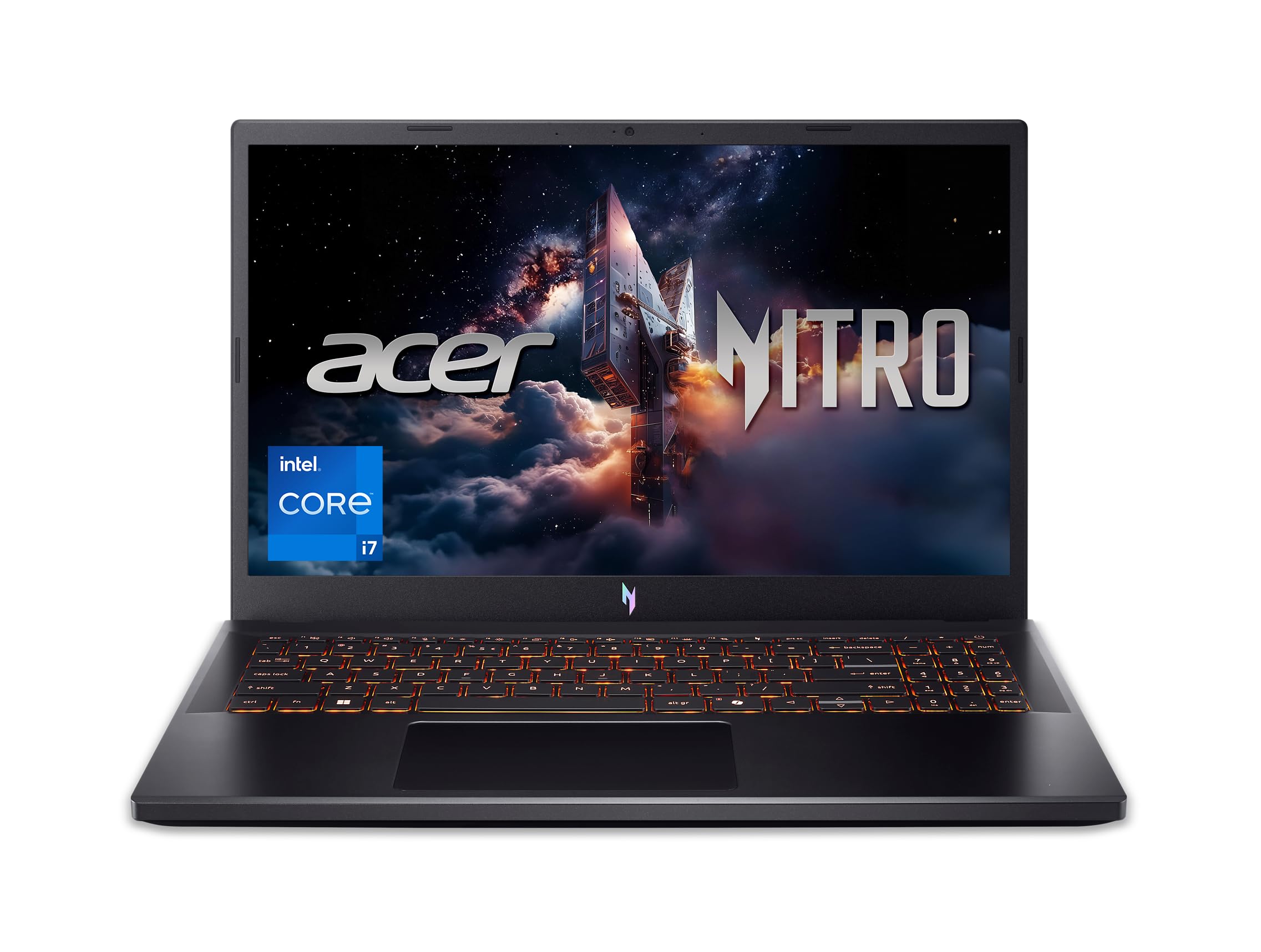
| Acer Nitro V 15 | RTX 4050 | Up to 7.5 hrs (light use) | 5.07 lbs |
| HP Victus 16 | RTX 4060 | Up to 8 hrs (light use) | 5.06 lbs |
| MSI Stealth 15 | RTX 4060 | Up to 7 hrs (light use) | 3.85 lbs |
Battery life estimates reflect productivity/browsing use. Gaming battery life will be significantly shorter on all models.
The 5 Best Gaming Laptops for College Students
1. ASUS TUF Gaming A15
The ASUS TUF Gaming A15 is the closest thing to a “do everything well” gaming laptop for college students. It hits a rare sweet spot: genuine RTX 4060 gaming power, a large 90Wh battery that actually lasts through a long class day, and a chassis that checks in at just 4.4 lbs — light enough that you’ll stop dreading the walk to your 8am.
Specs at a Glance
- GPU: NVIDIA GeForce RTX 4060 (8GB GDDR6)
- CPU: AMD Ryzen 7 7435HS
- Display: 15.6-inch FHD IPS, 144Hz
- RAM: 16GB DDR5 (upgradeable)
- Storage: 512GB NVMe SSD
- Battery: 90Wh
- Weight: 4.4 lbs (2.0 kg)
- Price: ~$999
Performance
At 1080p, the RTX 4060 handles everything in the current catalog. Elden Ring, Cyberpunk 2077 with medium-high settings, Call of Duty: Warzone, Valorant — all run smoothly above 60fps, with competitive titles pushing well past 100fps on the 144Hz panel. The Ryzen 7 CPU keeps up without creating thermal bottlenecks during extended sessions.
The 90Wh battery is the A15’s signature advantage for students. In productivity and note-taking use, expect 8–9 hours of real-world endurance. That’s a full day of classes without hunting for an outlet.
Pros and Cons
Pros:
- Best battery capacity in its class (90Wh)
- Genuine RTX 4060 1080p gaming performance
- Lightest sub-$1,000 RTX 4060 laptop available
- MIL-SPEC durability rating
- Affordable price for the spec level
Cons:
- Display isn’t the most color-accurate for creative work
- Plastic build feels slightly utilitarian
- Speaker quality is average
Who It’s For
The TUF A15 is the top pick for most college students. If you want one laptop that handles class, gaming, and doesn’t punish you physically or financially, this is the one.
2. Lenovo Legion Slim 5
The Lenovo Legion Slim 5 answers a real college question: can a gaming laptop look professional enough for a study group or coffee shop without screaming “I play video games at 2am”? Yes. The Slim 5 does exactly that, with a clean aluminum chassis, tasteful design, and full RTX 4060 performance wrapped in a form factor that doesn’t turn heads for the wrong reasons.

Specs at a Glance
- GPU: NVIDIA GeForce RTX 4060 (8GB GDDR6)
- CPU: AMD Ryzen 7 7745HX
- Display: 15.6-inch FHD IPS, 165Hz
- RAM: 16GB DDR5
- Storage: 512GB NVMe SSD
- Battery: 80Wh
- Weight: 5.0 lbs (2.27 kg)
- Price: ~$1,049
Performance
The Legion Slim 5 runs the Ryzen 7 7745HX — a more powerful processor than many competitors at this price — which benefits CPU-bound workloads like video rendering, code compilation, and data-heavy coursework. Gaming performance matches the A15 closely, with the 165Hz display giving a slight edge in competitive titles.
Thermal management is noticeably good for a slim chassis. The laptop sustains performance during extended gaming sessions better than many thin-and-light gaming machines.
Pros and Cons
Pros:
- Premium aluminum build that looks professional
- 165Hz display is among the best at this price
- Strong CPU performance for demanding coursework
- Good thermal management for a slim design
- Dual USB-C (including Thunderbolt 4)
Cons:
- Heavier than the TUF A15 at 5 lbs
- Smaller 80Wh battery than the A15
- Slightly higher price
Who It’s For
Engineering students, CS majors, and anyone who wants their laptop to work in a professional environment without a gaming logo plastered across the lid. The Slim 5 bridges the gap between serious workstation and gaming machine better than any other pick here.
3. Acer Nitro V 15
Not every college student has a $1,000 laptop budget. The Acer Nitro V 15 makes the argument that you don’t need to spend that much to game competitively in 2026. With an RTX 4050 and a price point around $749, it’s the budget champion of this roundup — and it’s more capable than its price suggests.
Specs at a Glance
- GPU: NVIDIA GeForce RTX 4050 (6GB GDDR6)
- CPU: Intel Core i5-13420H
- Display: 15.6-inch FHD IPS, 144Hz
- RAM: 8GB DDR5 (upgradeable to 32GB)
- Storage: 512GB NVMe SSD
- Battery: 57Wh
- Weight: 5.07 lbs (2.3 kg)
- Price: ~$749
Performance
The RTX 4050 is not the RTX 4060. At 1080p with medium settings, it runs most games comfortably above 60fps. Valorant, CS2, Fortnite, Minecraft with shaders — all smooth. More demanding titles like Cyberpunk 2077 will need settings adjustments to maintain fluid framerates, but they run.
The 8GB RAM is the weak link. For students running Chrome with 30 tabs, Discord, Spotify, and a game simultaneously, upgrading to 16GB (an inexpensive DIY job) makes a real difference. The DDR5 slots are accessible.
Battery life is shorter than competitors at roughly 6–7 hours of light productivity use, which means most students will want a charger at hand for a full day.
Pros and Cons
Pros:
- Lowest price of any RTX 4000-series pick
- 144Hz display at this price is excellent value
- Easily upgradeable RAM and storage
- Runs all popular competitive titles smoothly
- Good keyboard feel for a budget machine
Cons:
- RTX 4050 shows limits in AAA titles at high settings
- 8GB RAM base config is tight for multitasking
- Smaller 57Wh battery limits unplugged endurance
- Build quality feels budget-tier
Who It’s For
First-year students on a tight budget, casual-to-moderate gamers, and anyone whose gaming library skews toward competitive titles over cinematic AAA games. If $750 is your ceiling, the Nitro V 15 is the responsible buy.
4. HP Victus 16

The HP Victus 16 brings something the 15-inch picks can’t: a 16.1-inch display with a proportionally larger workspace, paired with full RTX 4060 performance, at a price that undercuts the Legion Slim 5. For students who do a lot of reading, writing, or spreadsheet work alongside gaming, the extra screen real estate is genuinely useful.
Specs at a Glance
- GPU: NVIDIA GeForce RTX 4060 (8GB GDDR6)
- CPU: AMD Ryzen 7 7700HX
- Display: 16.1-inch FHD IPS, 144Hz
- RAM: 16GB DDR5
- Storage: 512GB NVMe SSD
- Battery: 70Wh
- Weight: 5.06 lbs (2.3 kg)
- Price: ~$969
Performance
Gaming performance with the RTX 4060 matches the A15 and Legion Slim 5 — this is a full-power implementation, not a gimped mobile variant. The larger chassis gives the cooling system more room to work, which means the Victus 16 sustains performance during long gaming sessions without aggressive throttling.
The 16.1-inch 144Hz panel is the differentiator. It’s noticeably larger than the 15.6-inch competitors, and the panel quality is solid for the price. IPS colors are accurate enough for casual photo editing and content consumption.
Pros and Cons
Pros:
- Larger 16-inch display is a genuine productivity advantage
- Full RTX 4060 performance with good thermal headroom
- Competitive price for a 16-inch RTX 4060 machine
- Solid HP build quality and keyboard
- HP’s software ecosystem is clean and non-bloated
Cons:
- 16-inch size adds bulk — not the most portable option
- 70Wh battery is mid-range for endurance
- Heavier than the TUF A15
- No Thunderbolt port
Who It’s For
Students who use their laptop as a primary workstation as much as a gaming machine. The bigger screen makes long study sessions more comfortable. If you’re frequently in your dorm room or a dedicated workspace rather than hauling the laptop between classes, the Victus 16 makes more sense than a strictly portable pick.
5. MSI Stealth 15
The MSI Stealth 15 is the answer to a specific question: what if you refuse to carry a heavy laptop, full stop? At 3.85 lbs, it’s the lightest RTX 4060 laptop in this roundup — and arguably the best-looking. The brushed metal chassis, minimal branding, and slim profile make it the most “non-gaming laptop” gaming laptop on this list.
Specs at a Glance
- GPU: NVIDIA GeForce RTX 4060 (8GB GDDR6)
- CPU: Intel Core Ultra 7 155H
- Display: 15.6-inch FHD IPS, 144Hz
- RAM: 16GB LPDDR5X
- Storage: 512GB NVMe SSD
- Battery: 53Wh
- Weight: 3.85 lbs (1.74 kg)
- Price: ~$1,199
Performance
The Core Ultra 7 155H is one of Intel’s strongest mobile CPUs, and it shows in productivity workloads. For students doing video editing, machine learning coursework, or software development, the CPU headroom is real.
Gaming performance is solid for 1080p, though the smaller 53Wh battery and the thermal constraints of the ultra-slim chassis mean the GPU occasionally throttles under sustained load. For competitive gaming with shorter sessions, this isn’t a problem. For multi-hour gaming marathons, the A15 or Victus 16 sustain performance better.
The small battery is the Stealth 15’s genuine weakness for college use. At around 6–7 hours of light use, you’ll be reaching for your charger before the end of a full class day. The included 100W USB-C charger is small and easy to carry, which partially compensates.
Pros and Cons
Pros:
- Lightest RTX 4060 laptop at 3.85 lbs
- Premium aluminum build — genuinely looks professional
- Best CPU in this roundup for demanding workloads
- Charges via USB-C (compact charger included)
- Sleek design works in any setting
Cons:
- Most expensive pick at ~$1,199
- Smallest battery (53Wh) in the roundup
- GPU throttles under extended sustained load
- RAM is soldered — not upgradeable
Who It’s For
Students who prioritize portability above all else and are willing to pay for it. Creative and technical majors who need strong CPU performance. Anyone who has carried a 5+ lb laptop for a semester and sworn never again.
How to Choose the Best Gaming Laptop for College
Battery Life: The Most Underrated Spec
A gaming laptop that needs to be plugged in constantly is not a college laptop — it’s a desktop replacement. Target at least 70Wh battery capacity for meaningful all-day endurance. The A15’s 90Wh cell is the gold standard here. Remember: manufacturers test battery life under ideal conditions. Real-world mixed use (class notes, web browsing, light gaming) will be 30–40% below the advertised figure.
Weight: How Far Are You Walking?
If you’re commuting across a large campus with a loaded backpack, the difference between 3.85 lbs and 5 lbs is felt physically by Friday afternoon. The MSI Stealth 15 wins on portability. If most of your laptop use happens in a dorm room or a fixed workspace, the weight difference matters less than battery or display quality.
GPU Tier: RTX 4050 vs RTX 4060
For competitive games (Valorant, CS2, Fortnite, Apex), the RTX 4050 is sufficient and saves you $200+. For AAA titles at high settings, open-world games, or creative GPU workloads like video rendering, the RTX 4060 is worth the upgrade. If your gaming library is primarily competitive esports titles, don’t overpay for the 4060.
Display: 144Hz Is the Floor
In 2026, there’s no reason to buy a 60Hz gaming laptop at any price. All five picks here offer 144Hz or higher — and the difference in game feel versus 60Hz is significant for any action game. For competitive gaming, the Legion Slim 5’s 165Hz panel is the best here.
Budget Breakpoints
- Under $800: Acer Nitro V 15 is the only credible option. Upgrade the RAM immediately.
- $900–$1,050: ASUS TUF A15 is the best value. HP Victus 16 if you want the bigger screen.
- $1,050–$1,200: Lenovo Legion Slim 5 for the professional look and 165Hz panel.
- $1,200+: MSI Stealth 15 if portability is non-negotiable.
Upgradeability Matters in College
Budgets are tight and four years is a long time. Laptops with user-accessible RAM and SSD slots (A15, Nitro V 15, Victus 16) are worth prioritizing. Adding 16GB of RAM 18 months from now costs $40. Buying a laptop with 16GB from the start costs $100–150 extra at purchase. The Nitro V 15 in particular ships with 8GB — budget $35–50 to upgrade it immediately.
Final Verdict
Best overall: ASUS TUF Gaming A15 — The 90Wh battery, 4.4 lb weight, and full RTX 4060 performance at ~$999 make it the most balanced college gaming laptop available. For most students, this is the answer.
Best for professionals and engineers: Lenovo Legion Slim 5 — The aluminum chassis, 165Hz display, and clean design make it the pick for students who need their laptop to work in professional environments as much as gaming ones.
Best budget pick: Acer Nitro V 15 — At ~$749 with an RTX 4050, it delivers more gaming performance per dollar than anything else here. Upgrade the RAM and it becomes a genuinely strong college machine.
Best large-screen option: HP Victus 16 — The 16.1-inch display makes a real difference for students who do heavy reading, writing, and spreadsheet work. RTX 4060 performance at a fair price.
Best ultraportable: MSI Stealth 15 — At 3.85 lbs, it’s the lightest RTX 4060 laptop you can buy. Premium build, strong CPU, carries like a textbook. Pay the premium only if portability is your top priority.
The best gaming laptop for college is the one you’ll actually carry. Pick the balance of battery, weight, and performance that fits your campus life — and game on.
Frequently Asked Questions
Is a gaming laptop good for college students?
Yes. A gaming laptop handles coursework, multitasking, and demanding software easily, then doubles as a gaming machine. The main tradeoffs are weight and battery life versus an ultrabook.
What should a student look for in a gaming laptop?
Balance portability and battery life with gaming power. A 14-15 inch model with a modern mid-range GPU, 16GB or more RAM, an SSD, and decent battery life suits campus life best.
Are gaming laptops too heavy to carry to class?
Many modern gaming laptops are reasonably portable, especially 14-inch models around 4-5 pounds. Larger 17-inch laptops are powerful but heavy, so students usually prefer a compact size.
How is battery life on a gaming laptop for college?
Battery life is shorter than an ultrabook, often a few hours for general use and far less while gaming. Choose an efficient model and carry the charger for long campus days.
Related Articles
Looking for more on this topic? Browse the hand-picked guides below — each one applies the same scoring rubric used in this review.
Ready to decide? Our #1 pick for 2026 is the Laptop.
Live price & availability on Amazon.