
Best Full Tower Gaming Case 2026: How to Choose Room, Airflow and Build Freedom
A full tower gaming case is the right answer when space is not your constraint and build flexibility is. The best full tower gaming case gives you room for E-ATX boards, long graphics cards, large radiators and a drive layout you will not outgrow. This guide explains what a full tower should deliver in 2026, how to weigh its size against its benefits, and where a smaller chassis makes more sense.
This is a buying guide framed around the product class. We have not built in every case mentioned and this article does not claim detailed research. The hero listing below is the closest match we found for the query. Check the card for the exact model, dimensions and price before you order, and confirm the supported board and GPU lengths against your parts.

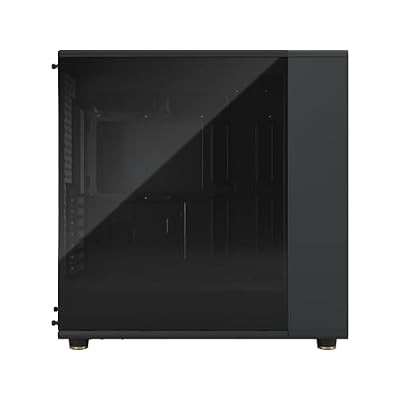
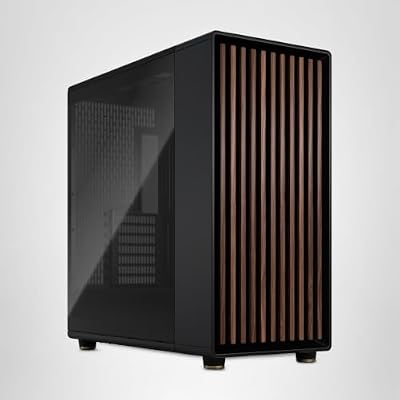
Fractal Design North XL Charcoal Black TG Dark


What Defines a Full Tower Case
A full tower chassis is usually built to take the largest common board size, E-ATX at 305 x 330mm, along with standard ATX and Micro-ATX boards. That extra width and depth gives the designer room for wider spacing between components, which helps airflow and cable routing. It also means more expansion slots, more drive bays and more room for a second radiator or a large air cooler. The trade-off is footprint: a full tower takes up more floor and desk space and weighs considerably more when loaded.
Not every case labeled full tower behaves the same. Some are built around a single large chamber, while others add a separate compartment for the power supply and drives. Some include a top radiator mount that can take a 360mm radiator, while others limit you to a smaller unit. Read the support list for the radiator, GPU and cooler, rather than relying on the category label.
Board Support and Expansion Room
If you plan to run an E-ATX workstation board, a full tower is often the only practical choice. Even with a standard ATX board, a full tower gives you more slots, which matters if you plan to add a capture card, a sound card, a network card or extra storage later. Check that the case supports the board you want, because some chassis list ATX as the maximum while others go to E-ATX.
Graphics Card Length and Clearance
Full towers are generous with GPU length, but the stated maximum still matters. Large triple-fan cards can be very long, and a bracket, front radiator or drive cage can cut into the usable space. Measure the card you plan to buy and compare it with the case’s maximum length, then confirm the clearance with any front radiator or fan you intend to install.
Full Tower Case Comparison by Build Type
The table below groups full tower cases by how they are most often used. It avoids model-specific claims because listings in this segment change often, and it uses price tiers instead of exact dollar figures. Pick the build type that matches your plans, then check the chassis specification.
| Case type | Best for | Typical trade-off | Typical price range |
|---|---|---|---|
| Open-airflow mesh full tower | High-load gaming and workstation builds | More dust and more fan noise | Check current price |
| Glass-panel full tower | Showcase builds with visible hardware | Panels can restrict airflow if not vented | Check current price |
| Full tower with separate PSU chamber | Clean cable routing and tidy interiors | Extra cost and a more complex layout | Check current price |
| Budget full tower | Large build on a tighter budget | Fewer fan slots and basic cable management | Check current price |
If you are still choosing between sizes, our guide to the best gaming PC cases compares chassis across every size class. For a lower-cost large chassis, the best gaming PC cases under 200 roundup is a good place to start.
Fractal Design North XL Charcoal Black TG Dark


As an Amazon Associate we earn from qualifying purchases. Product prices and availability are accurate as of the date/time indicated.
Airflow and Cooling in a Large Chassis
Fan Layout and Positive Pressure
A large case does not cool itself. Plan the fans so intake pressure slightly exceeds exhaust pressure, which keeps dust from entering through unfiltered gaps and helps the GPU breathe. A front intake of three 120mm fans, a rear exhaust fan and a top exhaust is a common starting point for full towers. Adjust the layout to your cooler, and check whether the front panel supports the fan size you want.
Radiator Support
Large radiators are one of the main reasons to choose a full tower. A 360mm radiator on the front or top can help a high-power processor stay cooler, but it needs clearance for the tubes and the motherboard’s VRM heatsink. Our overview of 360mm AIO coolers for Ryzen 9 explains which radiator sizes suit high-core-count chips, and the MasterLiquid 360 Atmos review shows how one large AIO is assessed.
Building in a Full Tower Without Wasting the Space
A full tower rewards an organized build. Start with the motherboard and power supply, then the GPU, then storage, and leave cable routing for the end. Mount the motherboard on standoffs before you install the cooler, because a tall air cooler can make the board hard to reach later. Our guide to how to build a gaming PC in 2026 walks through the assembly order, and the step-by-step build guide covers the details for first-time builders.
Storage is easy to overlook in a large case. Count your M.2 slots and the number of drive mounts before you buy, because a full tower often has space for several SATA drives but the board may only have a few NVMe slots. If you want to compare drives, the best gaming SSD guide lists options by speed and price.
Who Should Buy a Full Tower
A full tower suits builders who want the most room, plan to add components over time, or run a workstation board with a large radiator and a long GPU. It suits buyers who will keep the PC on the floor and who do not mind the weight. It is less suitable for someone who has limited space, plans to travel with the PC, or only needs a standard ATX board and a single GPU. In those cases a mid-tower is more practical, and our mid-tower gaming case roundup shows the sweet spot for most builds.
If you are weighing a full tower against a smaller chassis for a high-end build, the best gaming rig case guide covers the trade-offs. The $1500 gaming PC build shows how a full tower fits into a realistic budget.
Frequently Asked Questions
Is a full tower case worth it for gaming?
It is worth it if you need room for a large GPU, a big radiator or an E-ATX board. For a standard ATX build with one graphics card, a mid-tower usually gives the same cooling with less size and weight.
Can a full tower case take an E-ATX motherboard?
Most full towers do, but not all. Check the supported motherboard list on the spec sheet before buying, and measure the board’s width and depth against the case’s internal layout.
How many fans does a full tower need?
Many builds start with three intake fans and one or two exhaust fans. Add more only if the parts need it, because every extra fan adds noise and dust intake. Match the layout to the cooler and GPU you plan to install.
Do full towers collect more dust?
They can, because they have more open space and more fans. Choose a case with accessible filters and plan to clean them regularly.
Final Recommendation
The best full tower gaming case for most people is the one that gives you the room you need now and the room you will want later, at a size you are willing to live with. Start with your motherboard, GPU and radiator, confirm their clearances against the chassis specification, and choose an airflow layout that suits your cooling plan. Use the hero listing as your starting point, check its exact model and price, and compare it with the class guidance above. If you do not need the extra space, a mid-tower will serve you better and cost less to build in.


