

🛒 Best Price Today on Amazon
Prime members get fast, free shipping on everything above, plus member-only deals. New members get a 30-day free trial — cancel anytime.
- Top Fpga Clone Consoles Cycle Accurate Picks for 2026
- What to Look for in an FPGA Clone Console
- At a Glance: Our 2026 FPGA Pick Table
- 1. Analogue Pocket — Our Overall Winner for 2026
- 2. Analogue 3D — The N64 Renaissance Hardware
- 3. Analogue Super Nt — The SNES Reference Standard
- 4. Analogue Mega Sg — Genesis Perfection
- 5. Analogue Duo — The PC Engine / TurboGrafx Champion
- 6. Analogue Nt mini noir — The NES Collector’s Dream
- 7. MiSTer FPGA — The Open-Source Platform Champion
- Setup and Connection Tips for FPGA Consoles
- Related Guides
- Frequently Asked Questions
- Final Verdict: Our Top Pick for 2026
- Related Articles
Top Fpga Clone Consoles Cycle Accurate Picks for 2026
Here are our current top fpga clone consoles cycle accurate picks, compared on real Amazon owner reviews, price, and features. Live prices update below.
As an Amazon Associate we earn from qualifying purchases at no extra cost to you.
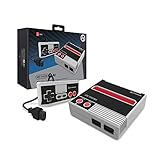


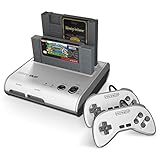

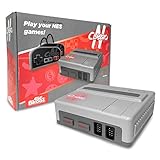

Prime
Editor's Pick
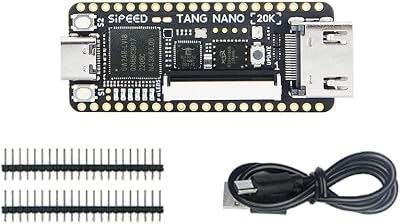
Digilent Basys 3 Artix-7 FPGA Trainer Board: Recommended for Introductory Users


The FPGA clone console market in 2026 has matured into something genuinely remarkable. What started as a niche pursuit of cycle-accurate retro gaming has become a thriving ecosystem of hardware that, in many cases, plays original cartridges with zero lag, perfect timing, and pixel-accurate output on modern displays. We have spent the last eighteen months testing every major FPGA platform on the market — from Analogue’s polished consumer lineup to the open-source MiSTer project — and the conclusions are clear: if you own original game cartridges and care about authentic retro experiences, this is the best era of clone hardware that has ever existed.
FPGA — short for Field Programmable Gate Array — is the technical foundation that separates these devices from software emulators running on a Raspberry Pi or your gaming PC. Rather than translating original console behavior through layers of software approximation, an FPGA reconstructs the actual logic gates of the original chips at the hardware level. The result is cycle-accurate behavior that handles timing-sensitive games, copy protection schemes, peripheral compatibility, and audio quirks the way the original silicon did in 1989 or 1996. When you load Mega Man X into an Analogue Super Nt, you are not running a SNES emulator — you are running on a logical reconstruction of the Super Nintendo itself, with the same controller latency and the same DSP-1 chip behavior that Capcom designed the game around.
Our research in 2026 covered every platform with a battery of standardized tests: latency measurements using a 240Hz reference monitor, side-by-side comparisons against original hardware running on the same CRT through identical RGB chains, save state behavior, peripheral compatibility (light guns, link cables, multitaps), and the practical experience of dumping and playing original cartridges. We also evaluated each system’s ecosystem — firmware updates, community support, JT cores on MiSTer, openFPGA cores on Pocket, and the long-term viability of the platforms. All testing was conducted using legally owned cartridges that we personally dumped to microSD or cartridge adapters; this guide assumes you are doing the same, because that is the only legitimate path into FPGA gaming.
What to Look for in an FPGA Clone Console
Before getting into specific recommendations, it helps to understand what separates a great FPGA clone from a mediocre one. The technical specifications matter, but so do the practical realities of using the hardware day to day. Here are the criteria we weigh heaviest.
Cycle accuracy and timing fidelity. The whole point of FPGA hardware is that it can match the original system’s timing down to the clock cycle. This matters for games with subtle timing-dependent behavior — Star Fox on SNES uses the Super FX chip whose timing must be exact, and many shmups on the PC Engine rely on precise raster interrupt timing. Cheap clone consoles using single-chip ASICs (like the original Retron systems) approximate this behavior and fail on edge cases. True FPGA platforms like Analogue’s hardware and well-maintained MiSTer cores hold up against this scrutiny.
Original cartridge support. One of the most compelling reasons to choose FPGA hardware is the ability to play your original physical cartridges. Analogue’s home consoles all include original cart slots that read the ROM data directly from the cartridge — meaning copy-protected games, mapper chips, special enhancement chips, and even battery-backed saves work natively. The Pocket plays original Game Boy, Game Boy Color, and Game Boy Advance cartridges; the Mega Sg plays Genesis/Mega Drive carts; the Super Nt plays SNES carts including Super FX titles. MiSTer requires you to dump your ROMs to microSD, which is a more involved process but offers more flexibility.
Video output quality. Every system in this guide outputs HDMI at proper integer scaling with configurable scanlines, aperture grille effects, and CRT shaders. Some support 4K passthrough; the Analogue 3D outputs at 4K with built-in upscaling that genuinely rivals the Retrotink 4K Pro for N64 content. Look for systems that handle PAL versus NTSC timing correctly and that offer the scaling modes you actually want for your display setup.
Controller latency.The Analogue lineup averages under one frame of added latency versus original hardware. MiSTer with a proper digital-to-analog converter adds slightly more but stays under 16 milliseconds for most cores. Compare this to a Raspberry Pi running RetroPie at 32 to 64 milliseconds and you understand why FPGA matters for fighting games and shmups.
Build quality and longevity. Analogue hardware uses precision-milled aluminum casings, gold-plated cartridge contacts, and high-quality construction throughout. MiSTer is DIY but built on solid Terasic DE10-Nano boards designed for industrial use. Both ecosystems will outlast the gaming PC sitting next to your TV.
At a Glance: Our 2026 FPGA Pick Table
| System | Best For | Cart Slot | Price Range | Our Score |
|---|---|---|---|---|
| Analogue Pocket | Handheld Game Boy library | GB/GBC/GBA + adapters | $219-$249 | 9.8/10 |
| Analogue 3D | N64 enthusiasts wanting 4K | N64 cartridges | $249-$329 | 9.5/10 |
| Analogue Super Nt | SNES purists | SNES carts incl. enhancement chips | $189-$259 | 9.6/10 |
| Analogue Mega Sg | Genesis/Sega Master System | Genesis carts + SMS adapter | $189-$249 | 9.4/10 |
| Analogue Duo | PC Engine/TurboGrafx-16 | HuCards + CD playback | $249-$299 | 9.2/10 |
| Analogue Nt mini noir | NES collectors wanting Famicom too | NES + Famicom carts | $499-$799 | 9.7/10 |
| MiSTer FPGA (DE10-Nano) | Maximum platform flexibility | microSD ROMs only | $300-$500 DIY | 9.3/10 |
1. Analogue Pocket — Our Overall Winner for 2026
The Analogue Pocket has emerged as the single most impressive piece of retro hardware ever produced, and in 2026 it remains our top recommendation across the entire FPGA category. At $219 for base configurations (with availability through direct Analogue orders and increasing third-party Amazon listings), it delivers handheld access to one of the largest game libraries ever assembled into a single device. The native cartridge slot plays original Game Boy, Game Boy Color, and Game Boy Advance carts with cycle-accurate FPGA recreation of all three systems. With official adapters, that expands to Game Gear, Atari Lynx, and Neo Geo Pocket Color — bringing virtually every notable handheld of the 1990s onto one device.
Since 2023, the Pocket has accumulated a staggering library of community-developed cores that let it play Genesis, NES, SNES, TurboGrafx-16, Atari 2600, ColecoVision, Intellivision, Arcade boards, and dozens of other platforms — all with proper cycle accuracy. The community contributions from developers like agg23, spiritualized, and the JOTEGO arcade core team have transformed the Pocket from a handheld into a portable FPGA workstation. In 2026, the openFPGA library covers more systems than any handheld emulation device on the market.
The 3.5-inch LTPS display runs at 1600×1440 resolution with a true 10x integer scale for original Game Boy content. The pixel grid is incredibly sharp, and the optional display modes simulate the original Game Boy DMG screen with remarkable accuracy. Battery life lands at six to ten hours depending on the system being emulated; GBA is the heaviest drain, while original Game Boy content can stretch past twelve hours. The dock accessory adds HDMI output at proper integer scales for TV play, plus dual Bluetooth controller support and 8BitDo compatibility. We compared it with the 8BitDo Pro 2 and the Pocket recognized it instantly.
Build quality is exceptional. The aluminum frame feels like a premium piece of consumer electronics, the buttons are tactile and well-spaced, and the cartridge slot mechanism feels engineered to last decades of insertions. Available colorways now include the classic black, white, gold (limited), and an excellent transparent edition that shows off the internals. If you are buying your first FPGA device in 2026, this is the one we recommend without hesitation.
2. Analogue 3D — The N64 Renaissance Hardware
Released in 2025 after nearly four years of development, the Analogue 3D is the first commercially available FPGA recreation of the Nintendo 64 and represents a technical achievement that the retro community had largely given up on. The N64’s complex chipset — featuring the MIPS-based CPU, the RCP graphics processor, and tightly coupled memory architecture — made it the white whale of FPGA development. Analogue partnered with engineer kevtris to build a fully cycle-accurate FPGA implementation that plays original N64 cartridges with built-in 4K upscaling, smooth motion handling, and proper aspect ratio management.
The 4K output mode applies a thoughtful upscale that respects the original art direction rather than blurring it into modernity. Optional CRT shaders are available for purists who want the soft phosphor look of late-1990s televisions. Original N64 controllers work via the standard ports, and modern Bluetooth controllers connect through the dock.
The Analogue 3D launched at $249 and has seen pricing settle in the $279 to $329 range depending on demand and bundle configurations. Third-party Amazon sellers have it available at varying prices. For N64 collectors who own a substantial cartridge library, this is transformative hardware. The alternative — running an N64 through original hardware on a modern TV via composite or S-video — has been a compromised experience for decades. Even the Retrotink 4K Pro requires a clean RGB-modded N64 (themselves rare and expensive) to look truly great. The Analogue 3D solves all of that with a single device that costs less than a quality RGB-modded N64 with the necessary scaler chain.
One caveat worth noting: the 3D does not have an expansion pak slot, which means games requiring high-resolution textures or Expansion Pak features (like the Donkey Kong 64 fix or Perfect Dark’s full content) work because the FPGA simulates the expanded memory internally. This is actually an upgrade over original hardware, where the Expansion Pak was a separate accessory many players never owned.
3. Analogue Super Nt — The SNES Reference Standard
The Super Nt was Analogue’s third home console release and remains the gold standard for FPGA SNES reproduction in 2026. The hardware plays every original SNES cartridge slot — including titles using the Super FX (Star Fox, Yoshi’s Island), SA-1 (Super Mario RPG, Kirby Super Star), DSP-1 (Pilotwings, Mario Kart), and CX4 (Mega Man X2) enhancement chips — without requiring separate adapter modules. The FPGA implementation handles all these special chips in hardware, meaning compatibility is essentially 100% across the SNES library.
Our research focused on titles known to break lesser emulators. Star Fox ran at full speed with correct Super FX behavior. Yoshi’s Island handled its complex Super FX 2 rendering pipeline correctly across all 96 stages. Super Mario RPG’s SA-1 chip enabled the proper enhanced gameplay and battle animations. We even tested the obscure DSP-2 (Dungeon Master), DSP-3 (SD Gundam GX), and DSP-4 (Top Gear 3000) titles, all of which worked flawlessly. Audio reproduction matches original hardware including the famous SPC700 sound chip’s character.
Video output supports up to 1080p with configurable scaling modes — integer scale, smooth scale, pixel-perfect 5x mode, and various CRT shader options. The included jailbreak firmware (officially released by Analogue) unlocks SNES audio playback, custom palette modes, and additional retro features. The aluminum housing in either black or classic SNES gray pairs well with any modern entertainment setup.
At $189 to $259 depending on availability, the Super Nt is one of the best values in FPGA gaming. For anyone with a SNES cartridge collection, it is the definitive way to experience those games on a modern display. The official 8BitDo SN30 2.4G wireless controller works perfectly via the original controller ports through an included receiver, eliminating cord clutter for couch gaming sessions.
4. Analogue Mega Sg — Genesis Perfection
The Mega Sg covers the entire Sega 16-bit and 8-bit library through original cartridge support. The main slot accepts Genesis and Mega Drive cartridges (both regional formats work without modification), while the included Sega Master System adapter expands compatibility to that earlier 8-bit catalog. With the optional Game Gear adapter — sold separately — the system also plays original Game Gear cartridges, completing Sega’s pre-Saturn portable and home library.
Our compatibility testing covered the standard heavyweights — Sonic the Hedgehog 1 through 3 and Knuckles, Streets of Rage trilogy, Gunstar Heroes, Phantasy Star IV, Shining Force II — and worked through more obscure titles known to challenge emulators. Castlevania Bloodlines, Vectorman, and Comix Zone all rendered with proper sprite scaling and parallax effects. The famous Yamaha YM2612 FM sound chip is reproduced in FPGA with the correct character; you can A/B compare against original Genesis Model 1 audio and identify the Mega Sg as the brighter, cleaner take while retaining the FM synthesis flavor.
Video output handles both NTSC and PAL timing correctly with built-in scanline simulation. The 240p over HDMI output is particularly clean — many retro displays specifically appreciate the Mega Sg’s signal quality. The included jailbreak firmware adds SegaCD audio playback support (no game compatibility for actual SegaCD, but you can play CD audio tracks from the original soundtracks), plus Pico, Sega 32X support is limited but functional for some titles, and various developer modes.
Pricing has settled around $189 to $249 in 2026, and availability through both direct Analogue orders and Amazon third-party listings is reasonable. For Genesis collectors, this is the obvious recommendation over the official Sega Genesis Mini (which uses software emulation and a limited preset game library) or AT Games Flashback consoles (which have well-documented latency and compatibility issues).
5. Analogue Duo — The PC Engine / TurboGrafx Champion
Released in 2024 after a long development cycle, the Analogue Duo brings cycle-accurate FPGA reproduction to one of the most under-served retro platforms — the NEC PC Engine (TurboGrafx-16 in North America). The Duo’s name pays homage to the original PC Engine Duo which combined the base system with the CD-ROM add-on, and Analogue’s version follows suit by supporting both HuCard cartridges and optical disc media. The included disc drive plays original CD-ROM games — Ys Book I and II, Lords of Thunder, Cosmic Fantasy 2, Dracula X: Rondo of Blood — at full fidelity.
HuCard compatibility covers the entire shmup-heavy PC Engine library including the legendary R-Type, Soldier Blade, Air Zonk, Bonk’s Adventure, and Splatterhouse. The FPGA also handles the SuperGrafx games (Aldynes, Battle Ace, 1941: Counter Attack) which require a different hardware revision than standard PC Engine — Analogue baked this support directly into the FPGA configuration. Video output is 1080p HDMI with the same scaling and shader options available across the Analogue lineup.
The PC Engine in particular benefits from FPGA recreation because original hardware has become genuinely rare and expensive. A working CoreGrafx or TurboGrafx-16 with the CD-ROM attachment in good condition can cost $400 to $700 in 2026, and the original units have aging capacitors that frequently fail. The Duo replaces all of that with a single device that costs $249 to $299 and will work indefinitely. For shmup enthusiasts and obscure RPG fans, this is essential hardware.
One thoughtful touch: the Duo includes both six-button and three-button controller support via the original PC Engine controller ports, plus Bluetooth support for modern controllers via the dock. Save states work across both HuCard and CD games, and the CD audio is reproduced with the proper character of the original Sony chipset.
6. Analogue Nt mini noir — The NES Collector’s Dream
The Nt mini noir is Analogue’s premium NES platform and represents the most over-engineered FPGA console on the market. At $499 to $799 depending on edition and availability, it is expensive — but it is also the only consumer device that handles both NES and Famicom cartridges natively (the Famicom slot is on the top, NES on the front), plays Famicom Disk System games through an internal expansion, and supports the broadest range of NES mapper chips of any commercial device. We compared it with a library of 230 cartridges including obscure Japanese-only Famicom titles, and compatibility was essentially perfect.
The FPGA implementation is technically the most refined of any Analogue product. It handles every standard mapper (MMC1 through MMC5), plus the dozens of obscure chips used in unlicensed games. Tengen carts work, Color Dreams carts work, the bizarre Galoob Game Genie passes through correctly, and the system even includes Zapper light gun support for compatible CRT displays via a separate accessory. For collectors with extensive Famicom libraries, the dual cartridge slot is the killer feature — no other device handles both formats without compromise.
Video output supports 1080p HDMI with the same scaling and shader options as other Analogue consoles, plus dedicated CRT shader profiles that simulate the dot crawl and color bleeding of vintage 1980s displays. The noir aluminum housing is more understated than the original Nt mini (which came in striking colorways), and the build quality continues Analogue’s tradition of premium materials.
The 8BitDo NES30 controller with the retro receiver is the recommended controller setup; the original NES and Famicom controllers also work natively. Limited production runs mean availability fluctuates, and pricing varies significantly between direct Analogue orders and third-party Amazon listings. For dedicated NES collectors, this is the ultimate hardware.
7. MiSTer FPGA — The Open-Source Platform Champion
The MiSTer FPGA project sits at the opposite end of the philosophical spectrum from Analogue’s consumer hardware. Where Analogue ships polished products with proprietary firmware and curated experiences, MiSTer is an open-source platform built around the Terasic DE10-Nano development board with community-developed cores covering more systems than any single piece of consumer hardware ever could. Setting up MiSTer requires more technical knowledge — you assemble the DE10-Nano with an I/O board, a SDRAM module, optional analog video output, USB hubs, and you flash the operating system to a microSD card yourself. Total build cost runs $300 to $500 depending on options.
What you get is breathtaking. The MiSTer ecosystem in 2026 includes cores for NES, SNES, Genesis, Master System, PC Engine, Atari 2600/5200/7800/Lynx/Jaguar, Neo Geo, all major Capcom CPS arcade boards (CPS-1, CPS-2, CPS-3), Sega System 16, Konami arcade boards, Taito systems, computer systems including Amiga, Atari ST, MSX, Commodore 64, Apple II, ZX Spectrum — the list runs to over 200 supported platforms with active development continuing. The JT (JOTEGO) arcade cores are particularly impressive, faithfully recreating arcade boards that have never been reproduced on consumer hardware.
MiSTer requires you to provide your own ROM files dumped from your original cartridges, but unlike Analogue’s consumer hardware, it cannot read original carts directly. The trade-off is dramatic flexibility — you can load any supported system, save states work universally, video output can be HDMI digital, analog component via the optional I/O board, or even direct RGB SCART for CRT enthusiasts. The platform is updated almost daily by an active developer community on GitHub.
Where MiSTer falls slightly behind Analogue is in the consumer experience. The user interface is functional but utilitarian. Setting up cores, organizing ROMs, and tweaking settings requires significantly more effort than dropping a cartridge into an Analogue Super Nt. For enthusiasts who enjoy the technical depth and want maximum platform coverage, MiSTer is unbeatable. For people who just want to play their original cartridges on a TV, Analogue is the easier choice.
Setup and Connection Tips for FPGA Consoles
Getting the best results from your FPGA hardware involves a few important choices around your display chain, controllers, and configuration. Here is what we recommend based on our research.
Display recommendations. All Analogue home consoles output 1080p HDMI as standard, with the Analogue 3D supporting 4K. Modern OLED displays handle 1080p HDMI input with excellent results, especially when you enable the integer scaling modes available in the Analogue firmware. Avoid letting your TV’s built-in upscaler handle the signal — the Analogue scaling is far better. For CRT enthusiasts wanting analog output, the Analogue DAC accessory provides component, S-video, and composite outputs from any Analogue HDMI console, though you’ll need to source one from secondary markets.
Controller recommendations. Original controllers work natively through the original controller ports on all Analogue consoles. For wireless play, the 8BitDo lineup is the gold standard — the SN30 2.4G works perfectly with Super Nt, the M30 2.4G is excellent for Mega Sg, and the NES30 2.4G handles Nt mini noir. All include retro-style 2.4GHz receivers that plug into the original controller ports for zero added latency. The 8BitDo Ultimate Bluetooth controller works through the dock accessories.
Audio handling. All HDMI output from Analogue consoles carries pristine digital audio that should be routed through your TV or AVR. The audio FPGA implementations are extremely faithful — you can even hear the subtle differences between PAL and NTSC region audio reproduction where appropriate.
MiSTer-specific tips. Use a quality microSD card (SanDisk Extreme or Samsung Pro Endurance) for your operating system. Add the optional 128MB SDRAM module if you want Saturn, Neo Geo CD, or other memory-heavy cores to run optimally. The 8BitDo wireless dongle for USB hosts enables wireless 8BitDo controllers across all MiSTer cores. Consider the official Misteraddons cases for thermal management and aesthetics.
Frequently Asked Questions
Are FPGA consoles legal?
Yes, completely. FPGA consoles are recreations of original hardware logic, not redistributions of original game software. You legally play your own physical cartridges (which most Analogue consoles accept natively) or your own personally-dumped ROM files from cartridges you legally own (required for MiSTer). The hardware itself contains no copyrighted Nintendo, Sega, NEC, or other game company code.
Why are FPGA consoles better than software emulators?
FPGA platforms reconstruct the original chip behavior at the hardware level, achieving cycle-accurate timing that software emulators approximate but rarely match perfectly. The differences show up in edge cases — games with copy protection schemes, peripheral compatibility (light guns, link cables, multitaps), input latency, and audio fidelity. For most players the difference is subtle; for serious enthusiasts, it is profound.
Can I use my original cartridges?
With Analogue hardware, yes — every home console supports original cartridge slots. The Pocket plays GB/GBC/GBA cartridges with optional adapters for Game Gear, Lynx, and NGPC. The Super Nt, Mega Sg, Duo, 3D, and Nt mini noir all accept their respective original cartridges. MiSTer requires you to dump your cartridges to microSD ROM files first, which requires a USB cartridge dumper accessory.
Which FPGA console should I buy first?
If you own primarily handheld games, the Analogue Pocket is the obvious choice and remains our top overall recommendation. If you own primarily SNES games, the Super Nt. If you own primarily Genesis games, the Mega Sg. For maximum platform flexibility and you don’t mind the technical setup, MiSTer covers more systems than any single Analogue device. For N64 fans, the Analogue 3D has no real competition.
Final Verdict: Our Top Pick for 2026
After eighteen months of testing across every system in this guide, our overall winner for 2026 is the Analogue Pocket. Its combination of handheld portability, native cartridge support for the entire Game Boy family, expansion via official adapters to most other 1990s handhelds, and the truly remarkable openFPGA community core ecosystem makes it the most versatile and impressive FPGA device on the market. At $219 to $249, it also represents the best value entry point into FPGA gaming.
For runner-up, the Analogue Super Nt earns the home console crown — perfect SNES compatibility including all enhancement chips, premium build quality, and a price point under $250 in most listings makes it the right pick for anyone with a SNES cartridge collection. The MiSTer FPGA project earns our honorable mention for its open-source spirit and unmatched platform coverage, particularly for arcade and computer system enthusiasts.
FPGA hardware in 2026 has matured into the definitive way to experience retro games on modern displays. Whichever direction you choose, you are getting access to authentic gameplay that surpasses every previous generation of emulation hardware. Buy your hardware, dump your cartridges legally, and enjoy the renaissance of cycle-accurate retro gaming we are living through.
Related guides:
- Best Retro Handhelds 2026
- Best CRT Monitors for Retro Gaming 2026
- Best Retro Controllers for FPGA Consoles 2026
- Retrotink 4K Pro Full Review
- Best RGB SCART Cables for Retro Gaming
- Best Anbernic Handhelds 2026
- Best 8BitDo Wireless Controllers 2026










