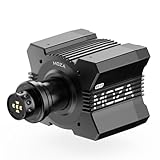
- Top Pick: MOZA R9 V3 Direct Drive Sim Racing Wheelbase 9Nm Force Feedback Servo Base | Aviation-grade Aluminum, NexGen 4.0 Force Feedback Algorithm, Intelligent Temperature Control, High-Performance Servo Motor
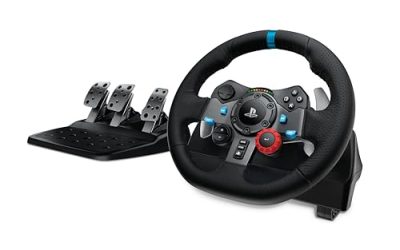
- Best Value: Logitech G RS50 8 Nm Direct Drive TRUEFORCE Racing Wheel for PS5/PS4/PC | 11 inch Wheel with Hub & Base, 13 Buttons, Adjustable Paddle Shifters, TRUEFORCE 4000Hz Force Feedback Integration
- Premium Choice: MOZA R12 V2 Direct Drive Sim Racing Wheelbase 12Nm Force Feedback Base | NexGen 4.0 Force Feedback, Intelligent Temperature Control, HighPerformance Slanted Pole Servo Motor, Aviation-grade Aluminum
The best direct drive wheel base for most PC sim racers is the Moza R9 for balanced strength and price, the Moza R5 for a first direct drive upgrade, and the Logitech G RS50 for a plug-and-play setup that also works with consoles. If you want more headroom and a bigger ecosystem, step up to the Moza R12, the Simagic Alpha Mini, or the Fanatec CSL DD with its torque boost kit. This guide is written for gamers: it covers peak torque, latency, platform compatibility, and whether a base will fit on your desk or rig.
As an Amazon Associate we earn from qualifying purchases at no extra cost to you.


Quick answer: which direct drive base fits which gamer
- Best overall for PC: Moza R9, a 9 Nm base with a wide range of wheels and pedals.
- Best entry-level direct drive: Moza R5, a 5.5 Nm base usually sold as a bundle with a wheel and pedals.
- Best for console and PC together: Logitech G RS50, an 8 Nm base sold in PC-only, PlayStation/PC, and Xbox/PC versions.
- Best for strong, detailed force: Moza R12 and Simagic Alpha Mini, both in the 10 to 12 Nm class.
- Best upgradeable ecosystem: Fanatec CSL DD, 5 Nm out of the box and 8 Nm with the Boost Kit 180.
- Best if you want maximum strength from a major brand: Logitech G PRO racing wheel, in the 11 Nm class.
How we chose
This guide is based on research: manufacturer specification pages, published sim racing buyer guides, and community discussion of long-term reliability and software. We did not run instrument measurements. We compared each base on rated peak torque, compatibility with PC and consoles, quick release and wheel ecosystem, mounting pattern, software maturity, and the kind of rig or desk it needs. Where sources disagree on a number, we describe the class rather than a single figure.
What direct drive actually changes for a gamer
A direct drive base mounts the steering wheel straight on the motor shaft. A gear-driven wheel uses plastic or metal gears between motor and rim, and a belt-driven wheel uses a rubber belt. Both add friction, lash, and smoothing that blur small details. With direct drive you feel tire slip building at the front axle, the lightening of the wheel over a crest, and the snap of oversteer sooner. That matters in games such as Assetto Corsa, Assetto Corsa Competizione, iRacing, and Automobilista 2, where the wheel is the main source of information about grip.
The other gains are practical. Direct drive motors respond quickly, so latency between the game’s force signal and your hands is lower. They are quieter than gear-driven wheels that rattle under load, though the cooling fan on a strong base can be heard near a microphone. Their torque is also smooth, with no notchy steps around the center.
Torque thresholds that matter
| Torque class | Typical bases | Who it suits | Watch for |
|---|---|---|---|
| Up to 6 Nm | Moza R5, Fanatec CSL DD (5 Nm) | First direct drive, desk clamp or light stand | Strong effects can clip in heavy cars |
| 8 to 10 Nm | Moza R9, Logitech RS50, Fanatec CSL DD with boost, Simagic Alpha Mini | Most sim racers, GT and open-wheel cars | Needs a rigid rig or a very solid desk |
| 11 to 12 Nm | Logitech G PRO, Moza R12 | Players who want maximum detail and headroom | Rig flex becomes visible, higher cost |
Peak torque is a ceiling, not a typical force. Most games peak only in short spikes, and a well-tuned profile sits well below the maximum.
Worked example: how much torque do you need
Torque becomes the force your hands feel through the rim. Force at the rim equals torque divided by the wheel radius. A 30 cm wheel has a 0.15 m radius, so:
- 5.5 Nm base: 5.5 / 0.15 = about 37 N at the rim, which is roughly 3.7 kg of pull.
- 9 Nm base: 9 / 0.15 = 60 N, roughly 6 kg.
- 12 Nm base: 12 / 0.15 = 80 N, roughly 8 kg.
Now apply a headroom rule. If you set the game’s strength so that the loudest cornering effects land around 60 to 70 percent of peak, the signal does not clip, and you keep detail on top of the load. A 5.5 Nm base at 70 percent gives about 3.9 Nm of usable load. A 9 Nm base gives about 6.3 Nm, and a 12 Nm base about 8.4 Nm. For GT and touring cars most players are comfortable between 4 and 7 Nm of working load, which is why the 8 to 10 Nm class is the practical center of this market. Going beyond that mainly adds fatigue unless you drive heavy cars with big steering angle or want realistic kerb impacts.
Best direct drive wheel bases
1. Moza R9
Spec line: 9 Nm peak · direct drive · PC only · Moza ecosystem of rims, pedals, and shifters · Pit House software.
Best for: PC gamers who want strong, clean force feedback without the highest price in the class. It sits in the sweet spot of working torque for GT and formula cars.
Skip if: you play on a console, or you want a plug-and-play kit with no software setup.
- Pros: strong and smooth, broad accessory range, good value for the torque, mounts to common rig patterns.
- Cons: PC-only, the software has many settings that take time to tune, and a thin desk may flex.
2. Moza R5 (bundle)
Spec line: 5.5 Nm peak · direct drive · bundle with ES wheel and SR-P Lite pedals · PC only.
Best for: a first direct drive purchase from a belt or gear wheel, and for desks where a huge motor is unwelcome.
Skip if: you drive heavy cars with big steering effects and want headroom, or you plan to move to a stronger base soon, because the wheel and pedals bundle is entry grade.
- Pros: lowest entry price for true direct drive, compact, upgrade path to better rims and pedals.
- Cons: clips earlier than larger bases, bundled pedals are basic, PC-only.
3. Moza R12
Spec line: 12 Nm peak · direct drive · PC only · same ecosystem as R5 and R9.
Best for: players who already own a sturdy rig and want extra headroom for strong effects and kerbs.
Skip if: you drive on a desk. At this torque a clamp mount or a wobbly wheel stand will move during hard cornering.
- Pros: strong with detail left over, shares accessories with smaller Moza bases, good value for 12 Nm.
- Cons: needs a stiff rig, PC-only, can feel excessive for casual play.
4. Logitech G RS50
Spec line: 8 Nm peak · direct drive with TRUEFORCE · versions for PC, PlayStation/PC, and Xbox/PC · integrated wheel and base design.
Best for: gamers who play on a console and PC, or who want a plug-and-play kit with a familiar brand and simple setup.
Skip if: you want a large third-party accessory market or to swap many rims. Check the platform version before you buy, because the PC-only version does not suit a console.
- Pros: simple setup, platform-specific versions, strong for the money, good game support through the brand’s software.
- Cons: smaller accessory range than Fanatec or Moza, platform-specific variants limit resale flexibility.
5. Simagic Alpha Mini
Spec line: 10 Nm peak · direct drive · PC · quick release and mounting for common rigs · previous-generation to the newer Alpha EVO line.
Best for: PC drivers who prefer Simagic’s software and want a compact motor with strong torque and fine detail.
Skip if: you want the newest generation. The Alpha EVO line (reported in 9, 12, and 18 Nm versions) replaced it, so compare current stock and pricing.
- Pros: strong detail, compact body for the torque, respected in the PC sim racing community.
- Cons: premium to mid-range cost, a successor line exists, less console focus.
6. Fanatec CSL DD
Spec line: 5 Nm base, 8 Nm with the Boost Kit 180 · direct drive · up to 2520 degrees of rotation · PC, with console support depending on the version.
Best for: drivers who like a large ecosystem of wheels, pedals, and shifters and want to start at 5 Nm and grow later.
Skip if: you want 8 Nm with no extra purchase. The boost kit is a separate cost, so compare the final total against alternatives.
- Pros: broad accessory support, upgradeable torque, wide game and platform reach depending on version.
- Cons: the boost kit adds to the cost, console compatibility depends on the version, and you should confirm the platform you need.
7. Fanatec GT DD Pro
Spec line: 8 Nm class · direct drive · licensed variant for PlayStation and PC versions · Fanatec wheel and pedal ecosystem.
Best for: console players who want an officially supported direct drive base and plan to use Fanatec rims.
Skip if: you only race on PC. The RS50 or Moza bases usually offer similar torque for less.
- Pros: console licensing, Fanatec ecosystem, strong 8 Nm class torque.
- Cons: higher price than PC-focused alternatives of similar torque, and the version you need depends on your console.
8. Logitech G PRO racing wheel
Spec line: 11 Nm class · direct drive · wheel and base for PC with console variants · brand software and TRUEFORCE game support.
Best for: players who want a premium base from a mainstream brand with high torque.
Skip if: you want more value per newton-meter. The RS50 delivers a large part of the experience for less.
- Pros: high torque, polished build, mainstream support.
- Cons: the cost is high, and it is more strength than many gamers can use on a desk.
Compare by buyer criteria
| Base | Peak torque | Platform | Rig need | Best use |
|---|---|---|---|---|
| Moza R5 | 5.5 Nm | PC | Desk or light stand | First direct drive |
| Fanatec CSL DD | 5 Nm, 8 Nm with boost | PC, console by version | Sturdy desk or rig | Ecosystem growth |
| Logitech G RS50 | 8 Nm | PC, PlayStation, Xbox by version | Rig preferred | Console and PC |
| Fanatec GT DD Pro | 8 Nm class | PlayStation and PC | Rig preferred | Console licensed |
| Moza R9 | 9 Nm | PC | Rig preferred | All-round PC |
| Simagic Alpha Mini | 10 Nm | PC | Rig required | Detail and strength |
| Logitech G PRO | 11 Nm class | PC, console by version | Rig required | Premium plug-and-play |
| Moza R12 | 12 Nm | PC | Rig required | Maximum headroom |
Group by buyer criteria
If you play on a desk
Limit yourself to about 6 Nm unless the desk is very solid. Direct drive pulls against the clamp. A 9 Nm base on a thin desk makes the edge bend and the whole setup lift, and the motion alters how the force feels. The Moza R5 and a 5 Nm Fanatec CSL DD are the sensible desk-friendly choices. Add a rear brace or a pair of rigid clamps, and always mount the base on the desk’s thickest section.
If you play on a console
Console support is license-driven. Look for the exact version name that lists your console, such as the PlayStation/PC or Xbox/PC models of the RS50, or the licensed Fanatec variants. A PC-only base does not work on a console no matter how strong it is. Check the supported games list for the title you play most, because not all games support every wheel feature.
If you want the most upgrade freedom
Choose a brand with a wide set of rims, hubs, pedals, and shifters. Moza and Fanatec both have deep ecosystems, and Simagic has strong third-party support on PC. Plan the wheel, pedals, and rig before you pick the base. A better pedal set often changes lap times more than extra base torque.
If you stream or record with a microphone
Direct drive bases have fans. The strongest ones can be audible on a sensitive microphone. Place the base away from the mic, use a directional microphone or a headset boom, and enable noise suppression in your capture software.
Compatibility and setup checklist
- Confirm your platform and the exact base version.
- Check the mounting pattern against your rig or desk.
- Check the quick release system and that the wheel you want fits.
- Check that pedals are included or compatible. Many bases are sold without them.
- Plan a power supply and a safe surge protector for the base’s power brick.
- Install the brand’s software and firmware, then set the in-game strength so that peaks stay under about 70 percent of the rated torque.
Safety and handling
A strong direct drive base can spin the wheel quickly if a game sends a violent effect or if the connection drops. Keep hands and fingers away from the spokes during startup, use the emergency stop or power switch where the base has one, and never connect or disconnect the wheel while the base is powered. Do not leave a powered base unattended around children or pets.
Common mistakes to avoid
- Buying the highest torque base for a desk setup. The desk, not the motor, becomes the limit.
- Overlooking platform versions. A console needs the right license.
- Spending the entire budget on the base and leaving a poor pedal set. Pedals give you braking consistency.
- Running the game’s force at 100 percent, which clips detail. Lower the strength and use the base software for fine tuning.
Frequently asked questions
Is direct drive worth it over a gear or belt wheel?
Yes, if you race often, because direct drive is smoother and more detailed. If you play occasionally, a gear or belt wheel still works.
The benefits are clearer force information in corners and less rattle. The cost is a stronger need for a stable mount and often higher overall spending.
How many newton-meters do I need?
For most gamers, a base with 8 to 10 Nm peak is enough. It provides about 5 to 7 Nm of clean working torque.
More torque only helps when your rig is stiff and you like heavy effects. Less torque, around 5 Nm, is fine for a desk.
Can I use a direct drive base on a desk?
You can use a 5 to 6 Nm base on a sturdy desk. Stronger bases need a rig or a very solid, braced surface.
Use heavy-duty clamps, mount near a leg, and check that the desk does not flex during hard cornering.
Do direct drive wheel bases work on consoles?
Only versions licensed for your console do. PC-only bases such as the Moza line do not.
Look for the exact platform in the product name. The Logitech RS50 and Fanatec licensed variants list console versions.
Do I need a separate wheel and pedals?
Often yes. Some bases come as bundles, and others sell the base alone.
The Moza R5 is commonly sold as a bundle. Check whether the listing includes a wheel rim and pedals before you compare costs.
Is the Fanatec boost kit worth it?
If you want 8 Nm from a CSL DD, yes, it is required. Compare the final total with other 8 Nm bases.
The boost kit raises output without changing the rest of the ecosystem, which suits players who plan to expand with Fanatec parts.
Will a stronger base make me faster?
Not by itself. Consistent pedals, a stable rig, and good force settings improve lap times more than torque.
A stronger base mainly adds detail and realism. Many fast drivers run moderate force levels.
Do direct drive bases wear out?
Motors are durable, but wiring, fans, and quick releases can fail over time. Keep firmware updated and avoid overheating.
Give the base airflow, do not cover the fan, and check cable strain relief regularly.
Final verdict
For most PC gamers the Moza R9 offers the best combination of force quality and price, the Moza R5 is the right entry into direct drive, and the Logitech G RS50 is the easy pick for console and PC. If you have a proper rig and want headroom, the Moza R12 or Simagic Alpha Mini are better fits. Choose your rig and pedals first, confirm platform support, and set your in-game force to leave about 30 percent headroom.