The best deck stains and sealers are chosen by wood species, exposure, and desired finish—not by the label alone: use a penetrating semi-transparent stain for most outdoor decks, a clear water repellent for attractive new wood, and a solid stain when hiding mismatched or weathered boards matters most.
- Quick Picks: Best Deck Stains and Sealers by Situation
- Stain vs. Sealer: What You Are Actually Buying
- Head-to-Head Comparison of the Main Formulas
- Choosing the Best Deck Stain by Wood Type
- Weather Resistance, Drying, and Climate Fit
- Worked Coverage Calculation: How Much Stain Do You Need?
- Decision Matrix: Match the Product to Your Priorities
- Application Steps That Prevent Early Failure
- Maintenance: The Test That Matters More Than the Calendar
- Bottom Line
As an Amazon Associate we earn from qualifying purchases at no extra cost to you.

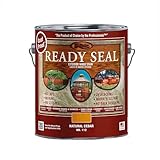
Quick Picks: Best Deck Stains and Sealers by Situation
| Deck situation | Best formula | Good product examples | Expected maintenance |
|---|---|---|---|
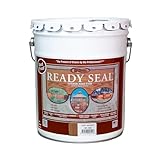
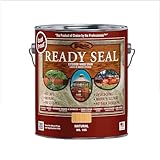
| New pressure-treated pine | Penetrating semi-transparent stain | Cabot Semi-Transparent Deck Stain, Ready Seal | Recoat about every 2–3 years |
| Older, weathered, uneven boards | Solid or opaque stain | Behr Premium Solid Color Waterproofing Wood Stain, Olympic Maximum | Recoat about every 3–5 years |
| Cedar or redwood with visible grain | Penetrating oil or hybrid stain | Ready Seal, Cabot Australian Timber Oil | Recoat about every 1–3 years |
| Hardwood such as ipe or teak | Hardwood-specific penetrating oil | Cabot Australian Timber Oil or an equivalent hardwood oil | Recoat about every 6–18 months |
| New deck whose natural color should remain visible | Clear or lightly tinted water repellent | Thompson’s WaterSeal Clear or a comparable clear sealer | Inspect annually; recoat when water stops beading |
These intervals are planning estimates, not guarantees. Full sun, standing water, snow, foot traffic, and a south-facing orientation can shorten them considerably.
Stain vs. Sealer: What You Are Actually Buying
A clear sealer primarily reduces water absorption. It can preserve a relatively new deck’s appearance, but it generally provides less pigment-based UV protection than a stain. Some clear products also allow wood to gray naturally rather than preserving its original color.
A stain combines water resistance with pigment. The more pigment it contains, the better it usually hides discoloration and protects against ultraviolet light—but the less natural grain remains visible.
- Clear sealer: Maximum grain visibility, limited color and UV protection, frequent inspection.
- Transparent or toner stain: Adds subtle color while retaining most grain detail.
- Semi-transparent stain: The best general-purpose compromise for sound wood.
- Semi-solid stain: Hides more variation while retaining some grain texture.
- Solid stain: Most uniform coverage and strong UV shielding, but it behaves more like a thin paint film.
Head-to-Head Comparison of the Main Formulas
| Formula | Typical coverage | Dry-to-touch time | Recoat or light-use window | Weather resistance | Main drawback |
|---|---|---|---|---|---|
| Clear water repellent | 150–250 sq. ft. per gallon | 2–4 hours | Usually 24–48 hours | Good water resistance; modest UV protection | Does little to disguise gray or damaged wood |
| Penetrating oil stain | 150–300 sq. ft. per gallon | 4–12 hours | Usually 24–48 hours | Good water resistance and attractive grain enhancement | Often needs more frequent maintenance |
| Water-based semi-transparent stain | 200–400 sq. ft. per gallon | 1–4 hours | Usually 4–24 hours | Good UV protection; variable resistance to standing water | Can highlight lap marks if applied unevenly |
| Solid-color stain | 200–400 sq. ft. per gallon | 1–4 hours | Usually 24–48 hours | Best color uniformity and UV coverage | Can peel if applied over a poorly prepared surface |
Coverage varies with board roughness, porosity, temperature, and whether the product is applied to horizontal boards, railings, or stairs. Treat label coverage as an upper limit rather than a promise.
Choosing the Best Deck Stain by Wood Type
Pressure-treated pine
Pressure-treated pine is porous but may contain residual treatment chemicals and moisture. Do not stain it merely because the calendar says the deck is ready. Sprinkle water on several boards: if droplets soak in within about 10 minutes, the surface is generally ready for a penetrating product. If water beads strongly, wait and retest.
A semi-transparent water-based stain is a practical choice when you want faster drying and easier cleanup. A penetrating oil stain can produce richer color and forgive small variations in application, but it may require longer drying and more frequent refreshing.
Cedar and redwood
These woods naturally contain oils and tannins, so they benefit from a penetrating stain that includes UV-resistant pigment. Clear sealers can preserve water resistance but will not reliably preserve the original red or cedar color. Choose a toner or semi-transparent formula if retaining visible grain is important.
Ipe, teak, and other dense hardwoods
Dense hardwoods absorb less product and can reject film-forming coatings when the surface is glossy or contaminated. Use a hardwood-specific penetrating oil, apply a thin coat, and remove excess product before it becomes sticky. Expect a shorter maintenance cycle than on pine because color fades quickly in direct sunlight.
Old, gray, or previously coated wood
If boards are discolored, patched, or visually mismatched, a solid stain is usually the most predictable choice. It can unify the appearance without the thicker film of paint. However, it requires careful preparation: loose coating, mildew, and gray surface fibers must be removed first.
Weather Resistance, Drying, and Climate Fit
For rainy climates, prioritize a product rated for horizontal decks and allow a full dry period before precipitation. “Waterproof” does not mean a fresh coat can withstand rain immediately; the coating still needs time to set and bond.
- Hot, sunny climate: Choose a pigmented semi-transparent or solid stain with strong UV protection. Clear products fade fastest.
- Wet or humid climate: Use a mildew-resistant deck product and improve drainage before coating. No stain compensates for boards that stay damp.
- Freeze-thaw climate: Favor a penetrating formula on sound wood, because trapped moisture and rigid surface films can worsen peeling.
- Cool application conditions: Check the label’s minimum temperature. Drying can extend from hours to several days when humidity is high.
Plan around the weather forecast. A useful minimum is 24 hours without rain after application, though some products require longer. Avoid coating hot boards in direct afternoon sun: the surface can dry before the product levels, creating lap marks.
Worked Coverage Calculation: How Much Stain Do You Need?
Suppose a deck measures 12 by 20 feet. Its surface area is 240 square feet. Add 15% for stairs, railings, end grain, and waste:
240 sq. ft. × 1.15 = 276 sq. ft. of working coverage.
If the selected stain realistically covers 250 square feet per gallon, divide 276 by 250. The result is 1.10 gallons, so buy at least 2 gallons rather than one. A rough deck, thirsty new pine, or a second coat can raise consumption to 3 gallons or more.
Measure railings and stairs separately when possible. Vertical surfaces often use more material per square foot because of their shape and extra edges.
Decision Matrix: Match the Product to Your Priorities
| Your priority | Choose | Avoid or reconsider |
|---|---|---|
| Natural grain and easy touch-ups | Penetrating semi-transparent stain | Solid stain unless appearance is already uneven |
| Longest visual color retention | Solid or semi-solid stain | Clear sealer |
| Fast return to use | Water-based product with a short recoat time | Slow-drying oil applied before damp weather |
| Minimal annual work | Durable solid stain on properly prepared wood | Clear sealer on a sunny deck |
| Easy future maintenance | Penetrating stain that can be cleaned and refreshed | Thick film applied over failing old coatings |
Application Steps That Prevent Early Failure
- Inspect the boards. Replace rotten wood and correct standing-water problems before applying anything.
- Clean the surface. Remove dirt, mildew, gray fibers, and loose coating with a deck cleaner and appropriate brushing or washing.
- Let the wood dry. Test several areas, not just one sunny board. Damp wood prevents penetration.
- Sand only as needed. Lightly smooth raised fibers, but avoid polishing the surface, which reduces absorption.
- Test a hidden area. Color changes with wood species, age, and previous coatings.
- Apply thin, controlled coats. Maintain a wet edge, work in board-length sections, and avoid stopping halfway across a board.
- Remove puddles and back-brush. Excess product can remain tacky or form a weak film.
- Protect the curing surface. Keep furniture, pets, and foot traffic off it for the label-specified period.
Maintenance: The Test That Matters More Than the Calendar
Inspect the deck every spring and fall. After cleaning and drying a small area, sprinkle water on the boards. If water beads, the protective layer is still functioning. If it darkens the wood and absorbs quickly, plan to clean and recoat.
Do not automatically add another coat over a glossy or peeling surface. Penetrating products should be refreshed only after cleaning and drying; solid stains may require scraping or sanding where the old film has failed. Recoating too frequently can create buildup, especially with oil-based products.
Bottom Line
For most sound residential decks, a quality semi-transparent penetrating stain offers the best balance of grain visibility, water resistance, repairability, and maintenance effort. Choose a clear sealer for attractive new wood when preserving color is not essential, a solid stain for worn or mismatched boards, and a hardwood-specific oil for dense species such as ipe or teak. The right preparation and a realistic weather window matter at least as much as the brand on the can.
Ready to decide? Our #1 pick for 2026 is the New pressure-treated pine.
Live price & availability on Amazon.