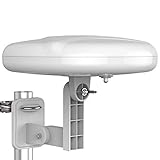
- Top Pick: Phonetone Cell Phone Signal Booster for Band 12,13,17 | Boost 4G LTE 5G Verizon and AT&T Signal on Band 12/13/17 | 65dB Cellular Repeater with High Gain Antennas | FCC Approved
- Best Value: Cell Phone Booster for Home Office, Cell Phone Signal Booster with 2 Indoor Antennas for Band 66/2/4/5/12/17/13/25,Boost 4G 5G LTE Data for All U.S. (Gray)
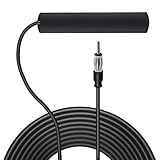
- Premium Choice: Cell Phone Signal Strength Booster Antenna for Cars and Trucks, Car Mount Passive Repeater Antenna – Automotive Reception Amplifier-Wireless Verizon AT&T Sprint, Tmobile, MetroPCS 5G 4G LTE By Cellet
Dropped calls in the kitchen, one bar in the basement office, a text that only sends when you stand by the window: these are the problems that lead people to search for a signal booster antenna. The word antenna in that search hides a real fork in the road. Some buyers want a complete kit with an amplifier and inside and outside antennas; others only want a replacement or add-on antenna for a vehicle system they already own.
This guide sorts the listings by that fork. It covers whole-home and office kits with indoor antennas, a vehicle antenna built for use with a drive-style booster, and two car-mount passive antennas. Everything is judged from the details in each listing title, such as supported bands, decibel gain, coverage area and FCC wording, because those are the facts a shopper can verify before ordering in 2026. Two sticker-style listings were left out, since a sticker is not an antenna in any practical sense.
Quick Picks
As an Amazon Associate we earn from qualifying purchases at no extra cost to you.


| Product | Best for | Key spec from the title |
|---|---|---|
| Phonetone Band 12/13/17 Booster | Verizon and AT&T homes | 65dB repeater, bands 12, 13 and 17, FCC Approved |
| Home Office Booster with 2 Indoor Antennas | Multi-carrier home office | Bands 66/2/4/5/12/17/13/25, two indoor antennas |
| 4,500 Sq Ft Tri-band Booster | Mid-size houses | Up to 4,500 sq ft, bands 5/12/13/17, 65dB |
| ZORIDA 72dB Booster | Weak signal, all US carriers | 72dB high gain antennas, FCC Approved |
| 7,000 Sq Ft Rural Booster | Large rural homes | Up to 7,000 sq ft, two indoor panel antennas |
| weBoost Overland Antenna (Model 311248) | Drive Reach vehicle systems | Made in the USA, FCC Approved, 5G and 4G LTE |
| Cellet Car Mount Passive Antenna | Cars and trucks | Passive repeater antenna, 5G and 4G LTE |
| Cellet Car Booster and Repeater Antenna | Simple in-car setup | Repeater antenna, 5G and 4G LTE |
How to Choose
Match the bands to your carrier
Every listing names the frequency bands it supports. Band 12, 13 and 17 cover low-frequency spectrum used by several major carriers, while kits that add bands 2, 4, 5, 25 and 66 cover more of the mid-band traffic. Look up which bands your carrier uses in your area and make sure the booster lists them. A kit that skips your band will amplify nothing useful.
Gain, coverage and building size
Gain is quoted in decibels; the listings here show 65dB and 72dB figures. Higher gain pushes a stronger signal indoors but also demands more separation between the outdoor and indoor antennas to avoid feedback. Coverage claims of 4,500 or 7,000 square feet describe best-case open layouts, so walls, metal siding and multiple floors will trim real reach. Treat the figure as a ceiling, not a promise.
Antenna type and placement
An indoor panel or high-gain antenna handles distribution, but you still need an outside signal to amplify. Boosters do not create coverage from nothing. If you get zero bars everywhere inside and outside the property, no kit will help. Passive vehicle antennas contain no amplifier at all, so they suit travelers who only need a small improvement. Active kits with a repeater suit anyone who needs more.
Compliance and what to skip
Look for FCC wording in the title, because unapproved gear can interfere with cell towers. Be skeptical of adhesive stickers promising better reception; they carry no electronics and no gain figure. Also check carrier compatibility, since a few listings name only Verizon and AT&T. Ignore vague marketing phrases and compare bands, gain and antenna count instead. Finally, think about cable length and mounting: an outdoor antenna needs a clear spot, ideally high on a roof or mast, and the indoor antenna belongs where people actually use their phones.
The 8 Best Options
Phonetone Band 12/13/17 Booster
Phonetone aims this kit at buyers on Verizon and AT&T who need help on bands 12, 13 and 17. The title lists a 65dB cellular repeater with high gain antennas and FCC Approved wording, so it is a focused solution rather than a catch-all. Households where everyone shares one of those two networks get the cleanest match for what the listing promises.
- Strength: clear band list that is easy to match to a carrier.
- Strength: FCC Approved wording and high gain antennas in the listing.
- Trade-off: it targets only three bands, so other networks may not benefit.
Skip it if your phone is on a carrier that relies on mid-band spectrum.
Home Office Booster with 2 Indoor Antennas
This listing is built around two indoor antennas and the broadest band list in the roundup: 66, 2, 4, 5, 12, 17, 13 and 25. It is written for home offices where several people on different carriers share one room. Because it names the indoor antennas explicitly, buyers can picture the layout before ordering and decide whether one desk or two walls need coverage.
- Strength: eight bands cover more carrier combinations.
- Strength: two indoor antennas give flexibility in where signal is spread.
- Trade-off: the title gives no decibel gain or square footage, so coverage is harder to judge.
Skip it if you need a stated coverage area before you buy.
4,500 Sq Ft Tri-band Booster
The title promises up to 4,500 square feet, a 65dB tri-band repeater and high gain antennas on bands 5, 12, 13 and 17 for all carriers. That puts it in the middle of the pack for a standard family house, where a single living area, kitchen and a couple of bedrooms need steadier calls and texts.
- Strength: a coverage number you can compare against your floor plan.
- Strength: for all carriers across four named bands.
- Trade-off: no mid-band 2 or 4 appears in the band list.
Skip it if your carrier leans on bands that are not named.
ZORIDA 72dB Booster
ZORIDA lists the highest gain figure here, 72dB, along with high gain antennas, FCC Approved wording and bands 12/17, 13, 5, 25/2 and 4. It suits homes with a weak outside signal that need every decibel available, such as houses in a valley or behind a hill where the tower is distant and the outdoor antenna can only catch a faint reading.
- Strength: 72dB gain is the top figure among the whole-home kits.
- Strength: wide band coverage across Verizon, AT&T and T-Mobile.
- Trade-off: higher gain makes careful antenna spacing more important.
Skip it if your outside signal is already strong and you only need a nudge.
7,000 Sq Ft Rural Booster
Marketed for rural areas, this kit claims coverage of up to 7,000 square feet and ships with two indoor panel antennas. It is meant for ranch-style homes, farmhouses and workshops spread across a large footprint, where a short cable run to one corner would leave the far end of the building without help.
- Strength: the largest stated coverage in the lineup.
- Strength: two panel antennas to serve different rooms.
- Trade-off: the title does not state decibel gain or bands.
Skip it if you live in a small apartment where a smaller kit does the job.
weBoost Overland Antenna (Model 311248)
This is a genuine antenna rather than a full kit. It is designed for Drive Reach cell phone signal boosters and is listed as made in the USA, FCC Approved and compatible with 5G and 4G LTE on all US carriers. Anyone replacing a damaged vehicle antenna or upgrading a truck setup will find the model number in the title useful for confirming a match.
- Strength: purpose-built for a vehicle booster system.
- Strength: all US carriers named, with Verizon, AT&T and T-Mobile in the title.
- Trade-off: it only makes sense if you already own a compatible Drive Reach booster.
Skip it if you need a standalone booster for a house.
Cellet Car Mount Passive Antenna
This is a car mount passive repeater antenna for cars and trucks, marketed for 5G and 4G LTE and a long list of carriers. Passive means there is no powered amplifier inside, so the effect is modest. It appeals to delivery drivers and road-trippers who want a small, tidy improvement without wiring anything into the vehicle.
- Strength: no power connection, so installation looks simple.
- Strength: carrier list includes Verizon, AT&T, Sprint, T-Mobile and MetroPCS.
- Trade-off: a passive design cannot match a powered booster in a truly dead zone.
Skip it if you regularly drive through areas with almost no coverage.
Cellet Car Booster and Repeater Antenna
The second Cellet entry is described as a car cellular phone signal booster and repeater antenna for 5G and 4G LTE on Verizon, AT&T, Sprint and T-Mobile phones. It is a minimal in-vehicle option for commuters who pass through the same patchy stretch of road every morning and want to keep a call alive.
- Strength: aimed squarely at in-car use.
- Strength: carriers are named in the title for quick matching.
- Trade-off: the listing offers no decibel figure or band list.
Skip it if you need verified band support for a specific carrier.
Which One Fits Your Situation
You work from a home office with mixed carriers
The Home Office Booster with 2 Indoor Antennas lists the most bands, which helps when coworkers or family members use different networks in one space.
You have a large rural property
Look at the 7,000 Sq Ft Rural Booster for the largest claimed coverage, or the ZORIDA 72dB Booster if signal strength outside is the bigger concern.
You already own a Drive Reach booster
The weBoost Overland Antenna is the logical add-on, since it is built for that product family and carries FCC wording.
You want a simple in-car upgrade
Try the Cellet Car Mount Passive Antenna for a low-effort install, or the Cellet Car Booster and Repeater Antenna if you want the repeater wording in the title.
Common Mistakes
- Buying a booster before confirming that any outside signal exists to amplify.
- Ignoring the band list and assuming all carriers are covered equally.
- Placing the indoor and outdoor antennas too close together, which invites feedback.
- Treating a coverage figure as guaranteed for a multi-floor home with thick walls.
- Choosing adhesive reception stickers instead of a real antenna and amplifier.
Related guides
- Battery Operated Smoke And Carbon Monoxide Detectors
- Combination Smoke And Carbon Monoxide Detectors
- Aio Liquid Coolers For High Performance Gaming
Frequently Asked Questions
Can a booster work without any outside signal?
No. A booster only amplifies a signal that already exists. If your phone shows nothing outdoors at the best spot on the property, the kit has nothing to boost.
What does 65dB or 72dB mean?
It is the gain figure for the amplifier. Higher numbers amplify more, though real-world results depend on outside signal strength and antenna separation.
Do passive car antennas work?
They can help a little where signal is already present, but they have no amplifier. Active repeater kits are the stronger choice for fringe areas, though they need power and more careful placement than a simple mount.
Is an FCC Approved label important?
Yes. Properly approved boosters are designed to avoid interfering with carrier networks, so the wording is worth looking for in the title.