500 dollars used to get you a decent 1440p monitor and nothing more. That’s changed. Panel costs have dropped enough that 4K at 500 dollars is now a real category, not a compromise you talk yourself into. But there’s a catch worth understanding before you buy: at this price, you’re almost always trading refresh rate for resolution. Nobody’s selling a 4K 240Hz OLED for 500 dollars, and if you see one claiming to, check the return policy twice.
Here’s what actually happens in this price bracket, and how to pick the right trade-off for what you play.
As an Amazon Associate we earn from qualifying purchases at no extra cost to you.

The core trade-off: resolution vs. refresh rate
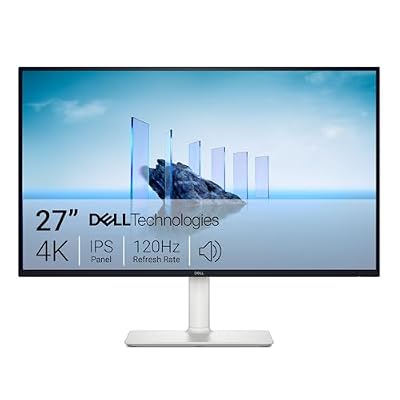
Under 500 dollars, 4K monitors mostly top out at 144Hz, and a lot of the genuinely good deals sit at 60Hz or 120Hz. That’s not a scandal, it’s physics and yield rates. Driving 8.3 million pixels at high refresh needs more bandwidth and a more expensive panel, and that cost has to come from somewhere.
If you play slower, visually dense games (RPGs, strategy, sim racing from a cockpit view, Flight Sim), 60-120Hz 4K is genuinely fine. The extra pixel density does more for those games than frame rate does. If you play competitive shooters or anything where tracking fast motion matters, a 144Hz panel at 1440p will beat a 60Hz 4K panel for the actual gameplay experience, even though the 4K monitor “sounds” better on paper. Resolution is a spec you can see in a screenshot. Refresh rate is a spec you feel in your hands.
So the real first question isn’t “which monitor” — it’s “what do I play most.” Decide that before you look at panels.
Panel types you’ll actually encounter at this price
Three panel types show up in the sub-500 4K space: IPS, VA, and occasionally a budget-tier OLED that’s heavily discounted or refurbished. Each has a specific failure mode you should know about before you buy, not after.
- IPS is the default choice and the safest. Good color accuracy, wide viewing angles, response times that are fine but not exceptional. The failure mode is IPS glow — a hazy, washed-out look in dark corners of the screen when viewed off-angle, worse in dark rooms. Also the weakest native black level of the three.
- VA gets you better contrast and genuinely dark blacks, which matters a lot in horror games or anything with nighttime scenes. The trade-off is slower pixel response, which shows up as smearing or trailing behind fast-moving bright objects on dark backgrounds — noticeable in games like Returnal or fast platformers.
- OLED at this price is rare and usually means you’re buying a close-out, a smaller panel size, or last year’s model at a discount. If you find one under 500 dollars, check the size (often 27-inch or smaller) and read recent reviews for that exact model number, because the “OLED” label doesn’t guarantee it’s a good value if everything else about the panel is a downgrade.
None of these is “wrong.” They just fail differently, and which failure mode bothers you depends on what you play.
What 500 dollars gets you, realistically
| Spec tier | Typical panel | Refresh rate | Best for | Watch out for |
|---|---|---|---|---|
| Budget 4K | IPS, 60Hz | 60Hz | Single-player, strategy, sim games | No headroom for fast-paced competitive play |
| Mid-tier 4K | IPS or VA, 120-144Hz | 120-144Hz | Mixed gaming, general use | Needs a strong GPU to actually hit those frames at 4K |
| Contrast-focused | VA, 120Hz+ | 120-144Hz | Dark, atmospheric games | Smearing on fast bright-on-dark motion |
| Discounted OLED | OLED, varies | Varies, often 120Hz+ | Picture quality above all else | Smaller size, older model, burn-in risk with static HUDs |
The GPU reality check nobody mentions
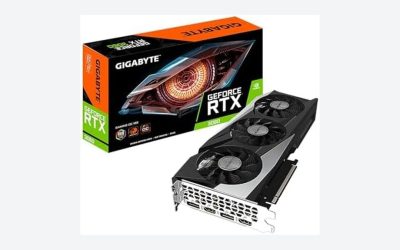
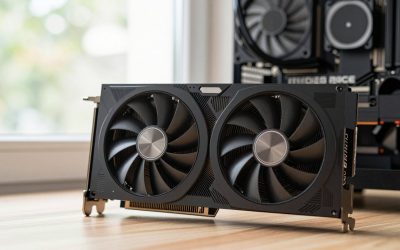
A 144Hz 4K monitor is only as good as the GPU feeding it. If you’re pairing a sub-500 monitor with a mid-range graphics card, you will not hit 144 frames per second at native 4K in most modern games — you’ll be running upscaling (DLSS, FSR) or dropping settings to get there, which is normal and fine, just know that going in. The monitor’s refresh rate ceiling matters less than your GPU’s actual output in most real-world setups. Don’t buy the highest refresh rate panel you can find if your graphics card can’t push half of that number at 4K; put the saved money toward the GPU instead, or step down to a 120Hz panel and spend the difference where it counts.
If you’re shopping for the display itself, browsing current 4K 144Hz gaming monitors will show you the current price spread for that tier, which shifts often enough that specific model recommendations go stale fast.
Don’t skip the cable and port check
4K at 120Hz or higher needs HDMI 2.1 or DisplayPort 1.4 to run uncompressed with HDR. Some budget monitors in this price range still ship with HDMI 2.0 ports that cap you at 4K/60Hz or force chroma subsampling at higher refresh rates — a real limitation, not a nitpick. Check the port spec sheet, not just the headline refresh rate, before you buy. If you’re on console, confirm the monitor’s HDMI port is explicitly rated for 4K/120 — plenty of “4K 120Hz” monitors only hit that combination over DisplayPort, which your console doesn’t have.
Where to land
If you mostly play single-player or slower-paced games, a 60Hz IPS panel in this range is not a compromise, it’s the right tool. If you split time between competitive and casual titles, a 120-144Hz IPS or VA panel is the sweet spot, assuming your GPU can back it up. If contrast and black levels matter more than motion clarity to you, lean VA and accept some smearing in exchange. For a general-purpose starting point, searching 4K IPS gaming monitors under 500 dollars will surface the safest, broadest-use options, while 4K VA gaming monitors covers the contrast-first alternative. Match the panel to your games, not the other way around, and the 500 dollar ceiling stops feeling like a limitation.