Apple doesn’t make a gaming PC. That’s not a knock, it’s just the honest starting point for anyone searching this phrase. There’s no Mac with an RTX card in it, no Apple tower you can open up and upgrade, and no path to the kind of frame rates PC gamers expect at 1440p or 4K. If you’re set on gaming, what you actually want is a Windows desktop. But if you already live in the Apple ecosystem and are wondering what your realistic options are, this is worth walking through properly.
What Apple actually offers
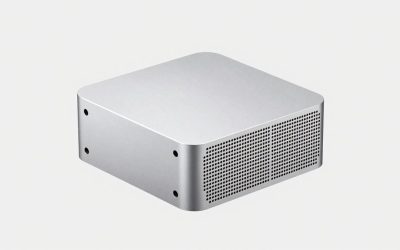
The closest things to an “Apple gaming computer” are the Mac Studio and the Mac Pro, both running Apple Silicon (M-series chips). These are capable machines for video editing, music production, and general creative work, and the GPU performance on the higher-end M-series chips has genuinely improved. Some games run well, especially titles that have been ported natively through Apple’s Game Porting Toolkit, and a growing number of AAA titles have shown up on Mac in the last couple of years.
But the game library is still a fraction of what’s available on Windows, frame rates in demanding titles lag behind equivalent-priced PC hardware, and you can’t swap in a graphics card later. You’re locked into whatever GPU performance the chip shipped with. For $4,000+ on a Mac Studio, you’re paying for an excellent all-around workstation that happens to run some games acceptably, not a gaming rig.
Why Windows wins for gaming
Almost every PC game ships for Windows first, and most ship for Windows only. Driver support from NVIDIA and AMD is mature, upgrade paths are open, and the price-to-performance ratio is dramatically better because you’re not paying an Apple margin on top of the silicon. A $1,500 Windows desktop with a mid-range discrete GPU will outperform a Mac costing two or three times as much in nearly every game that supports both platforms.
The trade-off is that you give up macOS. If your daily work depends on Final Cut Pro, Logic Pro, or tight iPhone integration, that’s a real cost. Plenty of people solve this by keeping a Mac laptop for work and building or buying a separate Windows desktop for gaming. It’s not an elegant one-box answer, but it’s the honest one.
Mac vs. a gaming-focused Windows desktop
| Factor | Mac Studio / Mac Pro | Windows gaming desktop |
|---|---|---|
| Game library | Limited, growing slowly | Nearly everything |
| Upgradeability | None (soldered/unified memory, fixed GPU) | GPU, RAM, storage all swappable |
| Price for gaming performance | Poor value | Strong value |
| Creative/pro app support | Excellent (Final Cut, Logic, Adobe) | Good, but fewer Mac-exclusive tools |
| Longevity | Fixed hardware, no mid-life upgrade | Can extend life with GPU/RAM/SSD upgrades |
If you still want a Mac-adjacent setup
Some people genuinely just want the Apple look and ecosystem alongside the ability to game. A few realistic paths:
Cloud gaming on a Mac. Services like GeForce NOW or Xbox Cloud Gaming run through a browser or app, streaming the game from a remote PC with a real GPU. This works surprisingly well on a stable connection and sidesteps the hardware problem entirely. The catch is you’re paying a subscription forever and you’re dependent on your internet connection’s latency and stability.
Boot Camp is dead. Worth mentioning because people still ask: Apple Silicon Macs cannot run Windows natively anymore. That era ended with the move away from Intel chips. Virtualization tools exist but add overhead and won’t give you real gaming performance.
Build a second, dedicated gaming PC. This is what most people in this situation actually do. Keep the Mac for work, add a Windows desktop for gaming. You don’t need to spend a fortune: a sensible prebuilt gaming desktop in the $1,200–1,600 range with a current mid-tier GPU will handle 1440p gaming at high settings in most titles for years.
What to prioritize if you go the Windows route
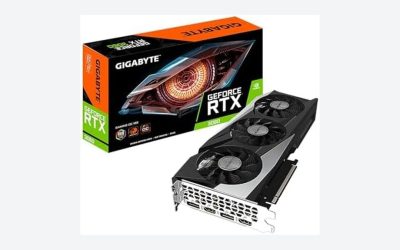
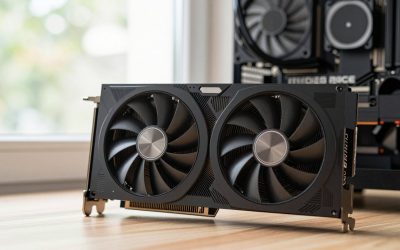
If you decide to build or buy a Windows machine instead, spend where it actually matters. The GPU is the single biggest driver of gaming performance, so don’t undercut it to get a flashier case or more RGB. A good RTX 4070-class graphics card paired with a mid-range CPU will outgame a top-tier CPU paired with a weak GPU almost every time. For storage, skip spinning hard drives entirely for your OS and game library; load times and stutter during asset streaming are night-and-day better on a fast NVMe SSD, and 2TB is a reasonable floor given how large modern game installs have gotten.
16GB of RAM is the realistic minimum for gaming today; 32GB gives headroom if you also stream, record, or run a browser with fifty tabs open while playing. None of this needs to be top-shelf. The cheaper mid-range GPU tier is genuinely fine for 1440p gaming; you only need to spend up into flagship territory if you’re targeting 4K or high-refresh competitive play.
FAQ
Can any Mac actually run modern AAA games well?
Some can, at modest settings, especially the higher-end M-series chips in the Mac Studio. But support is inconsistent title to title, and you’re always behind equivalent-cost Windows hardware in raw frame rate.
Is there any way to put a graphics card in a Mac?
No, not on current Apple Silicon machines. The GPU is part of the chip itself and can’t be upgraded or replaced. The old Intel Mac Pro supported external GPUs in limited cases, but that’s discontinued hardware at this point.
Should I just buy a gaming laptop instead of a second desktop?
If space or portability matters, a gaming laptop is a reasonable alternative to a second Windows desktop, though you’ll pay more for the same performance and deal with more heat and fan noise. A desktop gives you better cooling and easier upgrades for the same money.
Is cloud gaming a real substitute for owning gaming hardware?
For casual or occasional play, yes, especially if your internet is fast and stable. For competitive or latency-sensitive games, local hardware still wins because streaming always adds some input delay.