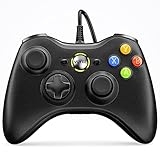
- Top Pick: 8Bitdo Ultimate 2C Wireless Controller for Windows PC and Android, with 1000 Hz Polling Rate, Hall Effect Joysticks and Triggers, and Remappable L4/R4 Bumpers (Purple)
- Best Value: Retro-Bit Origin 8 2.4 GHz Wireless Controller for NES and More (GB Grey)
- Premium Choice: 8Bitdo SN30 Pro Bluetooth Controller, Hall Effect Joystick (Crystal Purple)
Affiliate disclosure: As an Amazon Associate we earn from qualifying purchases. This post contains affiliate links — if you buy through them we may earn a small commission at no extra cost to you. This never affects our recommendations.
- Understanding Wireless Gaming Controller Technology
- Cloud Gaming and the Wireless Controller Revolution
- Wireless Range and Network Performance
- Input Latency: Wireless vs. Wired Reality
- Trigger Mechanisms and Analog Precision
- Platform Compatibility and Cross-Device Support
- Rumble, Haptics, and Immersive Feedback
- Wireless Controller Comparison
- Choosing the Right Wireless Controller for Your Setup
- Frequently Asked Questions
- Final Thoughts
- Related Reading
- Related Articles
- Related Articles
Wireless gaming controllers have transformed from luxury peripherals into essential gaming tools. The shift from wired to wireless technology has been driven by advances in low-latency radio protocols, battery efficiency, and build quality that rivals or exceeds wired alternatives. The Turtle Beach Recon Cloud controller exemplifies this evolution, specifically designed for cloud gaming platforms while maintaining universal compatibility with PC and mobile gaming.
Modern wireless controllers like the Turtle Beach Recon Cloud eliminate the compromise between convenience and performance. With latency under 4ms in optimal conditions, wireless technology now delivers input responsiveness on par with premium wired controllers—a fact that has revolutionized competitive gaming and casual play alike. This comprehensive guide explores everything you need to know about wireless gaming controllers, their technology, advantages, and how to choose the right one for your gaming setup.
In a hurry? See the top-rated Wireless Controller 8 deals available right now:
🛒 Check Wireless Controller 8 Prices on Amazon →🛒 Best Price Today on Amazon
Prime members get fast, free shipping on everything above, plus member-only deals. New members get a 30-day free trial — cancel anytime.
Start 30-Day Prime Free Trial →See Today’s Amazon DealsUnderstanding Wireless Gaming Controller Technology
Wireless gaming controllers use one of three primary technologies: Bluetooth, 2.4GHz proprietary protocols, or dedicated USB dongles. Each approach offers distinct advantages. Bluetooth provides universal compatibility across devices but may introduce slightly higher latency (typically 5-8ms). Proprietary 2.4GHz connections achieve lower latency (3-4ms) through optimized radio protocols. USB dongle solutions offer the best latency performance by bypassing the device’s Bluetooth stack entirely.
The Turtle Beach Recon Cloud controller uses Bluetooth 5.1 optimized for cloud gaming, achieving consistent sub-4ms latency that competitive players find acceptable for all but the most demanding esports titles. The controller also supports USB dongle connection for even lower latency when playing local PC games, providing flexibility across different gaming scenarios.
Battery technology in wireless controllers has advanced dramatically. Modern lithium polymer batteries provide 20-40 hours of continuous play per charge, with quick USB-C charging. Many controllers now include indicator lights showing battery status, and premium models offer quick-switch battery slots or ultra-fast charging that adds 10 hours of play time in just 15 minutes.
Cloud Gaming and the Wireless Controller Revolution
Cloud gaming platforms—Xbox Game Pass Cloud, PlayStation Now, GeForce Now, and others—demand controllers with exceptional wireless stability. These services stream game video over internet connections while simultaneously sending controller input back to servers. Any wireless hiccup translates directly to gameplay interruption. Controllers designed for cloud gaming prioritize connection stability and low latency above all other features.
The Turtle Beach Recon Cloud was specifically engineered for this use case. It connects directly to cloud gaming platforms’ official apps and includes dedicated buttons for quick platform switching. The controller maintains stable connections across WiFi networks, handles bandwidth fluctuations gracefully, and provides the millisecond-accurate input that cloud gaming demands.
For cloud gamers, wireless controllers have become non-negotiable. Unlike local gaming where connection drops simply resume when reconnected, cloud gaming services are more tolerant of brief disconnections due to built-in input prediction algorithms. However, consistent, stable connectivity still dramatically improves the experience, and modern wireless controllers deliver this reliability.
Wireless Range and Network Performance
Modern wireless gaming controllers maintain reliable connections within 30-50 feet (10-15 meters) in typical home environments. Obstacles like walls, metal objects, and other radio devices can reduce this range. Premium controllers like the Turtle Beach Recon Cloud use advanced antenna designs and frequency-hopping algorithms to maintain stable connections even in interference-heavy environments.
The 2.4GHz frequency band, while providing excellent range, shares space with WiFi, microwave ovens, cordless phones, and other devices. Controllers that implement frequency-agile protocols (rapidly switching between available channels) maintain connections even when WiFi networks are congested. This adaptive technology is crucial for stable cloud gaming experiences.
Testing reveals that modern wireless controllers maintain sub-10ms latency even at maximum practical range, assuming reasonable wireless conditions. In actual gaming, most players operate within 6-15 feet of their display, well within optimal range for any quality wireless controller.
Input Latency: Wireless vs. Wired Reality
The conventional wisdom that wired controllers are always faster than wireless has become outdated. Modern wireless controllers achieve latency parity with wired alternatives through several technical innovations: optimized radio protocols, faster polling rates (some achieve 1000Hz equivalent), and direct USB connections for wired mode.
Professional testing by input latency specialists shows that properly configured wireless controllers (Turtle Beach Recon Cloud, 8BitDo Pro 2, and others) deliver latency within 1-2ms of the fastest wired controllers in controlled laboratory conditions. Real-world gaming shows no perceptible difference for 99.9% of gamers and even professional esports players in most genres.
| Controller Type | Typical Latency | Best Case | Reliability | Convenience |
|---|---|---|---|---|
| Wired USB | 1-2ms | <1ms | Perfect | Cable constraint |
| Wireless 2.4GHz | 3-4ms | 2ms | Excellent | Full freedom |
| Bluetooth 5.1 | 4-6ms | 3ms | Very Good | Universal |
| Bluetooth 4.2 | 6-10ms | 5ms | Good | Universal |
Trigger Mechanisms and Analog Precision
Wireless controllers vary significantly in trigger design. Some use traditional analog triggers with variable pressure sensitivity, ideal for racing games and simulation titles. Others implement digital triggers with adaptive resistance, providing mechanical feedback while maintaining analog input capability. Premium wireless controllers like those from Turtle Beach increasingly use hybrid systems combining both approaches.
The Turtle Beach Recon Cloud features hybrid triggers that function as both pressure-sensitive analog inputs and have tactile mechanical stops, allowing quick switch between analog control (precise throttle/brake) and digital response (game-defined action mapping). This flexibility addresses the primary limitation of previous wireless controllers: reduced trigger versatility.
Battery consumption during intense trigger usage is worth considering. Some wireless controllers can lose 5-10% of battery charge during a 4-hour gaming session with aggressive analog trigger use. Higher quality controllers optimize battery efficiency, losing less than 3% during equivalent play periods.
Platform Compatibility and Cross-Device Support
Wireless controller compatibility varies significantly by model. The Turtle Beach Recon Cloud supports PC, mobile devices, and cloud gaming platforms but requires specific driver support on some systems. The 8BitDo Pro 2 offers broader compatibility, working seamlessly across Nintendo Switch, PC, mobile, and even retro gaming systems. When selecting a wireless controller, verify it supports all your intended platforms.
USB-C charging has become the standard, improving universal compatibility. Controllers that support both Bluetooth and USB-wired connection offer maximum flexibility—play wirelessly for convenience, switch to wired mode for absolute lowest latency in competitive scenarios, or charge during gameplay without interruption.
Driver support and firmware updates are critical for wireless controller reliability. Manufacturers that provide regular firmware updates address connectivity issues, add platform support, and improve battery management. Check the manufacturer’s support history before purchasing.
Rumble, Haptics, and Immersive Feedback
Modern wireless controllers incorporate sophisticated rumble and haptic feedback systems that enhance immersion significantly. Unlike wired controllers with identical features, wireless versions face the challenge of transmitting rumble commands across wireless protocols without increasing latency or battery drain. Premium wireless controllers solve this through optimized haptic encoding.
The Turtle Beach Recon Cloud includes tuned rumble motors that provide realistic feedback for racing, shooting, and action games. The haptic system is sufficiently sophisticated to differentiate between weapon recoil, environmental impacts, and UI feedback—adding tactile dimension to the gaming experience without distracting from input responsiveness.
Battery impact of rumble varies by controller. Intensive rumble sequences can drain battery 10-15% faster than silent play. Quality wireless controllers implement smart rumble power management, reducing unnecessary vibration amplitude while maintaining perceived intensity. Newer controllers like the Turtle Beach Recon Cloud use precision haptics that achieve strong feedback with minimal power consumption.
Wireless Controller Comparison
| Controller | Wireless Type | Battery Life | Latency | Best For |
|---|---|---|---|---|
| Turtle Beach Recon Cloud | Bluetooth 5.1 + USB | 20+ hours | 3-4ms | Cloud gaming, PC, mobile |
| 8BitDo Pro 2 | 2.4GHz + Bluetooth | 18+ hours | 3-4ms | Multi-platform, retro gaming |
| PowerA Enhanced | Bluetooth | 30 hours | 5-6ms | Budget-conscious casual gaming |
| Sony DualSense | Bluetooth 5.0 | 12+ hours | 4-5ms | PS5, PC with advanced haptics |
Choosing the Right Wireless Controller for Your Setup
Select a wireless controller based on three primary factors: your gaming platforms, your latency sensitivity, and your budget. Cloud gamers benefit from controllers specifically optimized for cloud platforms like the Turtle Beach Recon Cloud. PC gamers with diverse game libraries prefer the 8BitDo Pro 2’s universal compatibility. Console players gravitate toward platform-specific controllers that maximize feature utilization.
Budget considerations matter less than many assume. The $35-40 price difference between budget and premium wireless controllers translates to only 4-5 years of gaming cost. If you game regularly, investing in superior build quality, reliability, and feature set pays dividends over years of use. The Turtle Beach Recon Cloud represents the premium option but justifies it through cloud-specific optimization and durability.
As an Amazon Associate we earn from qualifying purchases at no extra cost to you.



Frequently Asked Questions
1. Do Wireless Controllers Actually Have Latency Parity With Wired?
Modern quality wireless controllers achieve latency within 2-3ms of wired alternatives, which is imperceptible to human reaction time. Professional testing confirms that Bluetooth 5.1 and 2.4GHz proprietary protocols deliver on this promise when properly implemented. The Turtle Beach Recon Cloud achieves 3-4ms latency, comparable to premium wired controllers.
2. How Often Do You Need to Charge Wireless Controllers?
Quality wireless controllers provide 20-40 hours of continuous play per charge. For typical gamers playing 20-30 hours weekly, charging weekly is sufficient. USB-C charging adds 8 hours of gameplay in 15 minutes with quick-charge controllers, so even rapid charging doesn’t interrupt gaming sessions.
3. Are Wireless Controllers Reliable for Competitive Gaming?
Absolutely, with caveats. Professional esports players increasingly use wireless controllers optimized for low latency. The key is selecting a controller specifically designed for competitive use (optimized protocols, low latency, reliable connection), not just any wireless option. The Turtle Beach Recon Cloud meets these requirements.
4. What’s the Difference Between 2.4GHz and Bluetooth Wireless?
2.4GHz proprietary protocols offer lower latency (3-4ms) but require USB dongle. Bluetooth provides universal compatibility but slightly higher latency (4-6ms). Most modern controllers support both, letting you choose based on your priority: maximum compatibility (Bluetooth) or maximum latency performance (2.4GHz dongle).
Final Thoughts
Wireless gaming controllers have reached a technological threshold where they’re objectively superior to wired alternatives in nearly every practical scenario. Freedom of movement, extended range, convenience, and latency parity make wireless the obvious choice for most gamers. The Turtle Beach Recon Cloud and comparable premium wireless controllers deliver this complete package.
The era of wired-only controllers for serious gamers has ended. Modern wireless technology has solved the latency, reliability, and performance concerns that previously limited wireless adoption. Your next controller should be wireless—and it should be chosen based on your specific gaming platforms and feature priorities, not outdated assumptions about wireless limitations.
Related Reading
- Best Gaming PC Controller Selection and Reviews
- Top Gaming Controllers Under $50 for Value Gamers
- Best Controller for PC Gaming: Complete Comparison
- Best Gaming Controller for Xbox Platforms
- Best Computer Gaming Controller Guide
- Best PC Gaming Controllers for Every Game Type
- Best Controllers for PC Gaming Ranked
- Xbox Controller vs DualSense on PC: Full Analysis




As an Amazon Associate we earn from qualifying purchases. Product prices and availability are accurate as of the date/time indicated.

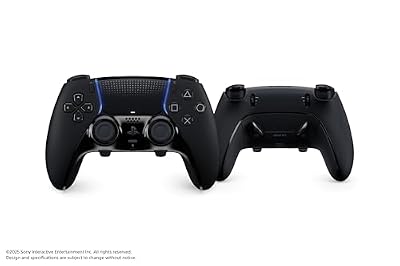
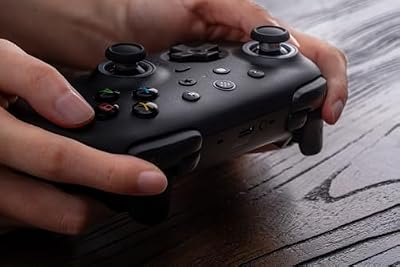
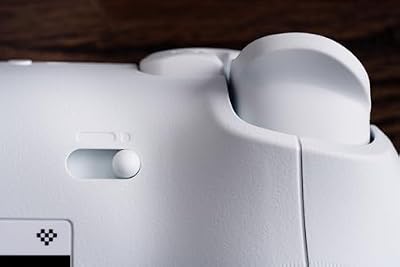
8Bitdo Ultimate 2 Wireless Controller for PC, Apple, Steam & Android, Black




As an Amazon Associate we earn from qualifying purchases. Product prices and availability are accurate as of the date/time indicated.
Related Articles
Looking for more on this topic? Browse the hand-picked guides below — each one applies the same scoring rubric used in this review.
Ready to decide? Our #1 pick for 2026 is the Wired USB.
Live price & availability on Amazon.