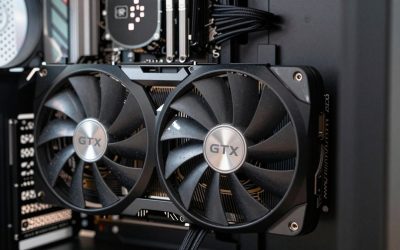
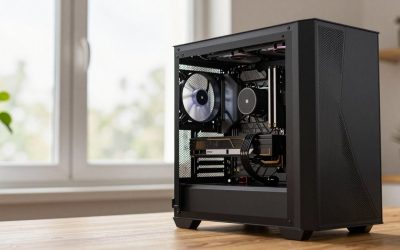
- Top Pick: msi Gaming RTX 3050 Ventus 2X 6G OC Graphics Card (NVIDIA RTX 3050, 96-Bit, Boost Clock: 1492 MHz, 6GB GDDR6 14 Gbps, HDMI/DP, Ampere Architecture)
- Best Value: ASUS Dual NVIDIA GeForce RTX 5060 8GB GDDR7 OC Edition (PCIe 5.0, 8GB GDDR7, DLSS 4, HDMI 2.1b, DisplayPort 2.1b, 2.5-Slot Design, Axial-tech Fan Design, 0dB Technology), 3 Year Warranty
- Premium Choice: MSI Gaming GeForce RTX 3060 12GB 15 Gbps GDRR6 192-Bit HDMI/DP PCIe 4 Torx Twin Fan Ampere OC Graphics Card
War Thunder is a free-to-play, cross-platform MMO military game from Gaijin Entertainment, covering aviation, armoured vehicles and naval craft from the early 20th century up to the most advanced modern combat units. It launched in 2013 and runs on Gaijin’s Dagor Engine, which scales across an unusually wide range of hardware: the official minimum is a dual-core 2.2 GHz CPU, 4GB of RAM and a DirectX 11 card along the lines of a GeForce GTX 660 or a Radeon 77XX, with 720p as the lowest supported resolution. The official recommended spec — an Intel Core i5 or Ryzen 5 3600, 16GB of RAM and a GTX 1060 or Radeon RX 570 or better — is a mid-range build from several generations ago rather than a modern high-end one. In practice, a budget gaming PC with a dedicated GTX 16-series, RTX 30-series or RX 6000-series card, a recent 4-core CPU and 16GB of RAM handles 1080p on high settings, while current mid-range cards such as the RTX 5060, RTX 5070, RX 9060 XT or RX 9070 are what you want for 1440p on a high-refresh monitor. Only 4K with heavy supersampling pushes War Thunder into genuinely heavy territory.
As an Amazon Associate we earn from qualifying purchases at no extra cost to you.


War Thunder Official PC System Requirements
| Component | Minimum (official) | Recommended (official) |
|---|---|---|
| OS | Windows 10 (64bit) | Windows 10/11 (64bit) |
| Processor | Dual-Core 2.2 GHz | Intel Core i5 or Ryzen 5 3600 or better |
| Memory | 4 GB RAM | 16 GB RAM |
| Graphics | DirectX 11 level video card: AMD Radeon 77XX / NVIDIA GeForce GTX 660. The minimum supported resolution for the game is 720p. | DirectX 11 level video card or higher and drivers: Nvidia GeForce 1060 and higher, Radeon RX 570 and higher |
| DirectX | Version 11 | Version 12 |
| Storage | 70 GB available space | 95 GB available space |
Source: the official War Thunder Steam store listing (app 236390), checked October 2026. Publishers can update these specs after patches.
Note the shape of those numbers. The minimum is very old hardware — a dual-core 2.2 GHz processor, 4GB of RAM and a GTX 660-class DirectX 11 card, with 720p as the lowest supported resolution — while the recommended column is a modern but still mid-range target: a Core i5 or Ryzen 5 3600, 16GB of RAM, a GTX 1060 or RX 570 or better, and DirectX 12. Storage is the one place the requirements are larger than people expect from a 2013 game, at 70GB for the minimum install and 95GB for the recommended one, because of the volume of vehicles, maps and high-detail assets the game ships with.
War Thunder also has native clients for macOS and Linux, and the game is cross-platform, so console and PC players share the same battles. The launcher offers an optional high-resolution texture download on top of the base install, which adds further to the footprint, so leave some headroom beyond 95GB. An SSD is not listed as a requirement, but it is the easiest upgrade for a game this size: faster loading on the large ground and air maps, and fewer texture-streaming hitches when reading from a mechanical drive. A broadband connection is required, and the official listing notes SteamVR support, with a keyboard or gamepad needed to play.
What Kind of PC Do You Need in 2026?
War Thunder is one of the most scalable multiplayer games on PC, and it is not a title you need to build around. The official minimum has barely moved in years and still names a dual-core 2.2 GHz CPU and a GTX 660-class card, so almost any desktop or laptop with a discrete GPU from the last decade can run it. The recommended spec is the more sensible target: a Ryzen 5 3600 or Core i5, 16GB of RAM and a GTX 1060 / RX 570 level card. Modern equivalents of that tier — an RTX 5060, an RX 9060 XT, or any recent 6-core CPU — sit comfortably above it.
Where hardware does matter is how the game behaves under load. War Thunder is a large-scale multiplayer simulation, and its big Ground Realistic and Simulator battles, with dozens of vehicles, AI units, physics and effects running at once, lean on the processor more than a typical shooter does. Settings such as supersampling, shadows and post-processing then shift the load onto the GPU, and at 1440p or 4K that becomes the limiting factor. A balanced build is the right approach, because there is no reason to buy a flagship component for one half of the equation. Memory is the other easy win: 4GB is the official minimum and only realistic at low settings, while 16GB matches the official recommendation and removes the stuttering that comes from running the game alongside a browser and voice chat.
GPU Recommendations by Resolution and FPS Target
The tiers below scale from the official requirements rather than from a generic template: anything at or above the recommended GTX 1060 / RX 570 level is a 1080p card, and the steps above that are about resolution and refresh rate rather than about whether the game will run at all. Performance varies by mode — Air, Ground and Naval battles load the system differently — and by preset, so treat these as sensible brackets rather than exact figures.
1080p (Full HD) – The Sweet Spot for Most Players
1080p is where War Thunder is happiest, and the official recommended GPU sits right in this bracket. A GTX 1060 6GB, RX 570/580, GTX 1650 Super or GTX 1660 Super is enough for 1080p on high settings at a standard 60Hz refresh rate, while an RTX 3050, RTX 3060, RX 6600 or Intel Arc A750 gives you headroom to raise settings further or move toward a 144Hz monitor. For 1080p at high refresh rates, the current-generation cards to look at are the RTX 5060 and the RX 9060 XT, with the RTX 5070 and RX 9070 a step above that; previous-generation options such as the RTX 4060, RTX 3060 Ti or RX 7600 also handle this resolution without trouble. War Thunder does not require ray tracing, so there is no reason to pay for it here — supersampling, shadow quality and post-processing are what actually cost performance. Older cards that only just meet the official minimum, such as a GTX 660 or a Radeon 77XX, will run the game, but expect to stay near 720p on low settings rather than 1080p on high.
1440p (QHD) – Ideal for High-Refresh-Rate Monitors
1440p is comfortably within reach of mid-range hardware because the engine scales so well, but it is the point at which the official minimum-class cards drop out of the conversation. For 1440p on high settings at 60–100Hz, an RTX 5060 Ti, RTX 4060 Ti, RX 9060 XT 16GB or RX 7700 XT is a good fit, and the RTX 3060 12GB / RX 6700 XT generation still handles this resolution if you trim a few of the heavier effects. For 1440p at 144Hz or above, the sensible targets are the RTX 5070, RX 9070, RTX 4070 Super or RX 7800 XT, all of which sit well above the official recommended spec. Supersampling (SSAA) is the one setting that can make 1440p expensive, so if you want to keep a high refresh rate, plan on leaving SSAA off and using TAA or FXAA rather than buying a bigger card.
4K (Ultra HD) – For Cinematic Visuals, Not for Everyone
4K is the only situation in which War Thunder becomes genuinely heavy, and even then it is the combination of 4K with maximum settings and supersampling that does it, not the resolution alone. With SSAA disabled and a lighter anti-aliasing option, 4K on high settings is realistic on upper-mid-range cards such as the RTX 5070 or RX 9070, and comfortable on the RTX 5070 Ti, RTX 5080, RX 9070 XT or RX 7900 XTX. If you want maximum settings with heavy supersampling at 4K, you are looking at the top of the current stack, and even those cards will not hold a high refresh rate in the densest ground battles. For most players, 1440p on a high-refresh monitor is a better use of budget than 4K at 60Hz, given how much fast-moving detail there is to track in air and ground combat.
CPU, RAM and Storage Notes for War Thunder
CPU: Single-Core Speed First, Cores Second
The official minimum of a dual-core 2.2 GHz processor tells you how little the game needs to boot, and the official recommendation of a Core i5 or Ryzen 5 3600 tells you what it actually wants. In practice, War Thunder is a large-scale multiplayer simulation, so it responds to single-core performance and clock speed more than to core count: physics, AI and the number of vehicles and effects in a battle are what load the processor, especially in big Ground Realistic and Simulator matches. A modern 6-core such as a Ryzen 5 5600, Ryzen 5 7600, Core i5-12400F or Core i5-14400F is more than the game needs and gives plenty of headroom, and a recent 4-core still keeps up at 1080p. There is no reason to buy an 8-core flagship for War Thunder alone. The pairing to avoid is a very old dual-core with a modern graphics card, where the GPU spends its time waiting.
RAM: 16GB Matches the Official Recommendation
The official minimum is 4GB, which is enough to launch the game on low settings and little else, and the official recommended figure is 16GB — that is the number to build around. 8GB will run War Thunder, but with the launcher, a browser and voice chat open it becomes tight and can cause hitching during map loads. A 16GB dual-channel kit is the comfortable standard, and 32GB is only worth it if you multitask heavily or play heavier games alongside it. War Thunder does not care much whether you use DDR4 or DDR5; capacity and dual-channel operation matter more than raw memory speed.
Storage: 70GB Minimum, 95GB Recommended
Storage is the requirement people most often underestimate. The official figures are 70GB of available space for the minimum install and 95GB for the recommended one, and the optional high-resolution texture download adds more on top of that. That makes a 500GB or 1TB NVMe SSD the sensible choice, since a 256GB drive fills up quickly once War Thunder is installed and patched. An SSD is not required to run the game, but on a title this size it is the upgrade that makes the biggest everyday difference: faster map loads for the large ground and air maps, and fewer texture-streaming hitches when you are flying low and fast. Because the game is updated frequently, leave some free space beyond the 95GB figure so patches have room to install.
Example PC Builds for War Thunder in 2026
These are balanced reference builds rather than shopping lists, and part availability varies by region. Both sit above the official recommended spec, because that spec is old enough that a modern entry-level build already clears it.
Budget Build for 1080p High Settings
Aimed at 1080p on high settings at 60Hz, with enough headroom for a 144Hz monitor at slightly reduced settings.
- CPU: AMD Ryzen 5 5600 or Intel Core i5-12400F
- GPU: NVIDIA GeForce RTX 5060 or AMD Radeon RX 9060 XT (an RTX 3060 or RX 6600 also clears the official recommended spec comfortably)
- RAM: 16GB (2x8GB) DDR4
- Storage: 1TB NVMe SSD, with well over 95GB free for the game
This tier is more than War Thunder needs, which is the point: it also leaves room for other free-to-play and multiplayer titles, and it handles 1440p with a few settings turned down.
Mid-Range Build for 1440p High Refresh
Aimed at 1440p on high settings on a high-refresh-rate monitor, and comfortable at 4K on high settings with lighter anti-aliasing.