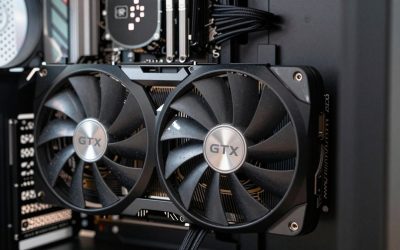
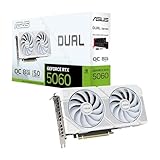
- Top Pick: ASUS Dual NVIDIA GeForce RTX 5060 8GB GDDR7 OC Edition (PCIe 5.0, 8GB GDDR7, DLSS 4, HDMI 2.1b, DisplayPort 2.1b, 2.5-Slot Design, Axial-tech Fan Design, 0dB Technology), 3 Year Warranty
- Best Value: ASUS Dual GeForce RTX 5050 8GB GDDR6 OC Edition Gaming Graphics Card
- Premium Choice: ASUS Dual GeForce RTX 5060 8GB GDDR7 White OC Edition Gaming Graphics Card
Rocket League is one of the least demanding competitive games on PC in 2026. It was built to run on a decade-old mid-range PC and still scales perfectly to high-refresh-rate esports monitors. Any modern budget gaming PC with an entry-level discrete GPU or even a recent integrated GPU can run it smoothly at 1080p, while a mid-range GPU is all you need for 1440p at 240Hz or 4K at high frame rates. You do not need a high-end CPU or GPU to play it competitively.
- Rocket League PC Requirements: Minimum & Recommended Specs
- What Kind of PC Do You Actually Need in 2026?
- GPU Recommendations by Resolution and Refresh Rate
- CPU, RAM and Storage: What Actually Matters for Rocket League
- Example PC Builds for Rocket League in 2026
- Laptop and Handheld Performance
- Best Settings to Raise FPS in Rocket League
- Frequently Asked Questions
As an Amazon Associate we earn from qualifying purchases at no extra cost to you.



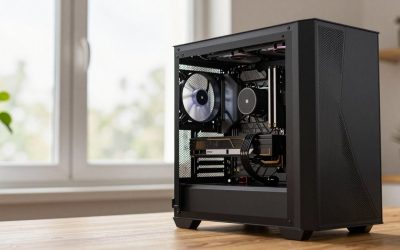
Rocket League PC Requirements: Minimum & Recommended Specs
The specs below are approximate, based on the publisher’s store page (Psyonix / Epic Games Store). Rocket League has not had a major engine overhaul, so requirements have remained stable since it went free-to-play.
| Component | Minimum Specs | Recommended Specs |
|---|---|---|
| OS | Windows 10 64-bit | Windows 10 64-bit / Windows 11 64-bit |
| CPU | 2.5 GHz Dual-Core | 3.0+ GHz Quad-Core |
| RAM | 4 GB | 8 GB |
| GPU | NVIDIA GeForce GTX 760 / AMD Radeon R7 270X | NVIDIA GeForce GTX 1060 / AMD Radeon RX 470 or better |
| DirectX | Version 11 | Version 11 |
| Storage | 20 GB available space | 20 GB available space |
| Network | Broadband Internet connection | Broadband Internet connection |
In practice, these are very conservative. The minimum spec targets 720p / 1080p at 30-60 FPS on low settings, while the recommended spec is aimed at 1080p 60 FPS on High Quality. Any PC bought new in the last 4-5 years will typically exceed the recommended spec by a large margin.
What Kind of PC Do You Actually Need in 2026?
Rocket League runs on Unreal Engine 3 and is heavily optimized for high frame rates rather than graphical fidelity. It is not CPU-bound in the way large simulation or open-world games are, and it has no heavy asset streaming, ray tracing, or high-resolution texture packs to worry about. The physics simulation is light, maps are small and enclosed, and there are no mods that significantly change hardware demands.
What matters most is hitting and maintaining a high, stable frame rate that matches your monitor’s refresh rate. For competitive play, players prioritize 144Hz, 240Hz, or even 360Hz over visual quality. That makes the GPU the primary factor, with the CPU playing a supporting role only at very high frame rates.
GPU Recommendations by Resolution and Refresh Rate
You do not need a current-generation high-end card for this game. The following guidance is based on approximate performance ranges reported by public outlets such as TechPowerUp, Hardware Unboxed, and Tom’s Hardware, not on in-house testing.
1080p – The Esports Sweet Spot
This is where most Rocket League players compete.
- For 1080p 60-144 FPS (High Quality): Any entry-level discrete GPU from the last several generations is more than enough. Cards like the GeForce GTX 1650, GeForce RTX 3050 / RTX 4060, or Radeon RX 6500 XT / RX 7600 will typically deliver well above 144 FPS at maximum settings, based on aggregated public benchmarks that often show 200-300+ FPS ranges on these cards.
- For 1080p 240-360Hz (Competitive): A budget to lower mid-range current GPU is ideal. A GeForce RTX 4060, Radeon RX 7600 XT, or Intel Arc A750 / A580 class GPU will easily push 250-400 FPS if you lower a few settings. Modern integrated graphics like AMD Radeon 780M / 880M (Ryzen 7040/8040 series) or Intel Arc in Core Ultra 7 processors can also handle 1080p 60-120 FPS on Performance / High Performance presets, making them viable for casual play without a discrete GPU.
1440p – For High-Refresh Monitors
1440p is still very easy for Rocket League.
- For 1440p 144-240 FPS: A mid-range GPU is the sweet spot. A GeForce RTX 4060 Ti / RTX 4070, Radeon RX 7700 XT / RX 7800 XT, or equivalent will generally hold 200-300+ FPS at High Quality. You do not need to lower many settings to stay above 144Hz. Public testing often shows even last-gen mid-range cards like the RTX 3060 Ti or RX 6700 XT averaging around 200+ FPS at 1440p max settings.
4K – Overkill But Effortless
Rocket League is one of the few competitive games where 4K high-refresh gaming is achievable without a flagship GPU.
- For 4K 60-144 FPS: A mid-range to upper mid-range card is sufficient. A GeForce RTX 4070 / RTX 4070 Super, Radeon RX 7800 XT / RX 7900 GRE, or newer equivalents will typically deliver 120-200+ FPS at High Quality. For 4K 240Hz, an RTX 4070 Ti Super, RX 7900 XT, or RTX 5070 class card will provide plenty of headroom.
- At 4K you are almost always GPU-limited, but the load is still so low that you will not need upscaling to hit high frame rates.
CPU, RAM and Storage: What Actually Matters for Rocket League
CPU
Rocket League is light on the CPU. It benefits from strong single-core performance if you are chasing 240Hz+ and want to avoid 1% low drops, but it does not need many cores. Any modern 6-core CPU like an Intel Core i5-12400 / i5-14400 or AMD Ryzen 5 5600 / Ryzen 5 7600 is already overkill and will not bottleneck any sensible GPU choice for this game. Even older quad-cores like the Ryzen 5 3600 or Core i3-12100F will keep you well above 200 FPS when paired with a budget GPU.
You do not need an X3D processor or a high-end i7/R7 for Rocket League alone, though those chips help if you play more CPU-demanding games on the same PC.
RAM
8 GB is the official recommended amount and is enough to run the game, but 16 GB is the practical standard for any gaming PC in 2026 and leaves headroom for Discord, Chrome, and background apps while you play. The game does not benefit from more than 16 GB. Dual-channel RAM (2x8GB) is recommended over single-channel, as it improves 1% lows and frame stability. Speed matters little beyond DDR4-3200 or DDR5-5600.
Storage
Rocket League takes up about 20 GB. An SSD is recommended for faster loading into matches and quicker boot times, but it does not affect FPS. Any SATA or NVMe SSD is fine. There is no DirectStorage or large open-world streaming that would require a high-speed NVMe drive.
Example PC Builds for Rocket League in 2026
These are general price ranges for new parts in 2026, without linking to specific retailers. Prices vary by region and sales.
Budget Build: 1080p 144-240 FPS – General Range $500-$700
Aimed at maximum value for competitive 1080p. This class of PC will run Rocket League at 200+ FPS on High Quality and handle other esports titles easily.
- CPU: Intel Core i3-12100F / i5-12400F or AMD Ryzen 5 5600
- GPU: NVIDIA GeForce RTX 3050 / RTX 4060 or AMD Radeon RX 6600 / RX 7600
- RAM: 16 GB (2x8GB) DDR4-3200 / DDR5
- Storage: 500GB – 1TB NVMe SSD
- Why it works: The CPU is inexpensive and more than fast enough, letting the budget go to a GPU that completely outclasses Rocket League’s recommended GTX 1060.
Mid-Range Build: 1440p 240Hz / 4K 144Hz – General Range $900-$1200
For players with a 1440p 240Hz or 4K high-refresh monitor who want headroom for more demanding games.
- CPU: AMD Ryzen 5 7600 / Intel Core i5-14400F
- GPU: NVIDIA GeForce RTX 4070 / RTX 4070 Super or AMD Radeon RX 7800 XT / RX 7900 GRE
- RAM: 16 GB – 32 GB (2x16GB) DDR5
- Storage: 1TB NVMe SSD
- Why it works: This tier easily holds 240Hz at 1440p and 144Hz at 4K in Rocket League while also delivering strong 60+ FPS performance in AAA titles. For Rocket League alone, this build is already well into diminishing returns.
You do not need a build more expensive than this for Rocket League unless you are building for other, far more demanding games at the same time.
Laptop and Handheld Performance
Gaming Laptops
Rocket League is excellent on gaming laptops. Any laptop with an RTX 4050, RTX 4060, or Radeon RX 7600S will run the game at 1080p well above 200 FPS on High Quality, and at 1440p above 144 FPS. Even thin-and-light laptops with no discrete GPU can handle it: recent AMD Ryzen 7 7840U / 8840U or Intel Core Ultra 7 155H laptops with Radeon 780M or Intel Arc integrated graphics typically achieve 60-120 FPS at 1080p on Performance or High Performance settings.
For competitive play on a laptop, prioritize a 144Hz+ display and make sure the laptop is plugged in and set to its performance power profile to avoid frame limiters.
Steam Deck, ROG Ally and Other Handhelds
Rocket League is Verified on Steam Deck and runs very well on all current handhelds. On Steam Deck, expect 60-90 FPS at native 1280×800 on High Quality, or a locked 90 FPS if you use the Performance preset and limit to 60Hz. Battery life is also better than average because the game is so light. On more powerful handhelds like the ROG Ally, Ally X, or Legion Go, you can typically push 90-120 FPS at 1080p High, or lock to 60-90 FPS for longer battery life. A stable internet connection matters more than horsepower for online matches on handhelds.
Best Settings to Raise FPS in Rocket League
If you want the highest stable frame rate for competitive play, these settings give the biggest gains with little downside to visibility:
- Render Quality – High Performance / Performance: This is the single largest FPS lever. High Quality applies heavier anti-aliasing and blur. Lowering it to High Performance can increase FPS by 30-50% with a cleaner, sharper image that many pros actually prefer. Leave it on High Quality only if you have hundreds of FPS to spare.
- Disable Bloom, Lens Flares, Light Shafts, and Motion Blur: These are purely visual effects. Turning them off improves visibility by removing glare and blur during fast camera movement, and gives a small but free FPS boost, especially at lower resolutions.
- Disable Depth of Field and Ambient Occlusion: Both add subtle shading that costs GPU time. Disabling them raises FPS and makes the arena look flatter and easier to read, which is why most competitive players turn them off.
- Render Detail – Performance / Custom (High Performance): Lowering world detail and particle detail slightly reduces load on the GPU during demolitions, boost trails, and arena particle effects. The gameplay impact is minimal and it helps stabilize 1% lows.
- Uncap FPS and Disable VSync / Limit to Monitor Refresh + 10%: In Video settings, set Max FPS to 250 or 360 (or uncapped) and disable VSync to minimize input lag. If you experience screen tearing, use your monitor’s FreeSync / G-Sync instead of in-game VSync.
Rocket League does not support DLSS, FSR, or ray tracing, so there are no upscaling settings to tune. The best approach is to use the in-game presets and disable the effects above. Most esports players run High Performance with all boxes unchecked except Transparent Goalposts.
Frequently Asked Questions
Can you run Rocket League without a graphics card?
Yes. The game’s minimum GPU is very old, and modern integrated graphics have surpassed it. AMD Ryzen 5000G/7000 series APUs and Intel chips with Iris Xe or Arc integrated graphics can run Rocket League at 1080p 60 FPS on low to medium settings. For 120Hz+ you will still want a discrete GPU.
Is Rocket League CPU or GPU intensive?
Neither, by modern standards. At 60-144 FPS it is GPU-limited but extremely light. At 240Hz+ with a powerful GPU, you can become CPU-limited, but any modern 6-core CPU will keep frame times stable. It is not a demanding game for either component.
Do you need 16 GB RAM for Rocket League?
8 GB meets the official recommended spec, but 16 GB is strongly recommended in 2026 for a smoother overall system experience when you have a browser, voice chat, and the Epic Games Launcher open at the same time. The game itself uses far less than 8 GB in matches.
Is Rocket League good on Steam Deck?
Yes, it is one of the best competitive games on Steam Deck. It is lightweight, has full controller support, and holds 60 FPS easily. For ranked play, a wired or 5GHz Wi-Fi connection is more important than graphical settings to keep latency low.