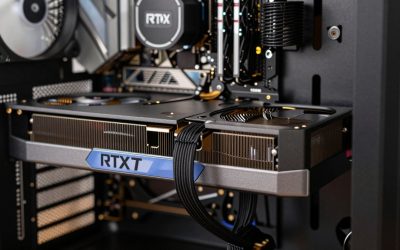
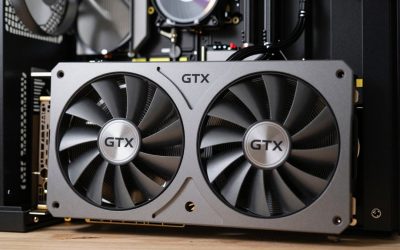
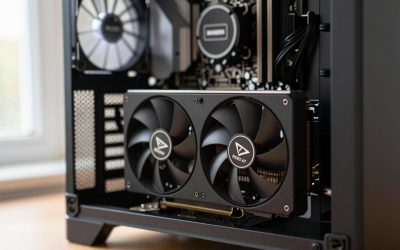
- Top Pick: ASUS TUF Gaming Radeon RX 7900 GRE OC Edition 16GB GDDR6 Graphics Card (PCIe 4.0, HDMI 2.1, DisplayPort 2.1), 3 Year Warranty
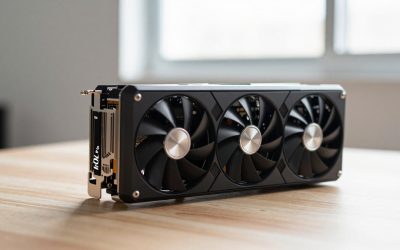
- Best Value: PowerColor Red Devil AMD Radeon 7900 GRE 16GB GDDR6 Graphics Card
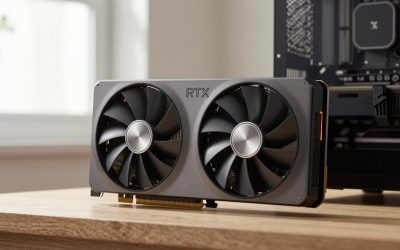
- Premium Choice: ASUS Dual Radeon RX 9060 XT 16GB GDDR6 Gaming Graphics Card | PCIe 5.0, HDMI 2.1b, DisplayPort 2.1a, 2.5-slot design, Axial-tech Fans, 0dB Technology
The newer RX 9060 XT 16GB is slower than the RX 7900 GRE, by roughly 30-40% in raster according to aggregated benchmark data, so the 7900 GRE is the pick for maximum 1440p frame rates if you can find one at a fair price, while the RX 9060 XT 16GB is the better buy for most new builds thanks to its $200 lower MSRP, 100 W lower power, FSR 4 support and stronger ray tracing per unit of hardware.
Both cards have 16 GB of GDDR6, and both come from AMD, which makes the comparison confusing at first glance. The RX 7900 GRE is a cut-down RDNA 3 Navi 31 card that launched globally in 2024 at $549 as a high-end 1440p option. The RX 9060 XT 16GB is an RDNA 4 mainstream card launched in June 2025 at $349. One is a large chip with a wide bus; the other is a small, efficient chip with a newer feature set. Neither is a straight upgrade from the other.
As an Amazon Associate we earn from qualifying purchases at no extra cost to you.




The Numbers Behind Each Card
| Spec | RX 7900 GRE | RX 9060 XT 16GB |
|---|---|---|
| Architecture | RDNA 3.0 | RDNA 4.0 |
| Release date | 27 July 2023 | 4 June 2025 |
| Launch MSRP | $549 | $349 |
| Stream processors | 5120 | 2048 |
| Boost clock | 2245 MHz | 3130 MHz |
| Process | 5 nm | 4 nm |
| TDP | 260 W | 160 W |
| Memory | 16 GB GDDR6 | 16 GB GDDR6 |
| Memory bus | 256-bit | 128-bit |
| Bandwidth | 576.0 GB/s | 322.3 GB/s |
| Cache | 6 MB L2 + 64 MB L3 | 4 MB L2 + 32 MB L3 |
| Interface | PCIe 4.0 x16 | PCIe 5.0 x16 |
| Power connectors | 2x 8-pin | 1x 8-pin |
| Length / width | 276 mm, 2-slot | 267 mm, 2-slot |
| Display outputs | 1x HDMI 2.1a, 2x DP 2.1, 1x USB-C | 1x HDMI 2.1b, 2x DP 2.1a |
The RX 7900 GRE has two and a half times the stream processors, a 256-bit bus and 576 GB/s of bandwidth. The RX 9060 XT counters with much higher clocks, a newer architecture with reworked ray tracing and AI hardware, and a full PCIe 5.0 x16 link. On paper the GRE is the heavyweight, and in raster games that shows.
Raster Performance at 1080p, 1440p and 4K
Benchmark aggregators broadly place the RX 7900 GRE about 30-40% ahead of the RX 9060 XT 16GB, with 3DMark Time Spy scores showing a similar gap of around 36%. One outlier comparison site shows only single-digit differences at 1440p, so results depend heavily on the game selection, but the consensus is clear: the GRE is a tier above.
- 1080p: the gap narrows because the 9060 XT’s high clocks keep it competitive when the CPU sets the pace.
- 1440p: the GRE’s extra bandwidth and shaders pay off; in a demanding title where the 9060 XT averages around 60 FPS at High, the GRE often sits around 80 FPS. Exact numbers vary with settings, CPU and game patch.
- 4K: the 9060 XT’s 128-bit bus becomes a clear limit, and the GRE’s lead is at its largest.
Where RDNA 4 Closes the Gap
Raster is only part of the picture. RDNA 4 brought a significant overhaul of AMD’s ray tracing units, so the gap in ray-traced games is noticeably narrower than in raster, and in some RT-heavy titles the 9060 XT gets close to the GRE despite having far fewer compute units.
The bigger difference is upscaling. FSR 4 is AMD’s machine-learning upscaler and is officially supported only on RDNA 4 cards. It produces clearly better image quality than FSR 3.1, especially in Performance and Balanced modes, which means the RX 9060 XT can run a lower internal resolution and still look good. The RX 7900 GRE is limited to FSR 3.1 upscaling, FSR 3 frame generation and AMD Fluid Motion Frames 2. With upscaling on in a game that supports FSR 4, the 9060 XT’s effective quality per frame improves, though the GRE generally still produces higher raw frame rates at matched settings.
AMD’s newer machine-learning FSR features are targeted at RDNA 4 first, which gives the 9060 XT a longer software runway than the RDNA 3-based GRE.
VRAM and Memory Bandwidth: Same Capacity, Different Headroom
Both cards carry 16 GB, so neither will run out of memory in current games at 1440p, and both handle most titles at 4K with sensible texture settings. The difference is how fast that memory can be fed. The GRE’s 256-bit bus delivers 576 GB/s, nearly 80% more than the 9060 XT’s 322.3 GB/s, and its 64 MB Infinity Cache is twice the size. At 1080p, the 9060 XT’s cache absorbs most memory traffic and the bandwidth gap rarely shows. At 1440p and especially 4K, more data misses the cache, and the narrower bus becomes the main reason the 9060 XT falls further behind. In practice, this makes the 9060 XT 16GB a strong 1080p and solid 1440p card, while the GRE is the one that can stretch into 4K with upscaling. Buyers planning a 4K monitor in the next year or two should weigh this more heavily than the feature list.
Power Draw and PSU Requirements
The 100 W TDP difference is substantial. Sizing as GPU TDP plus CPU plus about 150 W headroom with a 120 W gaming CPU:
- RX 7900 GRE: 260 + 120 + 150 = 530 W, so a quality 650-750 W unit is appropriate.
- RX 9060 XT 16GB: 160 + 120 + 150 = 430 W, so a quality 550 W unit is enough.
The GRE needs two 8-pin connectors; the 9060 XT needs one. Both are 2-slot in reference form, at 276 mm and 267 mm long, though partner cards vary in length and thickness, so measure GPU clearance before buying. The 9060 XT also runs cooler and quieter in compact cases thanks to its lower heat output.
Value: Cost per Frame at MSRP
With the RX 9060 XT 16GB as 100 and the RX 7900 GRE at about 135 in raster:
- RX 7900 GRE: $549 / 135 = about $4.07 per performance point.
- RX 9060 XT 16GB: $349 / 100 = $3.49 per performance point.
At launch pricing, the 9060 XT is about 14% cheaper per frame, before counting FSR 4 or lower power. The RX 7900 GRE has largely left new retail, and used prices are broadly in the $380-$480 range. At around $400 used, the GRE becomes roughly $2.96 per point, which beats a new 9060 XT on raw raster value, at the cost of no warranty, higher power draw and no FSR 4.
Buyer Guide: Pick X If, Pick Y If
| Situation | Better choice |
|---|---|
| 1440p high-refresh raster gaming, 650 W+ PSU | RX 7900 GRE |
| 4K with upscaling | RX 7900 GRE |
| New build under $400 with a warranty | RX 9060 XT 16GB |
| Image quality with upscaling (FSR 4) | RX 9060 XT 16GB |
| Small case or 550 W PSU | RX 9060 XT 16GB |
| Used GRE available well under $420 | RX 7900 GRE for raw performance per dollar |
| Budget stretches to an RX 9070 | RX 9070 beats both on performance and features |
Owners of an RX 7900 GRE should not “upgrade” to an RX 9060 XT 16GB; it would be a step backward in frame rate. The meaningful upgrade path from the GRE is an RX 9070 or RX 9070 XT.
Summary
The RX 7900 GRE is the faster card and remains excellent for 1440p, but it is older, hungrier and missing FSR 4. The RX 9060 XT 16GB delivers less raw performance, yet its price, efficiency and newer feature set make it the more sensible new purchase for most mainstream builds. Choose the GRE only when its used price makes the extra speed cheap and the power supply is ready for it.
Frequently Asked Questions
Is the RX 9060 XT 16GB faster than the RX 7900 GRE?
No. Aggregated benchmarks place the RX 7900 GRE roughly 30-40% ahead in raster games. The 9060 XT narrows the gap in ray tracing and with FSR 4, but the GRE remains the higher-performance card.
Does the RX 7900 GRE support FSR 4?
FSR 4 is officially limited to RDNA 4 cards such as the RX 9060 XT and RX 9070 series. The RX 7900 GRE uses FSR 3.1 upscaling, FSR 3 frame generation and AMD Fluid Motion Frames 2.
What PSU do I need for the RX 7900 GRE?
A quality 650-750 W unit is a safe target with a typical gaming CPU. The card has a 260 W TDP and needs two 8-pin PCIe connectors. The RX 9060 XT 16GB is comfortable on a quality 550 W unit with one 8-pin.
Is upgrading from an RX 7900 GRE to an RX 9060 XT worth it?
No, that would be a downgrade in frame rates. The only gains would be FSR 4, lower power and somewhat better efficiency in ray tracing. The RX 9070 or RX 9070 XT is the real upgrade path.
Does PCIe 5.0 on the RX 9060 XT matter?
Very little for gaming today. The card uses a full x16 link, so it performs well even on PCIe 4.0 or 3.0 motherboards, and with 16 GB of VRAM it rarely needs to move large amounts of data over the bus.
Ready to decide? Our #1 pick for 2026 is the Architecture.
Live price & availability on Amazon.