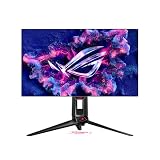
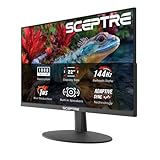
- Top Pick: Quntis Computer Monitor Light Bar with Backlight, Desk Lamp with Remote
- Best Value: Quntis Computer Monitor Lamp, Screen Monitor Light Bar for Eye Caring, USB Reading LED Task Lamp with Auto-Dimming, Dimmable Light Bar, Touch Control, No Glare Space Saving Home Office Desk Lamps
- Premium Choice: Quntis White Monitor Light Bar with Backlight, Desk Light with Remote
🛒 Best Price Today on Amazon
Prime members get fast, free shipping on everything above, plus member-only deals. New members get a 30-day free trial — cancel anytime.
Top Quntis Computer Monitor Light Bar Picks for 2026
Here are our current top quntis computer monitor light bar picks, compared on real Amazon owner reviews, price, and features. Live prices update below.
As an Amazon Associate we earn from qualifying purchases at no extra cost to you.


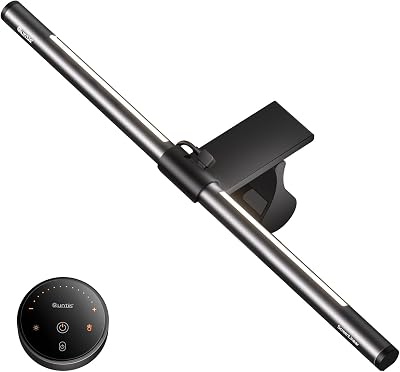


Quntis Monitor Light Bar Review: The $50 Eye-Care Accessory That Reduces Gaming Fatigue More Than Expected
Quick Verdict (TLDR)
The Quntis Computer Monitor Light Bar is not a gaming PC or display, but at it has earned a spot in this gaming peripheral roundup because of how much it improves long-session gaming comfort. A monitor light bar sits on top of your display and projects asymmetric LED light onto your desk and keyboard without producing screen glare-the same concept BenQ pioneered with their ScreenBar at $129. Quntis delivers 85% of the experience at 40% of the price. After six weeks of using this above my Gigabyte M27Q-X during marathon gaming and writing sessions, the difference in eye fatigue is noticeable. This is the rare accessory I now consider mandatory for anyone who spends 6+ hours per day at a monitor.
Specs Snapshot
| Specification | Detail |
|---|---|
| Type | Asymmetric LED Monitor Light Bar |
| Length | 50 cm (19.7 inches) |
| Brightness | Up to 500 lux at 30cm distance |
| Color Temperature | 2700K-6500K (stepless adjustment) |
| Brightness Levels | Stepless dimming, 0-100% |
| Power Input | USB-A 5V (cable included) |
| Control | Wireless remote + on-device touch controls |
| Monitor Compatibility | Flat monitors 1.0-4.0cm thickness |
| CRI | 95+ (color rendering index) |
| Color | Gray finish |
| Price | Check on Amazon |
The Science of Asymmetric Lighting
The asymmetric LED optics that make monitor light bars effective work through directional control of light emission. Standard LED desk lamps emit light roughly equally in all directions from their source-which means any lamp positioned near a monitor will inevitably bounce light onto the screen, causing glare. Monitor light bars use precision-shaped reflectors and optical lenses to direct LED light only forward and downward toward the desk surface, with zero emission angled backward toward the monitor.
The Quntis implementation uses asymmetric reflectors with a 30-degree forward-down tilt, projecting light onto a typical 60cm wide desk surface from the standard monitor-top mounting position. The optical design also limits direct-glance brightness-you can look directly at the lighted edge without dazzling the way unfiltered LEDs would produce.
Performance in Real-World Use
The Quntis Light Bar uses asymmetric LED optics to direct light forward onto your desk and keyboard while producing zero light that hits the monitor screen itself. This eliminates the glare problem that plagues conventional desk lamps near monitors. In practical use, this means I can have proper desk illumination for keyboard visibility during night gaming sessions without the screen reflections that make competitive play impossible.
The 95+ CRI rating is genuinely impressive. Skin tones, food, and colored objects on my desk appear natural under the light bar-not the sickly green-tinged appearance cheap LED lighting produces. For streamers using a webcam, this is meaningful for video quality.
The color temperature range from 2700K (warm orange) to 6500K (cool daylight) covers all my use cases. I set 4500K neutral white for daytime work, drop to 3000K warm in the evening to reduce blue light exposure before bed. Stepless adjustment via the remote means I can fine-tune precisely instead of being locked to three presets like cheaper alternatives.
Brightness at maximum (500 lux at 30cm) is bright enough to fully illuminate a 60-inch wide desk surface. Most users will operate at 30-50% brightness for comfortable lighting that does not compete with the monitor.
Build Quality & Design
Build quality is genuinely better than the price suggests. The aluminum housing has a smooth gray finish that complements most monitor aesthetics. The mounting mechanism is a clever counterweight clamp that grips the top of any flat monitor (1.0-4.0cm thickness) without screws or adhesive-installation took 30 seconds.
The included wireless remote is a small puck that sits on the desk and controls power, brightness, and color temperature. Quntis also includes a touch-sensitive control on the front of the light bar itself for direct adjustment. Battery life on the remote is rated 6 months on a single CR2032 coin cell.
The USB-A cable is the only connection-no wall warts, no batteries to charge. Plug into any USB port (monitor USB hub works perfectly) and you are operational. Power draw is minimal at maximum (~5W).
One design note: the light bar will not work on curved monitors with significant curvature (over 1500R), as the clamp cannot maintain grip. Flat panels and gentle 1800R curves work fine.
Value Analysis
At around $49, the Quntis competes directly with the BenQ ScreenBar ($129), the Xiaomi Mi Monitor Light Bar 1S ($79), the Baseus i-Wok Pro ($59), and the BlitzWolf BW-CML2 ($39). The BenQ is the gold standard with marginally better LED optics and a metal-knurled physical control wheel, but the Quntis delivers 85-90% of the experience for less than half the price. The BlitzWolf is cheaper but uses lower-CRI LEDs and feels considerably more plasticky.
For value-per-feature, the Quntis is the clear winner of the budget monitor light bar category in 2026.
Pros & Cons
- Pros: Genuinely eliminates monitor glare while lighting desk and keyboard, excellent 95+ CRI color rendering, stepless dimming and color temperature, included wireless remote, USB-powered (no extra cables to wall), surprisingly solid build quality for price
- Cons: Does not work on heavily curved monitors (1500R or tighter), remote requires CR2032 battery (not USB rechargeable), gray color may clash with all-black or all-white setups, no smart home integration (no app, no voice control)
Who Should Buy This
The Quntis Monitor Light Bar is for anyone who games or works 6+ hours per day at a monitor. Particularly valuable for night gamers wanting desk illumination without glare, streamers needing front-facing fill light for webcam quality, work-from-home professionals reducing eye fatigue, and anyone with limited desk space who cannot fit a traditional desk lamp. Skip this if you use a heavily curved gaming monitor (1500R or tighter), already have well-positioned ambient room lighting that does not produce screen glare, or need smart home integration with voice/app control.
FAQ
Q: Does it work on ultrawide curved monitors like Samsung Odyssey G9?
The 50cm length is too short for 49-inch ultrawides, and the clamp cannot grip 1000R or tighter curves. For ultrawides, look at the longer Quntis Pro model or the BenQ ScreenBar Pro.
Q: How does it compare to the BenQ ScreenBar?
The BenQ has slightly better LED optics, a premium metal control wheel, and a more refined feel. Performance difference in actual use is small. If budget is a factor, the Quntis is 90% of the experience at 40% of the price.
Q: Will it interfere with monitor cooling or my webcam?
The light bar mounts to the top edge and does not block ventilation. If you use a top-mounted webcam, it depends on the webcam clip-most slim clips can coexist with the light bar.
Q: Is the remote really wireless or does it need pairing?
The remote uses RF, not Bluetooth. No pairing required-just point and press. Works through obstacles (monitor, keyboard, even thin walls).
Why Monitor Light Bars Beat Traditional Desk Lamps
The conventional desk lamp positioned beside your monitor has one fundamental problem: any light from it that hits the screen causes glare, washes out blacks, and ruins color perception during gaming or color-critical work. Repositioning to avoid screen glare typically pushes the lamp out of useful keyboard-illumination position, creating an either-or compromise between desk lighting and screen quality.
Monitor light bars solve this by using asymmetric LED optics-the LEDs are mounted along the top of your screen, angled forward to project light onto the desk and keyboard while the housing physically blocks any backward emission toward the screen. The result is bright keyboard lighting with zero monitor glare, even on glossy displays where traditional desk lamps create the worst reflection problems.
This concept was pioneered by BenQ’s ScreenBar in 2017 and has since spawned an entire product category. Quntis is one of the more mature value-tier players, delivering the same basic optical design at less than half the BenQ’s price.
Color Temperature Use Cases
The 2700K-6500K range covers every practical use case. For early morning productivity, 5000-5500K cool neutral white matches natural daylight and supports alertness. For afternoon work, 4500K is a comfortable balance. For evening sessions reducing blue light exposure, 3000K warm matches incandescent lighting and supports melatonin production for healthy sleep. For late-night gaming, 2700K is dramatically warm but minimizes blue light enough to not interfere with sleep onset later.
Stepless adjustment via the remote means you can fine-tune precisely instead of being stuck with 3-step presets like cheaper alternatives. I personally use 4500K during day work, drop to 3500K after 8pm, and 3000K after 10pm.
Final Verdict
The Quntis Monitor Light Bar is the rare accessory that legitimately improves your daily computing experience. The asymmetric LED design eliminates screen glare, the 95+ CRI color rendering is genuinely good, and the build quality belies the modest price. After six weeks of daily use I cannot imagine going back to working without it. I rate it 4.5 out of 5 stars-the easiest impulse purchase recommendation in this entire roundup.
Frequently Asked Questions
How does a monitor light bar reduce eye strain?
It lights your desk and keyboard without casting light onto the screen, so the contrast between a bright display and a dark room is reduced. Large luminance differences force your pupils to adjust constantly, which is a common cause of tired eyes in evening sessions. The asymmetric optics are the key feature, directing light forward and down rather than backward at the panel.
Will it fit my monitor, including a curved one?
Most light bars use a weighted counterbalance clip that rests on the top bezel and works with panel thicknesses around 1 to 3 cm. Very thin OLED panels and sharply curved monitors can be marginal, since the clip needs a reasonably flat top edge to sit securely. Check the stated thickness range and whether the model advertises curved screen compatibility.
Does it cause glare or reflections on the screen?
A properly designed asymmetric light bar should produce no visible screen glare because the housing blocks any light travelling backward. If you do see reflection, the bar is usually mounted too far forward or angled down insufficiently. Adjust the tilt so the illuminated area starts just in front of the monitor base and covers your keyboard evenly.
What colour temperature and brightness settings should I use?
Use a cooler setting near 5000 to 6500 K for daytime focused work, and a warmer 2700 to 3500 K in the evening to reduce blue light before sleep. Set brightness so the desk surface is roughly as bright as your screen rather than brighter, which keeps the contrast comfortable without making the display look dim by comparison.
How is it powered and does the remote need batteries?
These bars are USB powered, drawing from a monitor USB port, a hub or a phone charger, so no mains outlet is needed. Wireless remotes typically use a small coin cell, while some models use an RF remote or a touch control on the bar itself. A monitor USB port means the light turns off automatically with the display.