Where to start: define your resolution and refresh rate first
The single biggest mistake in GPU shopping is buying for a monitor you don’t have yet. A card that’s overkill at 1080p/60Hz might choke at 4K/144Hz. Figure out your actual display situation before looking at a single benchmark chart. If you’re on a 1080p 60Hz or 1440p 75Hz panel, you don’t need the most expensive card on the shelf, and spending the difference on a better CPU, more RAM, or a faster SSD will usually improve your day-to-day experience more.
- Where to start: define your resolution and refresh rate first
- VRAM matters more than it used to
- Realistic tiers by resolution
- Upscaling changes the math, but read the fine print
- Power and cooling trade-offs people skip
- When the cheaper card is the right call
- Buying used or last-gen
- Matching the card to the rest of the build
VRAM matters more than it used to
Texture packs, ray tracing buffers, and upscaling workloads have pushed VRAM requirements up faster than most people expect. An 8GB card is fine for 1080p esports titles and older AAA games on medium-high settings, but it will stutter in newer titles at 1440p with textures maxed, because the game starts swapping assets in and out of VRAM mid-frame. That stutter is a telltale sign of VRAM starvation, not a weak GPU core. If you plan to keep a card for 4+ years, 12GB is a safer floor for 1440p, and 16GB is the comfortable number for 4K or heavy modding (Skyrim/Fallout texture mods eat VRAM for breakfast).
Realistic tiers by resolution
Here’s the honest breakdown of what tier of card you actually need, independent of brand or specific model:
| Resolution / Target | GPU Tier Needed | VRAM Floor | Notes |
|---|---|---|---|
| 1080p / 60Hz | Entry/mid-range | 8GB | Most games run comfortably; CPU often the bottleneck here |
| 1080p / 144Hz+ (competitive) | Mid-range | 8GB | Raw frame rate matters more than ray tracing features |
| 1440p / 60-100Hz | Upper-mid-range | 12GB | Sweet spot for price-to-performance right now |
| 1440p / 144Hz+ | High-end | 12-16GB | Needs a CPU that won’t bottleneck frame rate |
| 4K / 60Hz | High-end | 16GB | Upscaling (DLSS/FSR) does a lot of the heavy lifting |
| 4K / 120Hz+ | Flagship | 16GB+ | Diminishing returns; also check your PSU and case airflow |
If your target lands in the “upper-mid-range” or “high-end” row, that’s where most people should actually be shopping. You can browse what’s currently available by tier through a 1440p graphics card search rather than fixating on a single model name that may be out of stock or repriced by the time you read this.
Upscaling changes the math, but read the fine print
DLSS, FSR, and XeSS let a card render at a lower internal resolution and upscale, often with a visual quality hit that’s hard to spot in motion but obvious in screenshots. This matters for buying decisions because a “4K card” on paper is often really a “4K-with-upscaling” card. That’s not a scam, it’s just how the performance numbers get hit. The failure mode to watch for is relying on frame generation to make a genuinely underpowered card feel fast — latency goes up, and in fast-paced games you’ll feel the disconnect between what’s on screen and when your input registers, even if the frame counter looks great.
Power and cooling trade-offs people skip
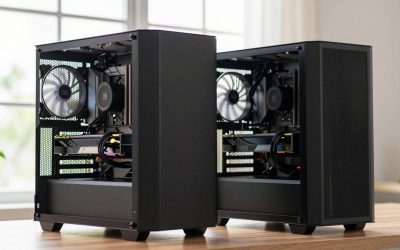
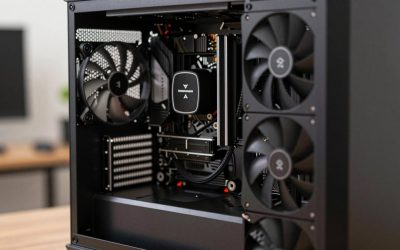
Bigger cards pull more power and dump more heat into your case. A 300W+ GPU in a cramped mid-tower with one intake fan will run hotter and louder than the same card in a case with good front-to-back airflow. Before buying a high-end card, check three things: your PSU’s actual wattage and age (a 650W unit from six years ago may not deliver its rated power cleanly anymore), your case’s fan count and placement, and whether the card physically fits — some flagship cards are over 320mm long and will hit a front fan or hard drive cage in smaller cases. If you’re unsure on cooling, a couple of extra case fans is a cheaper fix than people assume; look at case fans before assuming you need a bigger case entirely.
When the cheaper card is the right call
If you’re gaming at 1080p on a 60-75Hz monitor, stop reading spec sheets for anything above the mid-range tier. You will not see the benefit, full stop. The extra money is better spent on a 1TB+ NVMe SSD (load times matter more than you’d think) or saved outright. Similarly, if you’re running an older CPU (anything more than two generations behind current), a top-tier GPU will sit partially idle waiting on the processor in CPU-bound games like strategy titles or simulation games. Pairing a flagship GPU with a budget CPU is one of the most common wastes of money in PC building — the GPU benchmarks great in isolation but underperforms in your actual rig.
Buying used or last-gen
Previous-generation cards, once the new lineup launches, often drop 15-25% in price while still handling 1440p gaming fine. The risk with used cards specifically is mining wear or thermal paste that’s been baked dry — ask for idle and load temps if buying secondhand, and budget for a repaste if the seller can’t tell you. Retail last-gen (new, just discounted) carries none of that risk and is often the best value window in the entire GPU market. If you’re flexible on having the newest architecture, this is where to find it; a previous generation GPU search will usually surface current discounts on recently-superseded cards.
Matching the card to the rest of the build
A GPU doesn’t perform in a vacuum. It’s bottlenecked by your CPU, limited by your PSU, throttled by your case airflow, and capped by your monitor’s refresh rate. Buy for the weakest link in that chain, not the number on the GPU box.