If you’ve seen the Nvidia L40s mentioned alongside GeForce RTX cards and assumed it’s some kind of flagship gaming GPU, it isn’t. The L40s is a datacenter and workstation card built for AI inference, 3D rendering farms, and virtualized graphics in enterprise environments. It doesn’t ship with a gaming driver stack, it’s not sold through normal retail channels, and it will not get you better frame rates per dollar than a card actually designed for gaming. This article exists mainly to tell you that clearly, and then to point you toward what you probably actually want.
What the L40s actually is
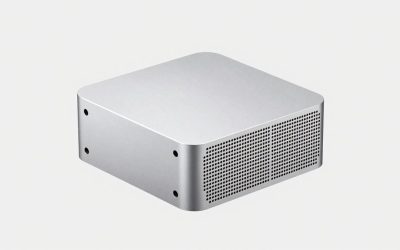
The L40s is built on the same Ada Lovelace architecture as the RTX 40-series gaming cards, but it’s a different product line entirely. It’s a passively cooled, full-height PCIe card meant to sit in a server chassis with its own forced airflow, not a case fan blowing on it. It carries 48GB of GDDR6 memory without ECC-locked HBM, no display outputs worth using for desktop gaming, and a price tag in the thousands of dollars, sold to businesses through Nvidia’s enterprise partners rather than Newegg or Amazon.
It’s aimed at three workloads: AI inference and fine-tuning for smaller models, professional 3D rendering (think Omniverse, VFX pipelines), and GPU virtualization where one physical card gets split across many virtual desktops. None of that overlaps with “what should I put in my gaming PC.”
Why you might see it mentioned near gaming cards
Because it shares the Ada Lovelace GPU die family with the RTX 4090 and RTX 6000 Ada, tech coverage sometimes lumps them together in architecture discussions. Spec sheets look superficially similar: similar CUDA core counts to the top-end Ada chips, similar process node, similar RT and Tensor core design. But clock behavior, cooling, driver support, and street pricing make it a completely different purchase decision.
How it stacks up against actual gaming and workstation options
This table is here to make the gap concrete, not to suggest you’d ever cross-shop these.
| Card | Intended use | Memory | Cooling | Typical price | Buy for gaming? |
|---|---|---|---|---|---|
| Nvidia L40s | AI inference, rendering, VDI in servers | 48GB GDDR6 | Passive, needs server airflow | $7,000-$8,500+ | No |
| RTX 4090 (consumer) | Gaming, content creation, local AI experimentation | 24GB GDDR6X | Active, desktop case fans | $1,600-$2,000 | Yes |
| RTX 6000 Ada (workstation) | CAD, VFX, ML training on a desktop workstation | 48GB GDDR6 | Active, desktop blower | $6,500-$7,500 | Technically, but overkill and expensive for it |
The practical takeaway: if someone quoted you an L40s for a gaming build, that’s a sign to get a second opinion, not a sign you’re getting a deal on enterprise silicon.
Who actually buys an L40s
IT departments and cloud providers building out inference capacity, render farm operators, and companies running virtual desktop infrastructure for remote workers. If you’re in one of those roles and landed here, the real research you need is around server compatibility, Nvidia’s vGPU licensing costs, and whether your workload is memory-bound or compute-bound, not a GPU shopping guide written for gamers. Talk to an Nvidia enterprise partner or your server vendor directly.
What to buy instead if you’re building a gaming or creator PC
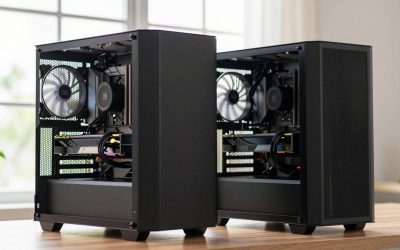
For most people who end up on this page, there are three realistic paths depending on budget and use case.
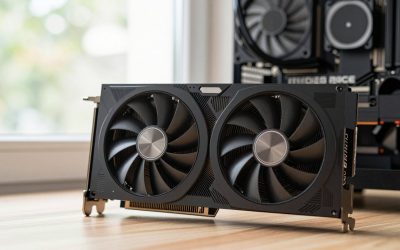
If you want the best single-card experience for 4K gaming and don’t mind paying for it, a current-generation flagship consumer card is the right call, and you can compare current listings through this RTX 4090 search. It’s a legitimately great card for both gaming and light local AI work, which is the closest a normal person gets to L40s-adjacent capability without enterprise pricing.
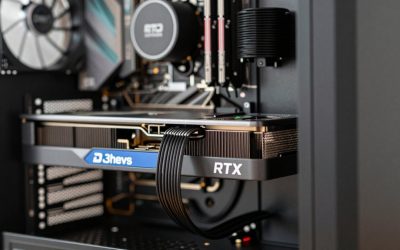
If you’re doing both gaming and real content creation or local AI model work on a budget that isn’t bottomless, the mid-tier of the current lineup is the sensible middle ground. Check what’s currently available through this RTX 4070 Super search before assuming you need to spend flagship money.
If you’re actually running a small home lab or local AI experimentation setup and keep seeing the L40s mentioned in AI tutorials, you don’t need one. Most local LLM inference for personal use runs fine on a 16GB-24GB consumer card, and you’ll spend a fraction of the cost. Browsing a 24GB VRAM graphics card search will get you something usable for learning and small-scale projects.
The failure mode to avoid here is overbuying because a spec sheet looked impressive. A gaming PC doesn’t benefit from 48GB of unused VRAM sitting idle while frame rates are bottlenecked by the CPU or the cooling solution the card wasn’t designed for.
FAQ
Can I buy an L40s for my gaming PC?
Not practically. It’s sold through enterprise channels, it has no active cooling for a desktop case, and its drivers aren’t built around gaming performance. Even if you found one, it would underperform a consumer flagship card in games.
Is the L40s faster than an RTX 4090?
In gaming workloads, no, the 4090 will generally win because it’s clocked and driver-tuned for that purpose. In AI inference and professional rendering at scale, the L40s has advantages from its memory capacity and enterprise software stack, but that’s a different comparison than frame rates.
Why does the L40s have so much VRAM if it’s not for gaming?
Large memory pools matter for running bigger AI models and handling multiple virtual desktop sessions simultaneously. No current game actually uses anywhere near 48GB, so that capacity would go to waste in a gaming context.
I saw an L40s listed cheap online, is it a good deal?
Be cautious. A legitimately low price on enterprise hardware outside normal business channels is a common sign of a scam, a stolen or mislabeled part, or a card that’s been damaged or improperly refurbished. Buy enterprise GPUs through authorized partners only.