Nvidia Fast Sync is a frame-synchronization option buried in the Nvidia Control Panel that most people never touch. It sits between V-Sync and raw uncapped rendering, and it solves a specific problem: tearing at high frame rates without the input lag that regular V-Sync adds. If you’re running a game well above your monitor’s refresh rate and you don’t have a G-Sync or FreeSync display, Fast Sync is worth knowing about. If you already have a variable refresh rate monitor, it mostly isn’t.
What Fast Sync actually does
Normal V-Sync locks your frame rate to your monitor’s refresh rate and queues frames in a buffer. That queue is what causes the lag: the GPU renders ahead, frames stack up waiting to be displayed, and what you see is slightly behind what the game engine is actually doing.
Fast Sync throws that queue model out. The GPU keeps rendering frames as fast as it can, uncapped, but a separate mechanism picks the most recently completed frame and sends only that one to the display at the monitor’s refresh interval. The extra frames the GPU produced in between get discarded. You get a torn-free image without the backed-up buffer, at the cost of the GPU doing more rendering work than actually makes it to the screen.
That last part matters. Fast Sync is not free. It only makes sense when your GPU has frame rate to spare, meaning you’re already rendering well above your refresh rate. If you’re sitting at 70fps on a 60Hz monitor, there isn’t enough headroom for Fast Sync to do its job cleanly, and you’ll want normal V-Sync or a cap instead.
When Fast Sync is the right call
The classic case is an older or less demanding game running at 150-300fps on a 60Hz or 75Hz monitor, with no variable refresh rate support. Think competitive shooters on lower settings, or an older title your current card chews through easily. Here, standard V-Sync would cap you at 60fps with noticeable lag, and no sync at all gives you tearing. Fast Sync gives you a clean image close to the responsiveness of uncapped rendering.
It’s also useful if your monitor doesn’t support G-Sync or FreeSync at all. Budget monitors and older panels still exist in a lot of setups, and Fast Sync is a reasonable way to get tear-free output from them without buying new hardware.
It’s a poor fit for GPU-bound AAA games where you’re struggling to hit your refresh rate in the first place. Making the GPU render extra throwaway frames when it’s already working hard just wastes performance and adds heat and fan noise for no visual benefit.
Fast Sync vs V-Sync vs G-Sync/FreeSync
| Method | Tearing | Input lag | Best use case |
|---|---|---|---|
| No sync | Yes, visible | Lowest | Competitive play where tearing doesn’t bother you |
| Standard V-Sync | None | Highest | Non-competitive games, fixed refresh monitors |
| Fast Sync | None | Low, close to uncapped | High fps on a fixed-refresh monitor, no FreeSync/G-Sync |
| G-Sync / FreeSync | None | Low | Any game, any frame rate, if your monitor supports it |
If you already own a variable refresh rate monitor, enabling G-Sync or FreeSync and leaving Fast Sync off is the better default. Variable refresh adjusts the display to match the GPU’s output instead of discarding frames, so you’re not wasting rendering work. Fast Sync is really a workaround for not having that hardware, not an upgrade over it.
How to turn it on
Open the Nvidia Control Panel, go to Manage 3D Settings, and find the Vertical Sync (or Monitor Technology, depending on driver version) option. Set it to Fast instead of On or Off. You can set this globally or per-game under Program Settings, and per-game is the better habit since Fast Sync only helps in the specific scenario described above. Leave V-Sync off inside the game’s own graphics menu so the two don’t conflict.
Worth noting: Fast Sync is Nvidia-specific. AMD’s equivalent is called Enhanced Sync, and it works on a similar principle, discarding extra frames rather than queuing them.
The hardware side of this
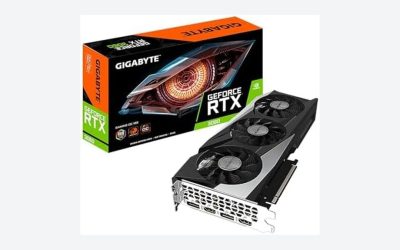
Fast Sync doesn’t require anything special, but it only matters if your GPU is capable of pushing well past your monitor’s refresh rate in the games you play. If you’re shopping for a card specifically to get high frame rates on a 1080p 144Hz or 240Hz monitor, a card like the ones you’d find searching RTX 4060 graphics cards will comfortably clear 60fps in older or lighter titles, which is exactly the range where Fast Sync is useful.
If you’re instead trying to solve tearing permanently and don’t mind spending a bit more, buying a G-Sync compatible monitor or a FreeSync panel is the more durable fix. It works across your whole frame rate range, not just when you’re far above refresh rate, and it doesn’t cost you the wasted rendering overhead Fast Sync carries. For most buyers upgrading a monitor is a better long-term use of money than relying on Fast Sync indefinitely, but if you’re not in the market for new hardware right now, Fast Sync costs nothing and takes thirty seconds to enable.
FAQ
Does Fast Sync reduce my frame rate?
Not the number your GPU renders internally, but the frame rate you actually see on screen gets capped to your monitor’s refresh rate, same as any sync method. The GPU keeps rendering extra frames behind the scenes that never get displayed.
Will Fast Sync increase my GPU temperature or power draw?
Yes, somewhat. Because the GPU keeps rendering at full speed even though only a fraction of frames get shown, it works harder than it would with a frame rate cap. If you’re on a laptop or a smaller cooler, pairing Fast Sync with an in-game frame rate limiter set slightly above your refresh rate can reduce the wasted work.
Can I use Fast Sync with G-Sync enabled?
Nvidia’s drivers don’t really let you run both meaningfully at once, and there’s no reason to. G-Sync already removes tearing and does it more efficiently than Fast Sync. Use G-Sync when available and save Fast Sync for displays that don’t support it.
Is Fast Sync the same as frame rate capping?
No. A frame rate cap tells the GPU to stop rendering once it hits a target number, saving power. Fast Sync lets the GPU keep rendering uncapped and just discards the frames that don’t get displayed. You can actually combine the two: cap your frame rate to something well above your refresh rate, then let Fast Sync handle the display sync, which gets you the tear-free benefit with less wasted GPU effort.