Multi Instance GPU, or MIG, is Nvidia’s way of carving a single physical GPU into several smaller, fully isolated GPUs that behave like separate pieces of hardware to whatever software is running on them. It shipped first on the A100 and is now available on the H100, H200, and a handful of other data center parts. If you’ve been reading about it and wondering whether it has any relevance to a gaming rig or a home workstation, the short answer is almost none. This article is for the people who do need to know: homelab builders experimenting with AI workloads, small teams renting GPU time, and anyone trying to figure out if the Ampere or Hopper card they’re eyeing actually supports it before they spend real money.
What MIG actually does
Normal GPU sharing, the kind you get with time-slicing or just running multiple processes on one card, means jobs take turns. One process can still hog memory bandwidth or crash in a way that affects its neighbors. MIG is different: it partitions the GPU at the hardware level into up to seven instances, each with its own dedicated slice of memory, cache, and compute cores. One instance can fall over without touching the others. From the perspective of a container or VM, each MIG instance looks like its own GPU with its own PCIe-like identity.
That isolation is the entire point. It’s built for scenarios where you’re running several independent workloads, say, inference for five different models, or five students in a class, on one expensive card, and you don’t want one noisy job starving the rest.
Who actually needs this
If you’re gaming, rendering, or doing single-user CUDA work, MIG does nothing for you. It only matters when:
You’re running inference serving for multiple models or multiple tenants on one GPU and need predictable, isolated performance per job. You’re in a lab or small company sharing one or two high-end accelerators across several researchers and want to stop them from quietly stepping on each other’s memory. You’re building out a GPU cluster for Kubernetes and want to schedule fractional GPUs instead of whole ones.
If none of that describes your situation, you don’t need to think about MIG at all. A single gaming GPU, even a high-end one, runs one game or one render job just fine without any partitioning.
Which cards support it
This is the part that trips people up, because MIG is not a software feature you can enable on anything. It requires specific silicon, and it is deliberately excluded from consumer cards.
| GPU family | MIG support | Typical use |
|---|---|---|
| A100 (40GB/80GB) | Yes, up to 7 instances | Data center, cloud instances |
| H100 / H200 | Yes, up to 7 instances | Data center, cloud instances |
| A30 | Yes, up to 4 instances | Data center, inference |
| RTX 6000 Ada, A6000 | No | Workstation, no MIG |
| RTX 4090 / 5090 and other GeForce cards | No | Gaming, content creation |
Notice the pattern: MIG lives on Nvidia’s data center silicon (A100, H100, A30, and a few others), not on anything with a GeForce badge and not even on the professional RTX workstation cards. If someone tells you they’re running MIG on an RTX card, they’re mistaken, or they mean something else like simple process sharing.
What to use instead if you don’t have data center hardware
Most people reading about MIG actually just want to share one GPU across multiple jobs or users, and there are more accessible ways to do that if you’re not buying A100s.
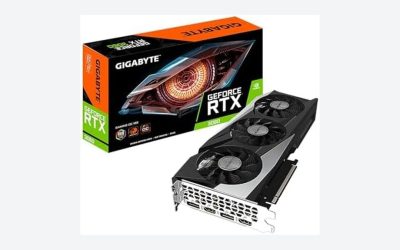
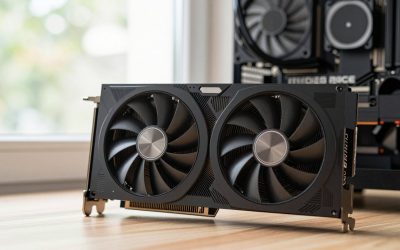
If you’re running a home AI rig with a single consumer card, time-slicing through your container runtime or just scheduling jobs sequentially will cover 90% of cases. CUDA MPS (Multi-Process Service) gives you some of the concurrency benefit without hardware partitioning, though without MIG’s hard isolation. For actual multi-tenant isolation on a budget, running two or three mid-range cards instead of one big one is often more practical than chasing MIG hardware, since you get real physical separation and more total VRAM for less money than a single A100. If you’re assembling a multi-GPU workstation for local AI experimentation, a pair of RTX 4090 graphics cards gets you more usable throughput per dollar than a single data center card most hobbyists will never get access to anyway.
If you’re actually in the market for MIG-capable hardware
Buying an A100 or H100 outright is a different conversation than buying a gaming GPU. These cards are expensive, power-hungry, often require specific server chassis and cooling, and are usually bought used or through cloud providers rather than off a retail shelf. Before buying used data center silicon, check the actual MIG profile support for your target model (not every instance count works on every memory configuration) and confirm driver and firmware compatibility, since consumer-grade motherboards and PSUs often aren’t a good match for these cards’ power and cooling demands.
For the overwhelming majority of people landing on this topic, renting MIG-partitioned instances from a cloud provider by the hour is far more sensible than owning the hardware. You get to test whether MIG solves your isolation problem before committing capital to a card that depreciates fast and that you may only need occasionally.
If your actual goal is a capable local machine for gaming and some AI side projects, skip MIG-specific shopping entirely and look at GeForce RTX graphics card find alternatives options instead, paired with enough system RAM and a 1200W power supply if you’re planning to add a second card later. That combination will outperform worrying about MIG for anything short of serving production inference traffic to multiple customers.
FAQ
Can I enable MIG on my RTX 3090 or 4090?
No. MIG is restricted to specific Nvidia data center GPUs like the A100, H100, and A30. GeForce and even professional RTX workstation cards don’t support it, regardless of driver version.
Does MIG improve gaming performance?
It has nothing to do with gaming. MIG partitions a GPU for isolated multi-user or multi-job compute workloads, not graphics rendering, and the hardware that supports it isn’t designed or sold for gaming anyway.
Is MIG the same as SLI or multi-GPU setups?
No, it’s the opposite. SLI and multi-GPU combine multiple physical cards to work on one task. MIG splits one physical card into multiple independent, isolated instances for separate tasks.
Is it worth buying a used A100 just to try MIG at home?
Usually not. Used A100s are costly, power-hungry, and need server-grade infrastructure. Renting MIG-enabled instances from a cloud provider for a few hours is a cheaper way to find out if it actually solves your problem before buying hardware.