- Top Pick: SteelSeries QcK Heavy XXL
- Runner-up: ZOWIE G-SR III
- Also consider: Logitech G840 XL
Low-sensitivity aiming changes what a mousepad has to do. At a low setting, a single turn or a long flick can move the mouse across most of the desk, so the pad must give the arm room to travel without running out of space or catching on an edge. A small pad forces constant repositioning, and every lift breaks aim and costs time in a duel often decided by a single shot.
The right pad also has to balance glide and stopping power. Low-sensitivity players use large arm movements for big turns and fine wrist adjustments for small corrections, so the surface must let the mouse start smoothly, then slow down predictably as the crosshair reaches the target. A pad that is too fast leads to overshooting, while one that is too rough makes micro-adjustments feel sticky over a long session.
As an Amazon Associate, we earn from qualifying purchases.
Quick Answer
For low-sensitivity aiming, choose a large control cloth pad at least 450 mm wide, ideally an XXL desk pad around 900 by 400 mm. The SteelSeries QcK Heavy XXL and ZOWIE G-SR III suit most players best because their textured cloth adds friction for stopping, their rubber bases stay planted during wide arm sweeps, and their surfaces stay consistent across long flicks.
Why Low-Sensitivity Players Need a Large Pad
Sensitivity is usually described by how far the mouse must travel to turn a full circle in game. At low sensitivity, that distance can be 40 cm, 50 cm, or more, so the pad must be wider than the full turning distance, with spare room for the keyboard, the arm, and the natural arc of a flick.
Depth matters too. Low-sensitivity aiming uses the whole forearm, so the pad should support the arm well past the wrist. A shallow pad leaves the forearm on bare desk, which creates drag as the arm moves.
A thicker pad smooths out desk imperfections and cushions the wrist, while a very thin pad feels faster but offers less comfort. Most low-sensitivity players do well with a pad between 3 mm and 6 mm thick.
Control Versus Speed Surfaces for Big Arm Movements
Control surfaces use a rougher, more textured cloth weave that creates friction. That friction helps the mouse stop exactly where the player intends, especially after a fast flick. The initial push takes slightly more effort, but the payoff is a stable crosshair during tracking and small corrections.
Speed surfaces use a tighter, smoother weave that lets the mouse glide with less resistance. They feel effortless during long sweeps, but they demand more control to stop on target. At low sensitivity, a speed pad can work for players with very steady hands, yet many find that it turns small overshoots into missed shots. A balanced surface, slightly toward control, is the safer starting point.
Humidity matters too. Cloth pads absorb moisture, and a surface that changes friction as it warms up will feel different in the first round than in the fifth. A humidity-resistant coating or a dense weave holds glide better, and a stitched edge stops the cloth from fraying at the border.
SteelSeries QcK Heavy XXL

The SteelSeries QcK Heavy XXL is a classic choice for low-sensitivity aiming because it combines a very large surface with a thick, stable base. At 900 by 400 mm, it covers the full sweep of a low-sensitivity turn, and its 6 mm thickness cushions the wrist. The micro-woven cloth gives a controlled glide with clear stopping power, which suits players who flick hard and need the mouse to settle quickly.
Its non-slip rubber base keeps the pad planted during aggressive arm movements, and the large size leaves room for the keyboard on the same surface. This is a strong default pick that works with almost any mouse sensor.
Specs
- Surface: Micro-woven cloth with a controlled glide
- Size: 900 by 400 mm, XXL
- Thickness: 6 mm
- Base: Non-slip rubber
- Edges: Unstitched
- Best for: Low-sensitivity FPS players who want maximum space and stopping power
ZOWIE G-SR III

The ZOWIE G-SR III is built for control. Its cloth surface has a firm, textured feel that adds friction without feeling rough, so the mouse starts smoothly and stops with confidence. The 470 by 390 mm size is large enough for most low-sensitivity players, while its squarer shape gives more vertical room than a long desk pad.
ZOWIE designed this pad with humidity resistance in mind, so the glide stays consistent when hands get warm during long matches. The high-density rubber base keeps the pad flat, and the stitched edges protect the cloth where the wrist rests.
Specs
- Surface: Humidity-resistant cloth with a controlling glide
- Size: 470 by 390 mm, large
- Thickness: 3.5 mm
- Base: Uniform high-density rubber with medium softness
- Edges: Stitched
- Best for: Competitive FPS players who want consistent control in long sessions
Logitech G840 XL

The Logitech G840 XL is a desk-sized pad for low-sensitivity players who want a clean, even surface under both the mouse and the keyboard. At 900 by 400 mm, it gives the arm a long runway for full turns, and its 3 mm thickness keeps the height consistent across the desk.
Its performance-tuned cloth surface offers a balanced glide between control and speed, smooth enough for long sweeps yet firm enough for precise stops. The stable rubber base holds the pad in place, and the thin profile suits players who dislike a very thick pad.
Specs
- Surface: Performance-tuned cloth with a balanced glide
- Size: 900 by 400 mm, XL
- Thickness: 3 mm
- Base: Stable rubber
- Edges: Unstitched
- Best for: Players who want a full desk pad with a level, even feel
Corsair MM350 PRO Extended XL
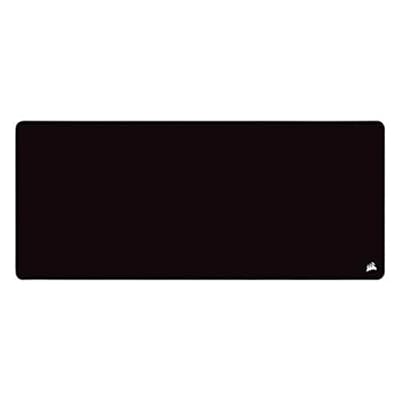
The Corsair MM350 PRO Extended XL is a practical large pad for low-sensitivity aiming, with a spill-proof coating that keeps the surface consistent. At 930 by 400 mm, it is one of the widest pads in this guide, giving extra room for very low sensitivity settings and wide flicks. The 4 mm plush rubber base adds comfort and keeps the pad firmly in place.
Its micro-weave fabric offers a smooth but controlled glide, and the spill-resistant coating helps moisture bead rather than soaking in. That makes it useful for players in warm rooms or for anyone who wants a pad that is easy to wipe clean.
Specs
- Surface: Micro-weave cloth with a spill-resistant coating
- Size: 930 by 400 mm, extended XL
- Thickness: 4 mm
- Base: Plush rubber
- Edges: Anti-fray stitched
- Best for: Low-sensitivity players who want a wide, durable, easy-to-clean desk pad
Artisan Zero Soft XL
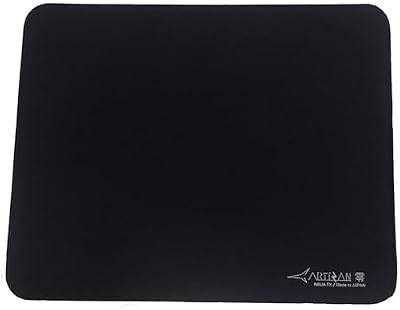
The Artisan Zero Soft XL is a premium Japanese cloth pad aimed at players who want strong stopping power. Its textured surface creates more friction than most mainstream pads, which helps the mouse stop dead on target after a fast flick. The Soft firmness uses a softer foam base that gives slightly under the hand, adding comfort during long sessions.
At XL size, it gives low-sensitivity players enough room for full arm movements, and its dense weave holds a consistent glide once the hand warms up. This pad suits players who already know they prefer a control surface, and it is less forgiving for players who like a fast glide.
Specs
- Surface: Textured cloth with strong stopping power
- Size: XL, 490 by 420 mm
- Firmness: Soft
- Base: Soft foam rubber
- Edges: Stitched
- Best for: Experienced low-sensitivity players who want maximum control
How to Choose a Mousepad for Low Sensitivity Aiming
Start with size. Measure the distance the mouse travels for a full turn in game, then add at least 10 cm of spare width for the keyboard and the arm. If that total is close to 900 mm, choose an XXL desk pad. If it is closer to 500 mm, a large pad such as the G-SR III will fit better.
Next, pick the surface. Choose a control cloth if stopping power matters most, and choose a balanced cloth if the current pad feels sticky during long sweeps. Avoid a very fast speed surface as a first low-sensitivity pad, because it makes overshooting more likely.
Then check thickness, edges, and base. A pad between 3 mm and 6 mm thick suits most players. Stitched edges last longer and stop curling, while a dense rubber base stops the pad from sliding during hard flicks. A full desk pad works best on a wide desk, while a large square pad fits better on a narrower desk.
Who Should Skip These Pads
Players who use high sensitivity should skip most of these pads, because they do not need a huge surface and a large desk pad will waste desk space. A medium pad with a faster glide will suit small wrist movements better. Players with very small desks should also look elsewhere, since an XXL pad can crowd the keyboard.
Players who prefer a hard plastic or glass surface should skip cloth control pads altogether, because the extra friction will slow down the fast, light movements that hard pads are made for. Players who travel with their setup should choose a thinner, lighter pad instead, because thick XXL pads are bulky and hard to carry.
Frequently Asked Questions
How big should a mousepad be for low sensitivity aiming?
It should be wider than the mouse travel for a full turn in game, with spare room for the keyboard and the arm. For most players, that means at least 450 mm wide, and an XXL pad around 900 by 400 mm is a safe choice when desk space allows.
Is a control pad or a speed pad better for low sensitivity?
A control pad is better for most low-sensitivity players because its extra friction helps the mouse stop on target after a long flick. A speed pad can work for steady hands, but it makes overshooting more likely.
Does mousepad thickness matter for aiming?
Thickness matters mainly for comfort and stability. A thicker pad cushions the wrist, while a thinner pad feels more direct. Most low-sensitivity players do well with a pad between 3 mm and 6 mm thick.
Why does my mousepad feel slower after an hour of play?
Cloth pads absorb moisture from hands and from the air, which can change friction as the surface warms up. A humidity-resistant coating and a dense weave help the glide stay consistent through a long session.
Final Verdict
For low-sensitivity aiming, size and control matter more than brand or style. A large pad removes the edge as a limit, and a control cloth gives the stopping power long flicks need. The SteelSeries QcK Heavy XXL is the best starting point for most players, thanks to its huge surface and thick base. The ZOWIE G-SR III is the best choice for competitive play, with consistent control and humidity resistance. Players who want a full desk pad should look at the Logitech G840 XL or the Corsair MM350 PRO Extended XL, while the Artisan Zero Soft XL suits experienced players who want the strongest stopping power.