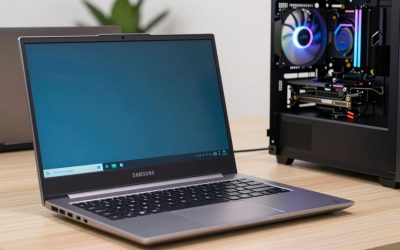
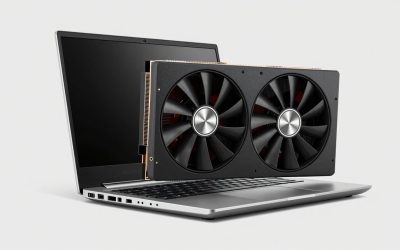
“Minimal” means different things depending on who’s asking. Some people want a thin, quiet laptop that happens to play games well. Others want to strip gaming down to its essentials and spend as little as possible on the box doing the work. This article is about both, because the overlap is bigger than laptop marketing admits. You don’t need an 18-inch RGB brick to play most games at good settings, and you don’t need to pay for cooling and screen real estate you won’t use if you’re mostly on battery, in cafes, or working from the same machine during the day.
The honest starting point: “minimal gaming laptop” is a compromise category. You’re trading peak frame rates and thermal headroom for portability, battery life, and a lower price. That’s fine for a lot of people. It’s a bad trade if you play competitive shooters at high refresh rates or you’re running the latest AAA titles maxed out. Know which camp you’re in before you read specs.
What “minimal” actually buys you
A minimal gaming laptop usually means a 14-inch chassis, a mid-tier mobile GPU (think the lower end of the current Nvidia or AMD mobile lineup), 16GB of RAM, and a weight under 4 pounds. The GPU is the part people get wrong. A smaller chassis can’t dissipate as much heat, so even if a 14-inch laptop has the “same” GPU model number as a 17-inch one, it’s often power-limited and will run slower under sustained load. That’s not a defect, it’s physics, but it means you should look at benchmarks for the specific laptop, not just the GPU name.
What you gain: these laptops are quieter under light load, often have better screens for color-accurate work, and last long enough on battery to survive a workday of email and docs without hunting for an outlet. That second part matters more than people think, because most “gaming laptops” with big GPUs get 3-4 hours of real battery life doing office work, not just games.
Minimal vs. full-size gaming laptops
| Factor | Minimal (13-14″, mid-tier GPU) | Full-size (16-18″, high-end GPU) |
|---|---|---|
| Weight | 3-4 lbs | 5.5-8 lbs |
| Battery (office work) | 7-10 hours | 3-5 hours |
| 1080p gaming, high settings | Good in most titles, drops in demanding new releases | Strong across almost everything |
| Fan noise under load | Noticeable but tolerable | Often loud, like a small vacuum |
| Upgradability | Usually RAM/SSD only, sometimes soldered RAM | RAM/SSD, sometimes more slots |
| Price range | $900-$1,400 | $1,500-$3,000+ |
The table oversimplifies one thing: “demanding new releases” is a moving target. A minimal laptop bought today will feel more cramped in two years than a full-size one, because the GPU has less headroom to begin with. If you upgrade laptops every 2-3 years anyway, that’s not a huge issue. If you want five years out of one machine, lean toward more GPU than you think you need now.
Who this is actually for
Students and hybrid workers who carry a laptop daily are the clearest fit. You’re already paying a tax in bag weight and battery anxiety for a gaming laptop; a minimal one cuts that tax substantially. If your games are mostly esports titles (CS2, Valorant, League, Overwatch), older or less demanding single-player games, or anything that isn’t a brand-new ray-traced AAA release, a mid-tier mobile GPU handles all of that at high frame rates without needing a thick chassis.
It’s a worse fit if you play newly released AAA titles at launch and want high settings without turning things down, or if you do GPU-accelerated creative work like 3D rendering or heavy video editing on the side. Those workloads reward raw GPU power and sustained cooling more than portability, and a minimal laptop will bottleneck you there in ways that are annoying to live with daily.
What to prioritize when shopping
RAM and storage matter more than people expect in this category because they’re often the first things cut to hit a price point. 16GB RAM is the realistic floor for gaming plus multitasking in 2024-era titles; 8GB will bottleneck you even with a decent GPU. For storage, 512GB fills up fast once you install a handful of modern games, so budget for an upgrade or buy a model with at least 1TB from the start. If you’re comparing options, browsing a current 14 inch gaming laptop listing will show you how wide the price spread is for similar-looking specs, which is usually down to screen quality and chassis cooling rather than the GPU alone.
Screen refresh rate is the other lever. A 144Hz panel is the sweet spot for this category; 240Hz+ panels exist on some minimal laptops but you need a GPU that can actually push those frame rates, which smaller chassis often can’t sustain. Don’t pay extra for a refresh rate your GPU won’t hit consistently.
If portability is the main goal and you’re willing to game at lower settings in exchange for an ultraportable build, it’s worth looking at what’s sold as an ultrabook with dedicated GPU, since these blur the line between work laptop and gaming laptop more than dedicated “gaming” branding does. For storage upgrades on any of these, a reliable NVMe SSD 1TB is cheap insurance against running out of space six months in.
Where the cheaper option is genuinely fine: if you’re buying for a student who games casually and needs one laptop for everything, don’t overspend on GPU tier. The jump from a mid-tier mobile GPU to a high-end one costs several hundred dollars and mostly buys frame rates you won’t notice at 1080p in non-competitive titles. Spend that money on more RAM or a better screen instead.
FAQ
Can a 14-inch laptop really run modern games well?
Yes, for most games at 1080p and high (not ultra) settings, assuming at least a mid-tier mobile GPU and 16GB RAM. It’ll struggle more than a full-size laptop with the newest, most demanding titles maxed out, but that’s a minority of what most people actually play.
Will a minimal gaming laptop overheat or throttle?
Smaller chassis do run hotter and throttle sooner under sustained load than bigger ones, since there’s less room for cooling. In practice this shows up as frame rate dips during long gaming sessions rather than crashes. Check independent benchmark reviews for the specific model before buying, since this varies a lot between laptops with similar specs.
Is it cheaper to buy a minimal gaming laptop or a separate work laptop and desktop PC?
If you need portability, one well-chosen minimal gaming laptop is usually cheaper and simpler than two devices. If you work from one location most of the time, a desktop for gaming plus a basic work laptop can give you more performance per dollar, since desktop GPUs are far more efficient than mobile ones at the same price.
How much RAM and storage do I actually need?
16GB RAM and 1TB storage is the realistic baseline for a laptop you’ll keep for a few years. 8GB RAM or 512GB storage will feel tight within the first year for most gamers, especially as game install sizes keep growing.