- Top Pick: Thrustmaster T.16000M FCS Flight Stick
- Runner-up: Logitech G29 Driving Force Racing Wheel
- Also consider: Xbox Wireless Controller, Carbon Black
Mech games spent years looking like a Windows-only genre: the big simulators assumed DirectX, the strategy spin-offs assumed Windows, and Linux players were left reading compatibility reports for scraps. That has changed from both directions. A handful now ship proper native Linux builds, and Proton has quietly absorbed most of the modern Windows catalogue, anti-cheat included in the cases that matter most.
This catalogue sorts the options by how they actually run. The native shelf needs no compatibility layer. The Proton shelf follows what community reports and Valve’s Deck ratings say today, with the multiplayer and anti-cheat position stated plainly for each title, because that is where mech games differ most. A short classic shelf covers the older MechWarrior games, and the gear section ends with sticks and controllers for cockpit play.
As an Amazon Associate, we earn from qualifying purchases.
Quick answer
Most modern mech games run on Linux. BATTLETECH and Brigador ship native Linux builds. The big Windows titles work through Proton: Armored Core VI, MechWarrior 5: Mercenaries and Daemon X Machina carry top-band ProtonDB ratings, and Armored Core VI’s anti-cheat is enabled for Linux, so even its online duels work. Classics need DOSBox or Wine tinkering.
The native shelf
BATTLETECH
Harebrained Schemes’ turn-based tactics game is the safest recommendation here, because it does not need Proton at all. The Steam page publishes full Linux requirements, naming 64-bit Ubuntu and SteamOS, and notes that multiplayer is compatible between the Windows, Mac and Linux versions, so Linux players can skirmish cross-platform. You command a mercenary lance through a story campaign and a sandbox career, managing pilots, salvage and repairs. Versus multiplayer asks for a Paradox account, the only hoop. If you want one mech game that simply installs and runs, this is it.
Brigador: Up-Armored Edition
Brigador is the native shelf’s action pick: an isometric mech and hover-tank rampage through destructible city districts on solo contracts. Its Steam page lists SteamOS and Linux requirements, naming Debian 10 and Ubuntu 20.04, so no compatibility layer is involved. It is single-player only, which removes every networking question, and its modest demands suit older machines. The Linux build carries the full Up-Armored Edition content, and a Linux review quote sits on the store page, a sign the build is maintained rather than abandoned.
The Proton shelf
Armored Core VI: Fires of Rubicon
FromSoftware’s return to mech action is the headline Proton result in the genre. ProtonDB’s page currently shows a Gold medal backed by hundreds of reports. The key detail is the anti-cheat: the game uses Easy Anti-Cheat, and FromSoftware enabled it for Linux, so the online side works rather than stopping at the menu. Community reports specifically describe PvP running, including ranked duels. Valve rates it Playable on Steam Deck rather than Verified, over small in-game text, not performance or controls.
MechWarrior 5: Mercenaries
Mercenaries is the sandbox simulator pick: an Unreal Engine 4 campaign about running a mercenary company across the Inner Sphere, with hundreds of BattleMech variants, four-player co-op and full Steam Workshop mod support. Its ProtonDB standing is Platinum, and Valve rates it Playable on Steam Deck. The co-op is peer-to-peer PvE rather than a server game, the kind of multiplayer that travels well through Proton, and the Platinum rating reflects reports covering the whole package. Of the two modern MechWarrior titles, buy this one first: older, lighter, and backed by the deepest pool of reports.
MechWarrior 5: Clans
Clans is the story-driven counterpart, built on Unreal Engine 5 with a handcrafted Clan Invasion campaign, motion-captured cinematics and five-player co-op with cross-play between PC and consoles. ProtonDB reports describe the campaign running under Proton, but the engine upgrade makes it far more demanding than Mercenaries, and its report history is still short. Buy it for the narrative, on a recent GPU; on a modest machine, Mercenaries is safer. Check the newest reports before buying, because early-report games move fastest.
Daemon X Machina
Daemon X Machina is the fast, arcade end of the genre: jet-boosting Arsenals, parts looted from downed enemies and four-player co-op boss fights. It holds a Platinum medal on ProtonDB and a Playable Steam Deck rating: a low-risk purchase. No anti-cheat wall guards its online co-op, and its sequel, Titanic Scion, has also collected Platinum-rated reports, so the series suits Linux players. If Armored Core VI looks too methodical, this is the lighter alternative that runs just as cleanly.
Vox Machinae
Vox Machinae needs one correction up front: despite often being listed among Linux mech games, its Steam page publishes Windows requirements only, so it belongs on this shelf, not the native one. What it does have is a Steam Deck Verified badge earned through Proton. It is a cockpit simulator first, playable on a flat screen or in VR, with crossplay between VR and standard-screen pilots. Flat-screen mode is the dependable recommendation; VR through SteamVR is a separate setup project.
Mechabellum
Mechabellum is the strategy outlier: an auto-battler where you draft and position an army of crawlers, tanks and giant units, then watch the battle play out. Winning is about formation and counters, not reflexes. It is a Windows game on Steam, currently Playable on Steam Deck with a Gold medal on ProtonDB. Because the game is fundamentally online (1v1, 2v2, free-for-all, survival), the useful detail in those reports is that matches themselves run through Proton.
Titanfall 2
Titanfall 2 pairs pilot parkour with its Titan, and its campaign is often called one of the genre’s best. The campaign is the dependable part on Linux: ProtonDB-sourced trackers place the game in the Gold band, and it needs no servers at all. Multiplayer has a long history of working through Proton on the official servers, and Northstar, the community client hosting custom servers, documents Linux support too. Buy it for the campaign, and treat multiplayer as a bonus with working routes rather than a promise.
The classic shelf
MechWarrior Online
The free-to-play PvP MechWarrior is the classic that still runs live servers. It was a holdout for years, until a Proton Experimental update in 2022 made it newly playable, and it has stayed playable since. As an always-online game, read the newest ProtonDB reports first; it remains the only way to get large-team MechWarrior PvP on Linux for free.
MechWarrior 2 and the DOS-era originals
The oldest shelf runs on different emulation. MechWarrior 2 was a DOS game, and DOS games are DOSBox territory; the route is well worn. MechCommander and MechWarrior 4 sit one rung up: Windows games that run under Wine with community install guides, not one-click Steam installs. Frame these as weekend tinkering projects with excellent payoffs, not purchases you will play twenty minutes after checkout.
Gear for the cockpit
Mech games reward deliberate controls. A twist-axis stick maps naturally onto torso twist, and the arcade titles are happiest on a good gamepad. These five fit the games above, and all are standard USB or Bluetooth devices Linux picks up without vendor software.
Thrustmaster T.16000M FCS Flight Stick

The stick most often paired with MechWarrior’s HOTAS support: its twist axis gives rudder-style leg steering while the stick handles the torso. Thrustmaster’s H.E.A.R.T magnetic sensors keep the aim point steady, and the ambidextrous grip makes it the standard dual-stick pick.
Specs:
- H.E.A.R.T HallEffect AccuRate magnetic sensors
- 16-bit resolution on the pitch and roll axes
- 4 axes, including twist rudder control
- 16 action buttons and an 8-way Point of View hat switch
Logitech G29 Driving Force Racing Wheel

A crossover pick for players who split desk time between racing sims and MechWarrior. Its three-pedal unit can be bound inside MechWarrior 5’s remappable controls, putting throttle and turning under your feet, and the wheel remains Logitech’s force feedback entry point for racing.
Specs:
- Dual-motor force feedback
- 900-degree lock-to-lock wheel rotation
- Leather-wrapped rim with stainless steel paddle shifters
- Three-pedal unit with clutch, model 941-000110
Xbox Wireless Controller, Carbon Black

The default gamepad answer for the Proton shelf. Steam Input understands it completely, and it pairs over Bluetooth or USB-C. Armored Core VI and Daemon X Machina feel designed around exactly this controller.
Specs:
- Model QAT-00001, Carbon Black finish
- Bluetooth wireless and USB-C wired connections
- Hybrid D-pad and dedicated Share button
- Textured grip on triggers and bumpers
8BitDo Ultimate 2 Bluetooth Controller

The alternative pad for players who want more than the standard layout. Its TMR sticks resist drift, its triggers switch between analogue Hall Effect and tactile modes, and it moves easily between a Switch and a Linux PC.
Specs:
- Model 80ND, Black finish
- TMR joysticks
- Switchable Hall Effect and tactile trigger modes
- Bluetooth, 2.4 GHz and wired USB connections
- Charging dock and 2.4 GHz adapter included
- Switch, Switch 2 and Windows PC support
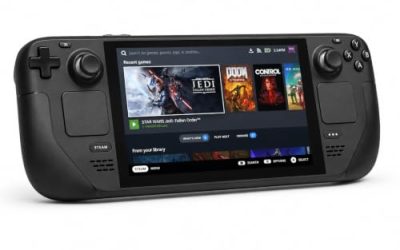
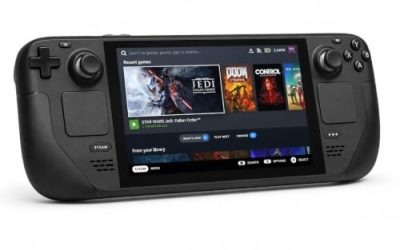
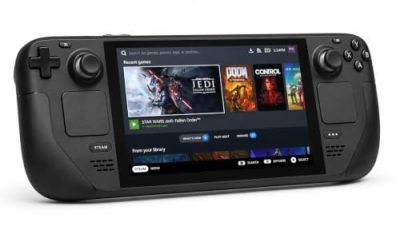
Valve Steam Deck OLED

The Deck is where much of this catalogue gets played, for a reason: Vox Machinae is Verified on it. The OLED screen and larger battery make it the comfortable way to take BATTLETECH, Brigador and Daemon X Machina off the desk.
Specs:
- 7.4-inch HDR OLED display
- AMD Zen 2 CPU with RDNA 2 graphics
- 16 GB LPDDR5 memory
- 512 GB NVMe storage, expandable by microSD
How to choose
Start with the shelf, not the title. For zero setup, buy native: BATTLETECH for tactics, Brigador for action. For the modern blockbusters, check the ProtonDB medal first, then the Deck rating, then the multiplayer note. Weigh your habits: solo campaigns forgive almost anything, while Mechabellum and MechWarrior Online are multiplayer-first, so their reports matter more. Then match hardware: Clans and Armored Core VI want a recent GPU; the native pair runs on almost anything. Buy controls last: a stick for simulators, a pad for arcade titles, nothing for strategy.
Who should skip
Skip this catalogue if your ladder is not listed here; unlisted anti-cheat games are unlisted for a reason. Skip the classic shelf if an evening of DOSBox or Wine setup sounds like work rather than fun. Skip Clans on a low-end machine, and skip Vox Machinae if your only interest is VR without a SteamVR setup project. And if you want a living, developer-supported native scene rather than a compatibility success story, stay on the native shelf only: this genre offers two native builds and a lot of Proton.
FAQ
Do I need a Steam Deck to play these on Linux?
No. Everything here runs on a regular Linux desktop. The Deck ratings appear because Valve’s testing is public and useful as a second opinion, but Proton is a desktop technology first, and the desktop is where this list’s simulators feel most at home.
Which mech games should I avoid on Linux?
Avoid buying any online mech game absent here without checking its anti-cheat status first. The pattern is consistent: games whose developers enabled anti-cheat for Linux, like Armored Core VI, work fully, while games with kernel-level anti-cheat never enabled for Linux usually stop at launch or at the multiplayer menu.
Does MechWarrior 5 co-op work between Linux and Windows players?
Mercenaries uses peer-to-peer co-op rather than platform servers, and its Platinum standing covers the full game, so mixed groups are the normal experience in community reports. Clans advertises cross-play between PC and consoles; on Linux, treat the campaign as confirmed and check current reports before planning a cross-platform session.
Final verdict
Mech games on Linux are in better shape than the genre’s Windows-only reputation suggests. The native shelf is short but real, with BATTLETECH as the standout. The Proton shelf carries the biggest names, and the crucial detail is that multiplayer mostly survived the trip: Armored Core VI’s anti-cheat is enabled, MechWarrior 5’s co-op works, and Mechabellum’s matches run. Start with BATTLETECH for certainty, Armored Core VI for spectacle and Mercenaries for the sandbox, and save the classics for later.