Lethal League Blaze, Team Reptile’s 2018 arena fighter built around smacking an anti-gravity ball back at your opponent, is one of the clean cases in this cluster. Steam’s record flags all three platforms, the Linux requirements field carries a written specification rather than a shell, and the depot table holds a Linux build marginally larger than the Windows one. The native build is simply there.
That makes the interesting questions the second-order ones. Does a normal purchase actually deliver the Linux depot, or is it stranded outside the store package? Do the thirteen add-on apps agree with the game, or does one wear the family’s usual false flag? And how old is the Deck paperwork behind the badge?
As an Amazon Associate, we earn from qualifying purchases.
Quick answer
Yes. Lethal League Blaze is native on Linux. Steam flags all three platforms, publishes an Ubuntu minimum specification, and ships a Linux depot larger than the Windows one inside the store package. Valve rates the game Verified on Steam Deck, and ProtonDB classifies it Native. No compatibility layer is required on desktop or Deck.
The status at a glance
| Question | Answer from the record |
|---|---|
| Native Linux build | Yes — all three platforms flagged |
| Linux depot | Yes, 3.67 GiB, inside the ordinary store package |
| Add-on apps | 13 of 13 flag all three platforms, agreeing with the game |
| Steam Deck | Verified; test paperwork from February 2022 |
| ProtonDB | Classifies the game Native |
| GOG edition | None — Steam is the only PC edition |
What Steam’s record says
The app record (app 553310) names Team Reptile as both developer and publisher, released 24 October 2018, with Action, Indie and Sports genres. The platform flags read Windows, Mac and Linux, all true. The categories describe a pad-first multiplayer game: single-player, online PvP, shared and split-screen PvP, full controller support, Steam Cloud and Remote Play Together. There is no DRM notice and no external-account notice.
The requirements fields back the flags up. The Linux minimum is genuinely written and platform-specific: Ubuntu 14.04, a Core 2 Duo or equivalent at 2.0 GHz or higher, 4 GB of RAM and 4 GB of storage — a porter-grade line, lighter than the Windows minimum beside it. The Linux recommended tier is a heading over an empty list, but the Mac recommended tier is blank in the same way, so the gap reads as an unfinished form rather than a Linux-specific omission.
Depots and the package a purchase delivers
SteamDB lists three content depots: Windows at 3.60 GiB, macOS at 3.61 GiB and Linux at 3.67 GiB, the largest of the three — a full-weight Linux depot, the opposite of the zero-byte and unpackaged shapes this cluster keeps finding elsewhere.
The package layer closes the question. The ordinary store package a purchase delivers (sub 137548, granting the game app alone) reads Windows, Mac and Linux all true on Steam’s own package record, so a normal purchase delivers the Linux depot with the rest. The public branch is still maintained, serving build 20415526 from October 2025. SteamDB’s detected technology is engine plumbing only — Unity and the Mono SDK — which matters for the anti-cheat section below.
The family sweep: thirteen add-on apps, one story
The full DLC array holds thirteen apps, every one opened individually. Twelve are outfit packs, one per fighter, and the thirteenth is the soundtrack. All thirteen flag Windows, Mac and Linux true, agreeing with the game they extend.
The soundtrack deserves its usual sentence, because it wears the classic shape: its flags claim all three systems while its requirements fields are empty lists outright on every platform. On a Windows-only game that combination is the trap that manufactures false Linux support. Here it manufactures nothing, because the base game’s own flag, field, depot and package already agree; the bare flag is an audio package with no paperwork, counted as evidence neither way.
Steam Deck: Verified, on paperwork from 2022
Valve’s compatibility record, read directly from Valve’s endpoint and matched against SteamDB’s republication of the same data, rates the game Verified: the default controller configuration is fully functional, the glyphs shown are Steam Deck controller icons, the interface text is legible, and the default graphics configuration performs well. SteamOS separately reads Compatible, and the configuration notes gamepad input, with no internet required for single-player.
Two paperwork details keep the badge in proportion. The test was run on 17 February 2022 against build 6335009, while the public branch now serves build 20415526 — the verdict predates the current build, which makes this a supplement candidate for the factual Deck-paperwork list: the badge is real, its test build is old. And the sheet’s recommended runtime line reads proton-stable, an odd line on a game with a native Linux build, named here plainly as on other native titles in this cluster. It is a form artefact, not evidence against the native build.
ProtonDB: a Native file the summary feed would not serve
ProtonDB’s summary feed failed this session — repeated calls returned an error page rather than data — so no headline tier, trend or confidence figure is claimed here. The game’s ProtonDB page itself could be read, and it is unambiguous: it classifies the game Native and heads its requirements block with the native-support wording, agreeing with Steam’s record on every layer. That makes this a clean-agreement heading check, the inverse of the stray-tag pattern found on so many Windows-only games in this series.
The page shows 31 reports, their texture mostly flawless native play across a spread of distributions and SteamOS, with local and online multiplayer repeatedly marked excellent. Two filings keep the file honest at report weight: one player on a high-end desktop found the Windows build under Proton noticeably faster than the native build on their hardware and switched, and one early Deck report under an old Proton version described a black screen. Neither outweighs the classification, but the first is worth knowing if a native session ever feels slower than it should.
Anti-cheat and the second storefront
Three sources, kept separate. Steam’s record names no anti-cheat and carries no DRM or account notices. SteamDB detects only engine technology — Unity and Mono. The Are We Anti-Cheat Yet dataset, all 1,167 games on its master branch, searched by name and by app id, carries no entry for this game. For an online PvP title that is the expected shape: no kernel-level or third-party anti-cheat stands in the record between a Linux player and the online modes the categories list, and nothing here speculates about servers or player counts.
On storefronts, the ruling is short. GOG’s catalogue and embed searches return no product for this game, under the full title or a partial one, and the natural product address resolves to GOG’s general catalogue — there is no GOG product record to verify, so no GOG edition exists to buy. The Steam copy is the only PC edition, and it carries the native build.
Gear that fits the record
The record is a pad-first multiplayer game with a Verified handheld badge, so the gear follows that shape: the handheld, two pads, a desktop mouse, and library storage.
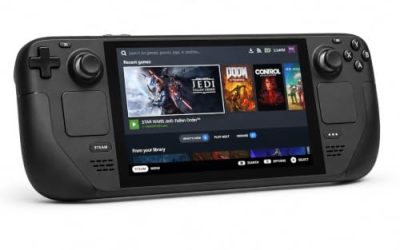
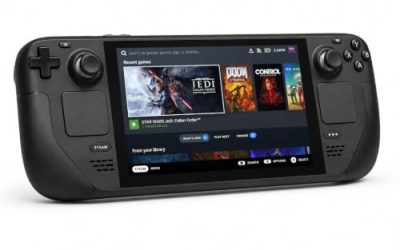
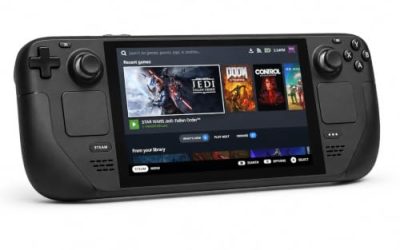
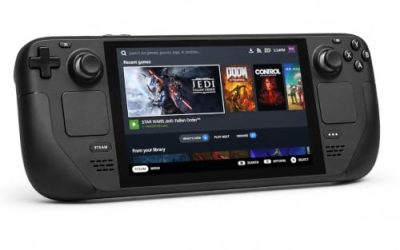
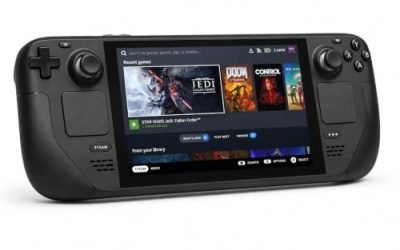
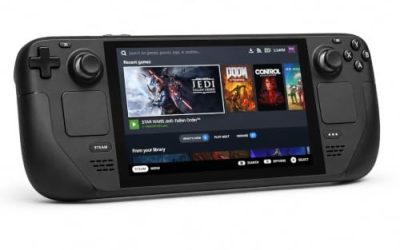
Valve Steam Deck OLED 512GB

The handheld the Verified badge was written for. The game’s Linux minimum is a rounding error next to the Deck’s APU, and the native build is the one a Deck install receives.
Specs
- Display: 7.4-inch HDR OLED, 1280 by 800, up to 90 Hz
- Processor: AMD Zen 2 and RDNA 2 custom APU
- Memory: 16 GB LPDDR5
- Storage: 512 GB NVMe, plus a microSD slot
- Wireless: Wi-Fi 6E and Bluetooth
- Channel note: Valve sells the Deck mainly through its own store, so Amazon listings are third-party sellers
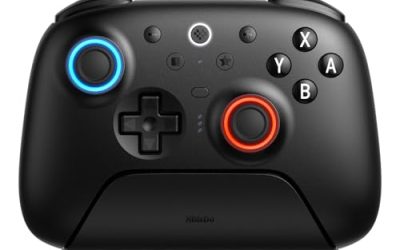
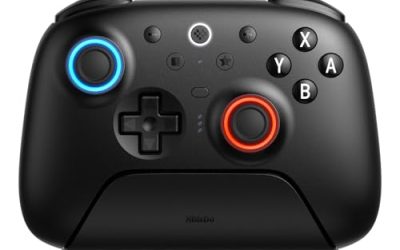
8BitDo Ultimate 2 Bluetooth Controller
The docked and desktop pad pick. Steam lists full controller support, and this pad covers the couch case with modern sticks and triggers plus back buttons for menu shortcuts.
Specs
- Connectivity: Bluetooth wireless and USB-C wired
- Joysticks: TMR electromagnetic, anti-drift design
- Triggers: Hall effect, with mode switching
- Extras: two remappable back buttons, motion control
- In the box: charging dock included
Xbox Wireless Controller, Carbon Black
The safest guest pad in PC gaming: Steam Input support is universal, the glyphs match what most games display, and it pairs over Bluetooth or its own wireless standard. For a shared and split-screen game, a second pad that simply works is the whole point.
- Connectivity: Xbox Wireless and Bluetooth
- Port: USB-C for wired play
- Controls: hybrid D-pad, dedicated Share button
- Power: AA batteries or optional rechargeable pack
Logitech G502 HERO
A wired mouse for the desktop side of the library: menus and settings screens are quicker with a precise pointer, and eleven programmable buttons cover the inputs a long session repeats.
Specs
- HERO optical sensor, up to 25,600 DPI
- 11 programmable buttons
- Adjustable weight system
- Wired USB connection
- On-board memory profiles
Samsung T9 Portable SSD 2TB
For moving a Linux game library between machines, or keeping an offline backup of installers, a fast USB-C drive is the simple answer. The headline figure needs a Gen 2×2 host port; on a lesser port the drive runs at that ceiling instead.
Specs
- Capacity: 2 TB portable SSD
- Interface: USB 3.2 Gen 2×2, USB-C connector
- Maker-rated speeds: up to 2,000 MB per second read, 1,950 MB per second write
- Features: Dynamic Thermal Guard, maker-rated drop resistance
How to choose
Choose the Steam copy: it is the only PC edition, and the build every record in this piece describes. On a Linux desktop or laptop, install it and launch — the native build is what arrives, with no compatibility tool to configure. On a Steam Deck, the Verified badge means the same: install and play, with the caveat that Valve’s test predates the current branch build, so treat it as a strong historical verdict rather than a fresh test. For input, a gamepad is the game’s native shape; take a second pad for the shared-screen modes before anything else.
Who should skip
Skip this one if you buy only DRM-free installers: no GOG edition exists, so there is nothing to buy outside Steam. Skip it if a fresh, current-build Deck test is a condition of purchase; Valve’s sheet is from 2022. And skip it if fast, timing-critical online fighting is not your genre — the record is clean, but it cannot change what the game is.
FAQ
Is Lethal League Blaze native on Linux?
Yes. Steam flags the game for Windows, Mac and Linux, the Linux requirements field carries a written Ubuntu minimum, a 3.67 GiB Linux depot sits in the ordinary store package, and ProtonDB classifies the game Native. No compatibility layer is involved.
Does the soundtrack’s Linux flag mean anything?
Not on its own. The soundtrack app flags all three platforms while its requirements fields are empty lists on every platform — the bare-flag shape. It agrees with the game’s verdict here, so it changes nothing, but a soundtrack flag is never evidence for a game’s Linux support.
Is Lethal League Blaze verified on Steam Deck?
Yes. Valve rates it Verified, all four checks passing, with SteamOS separately Compatible. The test behind the badge was run in February 2022 on an older build than the current branch, so the paperwork is dated even though the verdict stands.
Can I buy Lethal League Blaze on GOG instead?
No. GOG’s catalogue and embed searches return no product for the game, and there is no GOG product page to verify. The Steam copy is the only PC edition, and it carries the native Linux build.
Final verdict
Lethal League Blaze is native on Linux in the full sense this series measures: flag, written field, full-size depot, package membership and family paperwork all agree, and ProtonDB’s Native classification matches Steam instead of contradicting it. The blemishes are paperwork-grade only — a blank recommended tier shared with the Mac field, a soundtrack flag with no requirements behind it, and a 2022 Deck sheet whose runtime line oddly names Proton. None touches the build. Buy the Steam copy and play the native version.
Product and ASIN Reference
| Product | ASIN |
|---|---|
| Valve Steam Deck OLED 512GB | B0CQ3RWQQZ |
| 8BitDo Ultimate 2 Bluetooth Controller | B0F194QFT2 |
| Xbox Wireless Controller, Carbon Black | B08DF248LD |
| Logitech G502 HERO | B07GBZ4Q68 |
| Samsung T9 Portable SSD 2TB | B0CHFS9K14 |