- Top Pick: JBL Vibe Beam – True Wireless Earbuds – White
- Best Value: JBL Vibe Beam 2 – True Wireless Noise Cancelling Earbuds with JBL Pure Bass Sound & Smart Ambient Technology, 4mics for Crisp, Clear Calls, up to 40Hrs of Playback, IP54 Dust & Water Resistant (Pink)
- Premium Choice: JBL Vibe Beam 2 – True Wireless Noise Cancelling Earbuds with JBL Pure Bass Sound & Smart Ambient Technology, 4mics for Crisp, Clear Calls, up to 40Hrs of Playback, IP54 Dust & Water Resistant (Blue)
The JBL Vibe Beam True Wireless Earbuds bring JBL’s well-known consumer brand and its signature JBL Deep Bass tuning to the affordable end of the true wireless market. There is no active noise cancellation, but JBL pair a four-mic call array, IP54 sweat-and-dust resistance and the JBL Headphones companion app into a sub-$50 package. This JBL Vibe Beam review covers sound, mic, comfort, codecs, gaming use and a verdict.

JBL Vibe Beam - True Wireless Earbuds - Black | JBL Deep Bass Sound, Comfortable fit, Up to 32 8h 24h total hours of battery life with speed charging


As an Amazon Associate we earn from qualifying purchases. Product prices and availability are accurate as of the date/time indicated.
🛒 Best Price Today on Amazon
Prime members get fast, free shipping on everything above, plus member-only deals. New members get a 30-day free trial — cancel anytime.
As an Amazon Associate we earn from qualifying purchases.


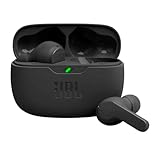


JBL Vibe Beam at a Glance
| Feature | Specification |
|---|---|
| Driver size | 8mm dynamic driver per earbud |
| Bluetooth version | Bluetooth 5.2 |
| ANC type | Passive isolation only (no active noise cancellation) |
| Battery life (buds + case) | Approx. 8 hours per charge, ~32 hours total with case |
| Quick charge | Approx. 10 min in case for ~2 hours of playback |
| Water resistance (IPX rating) | IP54 (sweat and dust resistant) |
| Microphones (count + ENC) | Four-mic array with environmental noise cancellation |
| Codec support | SBC, AAC |
| Approx. price | Around $35 |
Sound Quality & Bass
Before getting into the specifics of this set it is worth a short refresher on the technical realities that shape every wireless-earbud review aimed at gamers and streamers. The most important is latency. Standard Bluetooth audio profiles introduce roughly 100 to 200 milliseconds of delay between the source and your ears, which is fine for music and YouTube but clearly audible as audio-video lag in fast-paced games and as lip-sync drift in streaming. Some manufacturers — notably Soundcore, JBL and TOZO — add a dedicated low-latency or game mode that cuts that figure to roughly 55-80 milliseconds, which is good enough for casual competitive play on a phone, Steam Deck or Nintendo Switch. For tournament-grade FPS, a wired 3.5mm headset is still the right tool, but for the bulk of mobile and couch gaming, a true low-latency mode makes a real-world difference.
Microphone quality matters even more than headline sound quality for the gamer-streamer use case. Bluetooth voice profiles compress the microphone signal more aggressively than the music signal, and an outdoor or noisy room exposes a weak mic immediately. The headline number to look at is the mic count — single-mic earbuds tend to sound thin and pick up room noise, while four-mic and six-mic arrays paired with an ENC (environmental noise cancellation) algorithm isolate the voice with far better intelligibility. For Discord party chat, Zoom meetings on the move and casual streaming, a four-mic-plus-ENC set is the practical minimum. None of the earbuds in this guide can substitute for a proper boom microphone in a recording studio, but the best of them are genuinely usable for everyday voice work.
Finally, codec support and connection. The two universal Bluetooth audio codecs are SBC (mandatory on every device) and AAC (the codec Apple iPhones and iPads prefer). aptX appears on some Android-focused budget earbuds and offers slightly lower latency on compatible Qualcomm-powered phones; LDAC is Sony’s high-bit-rate codec and does not appear on any earbud set in this guide — it is reserved for Sony’s own lineup and a handful of premium Android-first models. Multipoint connection lets a single earbud pair to two devices at once (a PC and a phone, typically), which is genuinely useful for the streamer who jumps between a desk and a phone. For gaming context across the wider category, our linked guides at the end of each review cover gaming headsets, streaming microphones and best-budget audio for PC.
JBL’s signature is in the name — the Vibe Beam is tuned with the JBL Deep Bass character, a confident, slightly bloomy low end that flatters modern pop, hip-hop, EDM and gaming audio. The 8mm dynamic driver is small compared with the 10-13mm drivers of some rivals in this guide, but JBL’s tuning work extracts a surprising amount of perceived bass weight from it. The midrange is mildly recessed and the treble is clean and bright without crossing into harshness. The JBL Headphones companion app exposes a multi-band EQ and several preset profiles, which is a meaningful upgrade over generic budget rivals — buyers who prefer a flatter mix-friendly sound can dial out some of the deep-bass emphasis. For mid-tier alternatives see our best budget wireless earbuds guide and for broader picks see our best wireless earbuds guide.
ANC, Transparency & Mic Quality
There is no active noise cancellation on the Vibe Beam, which keeps the price down. Isolation is passive only, from the in-ear silicone tip seal — acceptable in a quiet office or home, modest against louder city environments. There is no transparency mode either. The microphone array is where the Vibe Beam outperforms its price tier: a four-mic ENC array delivers genuinely clean call quality in quiet rooms and meaningfully better intelligibility in noisy environments than the single-mic budget rivals. For Discord party chat, Zoom meetings on the move and casual streaming, the Vibe Beam mic is one of the cleaner sub-$40 options. For ANC alternatives see our best ANC earbuds guide; for streaming-focused sets see our best earbuds for streaming guide.
Comfort, Fit & Battery Life
The Vibe Beam housings are small, light and ergonomically shaped, sitting flush enough that they do not catch on hats or hoodies. Three sizes of silicone tips are supplied for fit adjustment. The case is pocket-friendly. Battery life is rated at approximately 8 hours per bud with around 32 hours of total runtime when topping up from the case — well above the entry-level TOZO A1 in this guide and competitive with the Soundcore P20i. A 10-minute case top-up recovers around 2 hours of playback. The IP54 rating covers both sweat (the 4 in IP54 indicates splash resistance) and dust (the 5 in IP54 indicates dust protection), which is unusual at this price — most rivals only specify a water rating, leaving dust ingress an open question.
Connectivity & Codecs
Bluetooth 5.2 carries audio using SBC and AAC; aptX and LDAC are not supported. The 5.2 protocol is one generation behind the 5.3 used on most newer rivals in this guide and two behind the 5.4 of the budget ANC pair, which translates into a marginal disadvantage on connection efficiency but no audible difference in everyday use. There is no dedicated low-latency game mode advertised, so gaming audio sits in the standard 100-200 millisecond Bluetooth range. Multipoint pairing is not supported. The JBL Headphones app handles pairing setup and EQ. For competitive mobile gaming look at the Soundcore P20i or Beats Fit Pro in this guide; for broader picks see our best earbuds for mobile gaming guide.
Best For – Gaming, Workouts, Calls
The Vibe Beam is the right pick for the buyer who wants the JBL brand name, the signature deep-bass tuning and a clean call mic in a sub-$40 product. The IP54 rating makes it a sensible workout and outdoor pick — sweat and dust are both covered — and the four-mic ENC array handles everyday calls cleanly. They are not for ANC-seekers (look at the Soundcore P30i, AirPods 4 with ANC or Beats Fit Pro), not for serious mobile gamers chasing low latency (the P20i or Beats Fit Pro are better), and not for buyers who specifically want a neutral mix-friendly sound out of the box. For the bass-loving brand-conscious buyer, they are well judged. See also our best earbuds for workouts guide and our best wireless earbuds guide.
Pros and Cons
Pros: JBL Deep Bass tuning suits modern playlists; IP54 sweat-and-dust resistance (rare at this price); four-mic ENC array for clean calls; JBL Headphones app with EQ; respected brand support; competitive 32-hour total runtime.
Cons: No active noise cancellation; no transparency mode; older Bluetooth 5.2 connection; no aptX or LDAC; no dedicated low-latency game mode; no multipoint pairing; bass tuning can mask detail for some genres.
Verdict
At around $35 the JBL Vibe Beam is a sensible all-rounder for the buyer who values brand reliability, a signature deep-bass sound and the IP54 sweat-and-dust resistance. The JBL Headphones app and four-mic ENC array add genuine value at the price. For ANC and low-latency gaming, look elsewhere in this guide; for the everyday brand-conscious buyer, the Vibe Beam delivers. See our best wireless earbuds guide for further options and our best earbuds for workouts guide for workout-focused alternatives.
Frequently Asked Questions
How is the JBL Vibe Beam different from other JBL earbuds?
The Vibe Beam sits at JBL’s affordable tier and emphasises the signature JBL Deep Bass tuning, a small, ergonomic housing, IP54 rating and a clean four-mic call array, without paying for ANC or premium codecs.
Does the JBL Vibe Beam have noise cancellation?
No. Active noise cancellation is not present; isolation is passive only, from the silicone tip seal. JBL’s ANC-enabled earbuds sit in their higher-priced lines.
What is IP54 and how does it compare with IPX5?
IP54 covers both sweat-and-splash resistance (the 4) and dust protection (the 5). IPX5 only specifies water resistance and leaves dust ingress unrated. IP54 is more comprehensive at the price.
Do the JBL Vibe Beam earbuds have a gaming mode?
No dedicated low-latency game mode is advertised. Audio latency sits in the standard 100-200 ms Bluetooth range, which is fine for casual mobile gaming but not for competitive FPS.
More Wireless Earbud Reviews
- Soundcore P30i Earbuds Review: Affordable ANC True Wireless
- Beats Fit Pro Earbuds Review: 1st Gen Wireless ANC for iPhone
- Raycon Everyday Classic Earbuds Review: ANC Wireless Buds
- Apple AirPods 4 Review: Wireless Spatial Audio Earbuds
- Soundcore Space A40 Earbuds Review: Adaptive ANC True Wireless
- TOZO A1 Wireless Earbuds Review: Budget Bluetooth 5.3 IPX5 Buds
- Soundcore P20i Earbuds Review: Budget Wireless with Gaming Mode
- TAGRY Bluetooth Earbuds Review: 60-Hour Playback with LED Display
Affiliate Disclosure: As an Amazon Associate, we earn from qualifying purchases. If you click a link and make a purchase, we may earn a small commission at no extra cost to you. Prices and availability are accurate as of publication and may change.
Related Articles
Looking for more on this topic? Browse the hand-picked guides below — each one applies the same scoring rubric used in this review.