- Top Pick: BEST GAMING LAPTOPS 2025: A Buyer’s Guide to Next-Gen AI-Powered Rigs for Entry-Level, Mid-Range, and High-End Gaming. (Ultimate Laptop Buyer's Guide series)
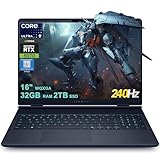
- Best Value: Dell Alien-Ware 16X Aurora Gaming AI Laptop 16" WQXGA 240Hz (100% DCI-P3) Intel 24-core Ultra 9 275HX 32GB RAM 2TB SSD GeForce RTX 5070 (Up to 798 AI Tops) Thunderbolt Win11Pro
- Premium Choice: 2026 AMD Gaming Laptop with Ryzen 5 7430U Processor(6C/12T, Up to 4.3GHz), 15.6" Display Gaming Computer, AMD Radeon™ Graphics, 16GB RAM 512GB NVMe SSD, BK, WiFi 6, HDMI, Type-C, Webcam Cover Slide
🛒 Best Price Today on Amazon
Prime members get fast, free shipping on everything above, plus member-only deals. New members get a 30-day free trial — cancel anytime.
Top Choose Gaming Laptop Complete Picks for 2026
Here are our current top choose gaming laptop complete picks, compared on real Amazon owner reviews, price, and features. Live prices update below.
As an Amazon Associate we earn from qualifying purchases at no extra cost to you.







Prime
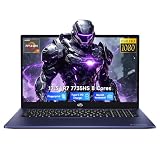
NIMO 17.3" Gaming-Creator-Laptop, 8-Core Ryzen 7 8745HS 32GB RAM 1TB SSD Beat i7-1360P up to 4.9GHz Radeon 780M, USB 4.0 FHD 100W Fast PD for Video Editing, AI Tasks & Remote Streaming, 2-Yr Warranty
How to Choose a Gaming Laptop: Complete Buying Guide (2026)
Embarking on the quest for the perfect gaming laptop is an exciting, yet often daunting, endeavor. In the dynamic world of PC gaming, the right machine can be the difference between buttery-smooth, immersive gameplay and frustrating frame drops and visual compromises. A gaming laptop isn’t just a portable computer; it’s your gateway to virtual worlds, your tool for competitive dominance, and your entertainment hub. With the sheer volume of options available, understanding the nuances of processors, graphics cards, display technologies, and cooling systems is paramount to making an informed decision that aligns with your gaming aspirations and budget.
This comprehensive buying guide is designed to demystify the process of selecting a gaming laptop in 2026. We’ll break down the essential components, explore different categories of gaming laptops to suit various needs, outline key features to prioritize, and help you navigate the often-confusing price spectrum. By the end of this guide, you’ll be equipped with the knowledge to confidently choose a gaming laptop that will deliver exceptional performance for years to come, ensuring your gaming experiences are as breathtaking as the developers intended.
Types of Gaming Laptops
Gaming laptops aren’t a monolithic entity. They come in various forms, each catering to different priorities like portability, raw power, or a balance of both. Understanding these categories will help you narrow down your search significantly.
Ultraportable Gaming Laptops
These are the sleekest and lightest gaming laptops, often prioritizing a slim profile and extended battery life alongside their gaming capabilities. While they might not house the absolute top-tier components found in thicker models, they offer a fantastic balance for gamers who frequently travel or want a device that can seamlessly transition from gaming to work or study without feeling cumbersome. Expect them to feature capable, but not necessarily the most powerful, graphics cards and processors, often with innovative cooling solutions to manage heat in their compact chassis.
Mainstream Gaming Laptops
This is the sweet spot for many gamers, offering a robust combination of performance, features, and value. These laptops typically strike a good balance between portability and power, featuring powerful processors and graphics cards that can handle most modern AAA titles at respectable settings. They often come with larger displays, more advanced cooling systems, and a wider array of connectivity options compared to ultraportables, making them a versatile choice for dedicated gamers who want a strong performance without breaking the bank or sacrificing too much portability.
Desktop Replacement Gaming Laptops
These are the powerhouses of the gaming laptop world, designed to deliver performance that rivals, and in some cases surpasses, many desktop PCs. They are typically the largest and heaviest, prioritizing raw power and advanced cooling systems above all else. If your primary goal is to have the absolute best gaming experience possible on a portable machine, and you don’t mind a bit of bulk, these laptops are your best bet. They often feature the highest-end processors, graphics cards, and ample RAM, along with superior thermal management to sustain peak performance during extended gaming sessions.
Key Features to Look For
Graphics Card (GPU)
The GPU is the heart of any gaming laptop. It’s responsible for rendering all the visuals you see on screen. For modern gaming, aim for at least an NVIDIA GeForce RTX 40-series or AMD Radeon RX 7000-series mobile GPU, with higher tiers offering better performance and ray tracing capabilities.
Processor (CPU)
The CPU handles game logic, AI, and other background tasks. A powerful CPU, like an Intel Core i7/i9 or AMD Ryzen 7/9 from their latest generations, is crucial to avoid bottlenecks and ensure smooth gameplay, especially in CPU-intensive games or when multitasking.
RAM (Memory)
RAM is your laptop’s short-term memory. For gaming in 2026, 16GB of DDR5 RAM is the recommended minimum for a smooth experience with most modern titles. 32GB is ideal for future-proofing and for demanding games or extensive multitasking.
Display Refresh Rate and Resolution
A high refresh rate (120Hz, 144Hz, or higher) is essential for fluid motion and responsiveness in fast-paced games, reducing motion blur. Resolution (1080p, 1440p, or 4K) impacts visual clarity; 1080p is common, 1440p offers a great balance, and 4K provides the sharpest image but demands a more powerful GPU.
Storage (SSD)
Solid State Drives (SSDs) are non-negotiable for gaming laptops. They drastically reduce load times for games and the operating system. Aim for at least a 1TB NVMe SSD for ample space and speed, with options for additional storage or secondary drives.
Cooling System
Gaming generates significant heat. An effective cooling system, often featuring multiple fans, heat pipes, and well-designed ventilation, is vital to prevent thermal throttling, which can reduce performance and shorten component lifespan. Look for laptops with robust cooling solutions.
Keyboard and Trackpad
A comfortable and responsive keyboard with good key travel and backlighting is crucial for long gaming sessions. While most gamers use an external mouse, a decent trackpad can be useful for general navigation and portability.
Connectivity Ports
Ensure the laptop has sufficient USB ports (including USB-C/Thunderbolt), HDMI or DisplayPort for external monitors, an Ethernet port for stable online gaming, and a headphone jack. Wi-Fi 6E or Wi-Fi 7 support is also beneficial for faster wireless networking.
How Much Should You Spend?
The price of a gaming laptop can vary dramatically, reflecting the power and features packed inside. Understanding these tiers will help you set realistic expectations.
Budget Gaming Laptops ($800
At this price point, you can expect solid entry-level gaming performance. These laptops are typically equipped with mid-range processors and graphics cards capable of running most popular esports titles and many older AAA games at respectable settings (often 1080p with medium to high graphics). They might feature 1080p displays with standard refresh rates (e.g., 60Hz or 120Hz) and typically come with 16GB of RAM and a 512GB SSD. Cooling systems will be functional but might struggle with sustained peak performance in very demanding games.
Mid-Range Gaming Laptops ($1200
This is where you’ll find the best balance of performance and value for most serious gamers. Laptops in this range offer significantly more powerful processors and GPUs, allowing for smoother gameplay at 1080p with ultra settings or at 1440p with high settings in many modern titles. You’ll generally find higher refresh rate displays (144Hz or more), improved cooling systems, and often larger SSDs (1TB). These machines are well-suited for a wide variety of games and offer a more immersive visual experience.
Premium Gaming Laptops
These are the top-tier machines designed for enthusiasts who demand the absolute best. They feature the most powerful mobile processors and graphics cards available, capable of running the latest AAA games at high resolutions (1440p or even 4K) with maximum graphical settings and ray tracing enabled. Expect high-refresh-rate 1440p or 4K displays, advanced cooling solutions for sustained performance, premium build materials, and often more RAM (32GB) and larger, faster SSDs. These laptops are also often the most portable or feature the most advanced designs.
Common Mistakes to Avoid
Overlooking the GPU for the CPU
While a good CPU is important, the GPU is the primary driver of gaming performance. Don’t spend your entire budget on a top-tier CPU and skimp on the graphics card; you’ll regret it when your games don’t look or run as well as you’d hoped.
Ignoring Cooling Systems
A powerful laptop that overheats will throttle its performance, negating the benefits of its high-end components. Always research reviews that specifically mention thermal performance and cooling solutions.
Buying Too Little RAM or Storage
While 8GB of RAM was once acceptable, it’s now a bottleneck for many modern games. Similarly, a small SSD will fill up quickly with game installations. Aim for at least 16GB RAM and a 1TB SSD to avoid future upgrade costs and frustrations.
Focusing Solely on Marketing Buzzwords
Don’t get swayed by flashy marketing or brand names alone. Look at benchmark comparisons, read in-depth reviews, and understand the actual performance metrics of the components rather than just the marketing hype.
Forgetting About Portability and Battery Life
If you plan to game on the go, consider the weight, size, and battery life. A desktop replacement might be overkill if you need to carry it to classes or coffee shops daily, and its battery will likely only last a couple of hours unplugged.
Frequently Asked Questions
Q: How important is the display’s refresh rate for gaming?
A: The display’s refresh rate is extremely important for gaming, especially in fast-paced genres like first-person shooters and racing games. A higher refresh rate (e.g., 144Hz or 240Hz) allows the display to show more frames per second, resulting in smoother motion, reduced motion blur, and improved responsiveness, giving you a competitive edge.
Q: Can a gaming laptop handle tasks other than gaming?
A: Absolutely. Gaming laptops are powerful machines equipped with high-performance processors and ample RAM, making them excellent for demanding tasks such as video editing, graphic design, 3D rendering, programming, and running virtual machines. They often outperform standard laptops in these areas due to their robust hardware.
Q: What’s the difference between a gaming laptop’s GPU and a desktop GPU?
A: Gaming laptop GPUs are mobile versions of their desktop counterparts, designed to be more power-efficient and to fit within the thermal and power constraints of a laptop chassis. While they are often very powerful, they may not reach the absolute peak performance of their desktop equivalents due to these limitations. However, high-end mobile GPUs are now incredibly capable and can deliver exceptional gaming experiences.
Q: How much noise can I expect from a gaming laptop’s fans?
A: Gaming laptops generate a lot of heat, and their cooling fans will spin up to manage it, especially during intensive gaming sessions. The noise level can vary significantly depending on the laptop’s cooling system design and the workload. Premium laptops often have more sophisticated cooling that can be quieter under load, but expect some fan noise when pushing the hardware.
Q: Should I prioritize a higher resolution or a higher refresh rate for my gaming laptop display?
A: This depends on your gaming preferences. For fast-paced competitive games where responsiveness is key, a higher refresh rate (e.g., 144Hz+) at 1080p or 1440p is generally more beneficial. For graphically intensive single-player games where visual fidelity is paramount, a higher resolution (1440p or 4K) might be preferred, provided your GPU can drive it at a playable frame rate.
Final Thoughts
Choosing a gaming laptop in 2026 is an investment in your entertainment and productivity. By understanding the different types of laptops, prioritizing key features like the GPU and display, and being aware of your budget and potential pitfalls, you can confidently select a machine that will serve you well for years to come. Take your time, do your research, and happy gaming!
Recommended Gaming Laptop Guides
- Best Motherboard For Gaming Desktop 2026
- Best Microcenter Gaming Desktop 2026
- Best Gaming Desktop Recommendations 2026
- Best Gaming Desktop Under $1000 2026
- Best Refurbished Gaming Desktop Pc 2026