- Top Pick: iBUYPOWER Element SE Gaming PC Desktop Computer AMD Ryzen 5 8400F CPU, NVIDIA GeForce RTX 3050 6GB GPU, 16GB DDR5 RAM, 1TB NVMe SSD, Windows 11 Home, Gamer Keyboard and Mouse – ESA5N3501
- Best Value: KOTIN Prebuilt Gaming PC RTX 5070 12GB, Ryzen 7 9700X, 32GB DDR5, 1TB SSD
- Premium Choice: CyberPowerPC Gaming PC, AMD Ryzen 7 8700F, GeForce RTX 5060 Ti 8GB
🛒 Best Price Today on Amazon
Prime members get fast, free shipping on everything above, plus member-only deals. New members get a 30-day free trial — cancel anytime.
Top Choose Gaming Complete Picks for 2026
Here are our current top choose gaming complete picks, compared on real Amazon owner reviews, price, and features. Live prices update below.
As an Amazon Associate we earn from qualifying purchases at no extra cost to you.


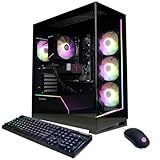


Embarking on the journey to build or buy a new gaming PC is an exciting prospect for any enthusiast. The right machine isn’t just a tool for entertainment; it’s your portal to immersive worlds, competitive arenas, and creative expression. A powerful gaming PC can unlock higher frame rates, smoother gameplay, and the ability to experience games at their most visually stunning settings, transforming your gaming sessions from good to truly unforgettable. Conversely, settling for a suboptimal system can lead to frustrating lag, graphical compromises, and the inability to enjoy the latest titles as intended. Making an informed decision upfront saves you not only potential headaches but also ensures you get the most value and enjoyment out of your investment for years to come.
This comprehensive guide is designed to demystify the process of choosing a gaming PC, whether you’re a seasoned veteran looking for an upgrade or a complete newcomer to the PC gaming landscape. We’ll break down the essential components, explore different types of gaming PCs available, and help you understand how to balance performance with your budget. By the end of this guide, you’ll have a clear understanding of what to look for, common pitfalls to avoid, and the confidence to select a gaming PC that perfectly aligns with your gaming aspirations and technical needs. Let’s dive in and equip you with the knowledge to make the best choice.
Types of Gaming PCs
Pre-built Gaming Desktops
These are ready-to-go systems assembled and sold by manufacturers or retailers. They offer convenience and often come with a warranty covering all components. Pre-built PCs are an excellent option for those who want a hassle-free setup and don’t have the time or inclination to assemble their own. They range from entry-level machines to high-end powerhouses, catering to a wide spectrum of users.
Custom-built Gaming Desktops
This involves selecting individual components and assembling them yourself or having a third party build it for you. Custom builds offer the ultimate in personalization, allowing you to tailor every part to your specific needs and budget. They can often provide better value for money and ensure you’re not paying for components you don’t need. This is the preferred route for enthusiasts who enjoy the technical challenge and want complete control over their system’s performance and aesthetics.
Gaming Laptops
These are portable gaming machines that integrate all the necessary components into a single, compact unit. Gaming laptops provide the flexibility to play anywhere, making them ideal for students, travelers, or anyone who needs a versatile device. While they offer portability, they generally come at a higher price point for equivalent performance compared to desktops and can have limitations in terms of cooling and upgradeability.
Small Form Factor (SFF) Gaming PCs
These are compact desktop PCs designed to take up minimal desk space. SFF builds can be challenging to assemble due to limited room for components and cooling, but they offer a sleek aesthetic and are highly portable. They are suitable for users who prioritize space-saving without sacrificing significant gaming performance, though thermal management can be a key consideration.
Key Features to Look For
Graphics Card (GPU)
The GPU is the single most important component for gaming performance, responsible for rendering all visual elements. Prioritize a GPU that meets or exceeds the recommended specifications for the games you intend to play at your desired resolution and frame rate.
Processor (CPU)
The CPU handles game logic, AI, and other background tasks. A capable CPU ensures that your GPU isn’t bottlenecked and that your games run smoothly, especially in CPU-intensive titles or when multitasking.
RAM (Memory)
RAM is your PC’s short-term memory, crucial for loading game assets and allowing the system to run multiple applications simultaneously. For modern gaming, 16GB is generally the sweet spot, with 32GB offering an advantage for demanding titles and future-proofing.
Storage (SSD/HDD)
Storage determines how quickly your games and operating system load. Solid State Drives (SSDs) offer significantly faster load times than traditional Hard Disk Drives (HDDs), making them essential for a modern gaming experience.
Motherboard
The motherboard connects all your PC’s components. Ensure it’s compatible with your chosen CPU and RAM, and offers sufficient expansion slots and connectivity options for your needs.
Power Supply Unit (PSU)
The PSU provides power to all your components. It’s crucial to select a PSU with enough wattage to reliably power your system, especially your power-hungry GPU, and ideally with a good efficiency rating.
Cooling System
Effective cooling is vital for maintaining optimal component performance and longevity. This includes CPU coolers (air or liquid) and case fans to ensure adequate airflow within the PC.
Case/Chassis
The case houses all your components and plays a role in airflow, aesthetics, and noise levels. Consider its size, build quality, ease of access for upgrades, and visual appeal.
How Much Should You Spend?
Budget Gaming PCs ($600
At this price point, you can expect a solid entry-level gaming experience. These PCs are typically capable of running most popular esports titles and many modern AAA games at 1080p resolution with medium to high settings. You’ll likely find a capable mid-range CPU and a capable but not top-tier GPU, sufficient RAM (often 8GB or 16GB), and an SSD for the operating system and a few games. They are excellent for those new to PC gaming or on a tighter budget who prioritize playing current games without breaking the bank.
Mid-Range Gaming PCs ($1000
This is often considered the sweet spot for value and performance. Mid-range builds can comfortably handle most modern AAA games at 1080p with high to ultra settings and achieve higher frame rates, or even step into 1440p gaming with good settings. You’ll typically get a more powerful CPU, a strong mid-range to upper-mid-range GPU, 16GB of RAM, and a larger or faster SSD. These systems offer a significant upgrade in visual fidelity and responsiveness, making them ideal for serious gamers who want a smooth and visually impressive experience across a wide range of titles.
Premium/High-End Gaming PCs
This tier is for the enthusiast who demands the absolute best performance and visual fidelity. Premium PCs are built to crush 1440p gaming at high refresh rates, excel at 4K gaming, or handle demanding tasks like high-end streaming and content creation alongside gaming. You’ll find top-of-the-line CPUs, flagship GPUs, 32GB or more of RAM, fast NVMe SSDs, and often more sophisticated cooling solutions and premium build aesthetics. These machines are an investment for those who want to experience games at their absolute best, with no compromises on graphics or performance, and are looking for maximum longevity.
Common Mistakes to Avoid
- Overspending on the CPU and Under-spending on the GPU: The GPU is the primary driver of gaming performance. A powerful CPU is important, but it won’t compensate for a weak graphics card in most gaming scenarios.
- Not Considering Future Upgradability: Choosing a motherboard with limited expansion slots or a power supply that’s barely adequate can make future upgrades difficult or impossible. Plan for potential component swaps down the line.
- Ignoring Thermals and Cooling: Components generate heat, and if not properly cooled, they can throttle performance or even suffer damage. Always ensure your PC has adequate cooling solutions, especially for high-performance builds.
- Buying Too Little RAM: While 8GB might have been sufficient a few years ago, many modern games and multitasking scenarios benefit greatly from 16GB or more. Insufficient RAM can lead to stuttering and slow performance.
- Opting for Only a Hard Disk Drive (HDD): While HDDs offer larger storage capacities for less money, their slow load times can significantly detract from the gaming experience. Prioritize an SSD for your operating system and frequently played games.
Frequently Asked Questions
Q: How important is the refresh rate of my monitor when choosing a gaming PC?
A: Your monitor’s refresh rate (measured in Hz) dictates how many frames per second (FPS) it can display. A high refresh rate monitor (e.g., 144Hz or higher) will only be beneficial if your gaming PC can consistently output a high number of FPS. If your PC can only produce 60 FPS, a 144Hz monitor won’t offer a noticeable advantage over a 60Hz one. Therefore, it’s crucial to match your PC’s capabilities with your monitor’s refresh rate for the smoothest visual experience.
Q: Should I buy a gaming PC or build my own?
A: The choice depends on your priorities. Pre-built PCs offer convenience, warranty, and ease of use, making them ideal for beginners or those who value simplicity. Custom-building allows for greater personalization, potential cost savings, and a deeper understanding of your hardware, appealing to enthusiasts who enjoy the process and want specific components.
Q: What resolution should I aim for with my gaming PC?
A: The most common gaming resolution is 1080p (Full HD), offering a great balance of visual clarity and performance demands. 1440p (QHD) provides a sharper image and is becoming increasingly popular, requiring a more powerful GPU. 4K (UHD) offers the highest level of detail but demands a very high-end PC to run smoothly. Your choice should align with your budget, the types of games you play, and your monitor’s native resolution.
Q: How much storage space do I really need for games?
A: Modern games are notoriously large, with many AAA titles easily exceeding 100GB. It’s recommended to have at least a 1TB SSD for your operating system, essential applications, and a good selection of your favorite games. If you play a wide variety of games or have a large library, consider a larger SSD or supplementing with a secondary HDD for less frequently played titles.
Q: Is it worth buying a gaming PC with an older generation CPU or GPU to save money?
A: While older components can offer a lower entry price, it’s often a false economy for gaming. Newer generations of CPUs and GPUs bring significant improvements in performance, efficiency, and support for new technologies (like advanced ray tracing or AI upscaling) that can drastically enhance your gaming experience. Unless you have a very specific, limited need or an exceptionally good deal, it’s generally advisable to aim for at least the current or previous generation of components for better longevity and performance.
Final Thoughts
Choosing the right gaming PC is a significant decision that impacts your entire gaming experience. By understanding the different types of systems, prioritizing key components like the GPU and CPU, and being mindful of your budget and future needs, you can make an informed choice. Avoid common pitfalls, and remember that a well-balanced system tailored to your specific gaming habits will provide the most satisfaction. Happy gaming!
Recommended Gaming Pc Guides
- Best Good Gaming Desktop Computers 2026
- Best Desktop Gaming Tower 2026
- Best Gaming Desktop Tower Pc 2026
- Best Motherboard For Gaming Desktop 2026
- Best Microcenter Gaming Desktop 2026