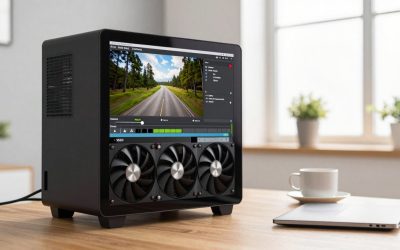
“Gaming desktop package” usually means one of two things: a prebuilt system sold as a complete bundle, or a build-it-yourself parts list that someone’s calling a package deal. Both routes get you to the same place, but they fail in different ways and suit different people. This is about how to pick between them without overspending or ending up with a bottleneck you didn’t see coming.
As an Amazon Associate we earn from qualifying purchases at no extra cost to you.

Prebuilt bundle vs. DIY parts list
A prebuilt gaming package bundles case, motherboard, CPU, GPU, RAM, storage, and PSU into one SKU with one price and one warranty. The appeal is obvious: no research, no compatibility checking, no risk of frying a part during assembly. The downside is just as real: prebuilts almost always use proprietary or cost-cut components somewhere, usually the PSU or the motherboard, to hit a price point. You pay a premium for assembly and support, and you give up some upgrade flexibility.
Building your own from a parts list costs less for the same performance tier, usually by 10-20%, and you know exactly what’s in it. The cost is your time, the risk of a DOA part or a seating mistake, and the fact that if something doesn’t work, you’re the one troubleshooting it, not a support line.
Neither is wrong. If you’ve never opened a case and don’t want to learn right now, buy prebuilt and accept the markup. If you’re even slightly curious about hardware, building saves money and teaches you things that pay off every time you upgrade later.
What actually matters in the package
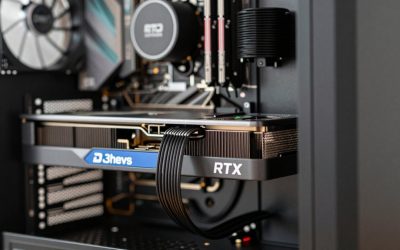
The GPU determines your frame rates more than anything else in the box, so it should get the largest share of your budget, roughly 35-45% of total spend for a gaming-focused build. The CPU matters less than people think unless you’re also streaming, running heavy background tasks, or playing CPU-bound simulation and strategy titles. A midrange CPU paired with a strong GPU will outperform a flagship CPU paired with a weak GPU in nearly every game.
RAM capacity matters more than RAM speed for most people. 16GB is the realistic floor for current games; 32GB is worth it if you alt-tab constantly, run a browser with fifty tabs, or do any content creation alongside gaming. Storage is where people underspend the most: a single small SSD fills up fast once a few modern titles are installed, and running your OS off a slow or aging drive makes everything feel sluggish regardless of GPU power.
The part nobody gets excited about but should: the power supply. A cheap, no-name PSU is the single most common cause of random shutdowns, failed boots, and in rare cases, damage to other components when it dies. This is not the place to cut corners, even in a budget build.
Budget tiers and what they actually get you
| Budget | Realistic target | Who it suits | Where it struggles |
|---|---|---|---|
| $700-900 | 1080p, high settings, 60-100fps in most titles | Casual and competitive gamers on a budget, first builds | Demanding new releases at max settings, any serious VR |
| $1,000-1,400 | 1080p high refresh (144Hz+) or solid 1440p | Most people who game regularly and want headroom for 2-3 years | 4K gaming, heavy simulation workloads |
| $1,500-2,200 | 1440p high refresh, entry to mid 4K | Enthusiasts, people who also stream or edit video | Diminishing returns past this point unless you need 4K/144 |
| $2,500+ | 4K high refresh, no compromises | Enthusiasts with disposable income, professional content creators | Cost per frame gets steep; mostly bragging rights above this |
Most buyers overspend at the top end chasing a frame rate difference they won’t notice, and underspend on storage and PSU to afford a flashier GPU. Both mistakes come from focusing on the one spec that’s easy to brag about.
Storage: the part that’s easy to get wrong
A single 500GB SSD feels generous until you install three or four current games and a Windows update eats 20GB. The practical minimum for a gaming-only system is 1TB; if you also keep a media library, work files, or multiple large games installed at once, 2TB is the saner floor. NVMe drives load levels faster than SATA SSDs, but the difference is seconds, not minutes, and won’t change your gameplay. Where NVMe actually matters is open-world games with asset streaming, where texture pop-in is noticeably worse on a slow drive.
If you’re assembling your own package, it’s worth browsing 1TB NVMe SSD options rather than assuming the prebuilt’s default drive is big enough. A lot of mid-tier prebuilts still ship with 512GB as the primary drive, which fills up within a few months of normal use.
What to actually do
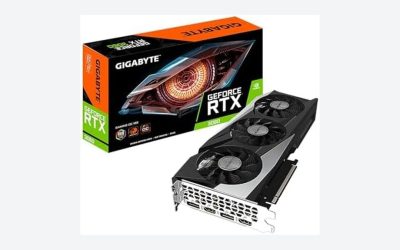
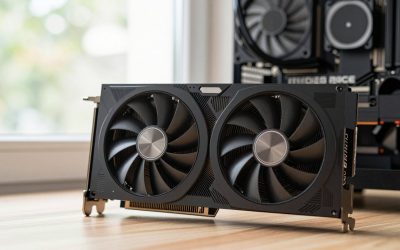
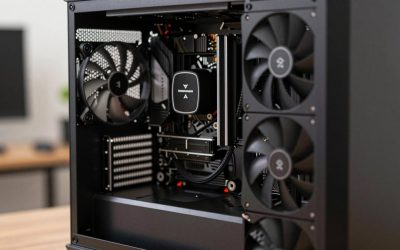
If you’re buying prebuilt, check the PSU brand and wattage before anything else, and confirm the case has airflow (mesh front, not solid glass) if you’re buying a high-wattage GPU. If you’re assembling a parts package yourself, start by picking the GPU for your target resolution and refresh rate, then build the rest of the budget around it. Browsing a current graphics card lineup at your price point first will anchor the rest of your decisions better than starting with the CPU or case.
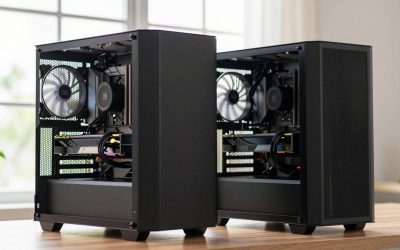
Don’t skip the PSU line item to save money, and don’t buy a case with no airflow because it looked good in photos, those are the two decisions people regret most six months in. If you want a full package without the per-part research, a prebuilt gaming desktop at the right tier above is a reasonable trade of money for time, as long as you check the PSU and storage specs before buying rather than after.
FAQ
Is a prebuilt gaming PC worth the extra cost over building my own?
It’s worth it if you value your time and want a single warranty to call if something breaks. It’s not worth it if you’re comfortable with a screwdriver and want the best price-to-performance ratio, since building typically saves 10-20% for the same specs.
How much RAM do I actually need for gaming?
16GB is enough for the vast majority of current games. Go to 32GB only if you multitask heavily, stream, or run creative software alongside games.
Should I prioritize CPU or GPU on a tight budget?
GPU, in almost every case. A capable GPU with a modest CPU will outperform the reverse pairing for gaming specifically. The exception is CPU-heavy strategy or simulation games, where a stronger CPU pays off more.
Is 1TB of storage enough for a gaming PC?
It’s a reasonable minimum for a gaming-only setup today, but it fills up fast with a handful of modern titles installed. If you also store media or work files, 2TB avoids the hassle of constantly uninstalling games to make room.