DEVOUR is Straight Back Games’ co-op horror game, released on Steam on 28 January 2021, built around online co-op for small groups with full controller support and optional VR support. Readers ask whether it runs on Linux, and the honest answer starts with an unusual record shape: this is a genuine two-platform game whose second platform is Mac, not Linux. The Mac support is real at every layer a buyer can check, while Linux is absent at every layer that delivers a build.


That split is what this status check walks through: Steam’s flags, fields, depots and package read one by one, the two family apps read individually, and the community records reported at exactly the level each could be read.
As an Amazon Associate, we earn from qualifying purchases.
Quick answer
DEVOUR has no native Linux build. Steam’s record flags Windows and Mac only, the Linux requirements field is blank, no Linux depot exists, and the purchase package delivers the two named builds. Linux players use Proton: ProtonDB rates the game Gold across 63 reports, and Valve marks the Steam Deck Verified.
What Steam’s record actually sells
The store record’s platform flags read windows true, mac true and linux false. The Windows requirements are genuinely populated at both tiers, asking for a 64-bit Windows 10 system with an i5 class processor, 8 GB of memory and a GTX 970 class graphics card at minimum. The Mac field is populated just as concretely: OS 10.15, an Intel i5 or equivalent, 8 GB of memory and 3 GB of video memory at minimum, rising to an i7 class processor and 4 GB of video memory recommended. The Linux field is an empty shell — its Minimum and Recommended headings sit over blank text.
Fields alone can mislead, so the delivery layers matter more. SteamDB’s depot table lists a Windows content depot of 14.03 GiB, a second Windows developer depot, and a macOS depot of 14.20 GiB — a full-size Mac build in the Windows one’s size class. There is no Linux depot in any form, and no registered Linux client icon either: the stray-asset shape this series watches for is absent. The configuration instead registers the Mac markers for 64-bit, Apple Silicon and notarized builds.
The purchase package closes the question. The game sells through a single package, and Steam’s packagedetails record for it reads windows true, mac true, linux false, granting the game app alone. A normal purchase delivers the Windows and Mac builds by construction. So the verdict is not native for Linux — and this record differs from the stranded cases in this series: the Mac flag that looks like boilerplate is backed by a populated field, a full-size depot and a package that includes it. Linux is the platform with nothing behind its name.
The family: one agreeing pack, one soundtrack flag
The game’s DLC array holds exactly two apps, and they split. The DEVOUR: Supporter Edition, released 3 August 2022, is a content pack of unique in-game items sold as a way to support development. Its record flags windows and mac true and linux false, its Mac field is populated, its Linux field is the game’s same empty shell, and its 91.24 MiB depot sits inside the game’s depot table. It agrees at every layer.
The DEVOUR: Soundtrack, released 13 May 2022, is the family’s sole false signal. The music app’s record flags all three platforms true — Windows, Mac and Linux — while its Mac and Linux fields are empty lists outright. A soundtrack carries audio files, not a game build, so its Linux flag describes nothing a buyer can install and play. This is the classic soundtrack trap, and the ruling follows the game and its purchase package, not the album. No further family apps exist — a store search returns the game and these two extras, and SteamDB associates no additional apps.
Anti-cheat: three sources, kept separate
Because DEVOUR is an online co-op title, the anti-cheat layer matters, and the three sources are reported separately. Steam’s store record names no anti-cheat: there is no DRM notice and no external account notice. SteamDB’s detected-technology list names engine and services plumbing only — Unity, the Discord SDK, the Dissonance voice-chat SDK, OpenXR and Opus — with no anti-cheat technology detected. Are We Anti-Cheat Yet, the community dataset tracking anti-cheat support for Proton, carries no entry for this game: its full dataset was searched by name and by app id and returned zero hits.
The accurate summary is documented silence. No source names an anti-cheat, records a Linux block, or issues a Supported ruling. Nothing stronger is claimed here, and the ProtonDB file below holds the practical multiplayer evidence.
ProtonDB: a Gold headline over a mixed file
ProtonDB’s summary record was read in full. It rates the game Gold as its headline tier, with Platinum as both the best-reported and the trending tier, across 63 reports at strong confidence — a healthy community file for a title running through a compatibility layer it was never built for.
One check could not be completed. ProtonDB game pages head their requirements block with a classification label, and this series checks whether it claims native support Steam’s record contradicts. This session the page’s readable text carried report content only and the raw page is a script shell, so the heading could not be read in either direction and nothing is claimed about it.
The report texture is mixed in a way the headline hides, kept at report weight here. The page’s featured filing describes multiplayer connection failures — lobby lists visible but sessions unreachable — and crashes around the introductory cutscene in single-player. Set against the Gold headline, the fair reading is that most reporters run the game well under current Proton while a minority hit connection or stability faults.
Steam Deck: Verified, on 2022 paperwork
Valve’s compatibility endpoint answered directly this session and returns the game as Verified, with SteamOS separately rated Compatible. All four Verified checks pass: all functionality is accessible under the default controller configuration, the game shows Steam Deck controller glyphs, interface text is legible, and the default graphics configuration performs well. The sheet’s one note is that external Bluetooth or USB controllers do not default for the primary player, which may need a manual Quick Access Menu switch. The recommended runtime reads proton-stable, meaning the badge certifies the Windows build under Proton.
The paperwork’s age is the caveat. Valve’s test was recorded on 2 April 2022 against build 8468930; the public branch now serves build 26455909, built in November 2026, after years of content updates. The grade is the current store verdict and has not been withdrawn, but the sheet describes a much older build, so this file joins the factual list of Deck paperwork that predates the current build line.
The GOG question
There is no GOG edition to weigh. The game’s natural GOG address redirects to the general catalogue instead of resolving to a product page, the catalogue API returns no record for the name, and the embed search returns zero products. No identity-verifiable GOG product exists, and no wishlist listing is treated as an edition.
Gear that fits the record
The gear below follows the record’s shape: a Verified badge over a Windows build, full controller support, and co-op play where a second pad matters.
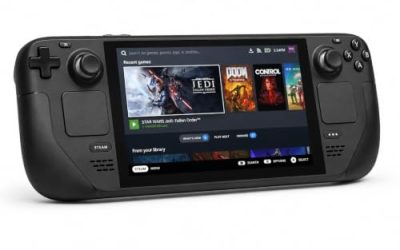
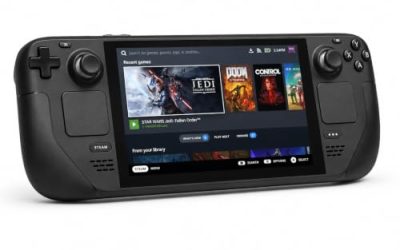
Valve Steam Deck OLED 512GB
The handheld the Verified badge was written for. Valve’s sheet passes the Windows build on all four checks under proton-stable, and the game’s recommended specification is modest next to the Deck’s APU.
Specs
- Display: 7.4-inch HDR OLED, 1280 by 800, up to 90 Hz
- Processor: AMD Zen 2 and RDNA 2 custom APU
- Memory: 16 GB LPDDR5
- Storage: 512 GB NVMe, plus a microSD slot
- Wireless: Wi-Fi 6E and Bluetooth
- Channel note: Valve sells the Deck mainly through its own store, so Amazon listings are third-party sellers
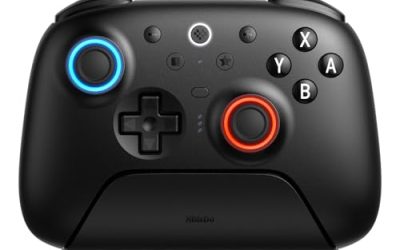
8BitDo Ultimate 2 Bluetooth Controller
The second-player and docked pick, adding back buttons and a charging dock to the couch setup.
Specs
- Connectivity: Bluetooth wireless and USB-C wired
- Joysticks: TMR electromagnetic, anti-drift design
- Triggers: Hall effect, with mode switching
- Extras: two remappable back buttons, motion control
- In the box: charging dock included
Xbox Wireless Controller, Carbon Black

The guest pad that needs no introduction: Steam Input support is universal and the glyphs match what the game displays. On the handheld, Valve’s note applies — an external pad may need the Quick Access Menu switch before it takes the primary player slot.
- Connectivity: Xbox Wireless and Bluetooth
- Port: USB-C for wired play
- Controls: hybrid D-pad, dedicated Share button
- Power: AA batteries or optional rechargeable pack
Logitech G502 HERO

For desktop sessions, where menus and lobby screens reward a precise wired mouse with programmable buttons for the inputs a long session repeats.
Specs
- HERO optical sensor, up to 25,600 DPI
- 11 programmable buttons
- Adjustable weight system
- Wired USB connection
- On-board memory profiles
Samsung T9 Portable SSD 2TB

A library shared between a desktop and a laptop travels well on a fast USB-C drive. The headline speed needs a Gen 2×2 host port; on a lesser port the drive runs at that ceiling.
Specs
- Capacity: 2 TB portable SSD
- Interface: USB 3.2 Gen 2×2, USB-C connector
- Maker-rated speeds: up to 2,000 MB per second read, 1,950 MB per second write
- Features: Dynamic Thermal Guard, maker-rated drop resistance
How to choose
Choose the Steam copy, because it is the only PC edition on sale and the build both compatibility records describe. On a Linux desktop or laptop, install it under Proton and start with the default compatibility tool: the Gold headline with Platinum tiers behind it says the aggregate experience is strong, and the file’s faults cluster in a minority of filings. On a Steam Deck, the Verified badge means install and launch with no configuration expected; only reach for controller settings if you pair an external pad.
Who should skip
Skip this one if you are shopping for a native Linux horror game: DEVOUR is not one, and the only Linux flag in its family belongs to a soundtrack. Skip it if you want a DRM-free installer, because no GOG edition exists. Skip it if your co-op nights cannot tolerate connection risk, since the ProtonDB file carries detailed multiplayer failure reports alongside its Gold headline.
FAQ
Is DEVOUR native on Linux?
No. Steam’s record flags Windows and Mac only, the Linux field is blank, no Linux depot exists, and the purchase package delivers Windows and Mac builds. The family’s only Linux flag belongs to the soundtrack app, which sells audio files, not a build.
How well does DEVOUR run under Proton?
ProtonDB’s summary record rates it Gold, with Platinum as both the best-reported and trending tier, across 63 reports at strong confidence. Most filings describe a working game; a minority report multiplayer connection failures and cutscene crashes.
Is DEVOUR Steam Deck Verified?
Yes. Valve’s endpoint returns Verified, all four checks passing, with one note that external controllers do not default to the primary player and may need a Quick Access Menu switch. The test paperwork dates from April 2022, so the grade is current but the sheet behind it is old.
Can I buy DEVOUR on GOG instead?
No. GOG carries no edition: the natural product address redirects to the general catalogue, and the catalogue API and embed search return nothing for the name.
Final verdict
DEVOUR is a Windows and Mac game with no native Linux build, and its record is unusually honest about it: the Mac support that could have been boilerplate is backed by a populated field, a full-size depot and the purchase package, while Linux has a blank field and nothing else. The family’s one false note is the soundtrack’s all-platform flag, which the game’s own layers overrule. For Linux players the Proton route is the whole story, and a decent one — a Gold file trending Platinum, a Verified badge on old paperwork, and a minority of connection complaints to plan around.
Product and ASIN Reference
| Product | ASIN |
|---|---|
| Valve Steam Deck OLED 512GB | B0CQ3RWQQZ |
| 8BitDo Ultimate 2 Bluetooth Controller | B0F194QFT2 |
| Xbox Wireless Controller, Carbon Black | B08DF248LD |
| Logitech G502 HERO | B07GBZ4Q68 |
| Samsung T9 Portable SSD 2TB | B0CHFS9K14 |