- Top Pick: The Game Theory Method: Concepts, Worked Examples, and Exercises for Strategic Thinkers | Nash Equilibrium, Mixed Strategies, Sequential and Bayesian Games
- Best Value: Practice Game Theory: Get a Competitive Edge in Strategic Decision-Making, Avoid Getting Outplayed, and Maximize Your Gains. (Game Theory Series)
- Premium Choice: The Cooperative Heart – Game theory for modern relationships (GAME THEORY APPLIED TO EVERYDAY LIFE)
“Cheap Talk Game Theory” is a strange title for a hardware article, so I’m interpreting it the way a reader actually would: when is “cheap” in gaming gear just talk (false economy, marketing fluff), and when is cheap genuinely the correct, rational move? That’s a real buying question, so here’s the honest breakdown.
As an Amazon Associate we earn from qualifying purchases at no extra cost to you.


What “cheap talk” means when you’re buying hardware
In game theory, “cheap talk” is communication that costs nothing to make and isn’t backed by anything real, so a rational buyer should weigh it less than a signal that actually costs the sender something. Translate that to a gaming PC storefront and it explains a lot of what you see on spec sheets and product listings: a case plastered with “RGB GAMING” badges, a power supply with no 80 Plus certification but a shiny sticker, a mouse claiming “16000 DPI” when no human can use that meaningfully. These are cheap signals. They cost the manufacturer almost nothing to print and tell you almost nothing about real performance.
The flip side is that sometimes the cheap option is the correct option, not because of marketing, but because the extra money buys you a signal you don’t actually need. A $20 headset and a $150 headset might both tell you they have “immersive surround sound,” but only one of them is backed by actual driver quality and build cost. Your job as a buyer is to find the costly signals: certifications, warranty length, independent reviews, teardown data, that correlate with real quality, and ignore the free ones.
Where cheap talk shows up most in PC hardware
Power supplies are the clearest case. Wattage numbers on cheap, unbranded PSUs are often optimistic to the point of fiction, because printing a bigger number costs nothing. An 80 Plus Bronze/Gold/Platinum certification, by contrast, is a costly signal: it requires independent lab testing the manufacturer pays for, so a certified unit is telling you something real about efficiency and build quality. If you’re buying a PSU, treat the certification tier as the signal and the wattage claim on no-name units with skepticism.
RAM speed and “gaming” branding on components is another one. A stick of RAM labeled with aggressive marketing but no listed timings or a generic heatsink is cheap talk. The real signal is the JEDEC/XMP profile support and the actual CAS latency, which costs the manufacturer binning effort to achieve.
Cooling is a good example of the opposite: a plain aluminum tower cooler with no marketing at all can outperform a flashy RGB cooler because thermal performance is driven by fin surface area and fan quality, not paint. This is a place where cheap literally is fine, and spending more buys you lighting, not cooling.
When cheap is the rational choice
Mice and keyboards for casual or story-focused gaming are a good example. Once you have a stable sensor (basically anything from the last 6-7 years from a known brand) and no double-clicking issues, extra money mostly buys you weight tuning, software polish, and marginally better switches. A competitive Counter-Strike player chasing flick shots has a real reason to spend more; someone playing Baldur’s Gate 3 does not. If you just need a reliable daily driver, browsing a wired gaming mouse in the budget tier is genuinely fine, and the signal to check isn’t price, it’s whether the sensor model is named at all. If a listing won’t tell you the sensor, that’s cheap talk.
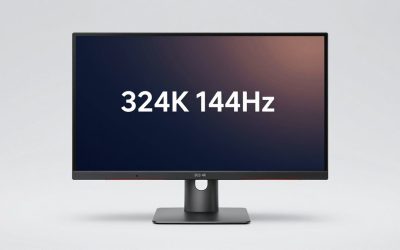
Monitors are similar. A 1080p 144Hz panel from a known brand is a real, costed product; the panel itself is expensive to manufacture to that spec, so the price floor tends to track real capability. You don’t need to overspend here unless you’re specifically chasing 1440p/240Hz+ for competitive play.
Where going cheap backfires
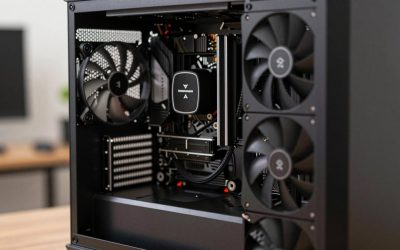
Power supplies again, because a PSU failure can take other components with it. Case airflow is another: a cheap case with no mesh front and one stock fan will bottleneck a good CPU cooler regardless of how good the cooler is, and you won’t find that out until you’re already thermal throttling under load. Peripherals with no replaceable parts (sealed battery headsets, glued-shut mice) are cheap talk in disguise, because the low price doesn’t account for the fact you’ll be buying a replacement in 18 months while a slightly pricier modular design lasts years.
| Component | Cheap talk signal (ignore) | Costly signal (trust) |
|---|---|---|
| Power supply | Printed wattage, “gaming” branding | 80 Plus certification tier |
| RAM | RGB, aggressive marketing name | Listed CAS latency, XMP/EXPO support |
| CPU cooler | Lighting, color | Fin surface area, fan static pressure specs |
| Mouse/keyboard | Unlabeled “high DPI” claims | Named sensor/switch model |
| Case | Tempered glass panels | Mesh front panel, fan mount count |
A practical rule for shopping
Before buying anything with a gaming label, ask whether the claim on the box would cost the manufacturer anything to fake. If the answer is no, it’s cheap talk and you should discount it. If the answer is yes, because it requires third-party certification, named components, or a warranty the company has to actually honor, it’s a real signal worth paying for. This single filter will save more money than any discount code, because it stops you from both overpaying for marketing and underpaying for parts where cheap really does mean worse. If you’re assembling a build and want to sanity-check a part, looking up a 80 Plus Gold power supply listing and comparing its certification badge against a no-name unit’s wattage claim is a quick, concrete way to see the difference in action.
FAQ
Does a higher price always mean better gaming hardware?
No. Price tracks real cost only when the spec in question is actually expensive to produce or certify, like PSU efficiency or display panel grade. Cosmetic features like RGB lighting inflate price without inflating performance.
How do I tell a real spec from marketing fluff?
Check whether the claim is independently verifiable, such as a certification body, a named chip or sensor, or a published datasheet. Vague superlatives with no backing number or brand name are usually filler.
Is it ever worth buying the cheapest option in a category?
Yes, when the category has a low performance ceiling that most products already hit, like basic wired mice or 1080p monitors for casual play. It’s not worth it for parts where failure has knock-on effects, like power supplies.
What’s the one spec worth paying extra for across almost any build?
Power supply certification. A cheap, uncertified PSU is one of the few components that can damage everything else in your system if it fails.