Buying computer parts locally still makes sense for certain items, and it’s a waste of money for others. The trick is knowing which category you’re dealing with before you drive to a store or place an order with a markup attached.
Why bother going local at all
Online retail wins on price almost every time, but local stores win on three things: speed, returns, and troubleshooting help you can get face to face. If a GPU dies three weeks after install, a local shop that sells and builds PCs can often swap it same day. An online RMA through a manufacturer can take two to four weeks, and that’s if you packed the original box and didn’t lose the invoice.
Local also matters when you’re mid-build and missing one part. Nobody wants to pause a build for two days waiting on a $12 cable or a case fan. That’s when a local computer store, even a mediocre one, earns its markup.
What’s actually worth buying local
Cheap, bulky, or urgently-needed items are the best local candidates:
Case fans, thermal paste, SATA and power cables, screws and standoffs, and basic cooling parts are cheap enough that a 20-30% local markup is still only a few dollars. You’re not saving meaningfully by waiting three days for shipping on a $9 item. If you need a case fans upgrade for better airflow, that’s also a fine impulse buy locally if your shop stocks decent brands and not just whatever’s been sitting on the shelf since 2019.
Prebuilt desktops and laptops from local shops can be worth it if you want someone local to blame when something breaks, but check the markup against building the equivalent yourself first.
What you should almost always buy online
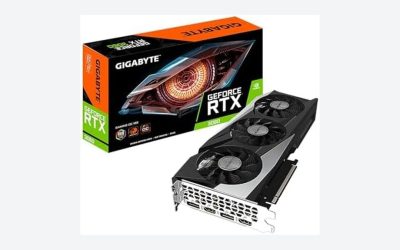
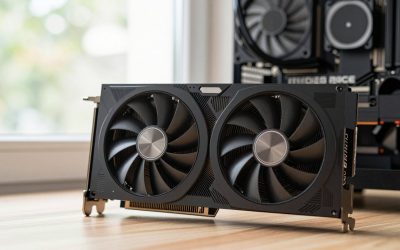
GPUs and CPUs are the two components where local pricing rarely competes. Local shops often carry only one or two SKUs per GPU tier, meaning you don’t get to shop between the $50-cheaper blower-style card and the quieter triple-fan version. Online, you can compare five or six variants of the same chip in one sitting. If you’re shopping for a new card, browse graphics cards find alternatives and compare clock speeds, cooler size, and power connectors before committing, because those details vary more than people expect even within the same GPU model.
CPUs are similar. Retail markup on processors at local stores commonly runs 10-20% over online pricing because shelf space for CPUs is limited and turnover is slower. There’s also no local advantage here: a CPU doesn’t need troubleshooting on day one the way a GPU might.
A realistic price comparison
Numbers vary by region and store, but this is a fair approximation of what you’ll see comparing a decent local computer shop against typical online pricing, based on components in the $150-400 range.
| Component | Typical local markup | Worth it locally? |
|---|---|---|
| GPU | 8-15% | No, unless you need it same day |
| CPU | 10-20% | No |
| Case fans / cables | 20-40% | Yes, cost difference is small in dollars |
| CPU cooler (air) | 10-25% | Sometimes, if return policy matters to you |
| AIO liquid cooler | 10-20% | No, failure-prone units are better bought where return windows are long and well documented |
| Thermal paste | 50-100% | Yes, it’s $5 either way |
The pattern is simple: the more expensive the part, the worse the local markup looks in absolute dollars. A 15% markup on a $30 fan is around $4. The same 15% on a $500 GPU is $75, which is real money for the exact same convenience.
Cooling is the gray area
Air coolers are forgiving enough that buying locally is reasonable, since there’s not much to go wrong and sizing mistakes (case clearance, RAM height clearance) are easy to check in person before buying. AIO liquid coolers are the opposite case. Pump failures and slow coolant loss are real failure modes that show up months or years in, and when they do, you want a retailer with a long, well-documented warranty process rather than a local shop that might not carry that exact pump model anymore. If you’re deciding between air and liquid, it’s worth browsing a CPU cooler selection online first just to see the price gap between tiers, then decide if you actually need the liquid cooling or if a $45 air cooler handles your CPU’s TDP fine. For most mainstream CPUs under 125W, it does.
Red flags at local shops
Watch for three things: no visible return policy posted, reluctance to show you the actual box or model number before purchase, and prices that don’t move at all when you mention you’ve seen it cheaper online. A shop confident in its service and speed will usually still come down a little, or at least explain clearly what you’re paying extra for. A shop that gets defensive about the comparison is telling you the markup isn’t buying you anything beyond convenience.
The actual decision rule
If the part is under $40, buy it wherever’s convenient. If it’s a GPU, CPU, or anything over roughly $150, check online pricing first and only pay the local premium if you genuinely need it that day or want the specific return relationship with that shop. Everything in between comes down to how much you value not waiting for shipping versus how much that wait is actually costing you in dollars.