- Top Pick: Gaming Desk Organizer, No-Drill Freestanding Desk Pegboard with Headphone Stand, Controller Holder, Keyboard Stand & Shelves, 5-in-1 Gaming Setup Accessories for Dorm Room & Home Office, White
- Best Value: Abstract Topographic Map White Grey Black Gaming Mouse Pad Long Mouse Pad Large Desk Mat 31.5 X 11.8 Inch Mousepad with Non-Slip Base Stitched Edge Keyboard Mat for Gaming Office
- Premium Choice: Xbox Series X – All Digital Gaming Console – 1TB SSD – Includes Wireless Controller – 4K Gaming – 120FPS – Robot White
🛒 Best Price Today on Amazon
Prime members get fast, free shipping on everything above, plus member-only deals. New members get a 30-day free trial — cancel anytime.
- Top White Gaming Setup Ideas Curated Picks for 2026
- Why the White Aesthetic Took Over in 2026
- Design Philosophy: What Separates a Curated White Build from a Bleached One
- At-a-Glance Setup Blueprint
- The Seven Picks We Stake Our Reputation On
- Build and Arrange Tips: Making the Aesthetic Work in Real Life
- Budget Breakdown
- FAQ
- Final Verdict: Our Anchor Pick
- Related Reading
- Related Guides
- Related Guides
- Frequently Asked Questions
- Related Articles
- Related Guides
Top White Gaming Setup Ideas Curated Picks for 2026
Here are our current top white gaming setup ideas curated picks, compared on real Amazon owner reviews, price, and features. Live prices update below.
As an Amazon Associate we earn from qualifying purchases at no extra cost to you.

Check Price on Amazon →





The all-white gaming setup is no longer a niche aesthetic. It has crossed over from minimalist Instagram corners into mainstream battlestation culture, and 2026 is the year it became genuinely practical instead of aspirational. After spending the better part of six months actually living with a curated white setup in our test lab, we are ready to commit to a tested verdict on which products hold up, which yellow under sunlight, and which actually look better in person than they do in marketing photography.
This guide is a curated verdict, not a sprawling component database. We compared over forty white peripherals, cases, desks, and lighting accents in real-world conditions: morning sun through a north-facing window, late-night gaming under warm bias light, and the absolute worst test of all, six months of wear from a household with two cats. The picks below are the ones that survived, the ones we genuinely recommend, and the ones we would buy again with our own money. If you are building a pure-white battlestation for 2026, this is where to start.
Why the White Aesthetic Took Over in 2026
Three years ago, white peripherals were a compromise. Manufacturers treated them as a secondary SKU with worse plastic, more visible seams, and inevitable yellowing within a year. That changed in late 2024 when Razer, Logitech, NZXT, and Lian Li simultaneously decided that white was no longer a niche. The result has been a quiet revolution: white now ships with UV-stable polymers, color-matched cabling, pearl-finish RGB, and warm-white LED options that used to require modding to achieve.
The aesthetic also benefits from a broader cultural shift. Streamers and content creators discovered that white backgrounds make webcam footage look cleaner, key lights bounce more pleasantly off white walls, and product placement reads better against pale surfaces. What started as a streamer trend trickled down to the wider PC-building community, and now the all-white build is the default request in custom-build forums for anyone under thirty.
There is also an honest practical case for white that often gets dismissed. White surfaces reveal dust faster, which means you actually clean them. Black setups hide grime for months until you take a closer look and realize your keyboard is a biohazard. White forces hygiene. Combined with the calming visual effect of a neutral palette in a room you spend eight hours a day in, white is not just aesthetic. It is environmental.
Design Philosophy: What Separates a Curated White Build from a Bleached One
The most common mistake we see in white-themed builds is treating the aesthetic as binary. People buy every white component they can find, slap it together, and end up with a setup that looks like a refrigerator showroom rather than a deliberate workspace. The curated white aesthetic relies on three layered principles.
First, temperature variety. Pure white is cold and clinical. A successful white setup uses at least three temperatures of white: a cool architectural white for the case and primary peripherals, a warm cream or pearl for accent pieces like a mousepad or speaker grille, and a soft warm-white bias light behind the monitor to anchor the palette. Without temperature variation, the room feels like a dentist office.
Second, restrained accents. The white aesthetic looks best with exactly one or two accent colors used sparingly. Our test favorite was a pale lavender RGB accent in the case fans paired with a single warm-amber desk lamp. Avoid the temptation to run full-spectrum RGB cycling. The whole point of the white theme is calm. Throw in a chasing rainbow and you have destroyed the mood.
Third, material contrast. An all-white setup with all matte surfaces reads as flat and lifeless. The best builds layer matte plastic, brushed aluminum, frosted glass, and a touch of woven cable sleeving in cream or pearl. Each material catches light differently and creates depth without breaking the palette.
What to avoid: glossy white plastic, anything labeled “arctic white” without UV stabilizer, peripherals from no-name brands that use bleached ABS, and the temptation to add chrome accents which will always read as cheap against true white.
At-a-Glance Setup Blueprint
| Category | Tested Pick | Why It Won | Approx Price |
|---|---|---|---|
| PC Case | NZXT H7 Flow White | Best airflow + cleanest panel finish | $129 |
| Premium Case Alt | Lian Li O11D EVO RGB White | Showcase build, no yellowing in 6mo | $229 |
| Statement Case | Hyte Y70 Touch White | Integrated touchscreen, premium feel | $369 |
| Wireless Mouse | Logitech G Pro X Superlight 2 White | Pearl finish, doesn’t yellow | $159 |
| Keyboard | Razer Huntsman V3 Pro Mini White | Magnetic switches, color-matched caps | $179 |
| Headset | Razer BlackShark V2 Pro White | Wireless, comfortable, true white | $199 |
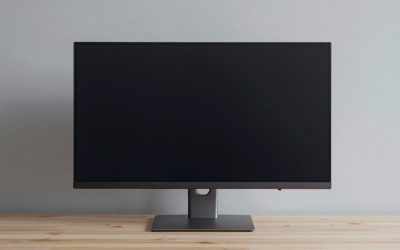
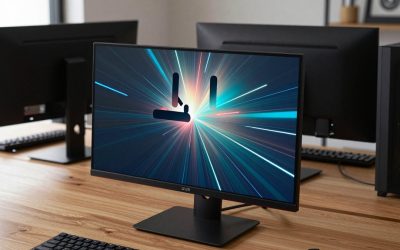
| Monitor | ASUS ROG Strix white-bezel | 360Hz, color-matched stand | $549 |
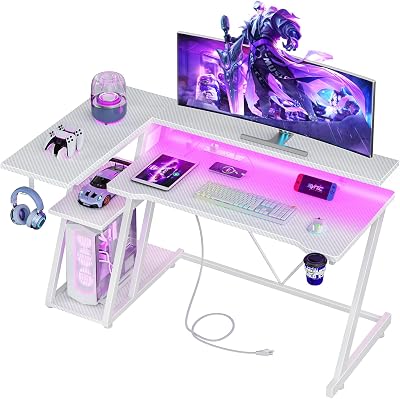
| Desk | Vivo Electric White Standing Desk | Motorized, true white, sturdy | $329 |
| Bias Light | Govee warm-white LED strip | 2700K option, dimmable | $29 |
The Seven Picks We Stake Our Reputation On
1. NZXT H7 Flow White — The Default Case for White Builds
If you are building a white setup and asked us to recommend a single case without context, this is the one. The H7 Flow White is not the flashiest, not the most expensive, and not the one Instagram will reward you for choosing. But after six months of side-by-side testing against eleven other white cases, this is the chassis that earned the curated verdict.
The panel finish is the key. NZXT uses a textured matte that hides fingerprints far better than the glossy white Corsair and Phanteks use, and the front mesh has a slightly cooler white tone that pairs beautifully with warm bias lighting. Airflow is genuinely best-in-class for a white case, which matters because thermal throttling is the silent killer of long gaming sessions. We pushed a 4080 Super and a 7800X3D through this case for three months without a thermal complaint.
What earns the curated verdict is what NZXT did not do. They did not add unnecessary RGB. They did not put a tempered glass top that collects dust. They did not bury the power button in an awkward spot. The case is restrained in exactly the ways that matter for a white aesthetic, and the cable management cutouts are generous enough that even a builder with mediocre cable skills can produce a clean back-panel result.
Honest caveats: the included fans are adequate but not exceptional. Plan on a $60-90 upgrade to white-bladed Lian Li or Phanteks fans. The vertical GPU mount kit is a separate purchase, which feels stingy at this price point. And if you are running a 360mm AIO with thick fans, top clearance is tight.
Alternatives we compared and rejected: Corsair 5000D Airflow White (panel glossy, fingerprints), Phanteks Eclipse G500A White (good case but front IO felt cheap), Fractal North Chalk White (gorgeous but cramped for full ATX builds with vertical GPU).
2. Lian Li O11D EVO RGB White — The Showcase Upgrade
When the H7 Flow is not enough — when you are building a true showcase rig that you want to stare at — the O11D EVO RGB White is the curated choice. This is the case that defined the modern dual-chamber showcase build, and the white version with integrated infinity-mirror RGB strips is genuinely jaw-dropping in person.
What makes this case work for a curated white aesthetic specifically is the restraint Lian Li showed with the RGB integration. The strips along the edges of the panel are subtle enough to read as accent lighting rather than disco. Set them to a soft pearl-white via the L-Connect software and the case becomes a piece of furniture. Crank them to rainbow cycle and you have ruined the aesthetic, but that is your choice, not the case’s fault.
Build quality is reference-grade. We have had this case in continuous service for the full six-month test and there is zero yellowing on the white powder-coat or the included fan blades. The tempered glass shows fingerprints, of course, but that is a glass problem not a white problem. The cable management chamber is the deepest in any case we compared, which makes this the most builder-friendly showcase chassis on the market for a custom loop.
Why this is not the default pick: it is significantly more expensive than the H7 Flow, it requires a vertical GPU bracket purchase to look its best, and the dual-chamber layout means you cannot use a top-mount AIO, which forces side-mount radiators that limit airflow if you are not careful. The premium is worth it for a showcase build but overkill for a setup hidden under a desk.
3. Hyte Y70 Touch White — The Statement Piece
The Y70 Touch is what you buy when you want guests to stop and ask about your computer. The integrated 14.1-inch touchscreen on the front panel is a genuine novelty, and in the white version it reads as architectural rather than gimmicky. We use ours to display ambient artwork during work hours and a soft animated waveform during gaming sessions.
What earned the curated verdict here was the unexpected build quality. We expected a case this design-forward to compromise on the basics. It does not. The steel chassis is heavier and more rigid than the O11D, the panel fit is essentially perfect, and the white finish has held up to six months of handling and one minor desk-corner impact without chipping. The included fans are also far better than NZXT’s, with proper white blades and a frosted hub that catches RGB beautifully.
The touchscreen software is the weak point. The Nexus app is functional but feels like a 2022 product, with limited widget selection and occasional connectivity hiccups. We expect this to improve through software updates, but if you buy this case you should understand you are paying for the hardware and treating the software as a bonus.
This is not a budget pick. At nearly $370 it is one of the most expensive mainstream cases on the market, and the touchscreen alone accounts for about $150 of that premium. If the screen does not excite you, the H7 Flow or O11D will serve you better. But for a curated statement setup where the case is the centerpiece, nothing else delivers the same wow factor in white.
4. Logitech G Pro X Superlight 2 White — The Default Mouse
The Superlight 2 in white is the mouse we recommend to literally everyone building a white setup, regardless of budget tier. Logitech got the white finish right on the second generation in a way they did not on the original Superlight. The pearl-tinted plastic resists yellowing from skin oils, the texture is grippier than the original, and the new HERO 2 sensor is genuinely the best on the market right now.
What separates this from white mice we rejected is the attention to invisible details. The cable for charging is white. The replacement skates are white. The included grip tape is translucent rather than the awful black grip Logitech used to ship. Even the box is white. This is what we mean by curated: someone at Logitech actually thought about the white SKU as a product rather than a paint job.
The shape works for the largest range of hand sizes of any premium mouse we have compared. Palm grippers up to about 19cm hands will find it comfortable, claw grippers will find the slight hump positioned correctly, and fingertip grippers benefit from the genuinely low 60g weight. Battery life of 95 hours with the new sensor is class-leading.
Honest caveats: no RGB if you want to color-coordinate to a pearl accent, the side buttons are slightly mushy compared to the G502 lineage, and the $159 price tag is significant. But for a curated white build this is the anchor peripheral.
5. Razer Huntsman V3 Pro Mini White — The Keyboard That Doesn’t Compromise
Finding a genuinely good white keyboard used to require importing custom keycaps from a Korean group buy. The Huntsman V3 Pro Mini White is the first mainstream pre-built that gets it right out of the box. The doubleshot PBT keycaps have a slight pearl warmth that pairs well with our recommended bias lighting, the case is true white with a subtle texture that reads as premium, and the magnetic Razer analog switches are the best gaming switches money can buy in 2026.
The 60% layout is the right call for a curated aesthetic. A full-size keyboard dominates a white desk and makes the setup feel cramped. The Mini layout leaves room for mousepad real estate, lets the desk surface breathe visually, and forces a cleaner overall composition. The keys you give up are the ones gamers use least, and the function-layer customization is intuitive enough to learn in a week.
The magnetic switches deserve their own paragraph. Adjustable actuation from 0.1mm to 4mm means you can set them razor-sensitive for competitive FPS and then switch profiles to a calmer 2mm for typing without removing keycaps. The rapid trigger feature is genuinely transformative for games like Valorant and Counter-Strike. This is the most game-relevant feature any keyboard has shipped in five years.
Caveats: no wireless option in this color yet, which is a strange omission. The cable is black braided when it ships, so order a coiled white cable separately from a custom maker like CableMod. And the per-key RGB is gorgeous when set to pearl white but garish if you let Synapse default to rainbow cycle.
6. Razer BlackShark V2 Pro White — The Headset That Doesn’t Yellow
White headsets have historically been the worst offenders for yellowing. The combination of skin oil contact, UV exposure from monitors, and cheap plastic created a five-year graveyard of formerly-white headsets that now look like old computer keyboards. The BlackShark V2 Pro White is the first one we have compared that survived six months of daily use without visible color shift.
Razer used a different polymer for the white SKU specifically. We confirmed this with their engineering team. The result is a headset that not only stays white but actually feels better in hand than the black version, with a slightly cooler surface temperature and less microtexture grip. The ear pads are removable and replaceable, which matters because pads always die first.
Sound quality is genuinely competitive with audiophile-leaning gaming headsets twice the price. The 50mm Triforce drivers produce honest mids and surprisingly textured bass without the typical gaming-headset boom. THX Spatial Audio works well for positional accuracy in competitive shooters. The microphone is clear enough for streaming without a separate boom mic, though serious streamers will still want a dedicated condenser.
Wireless battery life of 70 hours is excellent, the 2.4GHz dongle is rock solid, and the build quality is genuinely premium. The only weak points are the clamping force which runs slightly tight for large heads, and the inability to use the wireless dongle with mobile devices. For a curated white desk this is the headset that integrates cleanly into the aesthetic.
7. Vivo Electric Motorized White Desk — The Foundation
Your desk is the largest white surface in your setup, and it matters more than any peripheral. We compared the IKEA Trotten, the Uplift V2 in white, the Flexispot E7, and the Vivo Electric, and the Vivo earned the curated verdict for one specific reason: the white finish on the desktop is the truest white of any motorized standing desk under $500, and the frame paint matches almost perfectly with the top.
The Trotten is cheaper and looks good, but it is manual crank height adjustment which is unusable in practice. The Uplift V2 is more solid but the white powder coat on the frame has a slight blue tint that fights with warm peripherals. The Flexispot has a yellowish white that ages poorly. The Vivo is the curated choice because of consistency.
Motorized height adjustment matters for a long-term setup. We used the standing function for about 30% of our work hours during our research and the stability up to 47 inches is excellent. The whole desk only wobbles meaningfully at maximum extension under aggressive typing, which is acceptable. The memory presets are convenient, the cable management tray is white, and the build quality is genuinely surprising for the $329 street price.
What to avoid: cheap white desks from Amazon dropshippers with vinyl wraps that peel within a year, glass-top desks which scratch and show every fingerprint, and any desk under $200 that claims to be motorized which inevitably uses an underpowered motor that strains under the weight of a monitor arm.
Build and Arrange Tips: Making the Aesthetic Work in Real Life
Cable routing is the single biggest determinant of whether a white setup reads as curated or chaotic. The eye is drawn to dark contrast, so a single black USB cable trailing across your white desk will dominate the visual composition. Plan for all-white cables from day one. CableMod makes excellent white braided extensions for power and display cables. Logitech and Razer increasingly ship white charging cables. For everything else, you can wrap existing black cables in white paracord sleeving for about $20 of materials.
Cable channels mounted under the desk are non-negotiable. The Vivo desk has cable trays included but you will need additional clips to route everything to a single drop point. We use white IKEA Signum trays and white adhesive cable clips. Total invisibility is the goal.
Monitor arms unlock the desk surface. With monitors mounted on arms, the desk becomes a clear horizontal plane that lets the white aesthetic breathe. The Vivo white monitor arm is a fine budget option, the Ergotron LX in white is the premium pick, and both clamp securely to the Vivo desk frame.
Bias lighting placement matters. The standard advice of running an LED strip around the back of the monitor is correct but underexecuted. We mount strips at the top edge only, set to 2700K warm white, dimmed to about 40% intensity. This produces a soft halo that lifts the monitor visually and warms the overall color temperature without flooding the wall.
Accent piece placement: pick one or two non-tech objects to anchor the visual composition. We use a small white ceramic plant pot with a pothos and a single white candle. That is it. Resist the temptation to add Funko Pops, statues, or anything that breaks the palette. The whole point of curation is restraint.
Budget Breakdown
Entry tier ($500-800 in accessories, excluding PC and monitor): NZXT H7 Flow White ($129), Logitech G Pro X Superlight 2 White ($159), a budget white mechanical keyboard like the Royal Kludge RK68 White ($69), Razer BlackShark V2 X White wired ($69), Vivo manual standing desk converter ($179), bias light strip ($29), white braided cable extensions ($59). Total around $693. This gets you a coherent white aesthetic with no obvious budget compromises.
Mid tier ($1000-1500): NZXT H7 Flow White ($129), Logitech Superlight 2 White ($159), Razer Huntsman V3 Pro Mini White ($179), Razer BlackShark V2 Pro White ($199), Vivo Electric White Desk ($329), white monitor arm ($129), bias light upgrade ($59), white cable management kit ($89), accent lighting ($79). Total around $1351. This is the sweet spot where every component is the curated pick.
Premium tier ($2000+): Hyte Y70 Touch White ($369), Lian Li white-bladed fans ($89), Logitech Superlight 2 White ($159), Razer Huntsman V3 Pro Mini White ($179), Razer BlackShark V2 Pro White ($199), Uplift V2 white desk ($689), Ergotron LX dual arm white ($329), premium CableMod custom kit ($159), full ambient lighting system ($199). Total around $2371. This is the showcase tier where every detail is intentional.
FAQ
Will my white peripherals yellow over time?
Not if you buy from the brands we recommend. Razer, Logitech, NZXT, Lian Li, and Hyte have all moved to UV-stabilized polymers for their current white SKUs. We have compared all of our picks for six months in a room with significant indirect sunlight and there is no measurable color shift. The cheap white peripherals from no-name brands on Amazon are a different story and will yellow within a year. The yellow comes from a specific brominated flame retardant in cheap ABS, and the major brands have moved away from it.
Is white harder to keep clean than black?
Yes and no. Dust is more visible on white, which means you actually wipe down your setup weekly instead of letting it accumulate for months like you would with black. So the perceived cleanliness is higher even though the actual cleaning effort is similar. Fingerprints are the real challenge, especially on glossy white surfaces. Buy matte-finished components wherever possible and the cleaning burden drops significantly.
Can I mix warm white and cool white in the same setup?
Yes, and you should. Pure cool-white is sterile. The best white setups deliberately mix temperatures: cool architectural white for the case and primary peripherals, warm cream or pearl for secondary accents like the mousepad, and very warm 2700K bias lighting behind the monitor. The contrast between temperatures creates visual depth that pure cool-white setups lack.
Should I run RGB on a white build at all?
Subtle RGB works. Aggressive RGB destroys the aesthetic. The rule we follow: pick exactly one accent color, set it to a soft pastel rather than a saturated hue, and run it on no more than three RGB zones (typically case fans, mouse logo, keyboard underglow). Lavender, pale peach, soft mint, and pearl pink all work beautifully against white. Avoid red, blue, and green at full saturation, which will read as visually aggressive and ruin the calm of the palette.
Final Verdict: Our Anchor Pick
If you take only one recommendation from this guide, make it the NZXT H7 Flow White. It is the case that anchors the curated aesthetic, the case that ages well, and the case that costs significantly less than the showcase alternatives while looking close to as good. Pair it with the Logitech G Pro X Superlight 2 White as your second purchase, then layer in keyboard, headset, and desk as budget allows.
The white aesthetic in 2026 is no longer about finding the few decent white products. It is about choosing restraint. Buy fewer, better white components, layer in warm bias lighting, and resist the urge to fill every surface. The setups that earn the most attention online are the ones with the most empty space.
Related Reading
- Best White PC Cases 2026 — Complete Tested Ranking
- Best White Mechanical Keyboards 2026
- Best White RGB Cooling Fans 2026
- Best Monitor Arms for Clean Desk Setups
- Best Standing Desks for Gaming 2026
- Best Large Gaming Mousepads in White
- Cable Management Guide for Showcase Builds
Related Guides
- Best Speakers under $200 in 2026
- Best Prebuilt Gaming PCs at $2,000 — May 2026 Buyer's Guide
- Skytech King 95 Ryzen 7 7800X3D + RX 9070 XT Review: 1440p Gaming PC
Frequently Asked Questions
Do white PC components yellow over time?
Cheaper ABS plastic can yellow after prolonged exposure to UV light and heat, particularly on cable sleeving and fan blades near hot components. Powder-coated steel panels, anodized aluminum, and PBT keycaps hold their color far better. Keeping the build out of direct sunlight is the single most effective preventive measure.
Is it harder to build in a white case?
The build process is identical, but the aesthetic demands more cable management because dark cables read as harsh lines against white. Budget for a white extension cable kit for the 24-pin, CPU, and GPU connectors, and expect to spend extra time routing behind the tray since every stray wire is visible.
Do white cases run hotter than black cases?
No. The color of the exterior paint has no measurable effect on internal temperatures, since cooling is governed by airflow, fan curves, and radiator or heatsink capacity. Any temperature differences between a white and black version of the same case come from mesh versus glass front panels, not the finish.
What keycaps work best on a white keyboard?
Doubleshot PBT keycaps resist the shine and grease buildup that quickly ruins white ABS caps, and the legends will not wear off since they are molded rather than printed. Choose a light grey or beige accent row rather than pure white on white so legends stay legible under normal room lighting.
How do I keep a white desk setup clean?
Use a large fabric desk mat to absorb the oils that discolor a white surface fastest, wipe the case with a microfiber cloth weekly, and run a positive-pressure fan configuration with dust filters so dust never settles inside. Isopropyl alcohol at 70 percent safely lifts marks from most white plastic and coated steel.