- Top Pick: Medline Transfer Bench for Bathtubs and Showers, Adjustable Shower Bench and Bath Seat For Seniors and adults, Slip-resistant Feet, Heavy-Duty 400 lb. Weight Capacity, Tool-Free Assembly
- Best Value: DMI Tub Transfer Bench and Shower Chair with Non Slip Aluminum Body, FSA Eligible, Adjustable Seat Height and Cut Out Access, Holds Weight up to 400 Lbs, Bath and Shower Safety, Transfer Bench
- Premium Choice: Drive Medical Tub Transfer Bench for Bathtub, Height Adjustable
The best transfer benches are the ones that let you sit outside the tub, slide or pivot across the rim without stepping over it, and remain stable after adjustment; for most standard tubs, a height-adjustable, sliding bench with a 300-pound-or-higher capacity is the safest all-round choice.
As an Amazon Associate we earn from qualifying purchases at no extra cost to you.

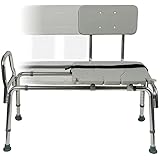


Best transfer benches compared
A transfer bench bridges the bathtub wall. Two or more legs sit on the bathroom floor outside the tub, while the remaining legs rest inside it. You sit on the outside section, move across the tub edge while seated, then position yourself under the shower.
| Bench type | Typical seat width | Height range | Typical capacity | Best for | Usual market range |
|---|---|---|---|---|---|
| Basic fixed transfer bench | 18–21 inches | 17–22 inches | 250–300 lb | Simple tub entry with adequate bathroom space | $60–$130 |
| Wide heavy-duty fixed bench | 20–24 inches | 17–23 inches | 350–600 lb | Users needing extra seating room or a larger safety margin | $100–$250 |
| Sliding transfer bench | 18–22 inches | 18–23 inches | 250–400 lb | Limited leg strength, painful transfers, or narrow tub walls | $180–$450 |
| Rotating-seat transfer bench | 16–20 inches | 19–23 inches | 250–350 lb | Users who cannot comfortably slide sideways | $250–$600 |
Capacity figures are manufacturer ratings, not recommended targets. Choose a bench rated at least 50 pounds above the user’s body weight, and more if clothing, movement, or caregiver assistance adds load.
How the main designs differ
Fixed transfer benches
A fixed bench has a continuous seat spanning the tub. It is usually the least expensive and simplest design, with fewer moving parts to maintain. The drawback is that the user must lift, shuffle, or pivot across the seat and tub wall. That can be difficult when hip, knee, shoulder, or balance problems are involved.
Choose a fixed design when the user can shift sideways while seated and the tub has a relatively low, unobstructed rim. A fixed bench is also easier to install in a compact bathroom because it does not require clearance for a sliding carriage.
Sliding transfer benches
A sliding bench places the seat on a rail. The user sits outside the tub, locks the seat, then slides across the tub wall without lifting the body over it. Look for dual locking mechanisms or a clearly audible locking system. The seat should not roll while the user is sitting down or standing up.
Sliding mechanisms reduce effort, but they add weight, cost, and maintenance. Hair, soap residue, and hard-water deposits can make rails rough. Clean the track according to the manual and never use the seat while it is between locked positions.
Rotating seats
A rotating seat turns the user toward the tub rather than requiring a sideways slide. This can help someone with limited hip movement, but the seat must lock firmly in both the entry and bathing positions. Rotation is not automatically safer: the user still needs enough trunk control to remain upright while turning.
Seat width and height: the measurements that decide fit
Seat width should provide room for the user without making the outside section extend so far into a walkway that it becomes a trip hazard. Measure the user’s seated hip width and add at least 2 inches. For example, a 17-inch seated hip width calls for a seat about 19 inches wide or wider.
Height is equally important. With the bench installed, the user’s feet should rest flat on the floor when seated. A rough starting calculation is:
Required seat height ≈ lower-leg length from the floor to the back of the knee.
Measure with shoes removed and the knee bent near 90 degrees. If that measurement is 18 inches, a bench with an adjustment range of approximately 17–21 inches is more useful than one fixed at 21 inches. A seat that is too high leaves the feet dangling; a seat that is too low increases the effort needed to stand.
For a tub with a 16-inch rim, do not assume the seat must be 16 inches high. The outside and inside leg settings may be different. Many benches are designed to sit level across the tub, but some allow a slight height difference. Follow the product instructions and check that all legs remain firmly planted.
Fit by bathtub layout
| Bathroom or tub layout | Recommended design | Important check |
|---|---|---|
| Standard alcove tub with open space beside it | Fixed or sliding bench | Measure the tub’s inside width and the available outside floor space |
| Tub beside a toilet or vanity | Narrow fixed bench or compact sliding bench | Confirm the outside seat will not block the toilet, door, or walking path |
| High tub wall or deep soaking tub | Sliding or rotating bench with sufficient height range | Check the maximum seat height and the rail’s clearance over the rim |
| Curved or unusually wide tub rim | Only a model whose frame clears the rim | Measure the rim width at several points; a straight frame may not sit safely |
| Freestanding tub | Usually not a conventional transfer bench | Consider a dedicated bath lift, shower chair, or professional assessment |
| Sliding glass doors | Removable doors or a narrow sliding bench may be necessary | Measure the clear door opening, not the tub’s total length |
Glass doors are a frequent compatibility problem. A transfer bench may technically fit inside the tub but still be unusable because the door opening is narrower than the seat. Removing the doors and installing a shower curtain can create a much safer entry path.
Drainage, stability, and installation details
Look for a seat with drainage holes or a perforated surface. A solid, smooth seat can hold water and soap, making transfers slippery. Drainage holes should be large enough to clear water but not so large that they create uncomfortable pressure points.
Legs should have individually adjustable, non-skid rubber tips. The tips must sit fully on the floor or tub surface rather than on a curved drain cover, bath mat, or loose tile. Remove the bath mat before transferring; it can bunch under a leg or slide underfoot.
For a typical installation:
- Measure the tub length, inside width, rim height, door opening, and floor space outside the tub.
- Assemble the frame according to the manual, keeping the left and right legs at matching settings unless the instructions specify otherwise.
- Place the bench so the outside section provides enough room to sit before reaching the tub.
- Set the height so the feet are flat and the seat is stable across the rim.
- Test every leg by applying downward pressure before use; no leg should rock or lift.
- For a sliding model, verify that the seat locks at the entry position and bathing position.
- Use the supplied clamps, brackets, or safety pins. Do not drill into the tub or substitute hardware unless the manufacturer explicitly permits it.
Many transfer benches are freestanding, but a wall-mounted grab bar can provide valuable support during the sitting and standing phases. A towel bar is not a grab bar and should not be used for body weight.
Decision guide: which transfer bench fits your situation?
- You can sit upright and shuffle sideways: choose a fixed bench with adjustable legs and a 300-pound capacity or higher.
- You cannot lift a leg over the tub wall comfortably: choose a sliding model with a long rail and positive locking positions.
- You have limited hip rotation: consider a rotating seat, provided it locks securely and the user can remain stable while turning.
- You need more seating room: choose a wide seat, but verify that the outside section does not obstruct the bathroom walkway.
- The user is near the stated capacity: select a heavy-duty frame rated well above the combined user and assistance load.
- The tub has doors or a high rim: prioritize clear-opening measurements and maximum height adjustment over a low purchase price.
What to avoid
A bench is a poor fit if its legs cannot sit flat, its seat cannot clear the tub rim, or its outside section leaves no safe space for the user to sit down. Avoid models with unverified capacity ratings, worn rubber tips, loose locking pins, or rails that bind during movement.
Do not use a transfer bench as a substitute for a medical assessment when the user has frequent falls, fainting, severe weakness, or difficulty remaining upright. In those cases, a clinician or occupational therapist can evaluate whether a shower chair, bath lift, roll-in shower, or caregiver-assisted transfer is more appropriate.
Bottom line
For most standard alcove tubs, the best transfer benches combine a 19–22-inch seat, adjustable legs covering roughly 17–23 inches, drainage openings, non-skid feet, and a capacity comfortably above the user’s weight. Select a fixed bench for simplicity, a sliding bench when lifting across the tub is difficult, and a rotating design when turning is easier than sliding. The correct measurements and a stable installation matter more than choosing the most expensive mechanism.
Ready to decide? Our #1 pick for 2026 is the Basic fixed transfer bench.
Live price & availability on Amazon.