

- Top Pick: ASUS Ascent GX10 Mini PC for AI Developers GB10 Superchip 128GB Memory
- Best Value: Bestoss M.2 2280 NVMe Internal SSD 1TB Gen4,Up to 7350MB/s, SLC Cache & HMB
- Premium Choice: Yahboom Jetson AGX Thor Developer Board 128GB 2070 TFLOPS AI Large Model Voice Module, USB 3.0 HUB, 15.6in Display, USB Camera
For developers, an SSD is not just where files live — it is the difference between a build that finishes while you keep thinking and one that breaks your flow. Compiling code, cloning and indexing large repos, spinning up containers, and running test suites all hammer storage with countless small reads and writes, and that small-file, high-queue I/O is exactly where a fast SSD earns its keep. The headline sequential speeds on the box matter less for this work than responsiveness under lots of little operations, so this guide is framed around what genuinely speeds up a developer’s day.
- Best SSDs for Developers at a Glance
- 1. SAMSUNG 970 EVO Plus SSD 2TB NVMe M.2 Internal Solid State Drive w/ V-NAND
- 2. Corsair MP700 Elite 4TB PCIe 5.0 NVMe M.2 SSD with Heatsink, Up to 9,400 MB/s
- 3. Kingston 480GB A400 SATA 3 2.5″ Internal SSD SA400S37/480G
- 4. SANDISK 2TB Extreme Portable SSD – Up to 1050MB/s, USB-C, USB 3.2 Gen 2
- 5. SANDISK 2TB SSD Plus 2.5″ SATA SSD, Internal, Read speeds up to 545 MB/s
- 6. NVIDIA Jetson AGX Orin 64GB Developer Kit, 275 TOPS, with 1TB SSD and USB Camera
- How to Choose an SSD for Developers
- Frequently Asked Questions
- Related Guides
- Related Articles
This roundup spans a deliberately broad range, and we will be honest about what each item really is. Most are conventional internal or portable SSDs, from a flagship PCIe 5.0 NVMe drive to dependable SATA workhorses and a rugged USB-C portable; one entry is not a bare SSD at all but an embedded AI developer kit that happens to ship with onboard storage, included because it is part of the developer-hardware conversation and clearly flagged as such. Prices run from around $106 to specialist hardware costs. We have chosen on small-file responsiveness, capacity, NVMe-versus-SATA fit, and value. Below is an at-a-glance comparison, then a closer look at each and a buyer’s guide for developer storage.
As an Amazon Associate we earn from qualifying purchases.


🛒 Best Price Today on Amazon
Prime members get fast, free shipping on everything above, plus member-only deals. New members get a 30-day free trial — cancel anytime.
Best SSDs for Developers at a Glance
| Drive | Best For | Standout Spec | Approx Price |
|---|---|---|---|
| SAMSUNG 970 EVO Plus 2TB NVMe M.2 | Everyday dev workhorse | 2TB NVMe, V-NAND, M.2 | around $365 |
| Corsair MP700 Elite 4TB PCIe 5.0 NVMe M.2 | Fastest builds + huge repos | 4TB, PCIe 5.0, up to 9,400 MB/s | specialist pricing |
| Kingston 480GB A400 SATA 2.5″ | Cheap boot/scratch drive | 480GB SATA, HDD replacement | around $106 |
| SANDISK 2TB Extreme Portable SSD | Portable repos and backups | 2TB USB-C, up to 1050 MB/s | around $294 |
| SANDISK 2TB SSD Plus 2.5″ SATA | Budget bulk internal SATA | 2TB SATA, up to 545 MB/s | around $399 |
| NVIDIA Jetson AGX Orin 64GB Dev Kit | Embedded/edge AI development | 275 TOPS, 1TB SSD, AI dev kit | specialist pricing |
1. SAMSUNG 970 EVO Plus SSD 2TB NVMe M.2 Internal Solid State Drive w/ V-NAND

SAMSUNG (MZ-V7E500BW) 970 EVO SSD 500GB - M.2 NVMe Interface Internal Solid State Drive with V-NAND Technology, Black/Red


As an Amazon Associate we earn from qualifying purchases. Product prices and availability are accurate as of the date/time indicated.
The Samsung 970 EVO Plus 2TB is the everyday developer workhorse and the most broadly sensible pick on this list. It is a 2TB NVMe M.2 drive built on Samsung’s proven V-NAND, delivering the kind of fast, low-latency random I/O that makes compiles, repo operations and container work feel snappy. At around $365 it pairs a generous, developer-friendly capacity with Samsung’s well-earned reputation for reliability and consistency.
For a developer’s primary drive this hits the right notes: NVMe random performance accelerates the small-file reads and writes that dominate building and indexing, the 2TB capacity holds multiple large repos, toolchains, containers and VMs without constant cleanup, and the M.2 form factor keeps the build tidy. It is not the absolute fastest sequential drive here, but for the responsive, dependable everyday storage that most developers actually want, the 970 EVO Plus is the safe, smart default.
Pros: Fast NVMe random I/O for builds, ample 2TB capacity, trusted Samsung V-NAND reliability.
Cons: Not the fastest sequential drive here; requires an M.2 NVMe slot.
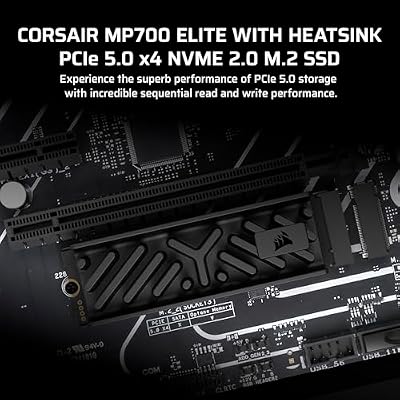
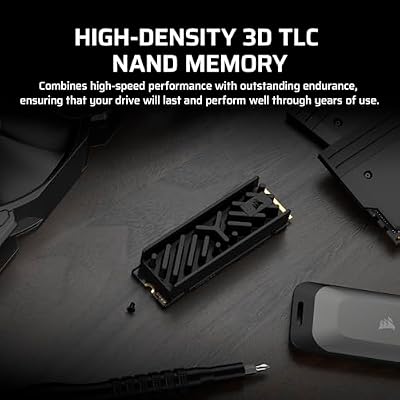
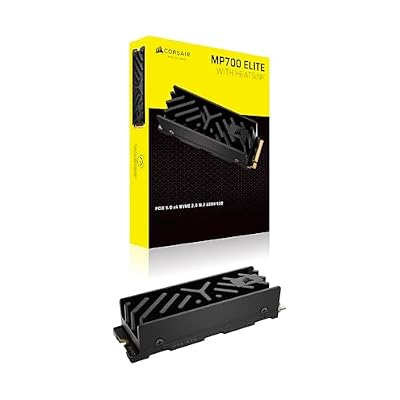
2. Corsair MP700 Elite 4TB PCIe 5.0 NVMe M.2 SSD with Heatsink, Up to 9,400 MB/s
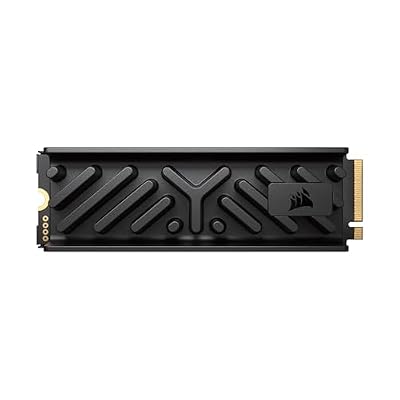
Corsair MP700 Elite 4TB PCIe 5.0 NVMe M.2 SSD with Heatsink – Up to 9,400 MB/s Read, 8,100 MB/s Write, Gen5 Speed for PC & Laptop – Black




As an Amazon Associate we earn from qualifying purchases. Product prices and availability are accurate as of the date/time indicated.
The Corsair MP700 Elite 4TB is the no-compromise pick for the fastest builds and the largest repos. It is a cutting-edge PCIe 5.0 NVMe M.2 drive rated for sequential reads up to 9,400 MB/s, paired with a massive 4TB capacity and an included heatsink to manage the heat that comes with Gen5 speed. For developers moving huge codebases, datasets and build artifacts, this is the performance flagship.
This is the drive for the power user whose platform supports PCIe 5.0 and who works with very large repositories, monorepos, or data-heavy projects. The enormous bandwidth helps with large sequential transfers and the responsive NVMe core keeps small-file work quick, while 4TB means you can keep many projects, containers and VMs resident at once. It demands a Gen5 M.2 slot and good airflow to sustain its speeds, and it sits at specialist pricing, but for a top-tier developer storage workhorse with room to spare, it is the standout.
Pros: Blazing PCIe 5.0 speeds up to 9,400 MB/s, huge 4TB capacity, includes a heatsink.
Cons: Needs a PCIe 5.0 M.2 slot and cooling; premium specialist pricing.
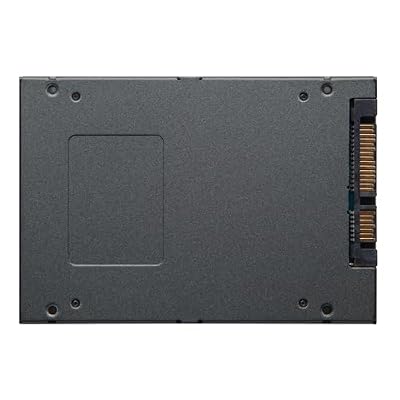
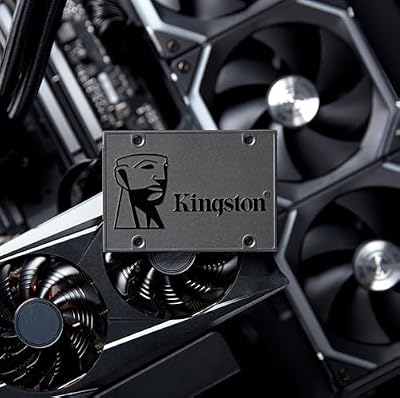
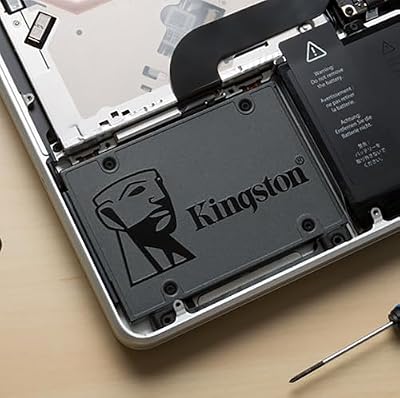
3. Kingston 480GB A400 SATA 3 2.5″ Internal SSD SA400S37/480G

Kingston 480GB A400 SATA 3 2.5" Internal SSD SA400S37/480G - HDD Replacement for Increase Performance




As an Amazon Associate we earn from qualifying purchases. Product prices and availability are accurate as of the date/time indicated.
The Kingston A400 480GB is the cheap, cheerful pick for a boot or scratch drive — and at around $106 it is the most affordable conventional SSD here. It is a 2.5-inch SATA III drive designed as a straightforward HDD replacement, so it is not going to challenge NVMe on raw speed, but it is dramatically faster than a mechanical disk and an easy way to add or revive solid-state storage cheaply.
For a developer, this is the practical secondary drive: a low-cost SATA SSD perfect as a dedicated OS/boot disk, a scratch volume for temporary build output, or a quick upgrade for an older laptop or test machine. The honest framing matters here — SATA tops out far below NVMe, so it is not the drive for your hottest build directory if you want maximum compile speed. But as an inexpensive, reliable SATA drive for boot duties, caching or breathing life into legacy hardware, the A400 is a sensible, budget-friendly choice.
Pros: Very affordable SATA SSD, easy HDD replacement, fine for boot/scratch and older machines.
Cons: SATA speeds are far below NVMe; modest 480GB capacity, not for hot build dirs.
4. SANDISK 2TB Extreme Portable SSD – Up to 1050MB/s, USB-C, USB 3.2 Gen 2
The SanDisk Extreme Portable 2TB is the pick for taking your repos, toolchains and backups on the move. It is a rugged, pocket-sized USB-C drive rated up to 1050 MB/s over USB 3.2 Gen 2, with the durable, weather-resistant build SanDisk’s Extreme line is known for. At around $294 it offers a generous 2TB of fast, portable solid-state storage.
For a developer this is the mobile companion: clone a large repo onto it to work across machines, carry a portable build or test environment, or keep fast off-machine backups of your projects. The USB-C connection makes it plug-and-go with modern laptops, the speed is far beyond a mechanical portable drive, and the rugged shell survives a bag. It is external storage rather than your primary internal build drive, so it complements rather than replaces an NVMe boot disk — but for portable, durable developer storage, it is an excellent choice.
Pros: Fast portable USB-C storage up to 1050 MB/s, rugged build, generous 2TB for repos and backups.
Cons: USB-attached, not an internal drive; slower than internal NVMe.
5. SANDISK 2TB SSD Plus 2.5″ SATA SSD, Internal, Read speeds up to 545 MB/s
The SanDisk SSD Plus 2TB is the budget bulk-storage pick for internal SATA. It is a 2.5-inch SATA SSD with read speeds up to 545 MB/s and a roomy 2TB capacity, aimed at delivering lots of dependable solid-state space without NVMe pricing or the need for an M.2 slot. It is the drive for capacity and compatibility rather than headline speed.
For a developer, this serves as spacious secondary storage on machines where SATA is the practical option — an older system, a build server with 2.5-inch bays, or a second drive for archives, datasets, container images and project backups. The honest note again: at SATA speeds it is far slower than NVMe, so keep your active, build-heavy workspace on a faster drive and use this for bulk. As a large, affordable, widely compatible SATA SSD for storing the things you do not need at NVMe speed, it does its job well.
Pros: Roomy 2TB SATA capacity, broad compatibility, dependable bulk storage for archives and images.
Cons: SATA read speeds well below NVMe; best as secondary/bulk, not your build drive.
6. NVIDIA Jetson AGX Orin 64GB Developer Kit, 275 TOPS, with 1TB SSD and USB Camera
In the interest of honesty, the NVIDIA Jetson AGX Orin 64GB is not an SSD at all — it is an embedded AI developer kit that happens to include a 1TB SSD — and we include it here because it is squarely part of the developer-hardware conversation for anyone building edge and embedded AI projects. It pairs a powerful 275 TOPS AI module with 64GB of memory, the bundled 1TB SSD for storage, and a USB camera, all in a compact development platform.
This is the pick for a very specific developer: someone building, prototyping or deploying AI and robotics applications at the edge, who needs an on-device compute platform rather than just storage. The integrated 1TB SSD gives the kit room for models, datasets and build artifacts locally. To be completely clear, if you simply want fast storage for compiling and repos on a PC, one of the NVMe or SATA drives above is what you want — but if your work is embedded AI development, this kit is the relevant, specialist piece of hardware, and its bundled SSD is part of the package.
Pros: Powerful 275 TOPS embedded AI platform, 64GB memory, bundled 1TB SSD, complete dev kit.
Cons: Not a standalone SSD — it is a full AI dev kit; specialist use and pricing only.
How to Choose an SSD for Developers
Start with the interface, because it sets the performance ceiling. NVMe drives like the Samsung 970 EVO Plus and the PCIe 5.0 Corsair MP700 Elite connect over the much faster M.2/PCIe bus and deliver far higher throughput and far better random I/O than SATA — and random, small-file I/O is exactly what compiling, indexing repos and running containers leans on. SATA drives like the Kingston A400 and SanDisk SSD Plus top out around 500 to 550 MB/s; they are great value for boot, scratch and bulk duties, but for your hottest build workspace, NVMe is the clear winner.
Think specifically about small-file performance rather than the big sequential numbers on the box. A developer’s day is dominated by thousands of tiny reads and writes — source files, object files, package caches, container layers — and responsiveness under that load matters more than peak sequential bandwidth. All the NVMe drives here handle small-file I/O well; the PCIe 5.0 MP700’s headline 9,400 MB/s mostly helps large sequential transfers, so do not over-index on that figure alone if your work is many small operations rather than giant files.
Size your capacity to your projects and your habits. Repos, toolchains, language runtimes, container images and VMs add up quickly, and running low on space is its own kind of slow. 2TB, as on the 970 EVO Plus and SanDisk drives, is a comfortable sweet spot for most developers; 4TB, like the MP700 Elite, suits monorepos and data-heavy work; and a small, cheap drive like the 480GB A400 is best kept to boot or scratch roles rather than your main workspace.
Finally, match the drive to its job and your machine, and decide what is internal versus portable. Confirm you have the right slot — M.2 NVMe (and PCIe 5.0 specifically for the MP700) versus a 2.5-inch SATA bay — before buying. A portable USB-C drive like the SanDisk Extreme is brilliant for carrying repos and backups between machines but should complement, not replace, a fast internal build drive. And if your work is embedded AI rather than PC development, recognize that a platform like the Jetson kit is a different tool entirely. Prioritize NVMe for active development, size capacity to your projects, and pick the drive on this list that fits your slot, your workflow and your budget.
Frequently Asked Questions
Do developers really benefit from a faster SSD?
Yes — storage is involved in almost everything you do, from compiling and cloning repos to spinning up containers and running tests. Those tasks hammer the drive with small reads and writes, and a fast NVMe SSD like the Samsung 970 EVO Plus or Corsair MP700 keeps that responsive, so builds and indexing finish quicker and your flow is less interrupted. The jump from a hard drive or even SATA to NVMe is very noticeable for development work.
NVMe or SATA for development — which should I pick?
For your main, build-heavy drive, NVMe wins clearly: it offers far higher throughput and much better random I/O than SATA, which is what compiling and repo work depend on. SATA drives like the Kingston A400 and SanDisk SSD Plus are still useful and great value for boot drives, scratch space, bulk archives and older machines. Many developers run an NVMe boot/workspace drive plus a larger SATA drive for bulk storage.
Why does small-file performance matter more than sequential speed?
Because a developer’s workload is mostly tiny operations, not giant transfers. Building code, indexing a repo, installing packages and layering containers all involve thousands of small reads and writes, and an SSD’s responsiveness under that random load determines how fast it feels. A drive’s big sequential number, like the MP700’s 9,400 MB/s, mainly helps large file copies — useful, but secondary to small-file responsiveness for everyday dev tasks.
Is the NVIDIA Jetson kit an SSD?
No, and we are upfront about that — the Jetson AGX Orin is an embedded AI developer kit that happens to include a 1TB SSD, not a storage product. It is for building and deploying edge AI and robotics applications on-device. If you just want fast storage for compiling and repos on a PC, choose one of the NVMe or SATA drives in this guide instead; the Jetson is only relevant if your work is specifically embedded AI development.
Related Guides
- Best NVMe SSDs
- Best SATA SSDs
- Best Portable SSDs
- Best RAM for Your Build
- Best PCs for Developers
- Best External Drives for Backups
Affiliate Disclosure: As an Amazon Associate, we earn from qualifying purchases. If you click a link and make a purchase, we may earn a small commission at no extra cost to you. Prices and availability are accurate as of publication and may change.
Ready to decide? Our #1 pick for 2026 is the SAMSUNG 970 EVO Plus 2TB NVMe M.2.
Live price & availability on Amazon.


