

🛒 Best Price Today on Amazon
Prime members get fast, free shipping on everything above, plus member-only deals. New members get a 30-day free trial — cancel anytime.
- Top Routers Music Production Picks for 2026
- Best Routers for Music Production at a Glance
- 1. ASUS RT-AX3000 Ultra-Fast Dual Band Gigabit Wireless Router, WiFi 6
- 2. TP-Link AX1800 WiFi 6 Router (Archer AX21 V5), Dual Band Gigabit
- 3. TP-Link Festa FR365 AX3000 WiFi 6 VPN Router, 5 Gigabit WAN + USB 3.0
- 4. TP-Link Deco XE75 AXE5400 Tri-Band WiFi 6E Mesh System
- 5. Amazon eero Pro 6E Mesh WiFi Router, up to 2.5 Gbps
- 6. TP-Link AC1200 Gigabit WiFi Router (Archer A6), Dual Band MU-MIMO
- How to Choose a Router for a Connected Studio
- Frequently Asked Questions
- Related Guides
- Related Articles
- Related Guides
Top Routers Music Production Picks for 2026
Here are our current top routers music production picks, compared on real Amazon owner reviews, price, and features. Live prices update below.
As an Amazon Associate we earn from qualifying purchases at no extra cost to you.



A router does not make your tracks sound better, but for the modern producer it quietly underpins a lot of the workflow. Real-time collaboration tools, remote sessions, cloud project backups, streaming reference tracks and downloading huge sample libraries and plugins all depend on a connection that is stable and low in latency rather than merely fast on a speed test. Drop-outs during a shared session, a backup that stalls, or laggy collaboration are the real enemies. We will be straight about this: these are general networking routers, not studio gear, and a wired Ethernet link to your main machine still beats Wi-Fi for the most critical work. This guide rounds up the best routers for music production in 2026, judged on stability, latency and coverage for a connected studio.
Our picks were chosen on what genuinely supports a producer’s network: a stable, low-latency connection for collaboration and cloud work, solid wired gigabit ports for reliable transfers, modern Wi-Fi for laptops and mobile devices, and value. We have been honest about which models are simple single-unit routers versus whole-home mesh systems, and we have not invented speed numbers — we describe how each fits a studio instead. Prices range from around $39 to around $200. Below is an at-a-glance comparison of all six, then a closer look at each and a buyer’s guide built around the stability, latency and coverage that matter for music work.
Best Routers for Music Production at a Glance
| Router | Best For | Standout Spec | Approx Price |
|---|---|---|---|
| ASUS RT-AX3000 WiFi 6 | Stable low-latency all-rounder | WiFi 6, gigabit, QoS | see listing |
| TP-Link AX1800 (Archer AX21) | Best-value WiFi 6 studio router | AX1800 dual-band, gigabit | around $52 |
| TP-Link Festa FR365 AX3000 VPN | Wired transfers + remote VPN | 5 Gigabit WAN, USB 3.0 | around $99 |
| TP-Link Deco XE75 AXE5400 Mesh | Whole-studio WiFi 6E coverage | Tri-band 6E, ~2900 sq ft | around $99 |
| Amazon eero Pro 6E Mesh | Simple reliable mesh | WiFi 6E, up to 2.5 Gbps | around $200 |
| TP-Link AC1200 (Archer A6) | Budget reliable basics | AC1200 dual-band, MU-MIMO | around $39 |
1. ASUS RT-AX3000 Ultra-Fast Dual Band Gigabit Wireless Router, WiFi 6
![ASUS AC1900 Wireless Dual Band (5GHz + 2.4GHz) Gigabit Wi-Fi Router [RT-AC68U] Ultra-Fast 802.11ac 1900 Mbps Speed, 5X Gigabit LAN Ports, Broadcam TurboQAM Wi-Fi Acceleration, AiProtection Security](https://m.media-amazon.com/images/I/41AQkd3zfKL._SL400_.jpg)
ASUS AC1900 Wireless Dual Band (5GHz + 2.4GHz) Gigabit Wi-Fi Router [RT-AC68U] Ultra-Fast 802.11ac 1900 Mbps Speed, 5X Gigabit LAN Ports, Broadcam TurboQAM Wi-Fi Acceleration, AiProtection Security


As an Amazon Associate we earn from qualifying purchases. Product prices and availability are accurate as of the date/time indicated.
The ASUS RT-AX3000 leads this list as the stable, low-latency all-rounder. It is a dual-band WiFi 6 router with gigabit Ethernet ports and ASUS’s robust firmware, including adaptive QoS (Quality of Service) that lets you prioritise specific traffic. ASUS lists pricing on the product page; whatever the current figure, it is positioned as a capable, feature-rich router rather than a bare-bones box.
For a producer this feature set is exactly what helps. WiFi 6 improves stability and efficiency when several devices are connected at once, the gigabit ports give you a solid wired link to your studio machine for the most latency-sensitive collaboration and large transfers, and adaptive QoS lets you prioritise a live session or cloud sync over background traffic so a download elsewhere in the house does not disrupt your work. ASUS firmware is known for stability and control. As a dependable router for a connected studio, the RT-AX3000 is the standout.
Pros: WiFi 6 stability, gigabit wired ports, adaptive QoS prioritisation, trusted ASUS firmware.
Cons: Pricing varies by listing; single-unit coverage, not whole-home mesh.
2. TP-Link AX1800 WiFi 6 Router (Archer AX21 V5), Dual Band Gigabit
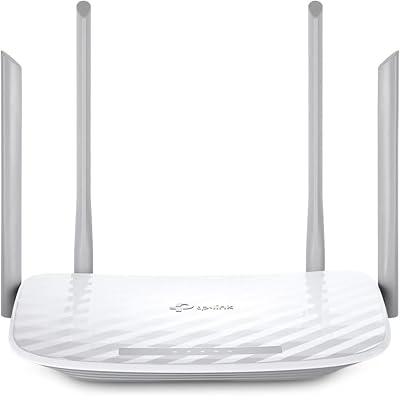
The TP-Link Archer AX21 (AX1800) is the best-value WiFi 6 pick. It is a dual-band WiFi 6 router with gigabit WAN and LAN ports and TP-Link’s mature, easy-to-use firmware and Tether app. At around $52 it is an affordable way to get modern, stable wireless and solid wired ports for a home studio.
For the producer who wants reliability without overspending, the AX21 hits the mark. WiFi 6 keeps the connection stable and efficient for laptops, phones and tablets, the gigabit Ethernet ports let you hardwire your main production machine for low-latency collaboration and fast sample-library downloads, and built-in QoS helps keep important traffic smooth. It is a single-unit router rather than a mesh system, so it suits apartments and small-to-medium studios best. As a dependable, well-priced WiFi 6 router for a connected studio, the Archer AX21 is an easy recommendation.
Pros: Affordable WiFi 6, gigabit wired ports, easy Tether app setup, built-in QoS.
Cons: Single-unit coverage; large or multi-room studios may want mesh.
3. TP-Link Festa FR365 AX3000 WiFi 6 VPN Router, 5 Gigabit WAN + USB 3.0

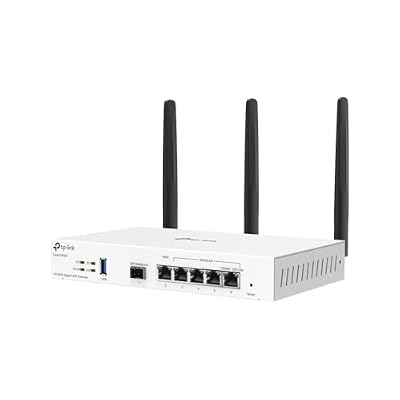
TP-Link Festa FR365, AX3000 WiFi 6 VPN Router | Up to 5 Gigabit WAN + 1 USB 3.0 WAN + 1 SFP, Self-Organizing Network, Free Cloud, Seamless Roaming, Not Work with Omada




As an Amazon Associate we earn from qualifying purchases. Product prices and availability are accurate as of the date/time indicated.
The TP-Link Festa FR365 is the wired-and-remote pick, aimed at producers who move a lot of data and work across locations. It is an AX3000 WiFi 6 VPN router with up to five gigabit WAN ports and a USB 3.0 port, plus built-in VPN support for secure remote connections. At around $99 it leans toward wired throughput and remote-access features.
For a studio this is a strong fit when reliable transfers and remote work matter. The multiple gigabit ports let you hardwire your production machine, a network-attached drive and other gear for stable, low-latency local transfers — ideal for shifting large project files and sample libraries — and the USB 3.0 port can share storage across the network. The VPN support is genuinely useful if you collaborate remotely or need secure access to studio files from elsewhere. As a wired-focused router with remote-access muscle for a data-heavy studio, the Festa FR365 stands out.
Pros: Multiple gigabit ports for wired transfers, USB 3.0 storage sharing, built-in VPN, WiFi 6.
Cons: Business-leaning setup; more router than a simple home studio may need.
4. TP-Link Deco XE75 AXE5400 Tri-Band WiFi 6E Mesh System

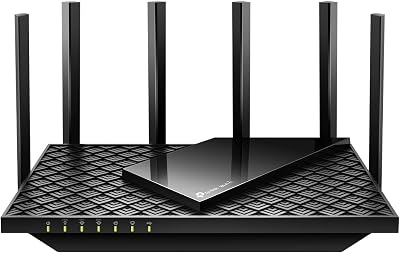
TP-Link Deco XE75 AXE5400 Tri-Band WiFi 6E Mesh System, 1-Pack | Whole Home WiFi Router Replacement, Covers up to 2900 Sq.Ft, Gaming & Streaming WiFi, 6GHz Band, WPA3, AI-Driven


As an Amazon Associate we earn from qualifying purchases. Product prices and availability are accurate as of the date/time indicated.
The TP-Link Deco XE75 is the whole-studio coverage pick, a tri-band WiFi 6E mesh system that covers up to around 2900 square feet. Instead of one router, it uses multiple units that blanket a larger space in seamless Wi-Fi, adding the new 6GHz band that WiFi 6E unlocks. At around $99 it is strong value for mesh coverage with the latest wireless standard.
For producers whose studio spreads across rooms or floors, consistent coverage is the priority, and mesh solves it. The Deco XE75 keeps laptops, phones and tablets on a stable connection as you move around the space, the WiFi 6E 6GHz band offers a cleaner, less congested lane for capable devices, and the system is easy to manage from the Deco app. For the most latency-critical work you can still hardwire into a node’s Ethernet port. As a whole-home mesh that keeps a larger, connected studio reliably online, the Deco XE75 is the standout.
Pros: Whole-home WiFi 6E mesh, ~2900 sq ft coverage, clean 6GHz band, easy app management.
Cons: Mesh is overkill for one small room; 6GHz benefits only 6E-capable devices.
5. Amazon eero Pro 6E Mesh WiFi Router, up to 2.5 Gbps

Amazon eero Pro 6E mesh wifi router - Supports internet plans up to 2.5 Gbps, Coverage up to 2,000 sq. ft., Connect 100+ devices, 1-pack


As an Amazon Associate we earn from qualifying purchases. Product prices and availability are accurate as of the date/time indicated.
The Amazon eero Pro 6E is the simple, reliable mesh pick. It is a WiFi 6E mesh system that supports internet plans up to 2.5 Gbps and is known above all for effortless setup and rock-solid, hands-off reliability through the eero app. At around $200 it is the premium option here, and the choice for producers who value a network that simply works.
For a studio, that dependability is the appeal. The eero mesh keeps a stable connection across the space for all your devices, the WiFi 6E support adds the 6GHz band and headroom for faster internet plans, and the automatic updates and simple app remove networking hassle so you can focus on music rather than router settings. Power users will note eero’s deep settings are deliberately streamlined, and for the lowest-latency work a wired link is still best. But for a producer who wants reliable, whole-home coverage with zero fuss, the eero Pro 6E is a polished, premium choice.
Pros: Effortless setup, very reliable mesh, WiFi 6E with 2.5 Gbps support, automatic updates.
Cons: Highest price here; streamlined settings give power users less manual control.
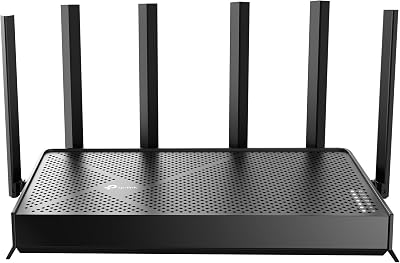
6. TP-Link AC1200 Gigabit WiFi Router (Archer A6), Dual Band MU-MIMO

TP-Link AC1200 Gigabit Dual Band WiFi Router (Archer A6) | MU-MIMO Wireless Internet Router, 4 x Antennas, OneMesh and AP Mode, Long Range Coverage


As an Amazon Associate we earn from qualifying purchases. Product prices and availability are accurate as of the date/time indicated.
Rounding out the list is the TP-Link Archer A6 (AC1200), the budget reliable pick and the most affordable router here at around $39. It is a dual-band AC1200 router with gigabit ports and MU-MIMO, delivering dependable wireless and wired connectivity at a rock-bottom price for a home studio.
This is the router for the producer on the tightest budget, or for a smaller studio where the latest standard is not essential. The dual-band AC1200 Wi-Fi is stable for laptops, phones and everyday devices, the gigabit Ethernet ports let you hardwire your main machine for low-latency collaboration and reliable transfers, and MU-MIMO helps it serve several devices at once. It is older-generation Wi-Fi rather than WiFi 6, so it suits modest needs best, but as an affordable, dependable router that covers the essentials for a connected studio, the Archer A6 is a sensible way to close out the list.
Pros: Very affordable, gigabit wired ports, dual-band MU-MIMO, dependable for the basics.
Cons: Older AC (WiFi 5) standard; single-unit coverage for smaller spaces.
How to Choose a Router for a Connected Studio
Start with an honest premise: a router is networking gear, not studio gear, and it will not change how your music sounds. What it does is keep the connection your workflow leans on — collaboration tools, cloud backups, sample downloads, remote sessions — stable and responsive. And the single most important tip is this: for the most latency-sensitive work, hardwire your main production machine to the router with Ethernet. Every router here has gigabit ports for exactly that, and a wired link beats Wi-Fi for consistency every time.
Stability and latency matter more than headline speed for music work. Real-time collaboration and live sessions are ruined by drop-outs and lag, not by a slightly lower top speed, so favour a router with modern, efficient wireless and good traffic handling. WiFi 6 and 6E routers like the ASUS RT-AX3000, Archer AX21 and the mesh systems manage many connected devices more smoothly than older standards, and QoS features — as on the ASUS — let you prioritise a live session or cloud sync so other household traffic does not interrupt it.
Coverage decides between a single router and a mesh system. If your studio is one room or a small apartment, a capable single-unit router like the ASUS RT-AX3000, Archer AX21 or budget Archer A6 is plenty. If your space spreads across rooms or floors, a mesh system like the TP-Link Deco XE75 or Amazon eero Pro 6E blankets the whole area in seamless Wi-Fi so your laptop and mobile devices stay connected as you move. Match the coverage type to the size and layout of the space you actually work in.
Finally, weigh wired ports, extra features and budget. Producers who shuttle large project files and sample libraries benefit from multiple gigabit ports and even USB storage sharing, as on the TP-Link Festa FR365, and a built-in VPN helps if you collaborate remotely or need secure access to studio files. Decide whether you value maximum control (ASUS firmware), effortless reliability (eero), wide coverage (Deco XE75) or low cost (Archer A6 and AX21). Hardwire what you can, prioritise stability and latency, size the coverage to your studio, and pick the router on this list that fits your space and budget.
Frequently Asked Questions
Does a better router actually help with music production?
Indirectly, yes. A router will not change your sound, but it keeps the connection your workflow depends on — online collaboration, cloud backups, remote sessions and large sample downloads — stable and low in latency. The biggest single improvement is to hardwire your main production machine to the router via the gigabit Ethernet ports every model here provides; wired beats Wi-Fi for the most critical, latency-sensitive work.
Should I use Wi-Fi or Ethernet for online collaboration sessions?
Use Ethernet whenever you can for real-time collaboration and remote sessions. A wired gigabit link, available on all the routers here, is more consistent and lower in latency than Wi-Fi, which matters most when drop-outs or lag would disrupt a shared session. Reserve Wi-Fi for laptops and mobile devices, and lean on a router with strong QoS, like the ASUS RT-AX3000, to prioritise the important traffic.
Do I need a mesh system or a single router for my studio?
It depends on your space. A single-unit router like the ASUS RT-AX3000, TP-Link Archer AX21 or budget Archer A6 is plenty for one room or a small apartment. If your studio spans multiple rooms or floors, a mesh system such as the TP-Link Deco XE75 or Amazon eero Pro 6E provides seamless, whole-home coverage so your devices stay connected as you move around the space.
Is WiFi 6 or 6E worth it for a home studio?
For stability with many connected devices, yes — WiFi 6 routers like the Archer AX21 and ASUS RT-AX3000 handle simultaneous connections more efficiently than older standards, which helps a busy studio network. WiFi 6E adds a cleaner 6GHz band, useful if you have 6E-capable devices, as on the Deco XE75 and eero Pro 6E. For the most latency-critical tasks, a wired link still matters more than the wireless standard.
Related Guides
- Best Routers
- Best Mesh WiFi Systems
- Best Gaming Routers
- Best NAS for Backups
- Best NVMe SSDs
- Best Budget Gaming Setup
Affiliate Disclosure: As an Amazon Associate, we earn from qualifying purchases. If you click a link and make a purchase, we may earn a small commission at no extra cost to you. Prices and availability are accurate as of publication and may change.










