- Top Pick: Anbernic RG35XX H: the pocket pick
- Runner-up: Retroid Pocket 5 (Black)
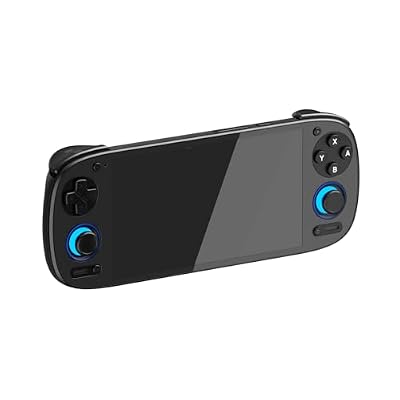
- Also consider: Anbernic RG556 (Blue)
A beat ’em up looks like the simplest genre in the arcade. Walk right, punch everyone, repeat. Play one seriously for an evening and the hardware demands turn out to be oddly specific. The whole game happens on a shallow belt of floor where you shuffle between lanes, crowd enemies into a corner, and alternate between two buttons thousands of times. A handheld that is perfect for RPGs can be miserable here: face buttons with long, soft travel blur a jab chain into mush, a cramped shell cramps your hands by stage three, and a narrow screen hides the enemy walking in from the right edge until he is already swinging.
Beat ’em ups also span more hardware generations than almost any other genre. The canon starts on CPS1 and Neo Geo boards, peaks on the Genesis, SNES and PlayStation, and runs through Dreamcast and PSP to PlayStation 2 and GameCube. Add the fact that these games were designed around a second player standing at the same cabinet, and the buying question becomes three questions: how well does it mash, how far up the system ladder does it climb, and how does it handle co-op.
As an Amazon Associate, we earn from qualifying purchases.
Quick Answer
For most players, the Retroid Pocket 5 is the beat ’em up handheld to buy: it has the power for PlayStation 2 and GameCube brawlers, Hall effect sticks, a wide AMOLED screen for reading crowds, and Wi-Fi plus video out for co-op. The Anbernic RG406H is the pick for arcade and 16-bit purists thanks to its 4:3 screen, while the TrimUI Smart Pro covers the classics on Linux for less.
Why Brawlers Judge a Handheld Differently
The face buttons do the fighting
A fighting game lives on the D-pad; a beat ’em up lives on the face buttons. Attack and jump are pressed in constant alternation, throws happen by walking into an enemy and hitting attack at the right moment, and special moves eat a chunk of your health bar when a button registers late. What matters is short travel, a crisp bottom-out, and a diamond layout wide enough that your thumb can roll between attack and jump without lifting. Four face buttons also map cleanly onto the Neo Geo and CPS layouts these games were built for.
Lane changes are the real movement test
Belt-scrollers move in eight directions, but the skill is vertical: stepping half a lane up to dodge a knife throw, then dropping back down to line up a combo. That means the up and down directions get more use than the diagonals, which is the opposite of a fighting game. A D-pad with a clean pivot and distinct up/down registration matters more than perfect diagonals here, and a stick with a tight, short throw works just as well for players who prefer one. What ruins runs is a pad so stiff that lane changes lag a beat behind the enemy’s attack.
Screen width is information
In a brawler, the edge of the screen is where danger comes from. A 16:9 display shows more of the street ahead than a 4:3 display at the same height, which means more reaction time against chargers and weapon throws. The trade-off is that the arcade, Genesis and SNES libraries are natively 4:3, so a widescreen handheld either stretches them, borders them, or crops them. Neither answer is wrong; it depends on whether your library is mostly 16-bit or mostly PSP and PlayStation 2.
Co-op is a hardware feature
These games were built for two players, so the second controller matters. RetroArch netplay over Wi-Fi lets two handheld owners play online, Bluetooth lets a friend pair a controller to one machine, and video out turns the handheld into a console on a TV. A handheld with none of those three is a strictly solo brawler machine, which cuts off the genre’s best trick.
The power ladder is steep at the top
CPS1, CPS2 and Neo Geo brawlers run well on almost any chip sold today, and the Genesis and SNES libraries are just as light. Dreamcast and PSP titles such as the Power Stone era 3D brawlers ask for a mid-range chip. PlayStation 2 and GameCube games like The Warriors and Mortal Kombat: Shaolin Monks are the ceiling: they separate Snapdragon-class handhelds from everything below them.
The Five Picks
Retroid Pocket 5: the full-ladder flagship
The Retroid Pocket 5 is the only pick here that covers the entire genre without apology. Its Snapdragon 865 runs the PlayStation 2 and GameCube brawlers that stop cheaper handhelds, and it still idles through CPS2 and Neo Geo catalogs. The 5.5-inch AMOLED gives the widest, clearest view of the belt, Hall effect sticks handle lane changes without drift, and the face buttons are firm and evenly spaced for long mash sessions. Wi-Fi netplay, Bluetooth controllers and USB-C video out cover every co-op arrangement the genre supports.
Specs:
– Display: 5.5-inch AMOLED, 1920 x 1080
– Chip: Qualcomm Snapdragon 865
– Memory and storage: 8 GB LPDDR4X, 128 GB UFS 3.1, microSD slot
– Battery: 5,000 mAh with active cooling fan
– Controls: Hall effect sticks, analog triggers, four face buttons
– System: Android 13, Wi-Fi, Bluetooth 5.1, USB-C video out
Anbernic RG556: the big-screen comfort pick
The RG556 pairs a 5.48-inch AMOLED with a sculpted, grip-heavy shell that suits the genre’s long stages. The Unisoc T820 handles Dreamcast and PSP brawlers comfortably and reaches into the lighter end of the PlayStation 2 library. Hall sticks and analog triggers are present, the face buttons sit under a relaxed thumb arc, and the 5,500 mAh battery is the largest here, which matters when a Streets of Rage 2 and Final Fight session runs back to back.
Specs:
– Display: 5.48-inch AMOLED, 1920 x 1080
– Chip: Unisoc T820
– Memory and storage: 8 GB LPDDR4X, 128 GB UFS 2.2, microSD slot
– Battery: 5,500 mAh
– Controls: Hall effect sticks, analog triggers, four face buttons
– System: Android 13, Wi-Fi, Bluetooth
Anbernic RG406H: the 4:3 arcade specialist
The RG406H is built around a 4-inch 960 x 720 IPS panel, and that aspect ratio is the whole argument. Arcade, Genesis, SNES and PlayStation brawlers fill the screen edge to edge at their native shape, with the pixel density to keep integer scaling clean. It shares the T820 chip with the RG556, so Dreamcast and PSP are in range, and its compact horizontal shell with Hall sticks suits the constant small lane adjustments the genre asks for. If your library stops at the PlayStation era, this is the most faithful way to carry it.
Specs:
– Display: 4-inch IPS, 960 x 720 (4:3)
– Chip: Unisoc T820
– Memory and storage: 8 GB LPDDR4X, 128 GB, microSD slot
– Battery: 5,000 mAh
– Controls: Hall effect sticks, analog triggers, four face buttons
– System: Android 13, Wi-Fi, Bluetooth
TrimUI Smart Pro: the widescreen Linux pick
The Smart Pro takes the opposite screen bet: a 4.96-inch 1280 x 720 panel that suits the PSP’s widescreen brawlers and gives bordered 4:3 games generous height. Its Linux software stack boots fast and keeps RetroArch netplay simple, and the controls are the surprise of the price tier, with a well-regarded D-pad and clicky face buttons that handle jab chains cleanly. The honest limits are power and triggers: the Allwinner A133 Plus tops out around PlayStation and lighter PSP games, and the shoulder triggers are digital, which the genre rarely misses but 3D brawlers sometimes do.
Specs:
– Display: 4.96-inch IPS, 1280 x 720
– Chip: Allwinner A133 Plus
– Memory and storage: 1 GB LPDDR4, microSD card bundle
– Battery: 5,000 mAh
– Controls: Analog sticks, digital triggers, four face buttons
– System: Linux, Wi-Fi, Bluetooth
Anbernic RG35XX H: the pocket pick

The RG35XX H is the handheld that actually leaves the house. Its horizontal shell and 3.5-inch 640 x 480 screen are sized for the CPS, Neo Geo, Genesis and SNES libraries, which the H700 chip runs at full speed with run-ahead to trim input latency. The D-pad is the star at this size: light, pivoting cleanly, and easy on the thumb during the genre’s constant lane changes. Wi-Fi enables RetroArch netplay with a second owner, and mini HDMI out covers TV co-op at home. PlayStation 2 is beyond it, and the screen asks you to sit closer, but as a dedicated classics brawler it is hard to fault.
Specs:
– Display: 3.5-inch IPS, 640 x 480
– Chip: Allwinner H700
– Memory and storage: 1 GB LPDDR4, 64 GB microSD card
– Battery: 3,300 mAh
– Controls: Analog sticks, digital triggers, four face buttons
– System: Linux, Wi-Fi, Bluetooth, mini HDMI out
How to Choose
Start with the top of your library, not the bottom. If PlayStation 2 and GameCube brawlers are on your list, the Retroid Pocket 5 is the only pick that runs them properly, and the RG556 covers part of that ground. If your canon is arcade through PlayStation, the RG406H and RG35XX H match its shape and weight better. Next, decide how you will play co-op: netplay needs Wi-Fi on both ends, a paired second controller needs Bluetooth, and a TV session needs video out. Finally, match the screen to the era: 4:3 panels for the arcade and 16-bit years, widescreens for PSP and PlayStation 2, and weigh grip and battery if your sessions run past an hour.
Who Should Skip These Handhelds
Skip this entire category if your beat ’em up time goes to modern releases rather than the retro canon: current indie brawlers need a PC handheld or a phone with a controller, not an emulation portable. Skip them if you mainly play versus fighting games, where D-pad diagonals and latency tolerances are stricter and a different shortlist applies. And skip them if you will not touch emulator settings at all; every pick here rewards a few minutes of core and control configuration, and none of them is a cartridge-slot appliance.
Frequently Asked Questions
Can two people play beat ’em ups on one of these handhelds?
Yes, three ways. Two owners can use RetroArch netplay over Wi-Fi, a second player can pair a Bluetooth controller to one handheld on the Android picks, and the Retroid Pocket 5 and RG35XX H can output to a TV so both players share a big screen.
Which beat ’em up systems are hardest to run?
PlayStation 2 and GameCube sit at the top; their 3D brawlers need a Snapdragon-class chip. Dreamcast and PSP form the middle tier that the T820 handles well, while CPS1, CPS2, Neo Geo, Genesis and SNES titles run at full speed on every pick in this list.
Is a D-pad or an analog stick better for belt-scrollers?
Both work, because the genre’s key inputs are clean up and down lane changes rather than rolling motions. A pivoting D-pad gives the most repeatable lanes, while a short-throw stick suits players coming from 3D brawlers. Avoid pads that register false diagonals when you press straight down.
Do beat ’em ups need analog triggers?
Almost never. The classic libraries predate analog triggers entirely, and only a handful of Dreamcast and PlayStation 2 titles use pressure sensitivity at all. Digital triggers are fine for the genre; analog triggers matter far more for racing games.
Final Verdict
The Retroid Pocket 5 is the default recommendation because it has no ceiling: every era of the genre runs, and every co-op setup is available. The RG556 trades a little power for the best screen-and-grip comfort, and the RG406H is the connoisseur’s 4:3 arcade machine. On a budget, the TrimUI Smart Pro covers the widescreen PSP era and the classics, while the RG35XX H is the pocketable purist pick.