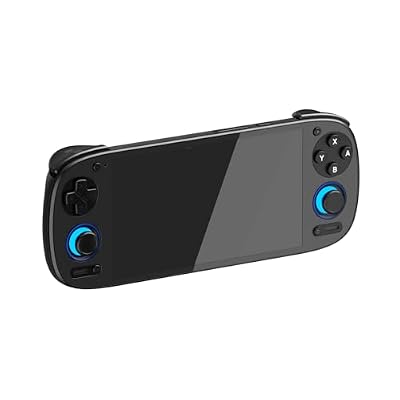
Most systems ask a retro handheld one question: is the chip fast enough? The Wii asks two. Raw power matters, because Wii games run through the Dolphin emulator and the demanding half of the library pushes harder than GameCube ever did. But the Wii also built its controls around a motion remote and an infrared pointer, and no emulator setting can wish that second problem away.
So this guide sorts five Amazon-listed handhelds along both axes at once: the silicon to hold full speed, and the control hardware to survive pointer-heavy games. Work through the control question first and the right chip tier usually picks itself.
As an Amazon Associate, we earn from qualifying purchases.
Quick Answer
For Wii games on a retro handheld, the AYN Thor Pro is the strongest pick, since its Snapdragon 8 Gen 2 runs Dolphin with headroom to spare. The Anbernic RG557 and Retroid Pocket 5 handle most of the library at full speed, the Pocket Flip 2 adds a protective clamshell, and the RG556 covers lighter, pointer-free titles.
Why the Wii Is Two Problems at Once
The performance problem is familiar. Dolphin leans on single-core CPU speed and clean graphics drivers, and Wii titles such as Super Mario Galaxy, Xenoblade Chronicles and The Legend of Zelda: Skyward Sword sit at the heavy end of what the emulator does. Strong chips clear them at full speed with room to raise the internal resolution; weaker chips cope by dropping to native resolution and accepting dips in busy scenes.
The control problem is the one buyers forget. A large slice of the Wii library treats the Wii Remote as a pointer: you aim at the screen in shooters, puzzle games and the Galaxy titles, and other games expect a shake, a tilt or a sideways-held remote. On a handheld, those inputs have to be rebuilt from what the hardware offers. Dolphin lets you map the pointer to a touchscreen or to the right analog stick, bind shake and tilt to buttons, and pair a real Wii Remote over Bluetooth for the games that truly demand one. A big, responsive touchscreen and good sticks are therefore Wii features, not luxuries.
That split also divides the library. Sideways-remote platformers and racers, such as New Super Mario Bros. Wii and Mario Kart Wii, translate cleanly to a standard gamepad layout. Pointer-led games ask more of the hardware and of your patience with mappings. Every pick below is rated against both halves.
The Flagship: AYN Thor Pro
The Thor Pro is the pick for players who want the performance question settled outright. Its Snapdragon 8 Gen 2 is the fastest chip in this roundup, with the mature Adreno driver support that Dolphin rewards, so heavy Wii titles hold full speed and many run above native resolution. The dual-screen layout is the control bonus: the large main touchscreen gives pointer mapping a generous target, while the lower screen can hold maps, inventories or emulator controls instead of crowding the game view.
Active cooling keeps that pace steady across long sessions, and the large battery is sized for the drain that high-resolution Dolphin play causes. It is the biggest and heaviest device here, which is the honest trade for this much headroom.
Specs:
- Chip: Qualcomm Snapdragon 8 Gen 2
- Memory and storage: 12GB RAM, 256GB storage, microSD slot
- Display: dual touchscreens, 6.31-inch AMOLED main screen
- Battery: 6,000 mAh with fast charging
- Controls: Hall effect sticks, analog triggers, touchscreen
- System: Android with active cooling fan
The AMOLED All-Rounder: Anbernic RG557
The RG557 is Anbernic’s strongest Wii machine. The Dimensity 8300 is a clear step up from the T820 in the model below, and in Dolphin it covers the great majority of the Wii library at full speed, with lighter games taking a resolution bump. The 5.48-inch AMOLED panel is bright and sharp for pointer work, and the capacitive sticks are built to resist drift, which matters when the right stick spends its life steering a cursor.
Anbernic also fits an active cooling fan, a 5,500 mAh battery and fast charging, so the RG557 suits long sessions better than passively cooled rivals. Mali graphics drivers still trail Adreno in a few edge-case titles, so expect the occasional per-game tweak where the Snapdragon picks sail through.
Specs:
- Chip: MediaTek Dimensity 8300, Mali-G615 MC6 GPU
- Memory and storage: 12GB LPDDR5X RAM, 256GB storage, microSD slot
- Display: 5.48-inch AMOLED, 1920 x 1080 touchscreen
- Battery: 5,500 mAh, 27W charging
- Controls: capacitive anti-drift sticks with RGB rings, analog triggers
- System: Android 14, Wi-Fi 6E, active cooling fan
The Sweet Spot: Retroid Pocket 5
The Pocket 5 remains the balanced answer for Wii. Its Snapdragon 865 is a known quantity in Dolphin: most of the library runs at full speed at native resolution, and a healthy share of it goes further. Adreno driver quality is the quiet advantage here, because fewer titles need workarounds to render correctly.
For controls, the 5.5-inch AMOLED touchscreen is large enough for pointer mapping to feel workable rather than cramped, and the analog triggers and Hall sticks cover the sideways-remote half of the library comfortably. A real Wii Remote can be paired over Bluetooth when a game refuses every mapping trick. It is also one of the slimmer devices in this list, which helps on the move.
Specs:
- Chip: Qualcomm Snapdragon 865, Adreno 650 GPU
- Memory and storage: 8GB RAM, 128GB storage, microSD slot
- Display: 5.5-inch AMOLED, 1920 x 1080 touchscreen
- Battery: 5,000 mAh with fast charging
- Controls: Hall effect sticks, analog triggers, touchscreen
- System: Android 13 with active cooling fan
The Travel Pick: Retroid Pocket Flip 2
The Flip 2 carries the same Snapdragon 865 as the Pocket 5 into a clamshell shell, and for Wii that shape earns its place. The hinge closes over the screen and sticks, so the device rides in a bag without a case, and it opens straight into the same Dolphin performance as its sibling: most Wii games at full speed, with the same Adreno driver manners.
Pointer games work the same way too, through the 5.5-inch AMOLED touchscreen or right-stick mapping, and the analog triggers suit Mario Kart Wii’s sideways style once the remote layout is bound to the pad. Choose it over the Pocket 5 if the handheld will live in a pocket or a travel bag rather than on a desk.
Specs:
- Chip: Qualcomm Snapdragon 865, Adreno 650 GPU
- Memory and storage: 8GB RAM, 128GB storage, microSD slot
- Display: 5.5-inch AMOLED, 1920 x 1080 touchscreen, clamshell design
- Battery: 5,000 mAh, 27W charging
- Controls: Hall effect sticks, analog triggers, touchscreen
- System: Android with active cooling fan
The Value Pick for the Pointer-Light Library: Anbernic RG556
The RG556 is the honest budget route into Wii, provided your library is chosen with its chip in mind. The Unisoc T820 cannot match the picks above in heavy 3D titles, and demanding games will dip below full speed. What it does cover well is the pointer-light half of the catalogue: 2D and sideways-remote games, party titles and lighter racers, played at native resolution.
You still get a 5.48-inch AMOLED touchscreen for the pointer games that do run, Hall sticks, and the biggest battery in this list relative to its performance class, so sessions are long even if the settings stay modest. Treat it as a way into Wii’s friendlier half rather than a full-library machine.
Specs:
- Chip: Unisoc T820, Mali-G57 GPU
- Memory and storage: 8GB LPDDR4X RAM, 128GB storage, microSD slot
- Display: 5.48-inch AMOLED, 1920 x 1080 touchscreen
- Battery: 5,500 mAh with fast charging
- Controls: Hall effect sticks, analog triggers, touchscreen
- System: Android 13
How to Choose
Start with your library, not the spec sheet. If pointer-heavy games such as the Galaxy titles or pointer-led shooters are the point, weight the touchscreen size and stick quality as heavily as the chip, and lean toward the Thor Pro or RG557. If your Wii time is mostly sideways-remote platformers and racers, the control problem mostly disappears, and the choice becomes a plain performance one.
Then set your performance floor. Snapdragon 8 Gen 2 and Dimensity 8300 class hardware clears nearly the whole library; Snapdragon 865 covers most of it at native resolution; the T820 covers the lighter half. Finally, match the shape to your routine: the Flip 2 for travel, the larger bodies for desk-and-sofa play, and check battery capacity if your sessions run long, because Dolphin at raised resolutions drains any of these devices quickly.
Who Should Skip These Handhelds
Skip this whole category if your Wii memories are inseparable from swinging a real remote in front of a television: a full-size setup with original hardware will always feel more faithful than mapped controls. Players who only want one or two Wii titles should also think twice, since the mapping setup per game is real work. And if your interest stops at GameCube and below, the cheaper handhelds in those guides have all the power you need; Wii is the system that justifies spending more.
Frequently Asked Questions
Can these handhelds really run Wii games at full speed?
Most of them, most of the time. The Thor Pro and RG557 clear nearly the whole library, the two Snapdragon 865 models cover the majority at native resolution, and the RG556 handles the lighter half. A small set of demanding titles still needs per-game settings in Dolphin on any handheld.
How do motion controls work without a Wii Remote?
Dolphin maps the pointer to the touchscreen or the right stick, and shake or tilt inputs can be bound to buttons. It works well for slower pointer games and acceptably for faster ones. For games built entirely around motion, every pick here can also pair a real Wii Remote over Bluetooth.
Is the Wii harder to emulate than the GameCube?
Generally, yes. Both run in Dolphin, but Wii games arrived later in the console’s life, use more of the hardware, and add the motion-control layer on top. A handheld that cruises through GameCube can still struggle with the heaviest Wii titles.
Which pick is best for Mario Kart Wii and platformers?
Any of the five. Sideways-remote games map cleanly onto a normal gamepad, so even the RG556 plays them well. The Snapdragon models add resolution headroom, which makes them the nicer choice if those games are part of a broader Wii library.
Final Verdict
The Wii rewards buyers who think about controls before chips. The AYN Thor Pro is the complete answer, pairing the strongest silicon here with a big touchscreen for pointer work. The RG557 runs it close with a sharp AMOLED panel and a newer chip, the Pocket 5 is the balanced default, and the Flip 2 is the same idea in a travel-proof shell. The RG556 earns its place for the pointer-light half of the library. Pick by the games you actually own, and Wii on a handheld stops being a compromise.