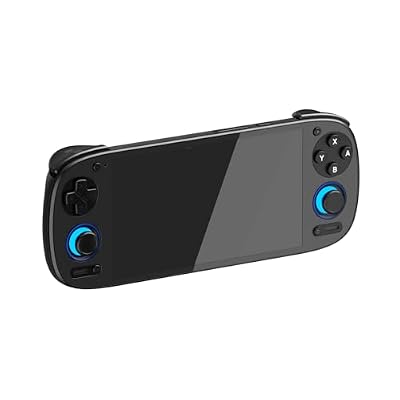
- Top Pick: Retroid Pocket 5 (Black)
- Runner-up: Retroid Pocket Flip 2 (Black)
- Also consider: Anbernic RG556 (Blue)
Sports games punish weak handhelds in ways that platformers and RPGs never do. You are reading the flight of a ball against a bright pitch, tracking small players at the far end of the field, and holding sprint on a shoulder button for ninety virtual minutes at a time. A dim screen washes out the action outdoors, a small battery dies before extra time, and shallow triggers make through balls and finesse shots feel vague. The library splits into two eras as well: 4:3 classics like NBA Jam, Sensible Soccer and the SNES and Genesis Madden and FIFA games on one side, and widescreen PSP and PS2 sports titles on the other.
The five handhelds below cover both eras. Each one pairs a screen you can actually read in daylight with a battery sized for long sessions, and each one has the shoulder buttons and triggers that sports games lean on hardest.
As an Amazon Associate, we earn from qualifying purchases.
Quick Answer
The Retroid Pocket 5 is the best all-round pick, pairing a bright 5.5-inch AMOLED screen with a 5,000 mAh battery and Hall effect triggers. The Retroid Pocket Flip 2 adds a protective clamshell, the Anbernic RG556 stretches battery life furthest, the RG406H suits 4:3 classics, and the TrimUI Smart Pro covers the basics for less demanding libraries.
What Sports Games Demand From a Handheld
Reading the Field in Bright Light
Sports titles are played at a distance. The ball, the puck and the receiver downfield are all small objects moving across a busy background, so contrast and brightness matter more here than in almost any other genre. AMOLED panels earn their place at the top of this list because their per-pixel contrast keeps white lines and player kits distinct even when light leaks into the room or you are playing on a train or in the stands. A laminated IPS screen can still work well, but an unlaminated budget panel is where far-post crosses go to disappear.
Extra Time: Battery and Fast Charging
A single match is short, but sports sessions rarely are. Season modes, tournaments and rivalry rematches stack matches back to back, and emulation of PS2 and GameCube sports games is some of the heaviest work these chips do. Battery capacity in the 5,000 mAh class is the practical floor for an evening of play, and fast charging matters because it turns a short break into another hour on the pitch instead of an overnight wait.
Shoulders Win Matches
No genre works the L and R buttons harder. Sprint lives on a shoulder button in most football and basketball games, Madden and NCAA titles map jukes and stiff arms to the triggers, and baseball games ask for precise, repeated trigger timing on every pitch. Hall effect triggers and sticks are worth prioritising because they sense position magnetically instead of relying on a wearing contact surface, which keeps them accurate across years of season modes. Clicky, shallow digital shoulders are the weak point to avoid.
Two Eras, Two Aspect Ratios
Almost everything before the PSP era was drawn for 4:3. On a widescreen handheld those games either stretch, which fattens every player on the field, or pillarbox with bars at the sides. A native 4:3 screen shows them full-frame and larger. The trade runs the other way for PSP sports games and the widescreen modes in later PS2 titles, which fill a 16:9 panel properly. The right choice depends on which era fills your library, and the list below includes both shapes.
Retroid Pocket 5: The Best All-Round Pick
The Pocket 5 is the easiest recommendation here because it has no weak leg for this genre. Its 5.5-inch AMOLED screen is bright and high-contrast, which keeps kits and pitch markings separate at a glance, and the Snapdragon 865 inside runs the PS2 and GameCube sports catalogues, the most demanding retro sports libraries there are, alongside everything older. Hall effect sticks and triggers give you analogue sprint control and precise trigger timing, and the 5,000 mAh battery with fast charging covers long season-mode sessions.
Specs:
- Display: 5.5-inch AMOLED touchscreen, 1920 x 1080
- Processor: Qualcomm Snapdragon 865
- Memory: 8 GB LPDDR4X RAM, 128 GB UFS 3.1 storage, microSD expansion
- Battery: 5,000 mAh with 27 W fast charging
- Controls: Hall effect sticks and triggers, analogue L2 and R2
- System: Android 13, Wi-Fi 6, Bluetooth 5.1, active cooling
Retroid Pocket Flip 2: The Clamshell for Match Days
The Flip 2 runs the same Snapdragon 865 hardware in a folding shell, and that hinge is a genuine sports feature: the screen folds shut and protected when the handheld goes into a gym bag or a coat pocket on the way to a real game. Its AMOLED panel is rated at 500 nits, the brightest figure on this list, which makes it the strongest choice for playing outdoors or in bright stands. Battery capacity matches the Pocket 5 at 5,000 mAh with the same fast charging, and the Hall effect sticks and analogue triggers carry over.
Specs:
- Display: 5.5-inch AMOLED touchscreen, 1920 x 1080, 500 nits
- Processor: Qualcomm Snapdragon 865
- Memory: 8 GB LPDDR4X RAM, 128 GB UFS 3.1 storage, microSD expansion
- Battery: 5,000 mAh with 27 W fast charging
- Controls: Hall effect sticks, analogue triggers, clamshell design
- System: Android 13, Wi-Fi 6, Bluetooth 5.1, active cooling
Anbernic RG556: The Biggest Battery and a Big AMOLED
If your sessions run longest, the RG556 is built around endurance. Its 5,500 mAh battery is the largest here, and its 5.48-inch AMOLED screen delivers the same contrast advantage as the Retroid pair for reading play at distance. The Unisoc T820 chip is a step behind the Snapdragon 865, so the heaviest PS2 sports titles may need more settings care, but the vast majority of the PS2, GameCube, PSP and Dreamcast sports libraries run well. Wide grips suit longer holds, which matters in the third hour of a tournament run.
Specs:
- Display: 5.48-inch AMOLED touchscreen, 1920 x 1080
- Processor: Unisoc T820 octa-core
- Memory: 8 GB LPDDR4X RAM, 128 GB UFS 2.2 storage, microSD expansion
- Battery: 5,500 mAh
- Controls: Hall effect sticks, analogue triggers
- System: Android 13, dual-band Wi-Fi, Bluetooth 5.0
Anbernic RG406H: The 4:3 Specialist
The RG406H is the pick for the classic era. Its 4-inch IPS screen is a native 4:3 panel with full lamination, so SNES, Genesis, PS1 and arcade sports games fill the whole display at a larger size than a pillarboxed image on a widescreen device, with no stretching. The T820 chip is far more power than those systems need and handles Dreamcast and a good share of PS2 and GameCube sports titles too. Hall effect sticks and triggers, a 5,000 mAh battery and a compact horizontal body round out a handheld that disappears into a pocket between matches.
Specs:
- Display: 4-inch IPS touchscreen, 960 x 720, 4:3, OCA full lamination
- Processor: Unisoc T820 octa-core
- Memory: 8 GB LPDDR4X RAM, 128 GB UFS 2.2 storage, microSD expansion
- Battery: 5,000 mAh
- Controls: Hall effect sticks and triggers
- System: Android 13, dual-band Wi-Fi, Bluetooth 5.0
TrimUI Smart Pro: The Budget Widescreen
The Smart Pro covers the older half of the sports library for the least commitment. Its 4.96-inch IPS screen is a proper 16:9 panel, which suits PSP sports games at their native shape, and the 5,000 mAh battery is generous for a device in this class. The Allwinner A133P chip is the honest limit: PS1 and everything below it run at full speed, while N64, Dreamcast and PSP results vary by title, so PS2 and GameCube sports games are beyond it. For 16-bit and 32-bit seasons, it is all the handheld most players need.
Specs:
- Display: 4.96-inch IPS, 1280 x 720
- Processor: Allwinner A133P quad-core
- Memory: 1 GB LPDDR4 RAM, 8 GB storage, microSD expansion
- Battery: 5,000 mAh
- Controls: Dual sticks, analogue-style shoulder buttons, vibration motor
- System: Linux-based, Wi-Fi, Bluetooth
How to Choose
Start with your library’s era. If most of your sports games are PS2, GameCube or PSP titles, you need the Snapdragon 865 pair or the T820 machines, and a widescreen panel will serve you best. If your shelves are full of SNES, Genesis, PS1 and arcade sports games, the RG406H shows them full-frame in 4:3 and costs your pocket less space. Next, think about where you play: brightness and contrast decide whether outdoor and travel play is comfortable, and the Flip 2’s folding screen is the safest travel design here. Finally, check the controls against your games. Titles that map sprint, jukes or pitching meters to the triggers reward Hall effect analogue triggers, and every pick above the budget tier includes them.
Who Should Skip These Handhelds
Skip this whole category if your sports gaming is current rather than retro: none of these devices plays modern console or PC sports releases, and a phone with a controller or a current console serves that library better. Skip the TrimUI Smart Pro if PS2 or GameCube sports games are non-negotiable, because its chip cannot carry them. And skip the widescreen models if you cannot stand pillarboxing and your library is almost entirely 4:3, since the RG406H exists precisely for you.
Frequently Asked Questions
Can these handhelds play PS2 sports games like Madden and FIFA?
The Retroid Pocket 5, Flip 2, RG556 and RG406H all have the processing headroom for a large share of the PS2 sports catalogue, though individual titles vary and some need per-game settings changes. The TrimUI Smart Pro cannot run PS2 games at playable speeds and should be treated as a PS1-and-below machine.
Is a 4:3 screen or a widescreen better for retro sports games?
It depends on the era. Sports games from the SNES, Genesis, PS1 and arcade years were drawn for 4:3 and display largest and cleanest on a native 4:3 screen like the RG406H. PSP sports games and the widescreen modes in later PS2 titles were made for 16:9 and fill a widescreen panel instead. Match the screen to the era you play most.
Do I need analogue triggers for retro sports games?
For most 16-bit and PS1 sports games, no, because those titles were designed around digital buttons. Analogue triggers earn their place in the PS2 and GameCube era, where games use trigger travel for pitching meters, shot power and throttle-style sprint control. If that era is your focus, prioritise the Hall effect triggers on the Retroid and Anbernic picks.
How long does the battery last during a long gaming session?
It varies with the system being emulated. Lighter 16-bit and PS1 sports games are the least demanding and stretch these batteries furthest, while PS2 and GameCube titles draw the most power. The RG556’s 5,500 mAh cell is the endurance pick, and the Retroid pair’s 27 W fast charging is the quickest route back to full between sessions.
Final Verdict
For most players, the Retroid Pocket 5 is the complete package: the brightest class of screen, the strongest chip here and proper Hall effect triggers. Take the Flip 2 if your handheld travels in a bag, the RG556 if battery life outranks everything, the RG406H if your sports library lives in 4:3, and the TrimUI Smart Pro if your seasons are 32-bit and below. Every one of them will still be playing long after the final whistle.