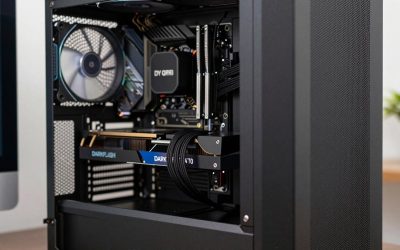
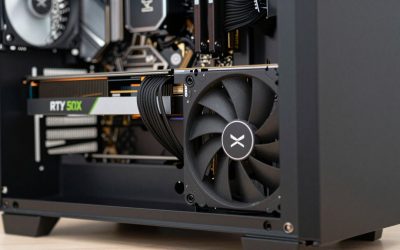
- Top Pick: Skytech Gaming King 95 Gaming PC, Ryzen 7 9800X3D, RTX 5070 Ti
- Best Value: Build Redux Gaming Desktop PC – AMD Ryzen 7 9700X CPU, NVIDIA GeForce RTX 5070 GPU, 16GB DDR5 RAM, 1TB NVMe M.2 SSD, 240mm Liquid CPU Cooler, Windows 11 Home, High-Performance Computer
- Premium Choice: Skytech Gaming PC King 95, Ryzen 7, RX 9070 XT, 32GB RAM, 1TB SSD
Affiliate disclosure: As an Amazon Associate we earn from qualifying purchases. This post contains affiliate links — if you buy through them we may earn a small commission at no extra cost to you. This never affects our recommendations.
As an Amazon Associate we earn from qualifying purchases at no extra cost to you.




The $3,000 price bracket is where PC building stops being about compromise and starts being about optimization. At this tier, you are not asking “will this run the game?” — you are asking “how consistently will this hit 144Hz at native 4K?” Whether your goal is silky-smooth triple-A gameplay, a dual-purpose rig for streaming and video editing, or simply the satisfaction of an uncapped experience with no thermal throttling and no VRAM headaches, the 2026 hardware landscape has never offered better returns at this budget. NVIDIA’s RTX 50-series GPUs have matured in availability, AMD’s Zen 5 stack is fully established, and DDR5 memory has dropped to competitive prices that make 64 GB configurations a straightforward choice rather than a luxury. These five builds represent the strongest component combinations at or just under the $3,000 ceiling — each optimized for a slightly different priority, with real-world 4K frame rate expectations to match.
In a hurry? See the top-rated Gaming PC Build Under $3000 deals available right now:
🛒 Check Gaming Pc Build Under $3000 Prices on Amazon →🛒 Best Price Today on Amazon
Prime members get fast, free shipping on everything above, plus member-only deals. New members get a 30-day free trial — cancel anytime.
Start 30-Day Prime Free Trial →See Today’s Amazon DealsQuick Comparison Table
| Build | CPU | GPU | RAM | Est. Price |
|---|---|---|---|---|
| 1. Best Overall | Ryzen 9 9800X3D | RTX 5080 | 32 GB DDR5-6000 | ~$2,900 |
| 2. Best Intel 4K | Core i9-14900KS | RTX 5080 | 32 GB DDR5-6400 | ~$2,850 |
| 3. Best Content Creator | Ryzen 9 9950X | RTX 5080 | 64 GB DDR5-5600 | ~$2,950 |
| 4. Best Raw GPU Power | Core i7-14700K | RTX 5090 | 32 GB DDR5-6000 | ~$2,980 |
| 5. Best Balanced Enthusiast | Ryzen 7 9800X3D | RTX 5090 | 32 GB DDR5-6000 | ~$2,990 |
Our Top Builds
Build 1: Ryzen 9 9800X3D + RTX 5080 — Best Overall
The Ryzen 9 9800X3D is the gaming CPU benchmark that every other processor gets measured against in 2026. AMD’s 3D V-Cache stacking dramatically reduces cache misses in CPU-bound gaming scenarios, which means minimum frame rates stay high even in the most demanding open-world titles. Paired with the RTX 5080, this combination delivers exceptional 4K gaming without a single bottleneck anywhere in the pipeline.
Full Parts List
| Component | Part |
|---|---|
| CPU | AMD Ryzen 9 9800X3D |
| Motherboard | ASUS ROG Crosshair X870E Hero |
| GPU | NVIDIA GeForce RTX 5080 16 GB |
| RAM | G.Skill Trident Z5 32 GB DDR5-6000 |
| Storage | Samsung 990 Pro 2 TB NVMe |
| CPU Cooler | Noctua NH-D15 G2 |
| Case | Fractal Design Torrent |
| PSU | Seasonic Focus GX-850W |
| Total |
Expected FPS at 4K (Ultra Settings)
- Cyberpunk 2077 (DLSS Quality): 115–130 fps
- Black Myth: Wukong: 90–105 fps
- Call of Duty BO6: 155+ fps
- Microsoft Flight Simulator 2024: 75–90 fps
Pros
- 3D V-Cache provides the highest minimum frame rates of any gaming CPU
- RTX 5080 handles every current 4K title with headroom
- AM5 platform extends upgrade life through 2027+
- Excellent thermal headroom without liquid cooling
Cons
- 9800X3D commands a price premium over 9700X3D
- Not the strongest multi-threaded CPU for heavy Premiere renders
Build 2: Core i9-14900KS + RTX 5080 — Best Intel 4K
Intel’s Core i9-14900KS remains a formidable 4K gaming and productivity processor in 2026, particularly for users who keep multiple OBS instances, browser tabs, and Discord open while gaming. Its 24-core hybrid architecture and very high clock speeds make it the go-to Intel choice for simultaneous streaming and gaming without frame pacing penalties. Paired with the RTX 5080, this is a balanced powerhouse that handles 4K gaming at 144Hz while leaving CPU headroom for live encoding.
Full Parts List

| Component | Part |
|---|---|
| CPU | Intel Core i9-14900KS |
| Motherboard | MSI MEG Z790 Ace |
| GPU | NVIDIA GeForce RTX 5080 16 GB |
| RAM | Corsair Dominator Titanium 32 GB DDR5-6400 |
| Storage | WD Black SN850X 2 TB |
| CPU Cooler | be quiet! Dark Rock Pro 5 |
| Case | Lian Li Lancool III |
| PSU | Corsair RM850x |
| Total |
Expected FPS at 4K (Ultra Settings)
- Cyberpunk 2077 (DLSS Quality): 110–125 fps
- Battlefield 2042: 140+ fps
- Hogwarts Legacy: 100–115 fps
- Call of Duty BO6: 150+ fps
Pros
- Outstanding multi-core performance for streaming + gaming simultaneously
- Strong overclocking headroom on Z790
- DDR5-6400 XMP compatibility is excellent on this platform
- Mature Intel ecosystem, broad software support
Cons
- Higher TDP than AMD Zen 5 — needs robust cooling solution
- Z790 platform is end-of-life; no upgrade path for future Intel generations
Build 3: Ryzen 9 9950X + RTX 5080 — Best for Content Creation + Gaming
The Ryzen 9 9950X’s 16-core / 32-thread configuration makes it the undisputed choice for users who spend as many hours in Adobe Premiere, DaVinci Resolve, or Blender as they do gaming. The 9950X exports timelines faster than any other CPU in this price range, and it still delivers strong 4K gaming when paired with the RTX 5080. This is the build for the creator who refuses to own two separate machines.
Full Parts List
| Component | Part |
|---|---|
| CPU | AMD Ryzen 9 9950X |
| Motherboard | Gigabyte X870E Aorus Master |
| GPU | NVIDIA GeForce RTX 5080 16 GB |
| RAM | Kingston Fury Beast 64 GB DDR5-5600 |
| Storage (Primary) | Samsung 990 Pro 2 TB NVMe |
| Storage (Secondary) | Seagate Barracuda 4 TB HDD |
| CPU Cooler | NZXT Kraken Elite 360 |
| Case | Fractal Design North XL |
| PSU | Seasonic Vertex GX-850W |
| Total |
Expected FPS at 4K (Ultra Settings)
- Cyberpunk 2077 (DLSS Quality): 108–120 fps
- Blender Render (GPU+CPU): Significantly faster than 8-core builds
- DaVinci Resolve 4K Export: Real-time or faster
- Hogwarts Legacy: 98–110 fps
Pros
- Best multi-threaded CPU in this price range bar none
- 64 GB DDR5 handles large video projects and game load simultaneously
- RTX 5080 accelerates GPU renders in Resolve and Blender
- Liquid cooling keeps 16 cores quiet under sustained workloads
Cons

- Weaker single-core gaming performance vs 9800X3D
- Minimum fps in CPU-bound games slightly lower than 3D V-Cache builds
Build 4: Core i7-14700K + RTX 5090 — Best Raw GPU Power
If your single priority is maximum GPU horsepower at 4K — native resolution, raytracing maxed, DLSS off or set to Quality — then pairing a capable mid-tier CPU with the RTX 5090 delivers the most raw GPU performance in this budget. The Core i7-14700K is not a bottleneck for GPU-bound 4K workloads and its lower price versus i9 or Ryzen 9 processors frees up enough budget to fit the RTX 5090. This is the build for the purist who wants the highest rasterization and ray tracing numbers available at $3,000.
Full Parts List
| Component | Part |
|---|---|
| CPU | Intel Core i7-14700K |
| Motherboard | ASUS TUF Gaming Z790-Plus WiFi |
| GPU | NVIDIA GeForce RTX 5090 32 GB |
| RAM | G.Skill Ripjaws S5 32 GB DDR5-6000 |
| Storage | WD Black SN850X 1 TB |
| CPU Cooler | DeepCool AK620 |
| Case | Phanteks Eclipse G500A |
| PSU | Corsair HX1000i |
| Total |
Expected FPS at 4K (Ultra Settings, No DLSS)
- Cyberpunk 2077: 95–110 fps
- Black Myth: Wukong (native 4K max RT): 75–90 fps
- Forza Horizon 5: 140+ fps
- Alan Wake 2 (Path Tracing): 60–75 fps
Pros
- RTX 5090’s 32 GB VRAM is future-proof for every current and upcoming title
- Best pure rasterization and ray tracing GPU performance in this price bracket
- Excellent for AI-accelerated workloads via CUDA
- The i7-14700K is not a meaningful bottleneck at native 4K
Cons
- Smallest SSD in the lineup — 1 TB fills quickly with modern game installs
- i7-14700K limits multi-core workload performance vs 9950X or i9-14900KS
- RTX 5090 power draw requires a robust 1000W+ PSU
Build 5: Ryzen 7 9800X3D + RTX 5090 — Best Balanced Enthusiast
The most balanced build on this list pairs AMD’s best gaming CPU with NVIDIA’s flagship GPU. The Ryzen 7 9800X3D delivers the same 3D V-Cache gaming advantages as the 9800X3D while the RTX 5090 takes the rendering ceiling so high that nearly every title runs at 4K 144Hz with settings maxed. This combination sacrifices nothing in gaming and still offers solid content creation throughput for creators who do not need 16 cores. It is very close to the maximum theoretical return on $3,000 for a pure gamer who occasionally renders.
Full Parts List
| Component | Part |
|---|---|
| CPU | AMD Ryzen 7 9800X3D |
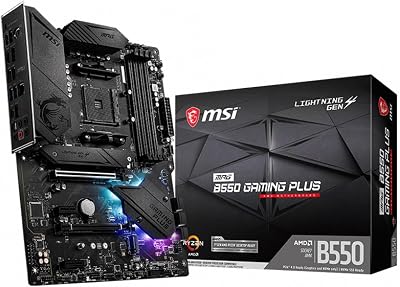
| Motherboard | MSI MAG X870E Tomahawk WiFi |
| GPU | NVIDIA GeForce RTX 5090 32 GB |
| RAM | G.Skill Trident Z5 32 GB DDR5-6000 |
| Storage | Samsung 990 Pro 1 TB NVMe |
| CPU Cooler | Noctua NH-D15 G2 |
| Case | Lian Li O11 Air Mini |
| PSU | Seasonic Focus PX-1000 |
| Total |
Expected FPS at 4K (Ultra Settings)
- Cyberpunk 2077 (DLSS Quality): 130–150 fps
- Black Myth: Wukong: 110–125 fps
- Forza Horizon 5: 165+ fps
- Microsoft Flight Simulator 2024: 90–110 fps
Pros
- Best gaming-to-price ratio of any $3,000 build
- 3D V-Cache + RTX 5090 eliminates CPU and GPU bottlenecks simultaneously
- RTX 5090’s 32 GB VRAM handles 4K texture packs without compromise
- AM5 platform supports future Zen 6 upgrades
Cons
- 8-core configuration is lighter on multi-core workloads than 9950X
- Storage is tight at 1 TB — plan for a secondary drive addition
How to Build a $3000 Gaming PC in 2026
Where to Splurge and Where to Save
At this budget, the GPU and CPU absorb the majority of spend for good reason — they determine every frame rate outcome directly. Do not under-invest here. The motherboard and case, however, have strong mid-range options that perform identically to flagship alternatives. A $229 ASUS TUF Z790 board routes the same power delivery as a $400 ROG Maximus for 95% of users. The savings flow to better storage or a higher-tier GPU. Memory sweet spot in 2026 is DDR5-6000 for AMD platforms and DDR5-6400 for Intel — anything beyond that shows diminishing returns in gaming benchmarks.
Cooling Requirements at This Tier
The RTX 5090 is a 575W GPU. The i9-14900KS and 9950X push 250W+ under all-core load. If your build includes either of these, a 360 mm AIO liquid cooler on the CPU is the right call — not for performance but for sustained quiet operation. The 9800X3D and 9700X3D actually run cooler than their non-X3D counterparts due to lower default clocks, making premium air cooling (Noctua NH-D15 G2, be quiet! Dark Rock Pro 5) a legitimate and quieter alternative. Always ensure your case supports at least 3 × 120 mm front intake fans for GPU exhaust airflow — this matters more than case aesthetics at this thermal envelope.
Storage Strategy
Modern AAA titles regularly install at 100–150 GB each. A 2 TB primary NVMe drive fits roughly 12–15 large games before management becomes necessary. If your budget allows, include a secondary high-capacity HDD (4 TB Seagate Barracuda for ~$69) as a game library archive drive — move inactive titles there and keep only active installs on the NVMe. For content creators, a second 2 TB NVMe dedicated to project scratch files and video cache dramatically improves Premiere and Resolve timeline responsiveness. Always buy NVMe Gen 4 or Gen 5 drives at this tier — SATA SSDs are a step backward.
Platform Longevity Considerations
AMD’s AM5 platform supports Zen 6 processors expected in late 2026 and into 2027, meaning any of the AMD builds here can receive a future CPU upgrade without a new motherboard. Intel’s LGA1700 socket (Z790) is at end of life — Core 14th gen is the final generation supported. This is not a dealbreaker for a build you plan to use for 3–4 years, but it is a factor if you prioritize upgrade flexibility.
Final Verdict
For pure gaming at 4K 144Hz, Build 1 (Ryzen 9 9800X3D + RTX 5080) is the strongest overall recommendation. The 3D V-Cache advantage in minimum frame rates is real, measurable, and consistent across genres, and the RTX 5080 handles every current title with authority. Build 5 (Ryzen 7 9800X3D + RTX 5090) earns the nod if your monitor is a 4K 144Hz G-Sync Ultimate panel and you want the absolute highest frame rate ceiling available at this budget. Build 3 (Ryzen 9 9950X + RTX 5080) is the clear winner for dual-purpose creators who render video professionally and play games at enthusiast settings. Whichever combination you choose, every build on this list will deliver a genuinely no-compromise 4K gaming experience through at least 2028.
Frequently Asked Questions
Is $3,000 enough for a true 4K 144Hz gaming PC in 2026?
Yes — definitively. The RTX 5080 and RTX 5090 both handle 4K at 144Hz in virtually every title available in 2026, either natively or with DLSS Quality mode enabled. At DLSS Quality, image quality is indistinguishable from native 4K to most viewers, and frame rates land comfortably in the 120–150+ fps range across demanding titles. You do not need to spend more than $3,000 to achieve this benchmark.
Should I choose AMD or Intel for my $3,000 gaming PC?
For pure gaming, AMD’s Ryzen 9800X3D is the stronger choice in 2026 due to its 3D V-Cache architecture, which delivers the highest minimum frame rates of any CPU on the market. For simultaneous streaming, video editing, and gaming, Intel’s Core i9-14900KS or AMD’s Ryzen 9 9950X offer more multi-threaded throughput. Platform longevity also favors AMD — AM5 supports future Zen 6 processors, while Intel’s LGA1700 is end of life.
Do I need a 1000W power supply for these builds?
For any build including the RTX 5090 (575W TGP), a 1000W PSU is the minimum responsible choice — 850W is too close to the ceiling once you factor in CPU, fans, storage, and transient spikes. For RTX 5080 builds (285W TGP), an 850W 80+ Gold unit is sufficient and leaves headroom for overclocking. Always choose units from reputable manufacturers: Seasonic, Corsair, and be quiet! are the safest picks at this tier.
Related Articles
Looking for more on this topic? Browse the hand-picked guides below — each one applies the same scoring rubric used in this review.