

- Top Pick: Sony Playstation 5 Disc Version PS5 Console – 4K-TV Gaming, 120Hz 8K Output, 16GB GDDR6, 825GB SSD, WiFi 6, Bluetooth 5.1 (Renewed) White
- Best Value: 2 Pack PCIE Cable ONLY for MSI MAG A850GL A750GL & MPG A850G A1000G Power Supplies, ATX 3.0, PSU 8 Pin Male to PCIe 8 Pin (6+2) Male Power Supply Sleeved Cable for MSI MAG A850GL A750GL Power Supply
- Premium Choice: PCIE Cable ONLY for MSI MAG A850GL A750GL & MPG A850G A1000G Power Supplies, ATX 3.0, PSU 8 Pin Male to PCIe 8 Pin (6+2) Male Power Supply Sleeved Cable for MSI MAG A850GL A750GL Power Supply
🛒 Best Price Today on Amazon
Prime members get fast, free shipping on everything above, plus member-only deals. New members get a 30-day free trial — cancel anytime.
- Top Psus Video Production Picks for 2026
- Best PSUs for Video Production at a Glance
- 1. msi MPG A1000G PCIE5 1000W 80+ Gold, 100% Japanese Capacitors, Fully Modular
- 2. CORSAIR RM1000x ATX 3.1 PCIe 5.1 Ready Fully Modular 1000W, Low-Noise
- 3. MSI MAG A850GL PCIE5, Fully Modular Compact 850W Power Supply, 80+ Gold
- 4. MSI MPG A850G PCIE5 Fully Modular Compact 850W Power Supply, 80+ Gold
- 5. Cooler Master MWE Gold 850 V2 Fully Modular Power Supply, 850W 80+ Gold
- 6. Thermaltake Smart 700W 80+ White Certified PSU, Continuous Power, 120mm Fan
- How to Choose a PSU for Video Production
- Related Guides
- Frequently Asked Questions
- Related Guides
- Related Articles
- Related Guides
Top Psus Video Production Picks for 2026
Here are our current top psus video production picks, compared on real Amazon owner reviews, price, and features. Live prices update below.
As an Amazon Associate we earn from qualifying purchases at no extra cost to you.



Prime
Best Seller
PS2 AV Cable, Audio Video Cord for PS2 PS1 PS3, AV to RCA Composite Audio Video, TV Cord Compatible with PlayStation

Prime
Editor's Pick
PS2 PS3 AV Cable, AV to RCA Cord for PlayStation 2 3 /PS2/PSX/PS3 Slim (6FT)
Prime
Limited Time
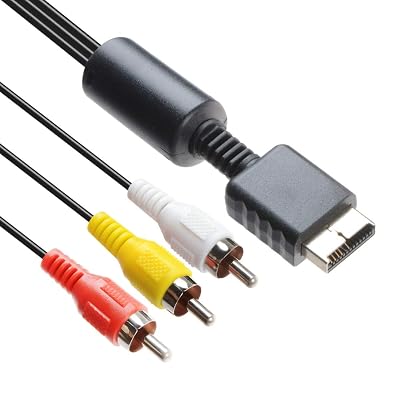
TENINYU Audio Video RCA Cable – Game Console Composite Accessories Connection AV Cable for PS1 PS2 PS3, 6FT

Prime
Top Rated
Tomee S-Video AV Cable for PS3/ PS2/ PS1, Audio Video TV Cord Compatible with PlayStation 1/2/3

Video production hammers a PC in a way gaming rarely does. A timeline render, a GPU-accelerated export, or an overnight batch encode can pin your graphics card and CPU at high draw for minutes or hours at a stretch, and that is exactly the load a power supply for editing has to swallow without flinching. What matters here is not a flashy peak rating but sustained, clean power: enough wattage headroom to feed a hungry GPU plus a many-core CPU, stable rails that hold voltage under prolonged stress, and enough efficiency that the unit runs cool and quiet through a long render. This guide rounds up the best PSUs for video production in 2026 with that sustained-load brief front of mind.
Our picks were chosen on the criteria a render workstation actually leans on: real wattage headroom for GPU-heavy export loads, 80 PLUS efficiency for cool and quiet sustained running, rail stability, and modular cabling for clean builds and airflow. We have led the list with the highest-capacity, most render-ready units and worked down to lighter-duty options, with prices from around $55 to around $161. Crucially, we flag honestly where a unit is sized for a modest single-GPU edit box rather than a power-hungry render rig — wattage is not optional headroom for this job. Below is an at-a-glance comparison of all six, then a closer look at each and a buyer’s guide built around wattage, efficiency, the ATX 3.1 standard and cabling.
Best PSUs for Video Production at a Glance
| Power Supply | Best For | Standout Spec | Approx Price |
|---|---|---|---|
| MSI MPG A1000G 1000W 80+ Gold | Top-tier render workstation | 1000W, Japanese caps, full modular | around $161 |
| CORSAIR RM1000x ATX 3.1 1000W | Modern high-GPU export rig | 1000W, ATX 3.1 / PCIe 5.1, low-noise | around $160 |
| MSI MAG A850GL 850W 80+ Gold | Single-GPU 4K editing build | 850W Gold, fully modular, compact | around $108 |
| MSI MPG A850G 850W 80+ Gold | Balanced creator workstation | 850W Gold, compact full modular | around $110 |
| Cooler Master MWE Gold 850 V2 | Value 850W render headroom | 850W Gold, fully modular, value | around $97 |
| Thermaltake Smart 700W 80+ White | Light single-GPU edit box | 700W, 120mm fan, budget | around $55 |
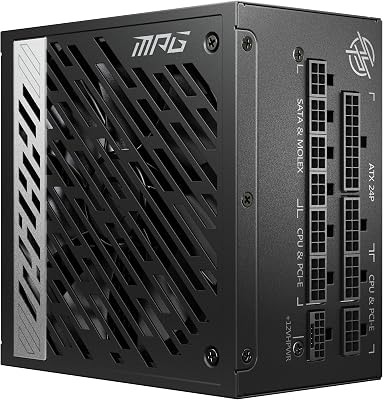
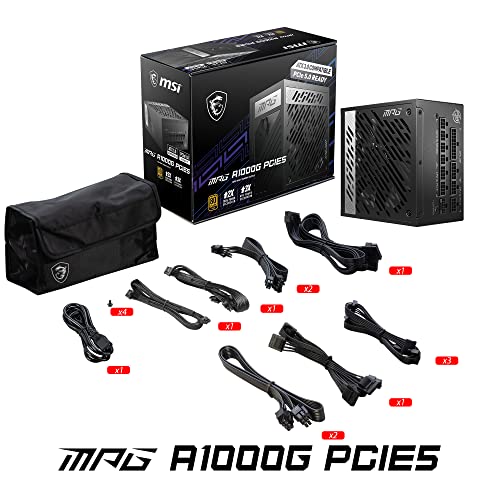
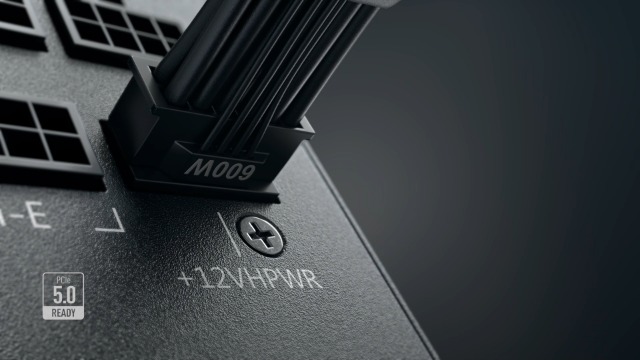
1. msi MPG A1000G PCIE5 1000W 80+ Gold, 100% Japanese Capacitors, Fully Modular
18
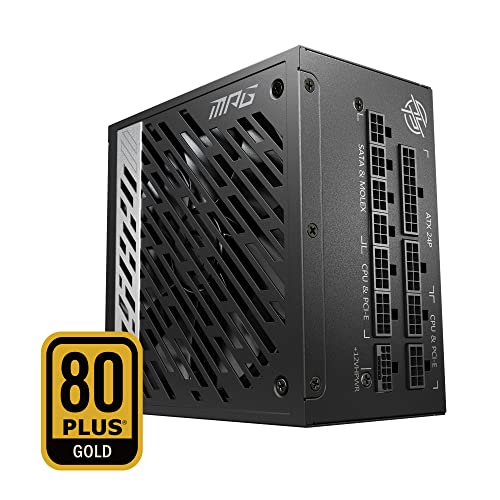
msi MPG 1000W 80+ Gold Power Supply – 1000W 80+ Gold – 100% Japanese Capacitors – Compatible with PCIe 5.0 Graphics Cards – 1 Fan(s)
In Stock
Updated: May 26, 2026




As an Amazon Associate we earn from qualifying purchases. Product prices and availability are accurate as of the date/time indicated.
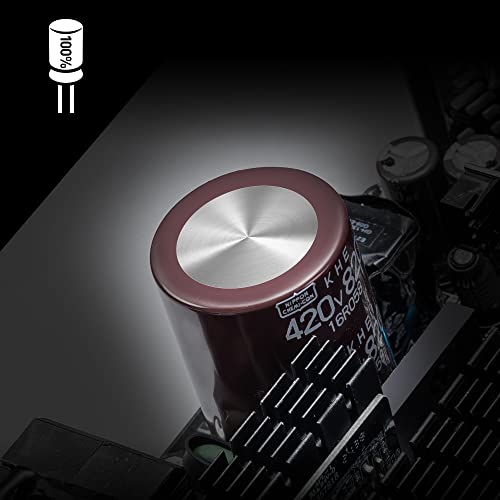
The MSI MPG A1000G is the headline pick for a serious video-production workstation, and the reasoning is simple: it has the wattage and the build quality to feed a power-hungry render rig for hours. With a 1000W capacity, an 80 PLUS Gold rating, 100% Japanese capacitors and full modular cabling, it is engineered to hold stable rails under exactly the kind of sustained GPU and CPU load that a timeline export or overnight batch encode generates. At around $161 it is the most capable unit here.
For video production this is the intent it serves best. A high-end GPU accelerating renders alongside a many-core CPU can pull serious sustained power, and a 1000W Gold supply gives the headroom to do that without running the unit near its limit, which keeps temperatures and fan noise in check through long jobs. The Japanese capacitors speak to longevity under heat, and full modular cabling keeps the case tidy for the airflow a hard-working workstation wants. If your edit rig drives a top-tier graphics card and you render often, this is the obvious starting point.
Pros: 1000W headroom for sustained GPU render loads, 80+ Gold efficiency, 100% Japanese capacitors, fully modular.
Cons: Highest price here; more capacity than a modest single-GPU edit box needs.
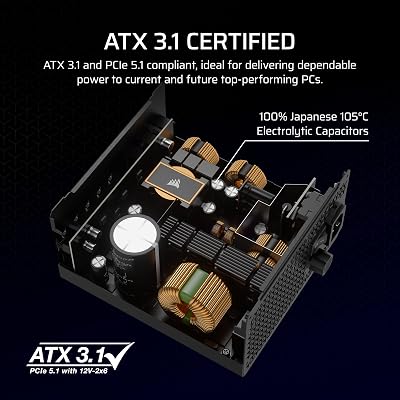
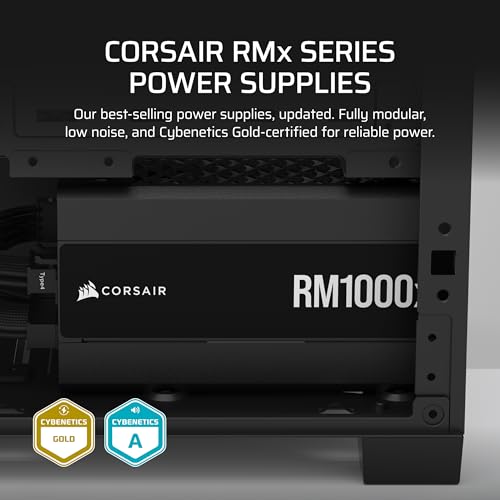
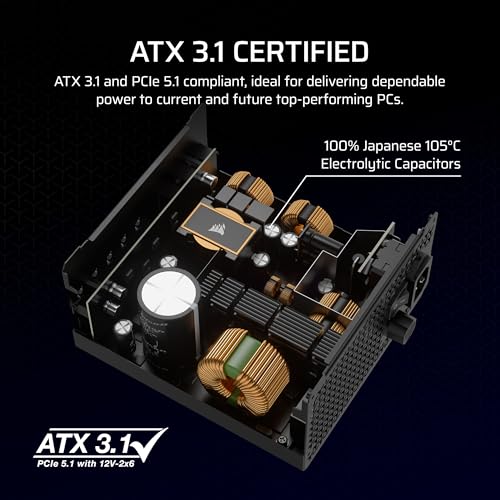
2. CORSAIR RM1000x ATX 3.1 PCIe 5.1 Ready Fully Modular 1000W, Low-Noise

20
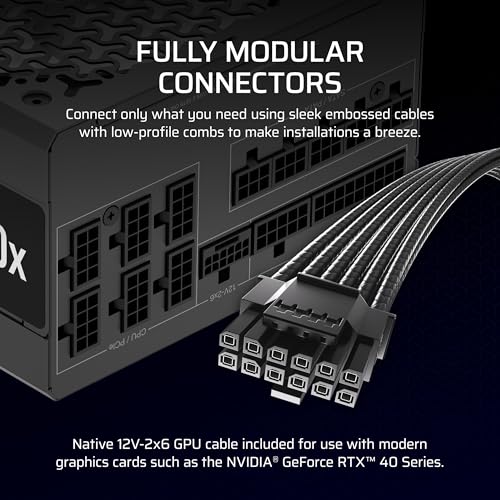
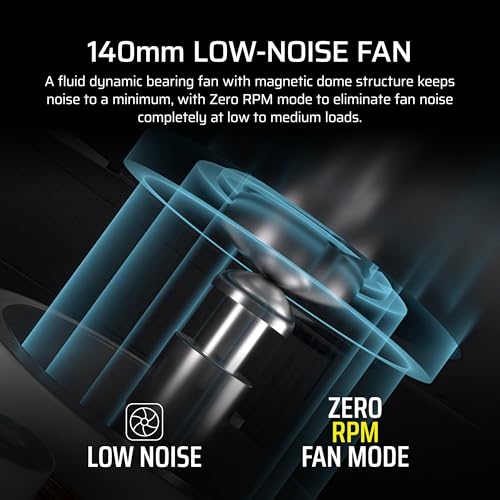
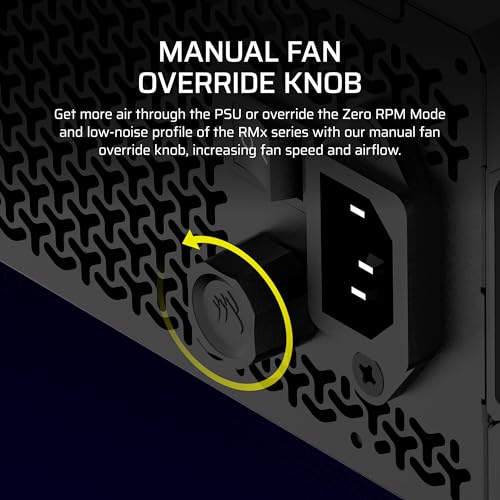
CORSAIR RM1000x ATX 3.1 PCIe 5.1 Ready Fully Modular 1000W Power Supply – Low-Noise, Cybenetics Gold Efficiency, Native 12V-2×6 Connector – Black
In Stock
$209.99
Save $43.75
Updated: July 24, 2026





As an Amazon Associate we earn from qualifying purchases. Product prices and availability are accurate as of the date/time indicated.
The Corsair RM1000x is the modern-standard pick for a high-GPU export rig. It matches the 1000W capacity that render-heavy work wants with the current ATX 3.1 and PCIe 5.1 specifications, meaning it is built to handle the transient power spikes modern graphics cards produce and to drive the latest 12V-2×6 GPU connector natively. It is also tuned for low-noise running. At around $160 it is a future-proof workstation supply.
This is the unit to choose if you are building or upgrading a current-generation editing and rendering machine. ATX 3.1 compliance matters for sustained creative loads because it is designed to ride out the power excursions a heavily loaded GPU throws during a long export rather than tripping protection, while the 1000W ceiling leaves comfortable headroom above a big card and a many-core CPU. The low-noise design keeps a render station civil during overnight jobs, and full modular cabling helps airflow. For a modern, render-stable 1000W supply, the RM1000x is a standout.

Pros: 1000W with ATX 3.1 / PCIe 5.1 for modern GPU transients, low-noise sustained running, fully modular.
Cons: Premium price; 1000W is overkill for a light, integrated-graphics edit box.
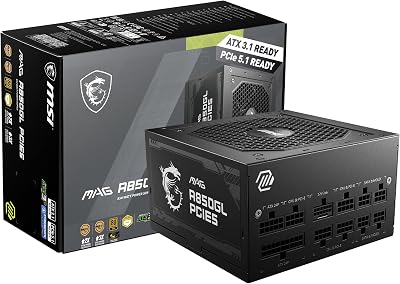
3. MSI MAG A850GL PCIE5, Fully Modular Compact 850W Power Supply, 80+ Gold
16
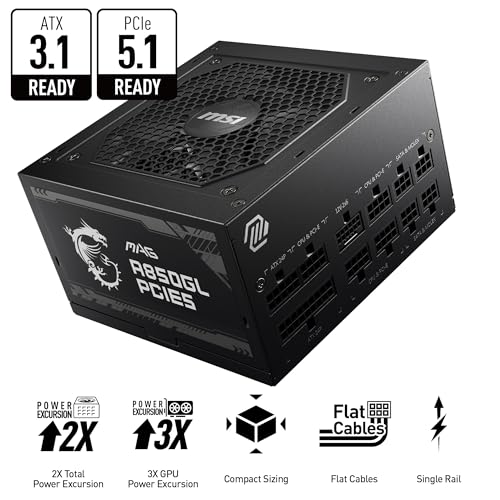
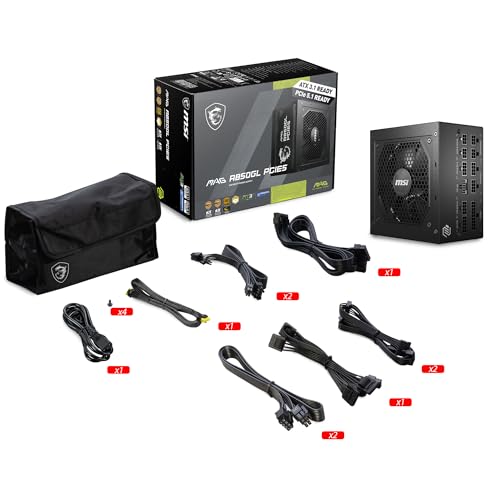
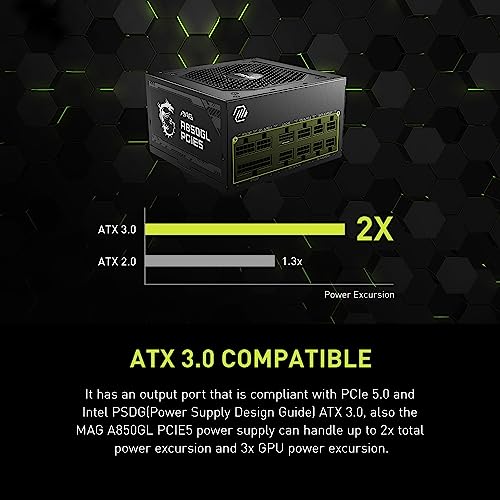
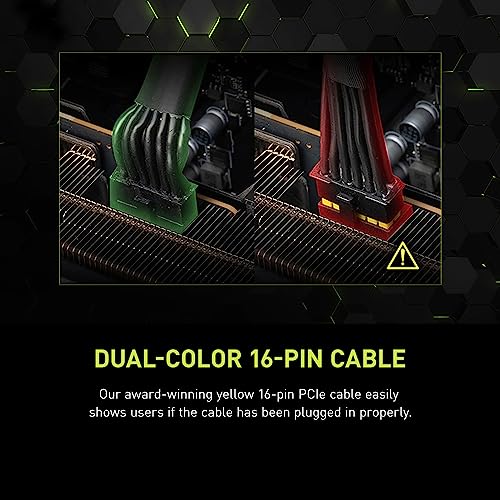
MSI MAG A850GL PCIE5, Fully Modular Compact Gaming 850W Power Supply, 80+ Gold, ATX 3.1 & PCIe 5.1 Ready, Native Dual-Color 12V-2×6 Cable, 10 Year Warranty
In Stock
$129.99
Save $25.99
Updated: July 24, 2026


As an Amazon Associate we earn from qualifying purchases. Product prices and availability are accurate as of the date/time indicated.
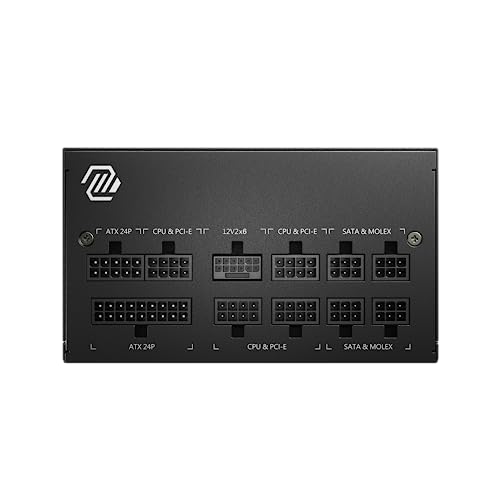
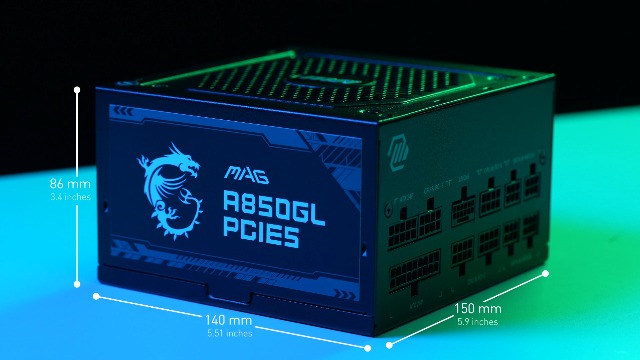
The MSI MAG A850GL is the pick for a capable single-GPU 4K editing build. Its 850W capacity and 80 PLUS Gold rating give solid, efficient headroom for a mainstream-to-upper graphics card paired with a strong editing CPU, and it is PCIe 5 ready with a fully modular, compact body that fits a wide range of cases. At around $108 it is a well-balanced creator supply at a sensible price.
This is the unit for the editor whose workstation runs one strong GPU rather than a flagship monster — the bulk of 4K timeline and color work. 850W of Gold-rated power comfortably feeds that class of card under a sustained export while staying efficient enough to run cool and quiet, the PCIe 5 readiness covers modern cards, and the compact fully modular design suits tidy mid-tower builds. If you want dependable sustained power for a single-GPU edit rig without paying for 1000W you will not use, the A850GL is a smart fit.
Pros: 850W of 80+ Gold sustained headroom, PCIe 5 ready, fully modular and compact for tidy editing builds.
Cons: 850W suits one strong GPU, not a multi-card or flagship render monster.
4. MSI MPG A850G PCIE5 Fully Modular Compact 850W Power Supply, 80+ Gold

21
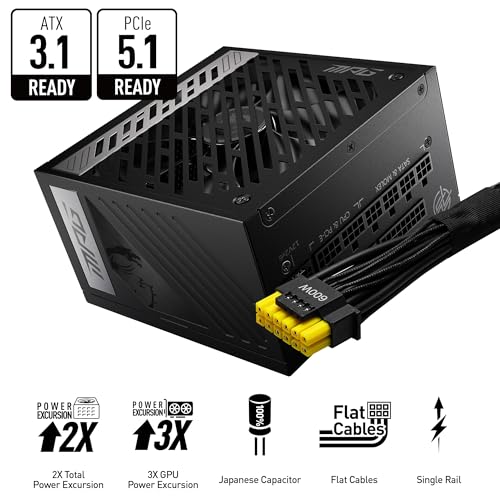
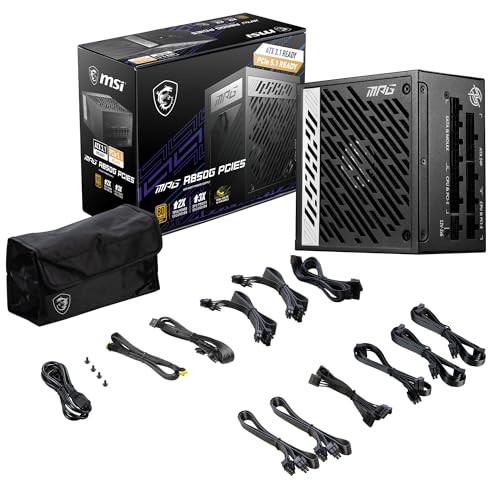
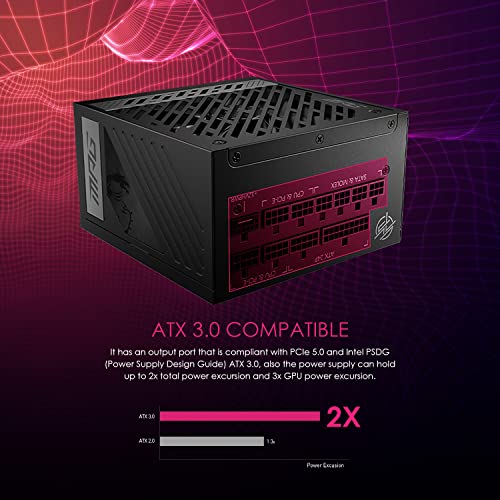
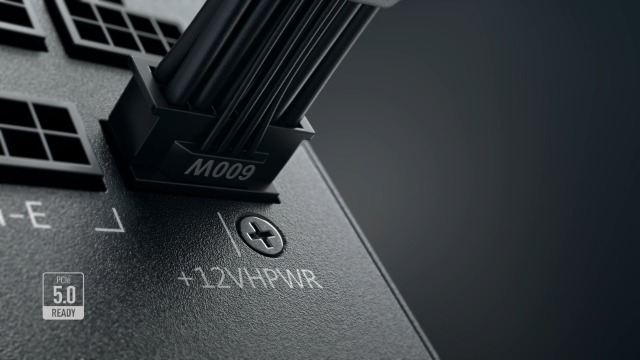
MSI MPG A850G PCIE5, Fully Modular Compact Gaming 850W Power Supply, 80+ Gold, Native 12V-2×6 Cable, 100% Japanese Capacitor, ATX 3.1 & PCIe 5.1 Ready, Low-Noise, 10 Year Warranty
In Stock
$139.99
Save $30.00
Updated: May 27, 2026






As an Amazon Associate we earn from qualifying purchases. Product prices and availability are accurate as of the date/time indicated.
The MSI MPG A850G is the balanced creator-workstation pick. It is MSI’s MPG-series 850W unit with an 80 PLUS Gold rating, PCIe 5 support and a compact, fully modular chassis — a step up in series positioning from the MAG line while holding the same useful 850W capacity. At around $110 it gives a stable, efficient backbone for a mainstream editing and rendering machine.
This is the unit for a creator who wants a quality 850W Gold supply with headroom for a single strong GPU and a multi-core CPU through sustained edit and render sessions. The Gold efficiency keeps the unit running cool and quiet during long exports, the PCIe 5 readiness handles current cards, and the compact full modular design keeps cabling clean for airflow. It sits alongside the MAG A850GL as a sensible 850W choice; pick whichever is better priced when you buy, as both deliver stable sustained power for a single-GPU creator rig.
Pros: 850W 80+ Gold for steady creator loads, PCIe 5 ready, compact fully modular cabling.
Cons: Like all 850W units here, sized for a single strong GPU rather than extreme render rigs.
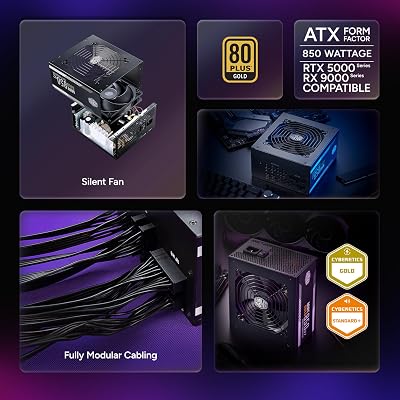
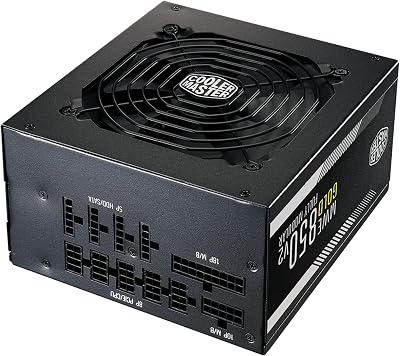
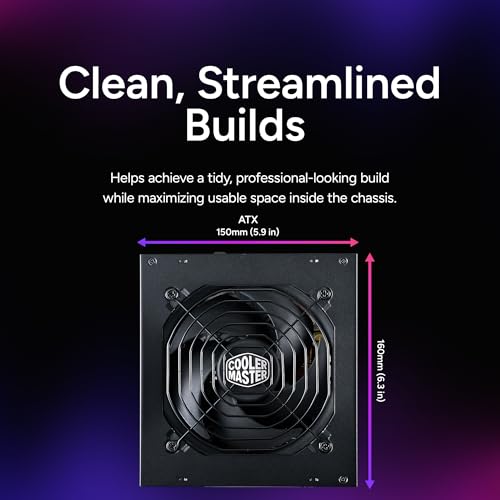
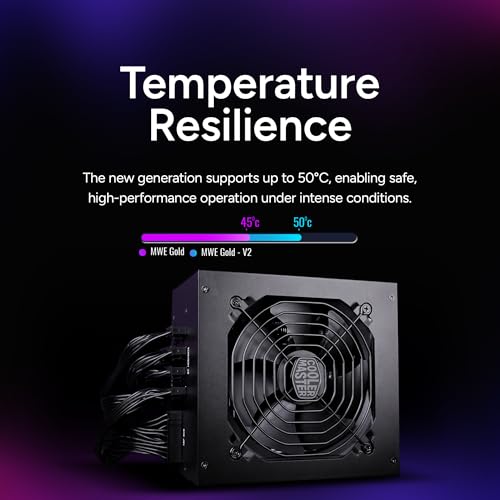
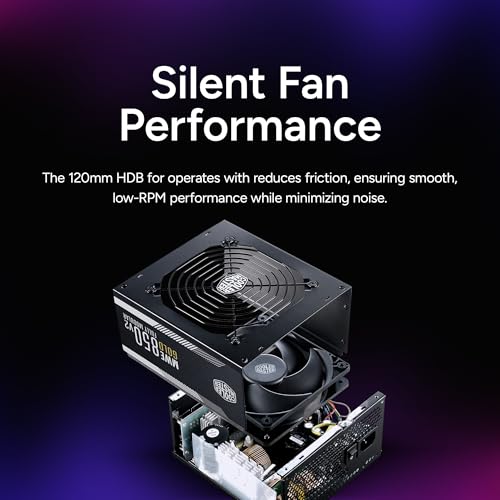
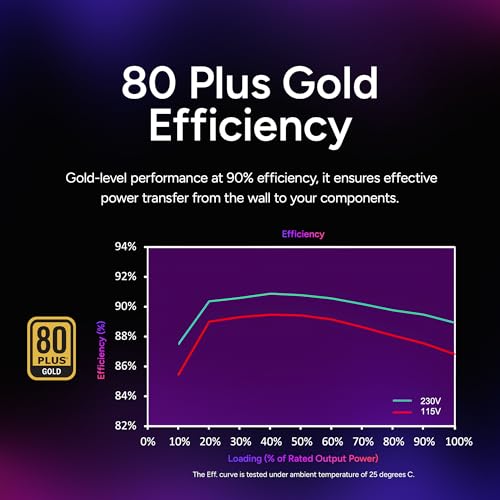
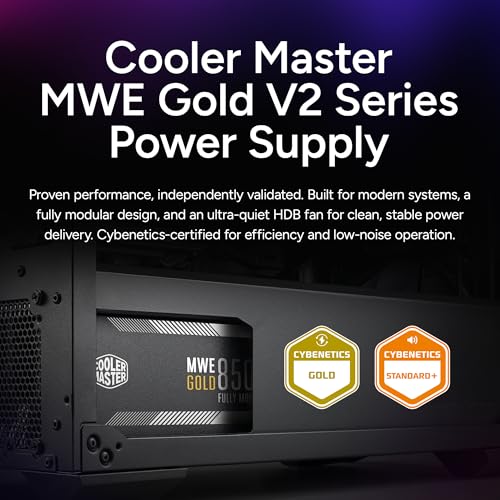
5. Cooler Master MWE Gold 850 V2 Fully Modular Power Supply, 850W 80+ Gold

34
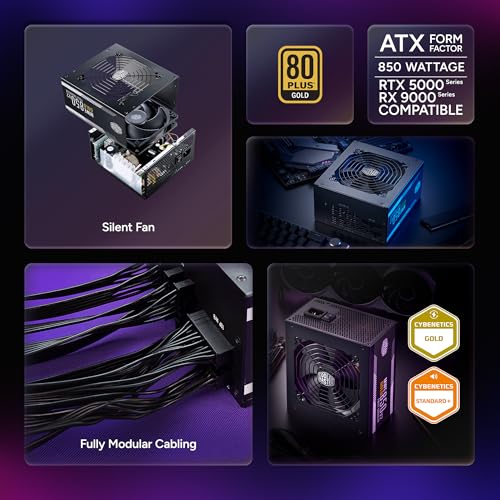
Cooler Master MWE Gold 850 V2 Fully Modular Power Supply – 850W 80+ Gold Certified PSU, Dual EPS Connectors, Semi-Fanless Low Noise Design, Flat Black Cables, Reliable ATX Gaming PSU, 5-Year Warranty
In Stock
Updated: May 26, 2026






As an Amazon Associate we earn from qualifying purchases. Product prices and availability are accurate as of the date/time indicated.
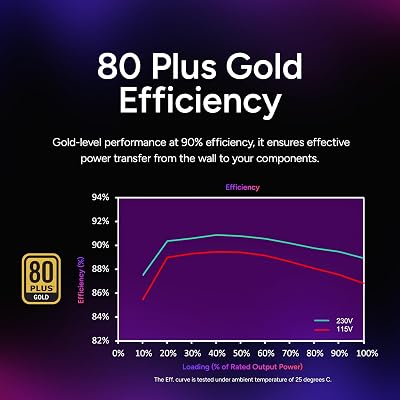
The Cooler Master MWE Gold 850 V2 is the value 850W pick for render headroom. It delivers the same useful 850W capacity and 80 PLUS Gold efficiency as the MSI 850W units in a fully modular package, but typically at the lowest price of the Gold-rated group. At around $97 it is the budget-conscious way to get efficient, modular power with enough headroom for a single-GPU creator workstation.
This is the unit for the editor on a tighter budget who still wants 850W of Gold-rated, fully modular power for a single strong graphics card and a capable CPU. The Gold efficiency helps it run cool and quiet through sustained exports, the modular cabling keeps the build airflow-friendly, and the price leaves more in the budget for storage or more RAM — both of which a video workstation appreciates. For dependable sustained power at a value price, the MWE Gold 850 V2 earns its place.
Pros: 850W 80+ Gold value, fully modular cabling, efficient sustained running for single-GPU edit rigs.
Cons: Value-tier unit; 850W ceiling suits one strong GPU, not flagship render builds.
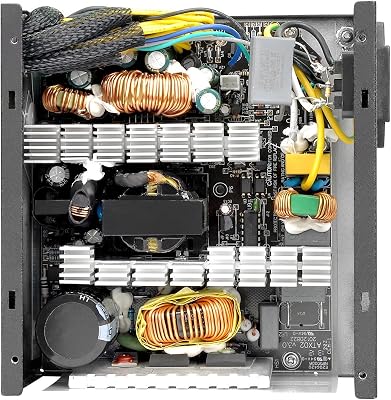
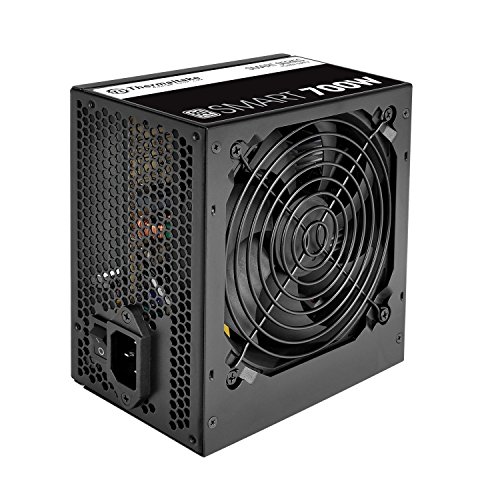
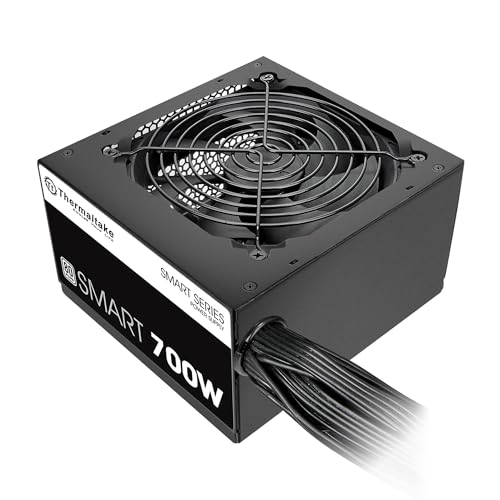
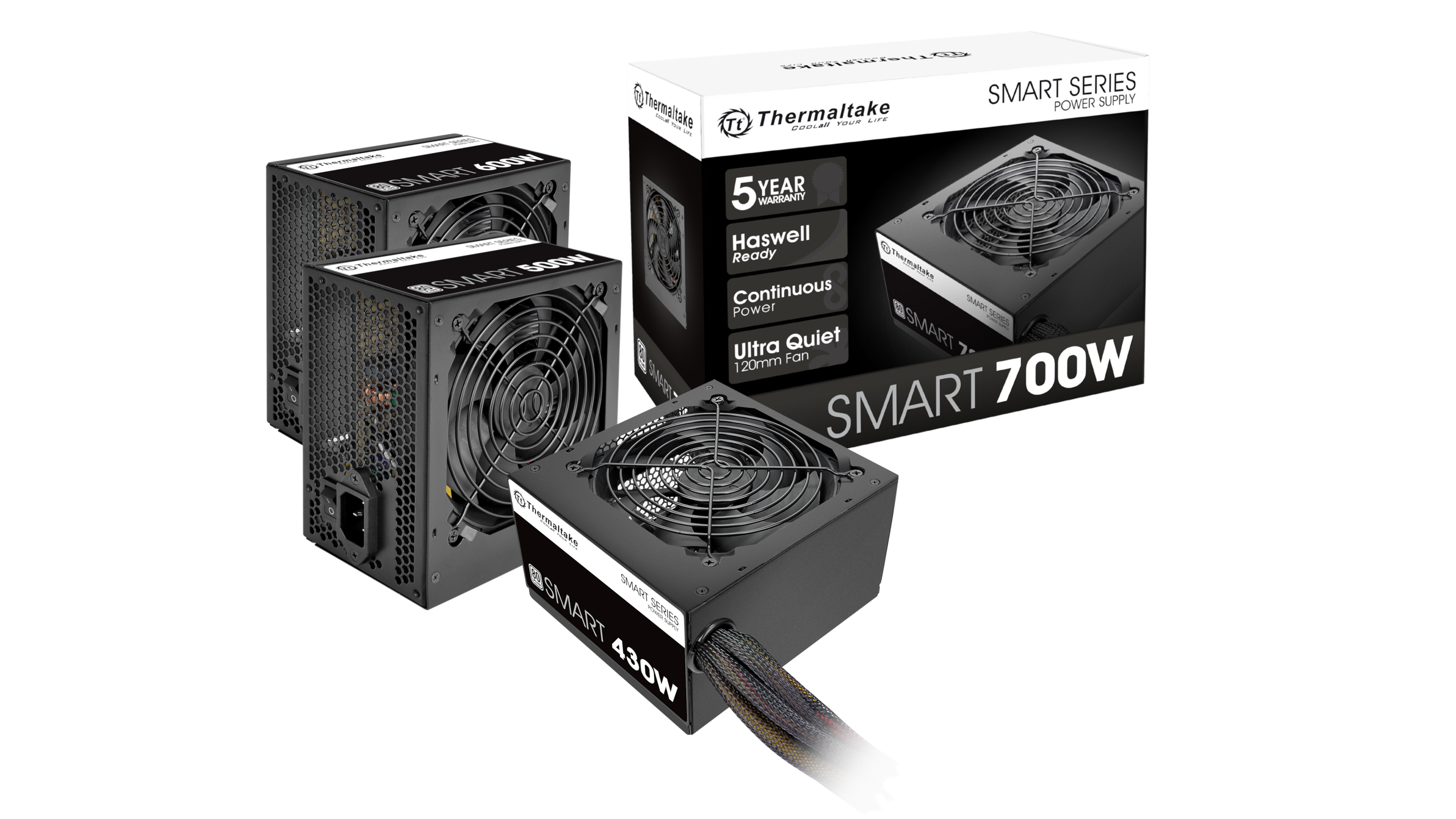
6. Thermaltake Smart 700W 80+ White Certified PSU, Continuous Power, 120mm Fan

12
Thermaltake Smart 700W 80+ White Certified PSU, Continuous Power with 120mm Ultra Quiet Fan, ATX 12V V2.3/EPS 12V Active PFC Power Supply PS-SPD-0700NPCWUS-W
In Stock
Updated: May 27, 2026




As an Amazon Associate we earn from qualifying purchases. Product prices and availability are accurate as of the date/time indicated.
Rounding out the list is the Thermaltake Smart 700W, and here is where we are honest about fit: this is the light-duty option, suited to a modest single-GPU or integrated-graphics edit box rather than a power-hungry render rig. It is a 700W unit with 80 PLUS White certification and a 120mm cooling fan, available for around $55 — by far the cheapest supply on this list. It covers basic editing duty on a budget, but it is the weakest match for the sustained, high-draw render loads this guide is really about.
Two caveats are worth stating plainly for video production. First, 700W is the lowest capacity here and leaves comparatively little headroom once a strong GPU and a many-core CPU are both working hard during an export, so it is best kept to a mid-range single-card setup. Second, 80 PLUS White is the lowest efficiency tier of the group, which means more heat and potentially more fan noise under a long sustained load than the Gold units above. If your budget is tight and your edit box is modest it will do the job, but for serious rendering on a hungry GPU, step up to one of the 850W or 1000W Gold units.
Pros: Budget-friendly, 120mm-fan cooled, fine for a modest single-GPU or iGPU edit box.
Cons: Lowest 700W capacity and lowest 80+ White efficiency here — under-sized and less efficient for sustained GPU render loads; not a non-modular cabling note.
How to Choose a PSU for Video Production
Start with wattage headroom, because sustained rendering is the load that separates a video-production supply from a casual one. Add up the rated draw of your graphics card and CPU under load and leave generous margin on top — a render or export can pin both for a long time, and a PSU running near its ceiling runs hotter, louder and harder. For a power-hungry single GPU plus a many-core CPU, a 1000W unit like the MSI A1000G or Corsair RM1000x gives comfortable room; for one strong mainstream GPU, the 850W units are the sensible floor. The 700W Thermaltake, by contrast, is only suited to a modest edit box and leaves little margin once both parts work hard.
Efficiency and rail stability come next, and they matter more for a workstation than for a gaming PC precisely because the load lasts so long. An 80 PLUS Gold unit — every supply here except the White-rated Thermaltake — wastes less power as heat, which keeps the PSU and the case cooler and the fan quieter through a multi-hour export. Stable rails that hold voltage under prolonged stress protect the rest of the system and keep renders reliable. If your work is render-heavy, treat Gold efficiency as a baseline rather than a luxury, and be wary of the heat and noise a lower-efficiency unit produces under sustained load.
Mind the modern power standard if you run a current-generation GPU. ATX 3.1 and PCIe 5.1 units, like the Corsair RM1000x, are designed to ride out the brief power transients today’s high-end cards produce and to drive the native 12V-2×6 connector, which reduces the risk of nuisance shutdowns mid-export. If your graphics card uses the newer connector or is known for power spikes, an ATX 3.1 supply is the safer foundation for the long, heavy loads creative work imposes.
Finally, weigh cabling and longevity against budget. Fully modular supplies — the majority here — let you attach only the cables you need, which improves airflow in a workstation that generates real heat under sustained load, and that cooler running helps the whole machine stay quiet and stable. Quality internals such as the 100% Japanese capacitors in the MSI A1000G speak to endurance under prolonged heat. Set your wattage from your actual GPU and CPU, insist on Gold efficiency for render work, match the ATX standard to your card, and pick the supply on this list that gives your edit rig honest, sustained headroom rather than a number that merely looks big on the box.
Frequently Asked Questions
How many watts does a PSU for video editing and rendering need?
Size it from your actual graphics card and CPU, then add generous headroom for sustained load. A power-hungry single GPU paired with a many-core CPU is well served by a 1000W unit like the MSI A1000G or Corsair RM1000x, while one strong mainstream GPU is comfortable on an 850W Gold supply. Rendering pins your hardware for long stretches, so err toward more headroom rather than running a PSU near its ceiling, where it gets hotter and louder.
Does 80 PLUS efficiency matter for a rendering workstation?
Yes, and arguably more than for a gaming PC, because the load lasts so much longer. An 80 PLUS Gold unit wastes less energy as heat, so it runs cooler and quieter through a multi-hour export and puts less thermal stress on itself. Every pick here except the 80 PLUS White Thermaltake is Gold-rated; for render-heavy work we treat Gold as the practical baseline rather than an upgrade.
Do I need an ATX 3.1 power supply for a video-production PC?
It is strongly recommended if you run a current-generation graphics card. ATX 3.1 and PCIe 5.1 supplies like the Corsair RM1000x are engineered to ride out the power transients modern GPUs produce and to drive the native 12V-2×6 connector, reducing the risk of a shutdown during a long export. If your card uses the newer connector or spikes hard under load, an ATX 3.1 unit is the safer foundation.
Is a 700W PSU enough for video production?
Only for a modest setup. The 700W Thermaltake here can power a mid-range single-GPU or integrated-graphics edit box, but it is the lowest-capacity and lowest-efficiency unit on this list, so it leaves little headroom and runs hotter under a sustained render than the Gold-rated 850W and 1000W options. For serious rendering on a hungry GPU, step up to one of those instead.
Related Guides
- Best Power Supplies
- Best PC Cases for Large Radiators
- Best Monitors for Content Creation
- Best GPUs for Your Build
- Best NVMe SSDs
- Best CPU Coolers for Low Noise
Affiliate Disclosure: As an Amazon Associate, we earn from qualifying purchases. If you click a link and make a purchase, we may earn a small commission at no extra cost to you. Prices and availability are accurate as of publication and may change.
Ready to decide? Our #1 pick for 2026 is the MSI MPG A1000G 1000W 80+ Gold.
Live price & availability on Amazon.


