A video-editing workstation places a different kind of demand on its power supply than a gaming PC. Where a game pushes the system in spikes, a render or export pins the CPU and GPU near full load for minutes or hours at a time, and the PSU has to deliver clean, stable power through every second of it without wavering. For an editor, the priorities are rock-solid stability under sustained draw, high efficiency to handle the heat that long loads generate, and quality internals that hold up over years of demanding work. This guide rounds up the best PSUs for video editing in 2026, leading with the most stable, well-built workstation-grade picks.
- Best PSUs for Video Editing at a Glance
- 1. msi MPG 1000W 80+ Gold Power Supply, 100% Japanese Capacitors
- 2. Corsair RMX Series RM850x, 850 Watt, 80+ Gold Certified, Fully Modular
- 3. CORSAIR RM1000x ATX 3.1 PCIe 5.1 Ready Fully Modular 1000W Power Supply
- 4. MSI MPG A850G PCIE5, Fully Modular Compact Gaming 850W Power Supply, 80+ Gold
- 5. MSI MAG A850GL PCIE5, Fully Modular Compact Gaming 850W Power Supply, 80+ Gold
- 6. Thermaltake Smart 700W 80+ White Certified PSU with 120mm Fan
- How to Choose a PSU for Video Editing
- Frequently Asked Questions
- Related Guides
- Related Articles
- Related Guides
Our picks were chosen on what genuinely keeps an editing rig reliable: stability and capacitor quality for sustained full-load renders, 80 Plus efficiency to keep a constantly-working supply cool, adequate wattage for a high-core-count CPU paired with a capable GPU, and modularity for a clean build. We have included a deliberate spread — from a 700W budget unit at around $55 up to 1000W workstation supplies around $160 — and we are honest where a unit is an entry-tier supply rather than a workstation-grade one. Below is an at-a-glance comparison of all six, then a closer look at each and a buyer’s guide built around stability, capacitor quality, efficiency and headroom.
As an Amazon Associate we earn from qualifying purchases at no extra cost to you.




🛒 Best Price Today on Amazon
Prime members get fast, free shipping on everything above, plus member-only deals. New members get a 30-day free trial — cancel anytime.
Best PSUs for Video Editing at a Glance
| Power Supply | Best For | Standout Spec | Approx Price |
|---|---|---|---|
| msi MPG 1000W 80+ Gold | Stable workstation power | 1000W, 100% Japanese capacitors | around $161 |
| Corsair RM850x 80+ Gold | Proven 850W reliability | 850W, RMx line, fully modular | around $205 |
| CORSAIR RM1000x ATX 3.1 | High-headroom render rig | 1000W, ATX 3.1, fully modular | around $160 |
| MSI MPG A850G PCIE5 | Value 850W workstation | 850W, PCIe 5, 80+ Gold | around $110 |
| MSI MAG A850GL PCIE5 | Compact editing build | 850W, PCIe 5, compact | around $108 |
| Thermaltake Smart 700W | Budget entry editing PC | 700W, 80+ White, 120mm fan | around $55 |
1. msi MPG 1000W 80+ Gold Power Supply, 100% Japanese Capacitors
The MSI MPG 1000W is the top video-editing pick because its standout feature speaks directly to an editor’s needs: 100% Japanese capacitors. For a workstation that holds the CPU and GPU at near-full load through long renders and exports, the stability and longevity those premium capacitors provide is exactly what you want from a power supply. It is fully modular, rated 80 Plus Gold, and delivers a full 1000W. At around $161 it is the workstation-grade standout here.
For video editing specifically, sustained stability is everything. A render does not spike and rest like a game — it pins the system for the duration, so the supply must deliver clean, unwavering power without thermal drama. The Japanese capacitors help the MPG 1000W stay stable and cool under exactly that kind of relentless load, the 1000W ceiling gives a high-core-count CPU and a capable GPU plenty of margin, and the 80 Plus Gold efficiency keeps a constantly-working supply from overheating. For a serious editing workstation that you trust to grind through exports, this is the pick.
Pros: 100% Japanese capacitors for sustained stability, 1000W headroom, fully modular, 80+ Gold.
Cons: 1000W is generous for a single-GPU editing rig; premium price.
2. Corsair RMX Series RM850x, 850 Watt, 80+ Gold Certified, Fully Modular

The Corsair RM850x is the proven-reliability pick for video editing, drawn from one of the most trusted PSU families in the business. It delivers 850W of fully modular, 80 Plus Gold power with the clean, stable output the RMx line is known for — the kind of dependable supply an editor can leave grinding through an overnight export without a second thought. At around $205 it is the priciest unit here, and that reflects its build quality and track record.
For an editing workstation, the RM850x’s appeal is consistency. Its stable output holds steady through the long, near-full-load renders that define video work, the 80 Plus Gold efficiency keeps it cool when it is working hard for hours, and 850W is ample headroom for a single high-core-count CPU paired with a strong GPU. Full modularity keeps an editing rig’s cabling tidy for clean airflow. If you do not need a full kilowatt and value a supply with a long, proven reputation for reliability above all, the RM850x is the editor’s safe, excellent choice.
Pros: Trusted RMx reliability, stable 850W output, fully modular, 80+ Gold, dependable for long renders.
Cons: Highest price on this list; 850W rather than the 1000W workstation leaders.
3. CORSAIR RM1000x ATX 3.1 PCIe 5.1 Ready Fully Modular 1000W Power Supply

CORSAIR RM1000x ATX 3.1 PCIe 5.1 Ready Fully Modular 1000W Power Supply – Low-Noise, Cybenetics Gold Efficiency, Native 12V-2x6 Connector – Black


As an Amazon Associate we earn from qualifying purchases. Product prices and availability are accurate as of the date/time indicated.
The Corsair RM1000x is the high-headroom render-rig pick, bringing a full 1000W of fully modular, 80 Plus power on a modern ATX 3.1 and PCIe 5.1 ready platform. For an editor running a power-hungry GPU for accelerated rendering alongside a many-core CPU, that combination of generous wattage and a current-spec design provides real margin under sustained load. At around $160 it is excellent value for a kilowatt workstation supply.
For video editing, the headroom does double duty: it gives a demanding CPU-and-GPU render rig comfortable margin so the supply never approaches its limit during long exports, and the ATX 3.1 design cleanly handles the transient power spikes a modern GPU produces during accelerated rendering. Running a workstation well within a 1000W supply’s capacity keeps it cool, efficient and stable hour after hour, and full modularity keeps the build tidy. For an editor with a heavy GPU-accelerated workflow who wants modern connectivity and plenty of margin, the RM1000x is a superb choice.
Pros: 1000W headroom for GPU-accelerated rendering, ATX 3.1, fully modular, great value.
Cons: More wattage than a modest editing rig needs; CL of acoustics not the headline for editors.
4. MSI MPG A850G PCIE5, Fully Modular Compact Gaming 850W Power Supply, 80+ Gold

MSI MPG A850G PCIE5, Fully Modular Compact Gaming 850W Power Supply, 80+ Gold, Native 12V-2x6 Cable, 100% Japanese Capacitor, ATX 3.1 & PCIe 5.1 Ready, Low-Noise, 10 Year Warranty


As an Amazon Associate we earn from qualifying purchases. Product prices and availability are accurate as of the date/time indicated.
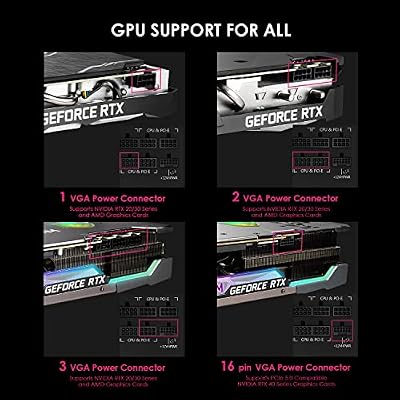
The MSI MPG A850G is the value 850W workstation pick. It is a fully modular 850W supply rated 80 Plus Gold with a native PCIe 5 connector, offering a healthy wattage ceiling and modern cabling at an affordable price. At around $110 it gives a video-editing build dependable, efficient power without stretching the budget toward a kilowatt unit.
For an editing rig, 850W is ample for a single capable GPU and a multi-core CPU running sustained renders, and the 80 Plus Gold efficiency keeps the supply cool when it is loaded for long stretches — important for a workstation that exports for hours. The native PCIe 5 cable connects cleanly to a current GPU used for accelerated editing, and full modularity lets you keep the build neat for steady airflow. For an editor who wants reliable, efficient workstation power at a value price, the MPG A850G is a smart, sensible pick.
Pros: Value 850W, 80+ Gold efficiency for sustained loads, native PCIe 5, fully modular.
Cons: Standard-tier internals rather than the Japanese-capacitor leader; 850W ceiling.
5. MSI MAG A850GL PCIE5, Fully Modular Compact Gaming 850W Power Supply, 80+ Gold

MSI MAG A850GL PCIE5, Fully Modular Compact Gaming 850W Power Supply, 80+ Gold, ATX 3.1 & PCIe 5.1 Ready, Native Dual-Color 12V-2x6 Cable, 10 Year Warranty


As an Amazon Associate we earn from qualifying purchases. Product prices and availability are accurate as of the date/time indicated.
The MSI MAG A850GL is the compact 850W pick for editors building in a smaller case. It is a fully modular 850W unit rated 80 Plus Gold with a native PCIe 5 connector, packaged in a compact body that fits tighter workstation enclosures. At around $108 it delivers editing-grade wattage and efficiency in a space-saving form factor.
For a video-editing build, 850W gives a single-GPU render rig solid headroom, and the 80 Plus Gold rating keeps the supply efficient and cool under the sustained loads exports demand. The compact size is the differentiator: editors running small-form-factor or tidy mATX workstations benefit from a shorter PSU that leaves room for clean cable routing to multiple drives and a GPU. With full modularity for a neat build, it is a practical 850W choice when your workstation case is on the smaller side but you still need reliable render power.
Pros: Compact body for small workstations, 850W headroom, 80+ Gold, native PCIe 5, fully modular.
Cons: Standard internals rather than the premium-capacitor leader; 850W not 1000W.
6. Thermaltake Smart 700W 80+ White Certified PSU with 120mm Fan

Thermaltake Smart 700W 80+ White Certified PSU, Continuous Power with 120mm Ultra Quiet Fan, ATX 12V V2.3/EPS 12V Active PFC Power Supply PS-SPD-0700NPCWUS-W


As an Amazon Associate we earn from qualifying purchases. Product prices and availability are accurate as of the date/time indicated.
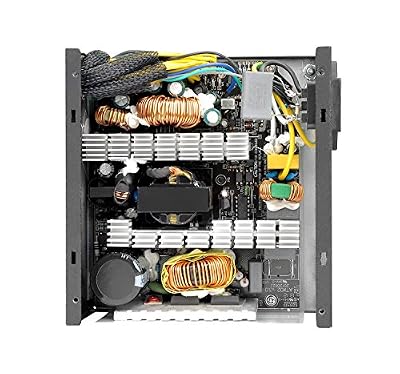
Rounding out the list is the Thermaltake Smart 700W, the honest budget entry for a basic editing PC. It is a 700W supply with an 80 Plus White rating and a 120mm cooling fan, and at around $55 it is by far the cheapest unit here. It is fair to be clear about what it is: a non-modular, entry-tier supply rather than the stable, high-efficiency workstation units that lead this list.
For video editing, this unit fits a narrow case — a beginner or budget editor running a modest single-GPU system who needs to start working without overspending. The 700W rating covers a mainstream build, but the 80 Plus White efficiency runs warmer under the sustained full loads that rendering imposes, which is exactly the condition a workstation supply should handle gracefully, and the fixed cabling makes a tidy multi-drive editing build harder. It will get a light editing PC running, but treat it as a starting point rather than the stable, efficient supply a demanding render workflow ultimately deserves.
Pros: Lowest price here, 700W for a modest editing PC, simple 120mm-fan cooling.
Cons: Only 80+ White efficiency and non-modular; runs warmer under the sustained render loads editing demands.
How to Choose a PSU for Video Editing
Choosing a PSU for video editing starts with stability under sustained load, because that is what renders and exports demand. Unlike gaming, which loads the system in bursts, an export holds the CPU and GPU near full draw for minutes or hours, and the supply must deliver clean, unwavering power the whole time. Quality internals matter here — a unit like the MSI MPG 1000W with 100% Japanese capacitors, or the proven Corsair RMx line, is built to stay stable and reliable through exactly that kind of relentless work.
Efficiency is the second pillar, because a constantly-loaded supply generates heat. An 80 Plus Gold rating, shared by most units here, wastes less energy as heat than the 80 Plus White budget Thermaltake, so a Gold supply runs cooler and more comfortably through long renders. For a workstation that may export overnight, that cooler, more efficient operation translates directly into reliability and longevity — prioritise a higher efficiency rating for an editing rig that works hard for extended periods.
Wattage and headroom come next, tied to your specific hardware. A video-editing workstation typically pairs a high-core-count CPU with a capable GPU for accelerated rendering, and you want enough margin that the supply runs comfortably within its rating rather than at its edge. For most single-GPU editing rigs, 850W like the RM850x or MPG A850G is ample; for a power-hungry GPU and many-core CPU, a 1000W unit such as the MPG 1000W or RM1000x gives genuine breathing room and keeps the supply cool under sustained draw.
Finally, weigh modularity and connectivity, and be honest about your tier. Full modularity lets you run only the cables your multiple drives and GPU need, keeping a workstation tidy for clean, consistent airflow during long jobs, while a native PCIe 5 connector and ATX 3.1 design (as on the RM1000x) handle a modern GPU’s spikes cleanly. The budget Thermaltake will run a light editing PC, but a serious render workflow deserves a stable, efficient, well-built supply. Set your budget, prioritise stability and efficiency for sustained loads, size the wattage to your hardware, and pick the unit on this list that fits your workstation.
Frequently Asked Questions
How many watts does a video-editing PC need?
For a single-GPU editing workstation, 850W like the Corsair RM850x or MSI MPG A850G is ample, giving a high-core-count CPU and a capable GPU comfortable margin during sustained renders. If you run a power-hungry GPU for accelerated editing alongside a many-core CPU, a 1000W unit such as the MSI MPG 1000W or Corsair RM1000x provides extra headroom that keeps the supply cool and stable under long, full-load exports.
Why do capacitor quality and build matter for an editing PSU?
Because rendering and exporting hold the system near full load for long stretches, and the power supply has to deliver stable, clean power throughout without wavering or overheating. Quality internals — like the 100% Japanese capacitors in the MSI MPG 1000W, or the proven design of the Corsair RMx line — help a supply stay stable and reliable through exactly that kind of sustained, demanding work, which is why editors should value build quality highly.
Does PSU efficiency affect a rendering workstation?
Yes. A higher 80 Plus rating, such as the Gold rating on most units here, wastes less power as heat than the 80 Plus White of the budget Thermaltake. For a workstation that holds full load through long renders and exports, that lower heat output means the supply runs cooler and more reliably over time, which is exactly what a sustained editing workload needs from its power supply.
Is a 1000W PSU overkill for video editing?
Not necessarily. While many single-GPU editing rigs run comfortably on 850W, a 1000W unit like the MSI MPG 1000W or Corsair RM1000x gives a power-hungry GPU and a high-core-count CPU genuine margin, keeping the supply cool and stable under sustained render loads and leaving room for future upgrades. If your workflow is GPU-accelerated and demanding, the extra headroom is a sensible investment rather than waste.
Related Guides
- Best Power Supplies
- Best CPUs for Video Editing
- Best GPUs for Your Build
- Best Workstation PC Builds
- Best NVMe SSDs for Editing
- Best PC Cases for Airflow
Affiliate Disclosure: As an Amazon Associate, we earn from qualifying purchases. If you click a link and make a purchase, we may earn a small commission at no extra cost to you. Prices and availability are accurate as of publication and may change.