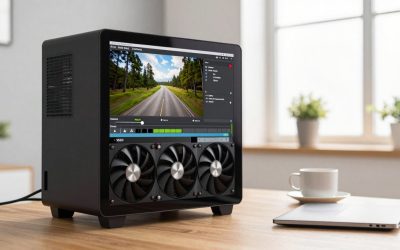
“Multimedia PC” means different things depending on who you ask. For some it’s a 4K video editing rig that chews through timelines without choking. For others it’s a living room box that plays back everything from Blu-ray rips to streaming apps without fan noise drowning out the movie. Those two use cases pull hardware specs in opposite directions, so the first real decision is figuring out which one you’re actually building.
This guide splits the difference and covers both, with concrete trade-offs instead of a generic “get a good GPU” answer.
What actually matters for multimedia work
Three things drive how a multimedia PC performs in practice: CPU core count for encoding and export tasks, GPU for playback acceleration and GPU-assisted rendering, and storage speed for scrubbing through large media files without stutter. RAM matters less than people assume once you’re past 16GB, unless you’re running multiple editing apps and a browser with forty tabs open at once, which, let’s be honest, most of us are.
Where people overspend: a top-tier gaming GPU for a system that mostly plays video and browses. Where people underspend: storage. A cheap 500GB SATA SSD fills up fast once you’re working with 4K footage or a large photo library, and running low on free space is one of the most common causes of a sluggish system that otherwise looks fine on paper.
Pick 1: The video/photo editing build
If you’re editing 4K footage, exporting long-form video, or batch-processing RAW photos, prioritize CPU core count and fast NVMe storage over GPU horsepower. Adobe Premiere and DaVinci Resolve both use GPU acceleration for effects and color work, but the CPU still does the heavy lifting on encoding unless you’ve got hardware encoding offload (which modern GPUs do have, to be fair).
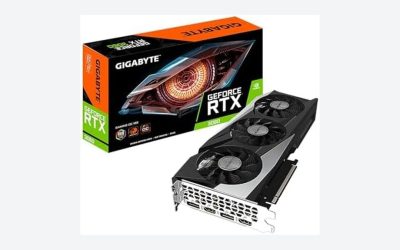
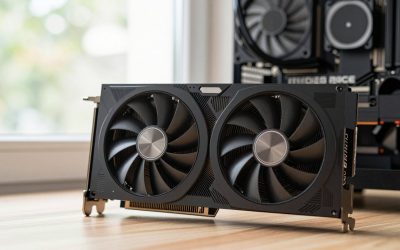
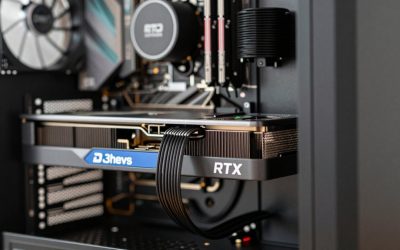
A 6-8 core CPU is the realistic sweet spot for most hobbyist and semi-pro editors. Going to 12+ cores helps mainly if you’re exporting multiple projects in parallel or doing heavy 3D render work alongside video. For the GPU, a mid-range card is usually enough to drive GPU-accelerated effects smoothly; you don’t need flagship silicon unless you’re also gaming on the same machine. Shoppers comparing options can start with a video editing desktop PC search to see what prebuilt configurations are actually shipping at a given price point.
Storage is where this build lives or dies. A single NVMe drive for the OS and active project files, plus a larger secondary drive (NVMe or SATA SSD) for a media library, is the standard setup. Spinning hard drives are fine for cold archive storage but will bottleneck you badly if you try to edit directly off one. Worth browsing a few NVMe SSD options since prices per terabyte vary more than people expect between brands.
Pick 2: The home theater / streaming build
If “multimedia PC” means a quiet box under the TV that plays movies, runs streaming apps, and maybe does light gaming, the priorities flip. Noise and idle power draw matter more than raw performance. A low-power CPU with integrated graphics is often enough, since most video decoding is hardware-accelerated and doesn’t tax the CPU cores directly.
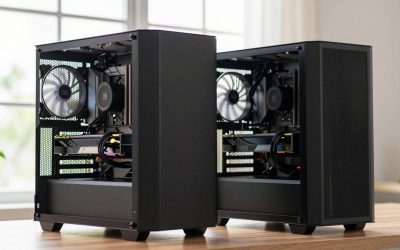
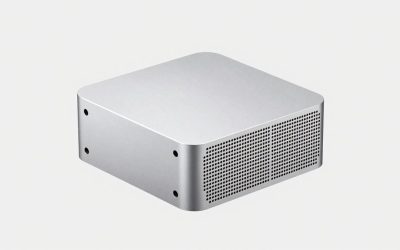
The main failure mode here is picking a case and cooler that are too loud for a living room. A build that’s fine on a desk three feet from your ears can be noticeably annoying across a quiet room during a movie’s quiet scenes. Compact cases with large, slow-spinning fans tend to be quieter than small cases crammed with tiny high-RPM fans. If you want something pre-assembled, a mini HTPC desktop search turns up compact options sized for a media cabinet.
Storage needs are lower unless you’re hoarding a local media library instead of streaming everything, in which case a large hard drive (not SSD) is the economical choice since sequential playback doesn’t need SSD speeds.
Side-by-side comparison
| Priority | Editing rig | Home theater build |
|---|---|---|
| CPU | 6-8+ cores, higher clocks | Low-power, integrated graphics fine |
| GPU | Mid-range, GPU-accelerated effects | Integrated or entry-level, hardware video decode |
| Storage | Fast NVMe + large secondary drive | Large HDD for local media, SSD optional |
| Noise tolerance | Moderate (desk use) | Must be near-silent |
| Typical cost driver | CPU + storage capacity | Case/cooling quality, not raw specs |
When the cheaper option is actually fine
If your “editing” is trimming a few clips for social media or batch-resizing vacation photos, you don’t need the full editing build. A mid-range CPU with 16GB RAM and a single decent NVMe drive handles that workload without issue, and spending extra on a high core count CPU or a bigger GPU won’t speed up tasks that are already fast. Similarly, if you’re mostly streaming rather than hosting a local media library, skip the large hard drive and save the money, since cloud and streaming services don’t care how much local storage you have.
The mistake to avoid is buying based on marketing tiers rather than your actual workload. A system labeled for “content creators” sometimes just means it has RGB lighting and a mid-tier GPU, not that it’s actually optimized for export speed or storage throughput. Check the actual CPU model and storage configuration before trusting the label.
FAQ
Do I need a dedicated GPU for video editing?
Not strictly, but it helps. Modern editing software uses the GPU for effects previews, color grading, and some export acceleration. Integrated graphics can handle light editing, but a dedicated mid-range card makes scrubbing and rendering noticeably smoother once projects get complex.
How much storage do I actually need?
For editing, 1TB of fast NVMe storage is a reasonable starting point for active projects, with a larger secondary drive for archives. For a streaming-focused build with no local media library, 500GB is often plenty since most content lives in the cloud.
Will a quiet case actually make a noticeable difference?
Yes, especially for a living room build. Fan noise that’s unnoticeable at a desk becomes distracting a few feet away in a quiet room, particularly during low-volume scenes in movies or TV.
Is a prebuilt PC good enough, or should I build my own?
Prebuilts are fine for most multimedia use cases and often cost less than sourcing identical parts individually. Building your own makes more sense if you want specific storage configurations or need to fit unusual case dimensions, like a slim HTPC chassis for a media cabinet.