- Top Pick: Asus ROG Strix B550-F Gaming WiFi II AMD AM4 (3rd Gen Ryzen) ATX DDR4 Gaming Motherboard (PCIe 4.0,WiFi 6E, 2.5Gb LAN, BIOS Flashback, HDMI 2.1, Addressable Gen 2 RGB Header and Aura Sync)
- Best Value: GIGABYTE B650 Eagle AX AM5 LGA 1718 ATX Motherboard, DDR5, Triple M.2 Slots (1x PCIe 5.0, 2X PCIe 4.0), USB 3.2 Gen2x2 Type-C, WiFi 6E, Realtek GbE LAN
- Premium Choice: MSI MPG X870E Carbon WiFi Gaming Motherboard (AMD Ryzen 9000/8000/7000 Series Processors, AM5, DDR5, PCIe 5.0, M.2 Gen5, SATA 6Gb/s, USB 40Gbps, HDMI, Wi-Fi 7, Bluetooth 5.4, 5Gbps LAN, ATX)
🛒 Best Price Today on Amazon
Prime members get fast, free shipping on everything above, plus member-only deals. New members get a 30-day free trial — cancel anytime.
- Top Motherboards Multitasking Picks for 2026
- Best Motherboards for Multitasking at a Glance
- 1. GIGABYTE B650 AORUS Elite AX AMD AM5 ATX Motherboard, DDR5, WiFi 6E
- 2. MSI MAG B550 Tomahawk Gaming Motherboard (AMD Ryzen 5000, AM4, DDR4, PCIe 4.0)
- 3. MSI B650 Gaming Plus WiFi Motherboard AMD B650 Socket AM5 ATX
- 4. ASUS ROG Strix Z390-E Gaming Motherboard LGA1151 (Intel 8th 9th Gen) ATX DDR4
- 5. MSI B550M PRO-VDH WiFi ProSeries Motherboard (AMD Ryzen 5000, AM4, DDR4, PCIe 4.0)
- 6. ASUS Prime Z390-P LGA1151 (Intel 8th and 9th Gen) ATX Motherboard for Cryptocurrency Mining
- How to Choose a Motherboard for Multitasking
- Frequently Asked Questions
- Related Guides
- Related Articles
Top Motherboards Multitasking Picks for 2026
Here are our current top motherboards multitasking picks, compared on real Amazon owner reviews, price, and features. Live prices update below.
As an Amazon Associate we earn from qualifying purchases at no extra cost to you.


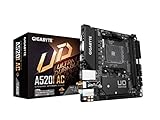

If your PC spends its day juggling many open applications, browser tabs, streams, virtual machines and background tasks, the motherboard quietly decides how far you can push it. For multitasking, the specs that matter are not flashy: maximum RAM capacity and the number of memory slots, the count of fast M.2 NVMe slots for responsive storage, PCIe lanes and expansion for the cards you need, and robust connectivity to wire everything together. A board strong in these areas gives you room to load it up without bottlenecks. This guide rounds up the best motherboards for multitasking in 2026, leading with the boards that offer the most capacity, storage and expansion for the money.
Our picks were chosen on what genuinely helps a heavy multitasker: RAM capacity and slot count, the number of M.2 and storage options, PCIe and expansion, networking and connectivity, and value. The list spans current AMD AM5, mature AM4, and Intel options across budgets, and we are honest about where each fits — including one board oriented toward a specialised use case rather than a typical multitasking build. We avoid inventing benchmark figures; instead we describe each board’s strengths. Below is an at-a-glance comparison of all six, then a closer look at each and a buyer’s guide built around RAM, M.2 and expansion.
Best Motherboards for Multitasking at a Glance
| Motherboard | Best For | Standout Spec | Approx Price |
|---|---|---|---|
| GIGABYTE B650 AORUS Elite AX | Future-proof AM5 multitasking | DDR5, multi M.2, WiFi 6E | around $150 |
| MSI MAG B550 Tomahawk | Best all-round AM4 value | Dual M.2, strong VRM | around $160 |
| MSI B650 Gaming Plus WiFi | Value AM5 DDR5 board | AM5, DDR5, WiFi, multi M.2 | around $173 |
| ASUS ROG Strix Z390-E Gaming | Intel high-connectivity board | Dual M.2, premium I/O | around $400 |
| MSI B550M PRO-VDH WiFi | Compact AM4 multitasker | MicroATX, M.2, WiFi | around $100 |
| ASUS Prime Z390-P | Many-PCIe specialist board | Multi PCIe slots, LGA1151 | around $194 |
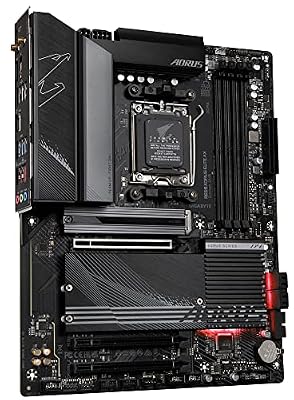
1. GIGABYTE B650 AORUS Elite AX AMD AM5 ATX Motherboard, DDR5, WiFi 6E

GIGABYTE B650 AORUS Elite AX AMD AM5 ATX Motherboard, Support Ryzen 9000/8000/7000 Series, DDR5, 14+2+1 Power Phase, PCIe 5.0 M.2, USB-C 3.2 Gen 2, WIFI6E, 2.5GbE, EZ-Latch, Q-Flash, RGB Fusion



As an Amazon Associate we earn from qualifying purchases. Product prices and availability are accurate as of the date/time indicated.
The GIGABYTE B650 AORUS Elite AX is the lead pick for future-proof multitasking, built on AMD’s current AM5 platform. It supports modern DDR5 memory at high capacities, provides multiple M.2 NVMe slots for fast storage, and includes WiFi 6E plus a generous rear I/O — exactly the foundation a heavy multitasker wants. At around $150 it brings current-generation capability and expansion at a sensible price.
This is the board to choose for a multitasking or creator PC you want to keep current for years. DDR5 support means high memory bandwidth and large capacities for running many apps, virtual machines and heavy workloads at once; the multiple M.2 slots let you separate your OS, projects and a fast scratch drive; and WiFi 6E plus strong connectivity keep everything linked. Sitting on the modern AM5 socket, it offers a long upgrade runway. For a capacious, future-proof multitasking foundation, the B650 AORUS Elite AX is the standout.
Pros: Modern AM5 with DDR5, high RAM capacity, multiple M.2 slots, WiFi 6E, strong upgrade path.
Cons: DDR5 platform costs more overall than mature AM4 (DDR4) boards.
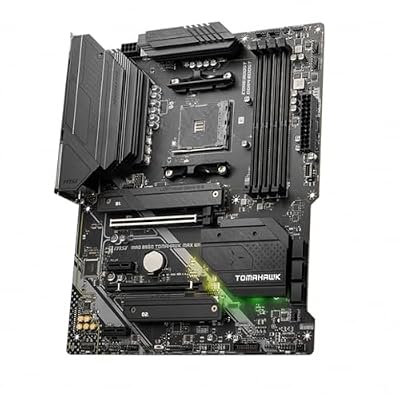
2. MSI MAG B550 Tomahawk Gaming Motherboard (AMD Ryzen 5000, AM4, DDR4, PCIe 4.0)

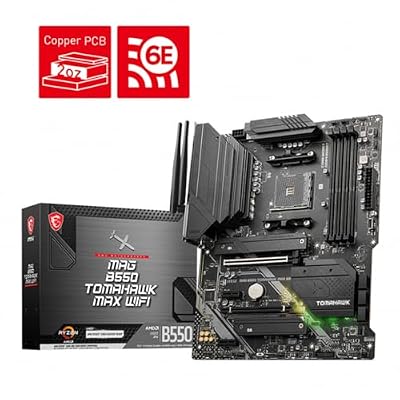
MSI MAG B550 Tomahawk MAX WiFi Gaming Motherboard (AMD Ryzen 5000 Series, AM4, DDR4, PCIe 4.0, SATA 6Gb/s, M.2, USB 3.2 Gen 2, HDMI/DP, Wi-Fi 6E, Bluetooth 5.2, 2.5Gbps LAN, ATX)



As an Amazon Associate we earn from qualifying purchases. Product prices and availability are accurate as of the date/time indicated.
The MSI MAG B550 Tomahawk is the best all-round value pick and a famously well-rounded AM4 board. It pairs a strong, well-cooled VRM with dual M.2 slots, PCIe 4.0 support, ample DDR4 capacity across four slots, and solid connectivity — the package that earned it a reputation as one of the best-balanced boards of its generation. At around $160 it is a dependable, high-value multitasking foundation.
This is the board for the multitasker who wants a proven, robust platform without paying the premium for the newest socket. The strong VRM comfortably feeds an eight-core Ryzen chip under sustained multi-threaded load, the dual M.2 slots let you run a fast OS drive plus a storage or scratch drive, and the four DDR4 slots support generous memory for heavy multitasking. It pairs perfectly with AM4 CPUs like the Ryzen 5000 series. For balanced capability and outstanding value, the B550 Tomahawk is an easy recommendation.
Pros: Strong VRM for sustained load, dual M.2, four DDR4 slots, PCIe 4.0, excellent value.
Cons: AM4 and DDR4 are a mature platform with a shorter future upgrade runway.
3. MSI B650 Gaming Plus WiFi Motherboard AMD B650 Socket AM5 ATX
The MSI B650 Gaming Plus WiFi is the value AM5 pick for multitaskers who want the modern platform without stretching the budget. It is a full ATX B650 board with DDR5 support, multiple M.2 slots, integrated WiFi and a sensible spread of connectivity, all on AMD’s current AM5 socket. At around $173 it is a well-equipped, current-generation foundation.
This is the board for the multitasker building fresh on AM5 who prioritises capacity and storage flexibility at a fair price. DDR5 support delivers high memory bandwidth and room for large kits to keep many apps and tasks running smoothly, the multiple M.2 slots allow a tiered storage setup for OS, work and fast scratch space, and built-in WiFi simplifies connectivity. As a current-platform board, it offers a healthy upgrade path. For a value-focused AM5 multitasking board, the B650 Gaming Plus WiFi is a strong contender.
Pros: Modern AM5 with DDR5, multiple M.2 slots, integrated WiFi, full ATX expansion, fair price.
Cons: DDR5 platform pricing is higher overall than AM4; a mid-tier B650 board.
4. ASUS ROG Strix Z390-E Gaming Motherboard LGA1151 (Intel 8th 9th Gen) ATX DDR4

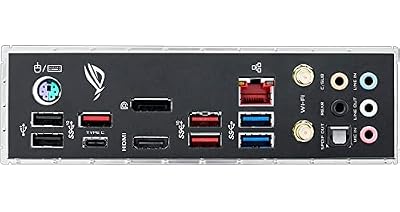
Asus ROG Strix Z390-E Gaming Motherboard LGA1151 (Intel 8th 9th Gen) ATX DDR4 DP HDMI M.2 USB 3.1 Gen2 802.11AC Wi-Fi


As an Amazon Associate we earn from qualifying purchases. Product prices and availability are accurate as of the date/time indicated.
The ASUS ROG Strix Z390-E Gaming is the Intel high-connectivity pick, a premium LGA1151 board for 8th and 9th-generation Intel processors. It offers dual M.2 slots, four DDR4 memory slots, generous PCIe expansion, and ASUS’s rich ROG Strix I/O and networking — a comprehensively connected board. At around $400 it is the priciest option here and the choice for someone committed to a high-end Intel platform of that era.
This is the board for a multitasker building on, or upgrading, an Intel 8th or 9th-gen system who wants extensive connectivity and storage. The dual M.2 slots support a fast tiered storage setup, the four DDR4 slots allow generous memory for running many tasks at once, and the abundant rear I/O and premium networking link plenty of peripherals. Be clear that it is a previous-generation Intel platform, so weigh that against a current socket for a brand new build. For a feature-rich Intel Z390 multitasking board, the Strix Z390-E is the premium pick.

Pros: Rich connectivity and premium I/O, dual M.2, four DDR4 slots, generous expansion, strong build.
Cons: Highest price here and an older Intel LGA1151 platform; less future upgrade headroom.
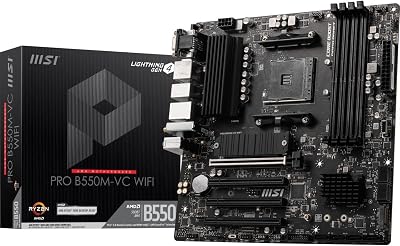
5. MSI B550M PRO-VDH WiFi ProSeries Motherboard (AMD Ryzen 5000, AM4, DDR4, PCIe 4.0)

MSI B550M PRO-VDH WiFi ProSeries Motherboard (AMD Ryzen 5000, AM4, DDR4, PCIe 4.0, SATA 6Gb/s, M.2, USB 3.2 Gen 1, Wi-Fi, Bluetooth, D-SUB/HDMI/DP, Micro-ATX)


As an Amazon Associate we earn from qualifying purchases. Product prices and availability are accurate as of the date/time indicated.
The MSI B550M PRO-VDH WiFi is the compact multitasking pick, packing a lot of capability into a smaller MicroATX form factor. It supports AM4 Ryzen 5000 chips with four DDR4 slots for ample memory, includes M.2 storage and PCIe 4.0, and adds integrated WiFi — useful features in a board that fits smaller cases. At around $100 it is the value-friendly, space-saving choice.
This is the board for the multitasker building a smaller or more affordable system who still needs solid memory capacity and storage. The four DDR4 slots allow generous RAM for juggling many applications, the M.2 support keeps storage fast, and integrated WiFi simplifies connectivity in a compact build. The MicroATX size suits smaller cases and tighter budgets while retaining the essentials of the dependable B550 platform. For a compact, well-priced AM4 multitasking board, the B550M PRO-VDH WiFi is a sensible pick.
Pros: Compact MicroATX, four DDR4 slots, M.2 storage, integrated WiFi, PCIe 4.0, great value.
Cons: MicroATX offers fewer expansion slots; AM4/DDR4 is a mature platform.
6. ASUS Prime Z390-P LGA1151 (Intel 8th and 9th Gen) ATX Motherboard for Cryptocurrency Mining

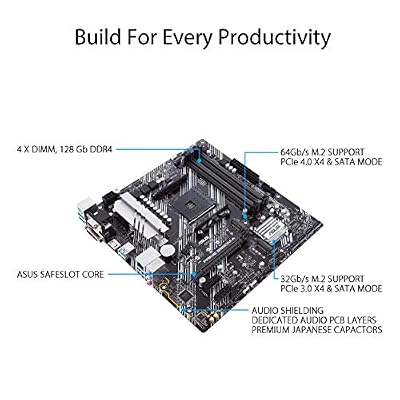
ASUS Prime B550M-A WiFi II AMD Micro ATX DDR4 Motherboard with PCIe 4.0, WiFi 6, ECC Memory, HDMI 2.1, RGB Header

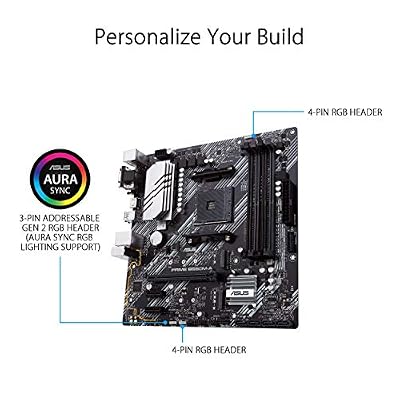


As an Amazon Associate we earn from qualifying purchases. Product prices and availability are accurate as of the date/time indicated.
In the interest of honesty, the ASUS Prime Z390-P is the specialist of this list: it is an Intel LGA1151 board explicitly marketed for cryptocurrency mining, which means its design emphasis is on supporting many PCIe devices rather than a typical balanced multitasking layout. It supports 8th and 9th-gen Intel CPUs with DDR4 memory and is priced around $194. It is worth understanding what it is before buying.
Where this board earns a mention for multitasking is its expansion-heavy orientation: a layout geared toward driving multiple PCIe devices can suit niche setups that need lots of cards or risers. For a conventional multitasking or creator build, however, the AM5 and balanced AM4 boards above are the more sensible choices, with better-rounded memory, M.2 and connectivity provisioning for everyday heavy workloads. If your specific need is a many-slot Intel Z390 board — including its original mining-style use — the Prime Z390-P fits that brief; for general multitasking, look to the balanced boards first.

Pros: Expansion-oriented many-PCIe layout, supports 8th/9th-gen Intel, DDR4, niche multi-device use.
Cons: Marketed for mining, not balanced multitasking; older Intel platform — pick a balanced board for general use.
How to Choose a Motherboard for Multitasking
For multitasking, RAM capacity is the first thing to check, because heavy workloads live and die by available memory. Look at both the maximum supported capacity and the number of memory slots — four slots, as on the B550 Tomahawk, B550M PRO-VDH and the Z390 boards, let you reach high totals and add memory later. The newer AM5 boards here (the B650 AORUS Elite AX and B650 Gaming Plus) use DDR5 for higher bandwidth and large capacities, which suits running many applications and virtual machines at once. Prioritise the capacity headroom your workload needs.
Storage flexibility is the next priority, and that means M.2 NVMe slots. Multiple M.2 slots — present on every balanced board here — let you separate your operating system, your active projects and a fast scratch drive, which keeps a busy system responsive when many tasks hit storage at once. More fast storage options translate directly into a smoother multitasking experience, so favour a board with at least two M.2 slots and check the supported PCIe generation for each.
PCIe lanes and expansion determine what else you can plug in — additional storage controllers, capture cards, networking or a second device. Most users are well served by the balanced expansion on the AM5 and B550 boards. The ASUS Prime Z390-P is the honest outlier: it is oriented toward driving many PCIe devices for mining-style setups rather than balanced multitasking, so it only makes sense for that niche. Match the slot count and layout to the cards you actually intend to run.
Finally, weigh connectivity, platform and value together. Integrated WiFi (on the AORUS, B650 Gaming Plus and B550M PRO-VDH) and strong rear I/O make wiring a busy setup easier, while VRM quality — a strength of the B550 Tomahawk — matters if you run a high-core CPU under sustained load. Choose your platform deliberately: AM5 with DDR5 offers the longest future runway, mature AM4 with DDR4 offers proven value, and the Intel Z390 boards are a previous generation. Decide between a future-proof AM5 board, a balanced AM4 value board, or a compact option, and pick the motherboard on this list that fits your build.
Frequently Asked Questions
What motherboard features matter most for multitasking?
Three things stand out: RAM capacity and slot count, the number of M.2 NVMe slots, and overall connectivity. High memory capacity lets you keep many apps, tabs and virtual machines open at once; multiple M.2 slots let you separate OS, projects and scratch storage for responsiveness under load; and strong I/O and networking wire everything together. Boards like the B650 AORUS Elite AX and B550 Tomahawk are strong across all three, which is why they lead this list.
Should I choose AM5 (DDR5) or AM4 (DDR4) for a multitasking build?
It comes down to future-proofing versus value. AM5 boards like the B650 AORUS Elite AX and B650 Gaming Plus use DDR5 for higher bandwidth and large capacities, with the longest upgrade runway — ideal for a fresh build you want to keep current. Mature AM4 boards like the B550 Tomahawk use DDR4 and offer proven, excellent value, especially if you already own AM4-compatible parts. Both multitask well; choose based on budget and how long you want to keep the platform current.
How many M.2 slots do I need for multitasking?
At least two is the practical sweet spot for a heavy multitasker. Two or more M.2 NVMe slots — available on every balanced board in this guide — let you run a fast OS drive alongside a separate drive for active projects or a scratch disk, which keeps the system responsive when many tasks access storage at once. If you handle large files or many simultaneous workloads, prioritise a board with multiple M.2 slots and check each slot’s supported speed.
Is the ASUS Prime Z390-P good for a multitasking PC?
Only for a niche case. To be upfront, the Prime Z390-P is marketed for cryptocurrency mining, with a layout that emphasises driving many PCIe devices rather than the balanced memory, storage and connectivity a typical multitasking build wants. For general heavy multitasking, the AM5 boards or the balanced B550 Tomahawk are far better suited. Consider the Z390-P only if you specifically need a many-slot Intel board for that kind of multi-device setup.
Related Guides
- Best CPUs Under $300
- Best NVMe SSDs
- Best RAM for Multitasking and Gaming
- Best GPUs Under $600
- Best Gaming PC Builds
- Best Power Supplies
Affiliate Disclosure: As an Amazon Associate, we earn from qualifying purchases. If you click a link and make a purchase, we may earn a small commission at no extra cost to you. Prices and availability are accurate as of publication and may change.