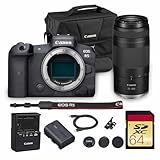
- Top Pick: Canon EOS R100 Mirrorless Camera RF-S18-45mm F4.5-6.3 is STM Lens Kit | 24.1 Megapixel CMOS (APS-C) Sensor, 4K Video, Wi-Fi & Bluetooth, Beginner Photographers & Creators, Digital Camera
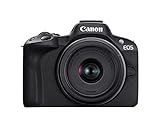
- Best Value: Canon EOS R50 Mirrorless Camera RF-S18-45mm F4.5-6.3 is STM Lens Kit | 24.2 Megapixel CMOS (APS-C) Sensor, 4K Video, Vlogging, Content Creation, Photography, Digital Camera, Black
- Premium Choice: Canon EOS R50 V Mirrorless Camera with 14-30mm Lens Bundle | For Vlogging & Content Creation | 4K Video | Dual Pixel Autofocus | Flip Screen + 64GB Memory Card + Camera Bag
Vlogging punishes the wrong camera in ways a spec sheet rarely warns you about. A body that shoots lovely stills can still leave you holding it at arm’s length with a screen you cannot see, a lens that crops your shoulders out of frame, and no obvious way to keep the autofocus locked on your face. Choosing a mirrorless camera for vlogging means weighing five things at once: sensor size, video resolution, a screen you can face toward yourself, the lens that comes in the box, and how much extra gear you still have to buy.
This guide is for creators moving up from a phone, or from a pocket camera, who want interchangeable lenses and a larger APS-C sensor without jumping to a full cinema rig. The seven cameras below are all true mirrorless bodies or kits, judged only on what their listings state. Pocket vlogging cameras with fixed lenses also appeared in the source set, but they are a different product type and were left out of the comparison on purpose.
Quick Picks
As an Amazon Associate we earn from qualifying purchases at no extra cost to you.





| Product | Best for | Key spec from the listing |
|---|---|---|
| Canon EOS R100 kit | First mirrorless step-up | 24.1 MP APS-C sensor, 4K video, Wi-Fi and Bluetooth |
| Canon EOS R50 kit | All-round vlogging starter | 24.2 MP APS-C sensor, 4K video, RF-S18-45mm lens |
| Canon EOS R50 V with 14-30mm bundle | Ready-to-shoot creators | Dual Pixel autofocus, flip screen, 64GB card and bag included |
| Nikon Z 30 with zoom lens | Nikon shooters wanting a small body | Compact, lightweight body with a 16-50mm zoom |
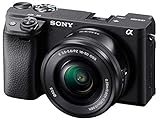
| Sony Alpha a6400 | Subject tracking fans | Real-Time Eye Auto Focus, 4K video, flip screen |
| Canon EOS R50 V with PZ lens kit | Wide-angle talking-head shots | RF-S14-30mm power zoom, ultra-wide start |
| Canon EOS R50 body only | Owners who already have RF-S lenses | 24.2 MP APS-C sensor, 4K video, no lens |
How to Choose
Start with the screen and the lens width
A vlogger spends most of the day in front of the lens, so a screen that flips out to the side or forward matters more than a spec-sheet headline. Without one, framing is guesswork. Pair that with a wide lens. A kit zoom that starts at 18mm on an APS-C body gives a tighter view than one that starts at 14mm, and at arm’s length the difference decides whether your shoulders and background fit in the shot. If you film handheld in tight rooms, favor kits that open wide.
Video resolution and what it really buys you
Look for 4K output at the very least, since it lets you crop in during editing and still deliver a clean 1080p file. Check whether the listing names any frame-rate limits, and remember that 4K on entry-level bodies often adds a crop that narrows the lens. A 24 megapixel APS-C sensor is the common sweet spot in this group. Ignore megapixel counts as a video selling point; for vlogging, autofocus behavior and stabilization matter far more than still-image resolution.
Autofocus and subject tracking
Vlogging means you walk, turn, and hold products up to the lens. Listings that mention Dual Pixel autofocus or eye-detection autofocus are pointing at systems built to hold a face. Budget tiers sometimes limit tracking modes, so confirm that the autofocus line in the listing is specific rather than generic. A camera that hunts when you raise an object is a bigger daily annoyance than a modest sensor.
Kit contents, mount, and the hidden extras
Count what you still need to buy: a memory card, a bag, a tripod, and a microphone. Some bundles here include a card and bag, which saves a separate order. Also think about lens mount. Canon RF-S, Nikon Z, and Sony E each have their own lens ecosystems, and swapping brands later means rebuying lenses. If audio is a priority, look for a microphone input in the full spec sheet, since the onboard mic is rarely enough outdoors.
The 7 Best Options
Canon EOS R100 RF-S18-45mm Kit
The R100 kit is aimed at beginners, and the listing says so directly. It pairs a 24.1 megapixel APS-C sensor with 4K video and both Wi-Fi and Bluetooth, which is the connectivity set most new creators need for moving clips to a phone. The 18-45mm image-stabilized zoom covers everyday framing, from a seated desk intro to a walk around town, and the whole kit stays light enough to carry all day.
- Strength: APS-C sensor and 4K video in a beginner-oriented kit.
- Strength: Wi-Fi and Bluetooth for quick transfers to a phone.
- Trade-off: the listing does not mention vlogging-specific features, so confirm the screen type before ordering.
Skip it if you already know you want strong subject tracking or live streaming tools; the R50 line is described with more creator-focused language.
Canon EOS R50 RF-S18-45mm Kit
The R50 kit uses a 24.2 megapixel APS-C sensor and explicitly calls out vlogging and content creation in its title, alongside 4K video. That framing makes it the most straightforward starting point in the Canon group for someone building a channel. The included 18-45mm image-stabilized zoom keeps the setup compact, which helps when you are holding the camera out in front of you for long takes.
- Strength: listing positions it for vlogging and content creation.
- Strength: 24.2 MP APS-C sensor with 4K video.
- Trade-off: the 18mm wide end is narrower than the 14mm kits listed below.
Skip it if you plan to film yourself handheld in small spaces and need the widest lens possible.
Canon EOS R50 V with 14-30mm Lens Bundle
This one reads like a ready-to-film package. The listing names Dual Pixel autofocus, a flip screen, 4K video, and a 14-30mm lens, then adds a 64GB memory card and a camera bag. For a first-time buyer, that removes several follow-up purchases and gets you recording sooner, which is the real appeal of a bundle like this.
- Strength: flip screen and Dual Pixel autofocus both appear in the title.
- Strength: card and bag included in the bundle.
- Trade-off: bundle accessories vary in quality, and you may upgrade the card later.
Skip it if you would rather choose your own card and bag, or prefer buying the body and lens separately.
Nikon Z 30 with Wide-Angle Zoom Lens
The Nikon listing describes this as the brand’s most compact, lightweight mirrorless stills and video camera, supplied with a 16-50mm zoom. That emphasis on small size suits travel vloggers who carry gear all day and do not want a heavy body at the end of a gimbal or tripod. The kit zoom covers the usual range between a wide establishing view and a tighter portrait framing.
- Strength: compact, lightweight body is the headline claim.
- Strength: 16-50mm kit zoom covers walking-around framing.
- Trade-off: the title gives few video specifics, so check the full sheet for resolution and screen details.
Skip it if you are tied to another brand’s lenses or want the listing to spell out the video features up front.
Sony Alpha a6400 with 16-50mm Lens
The a6400 listing leans on autofocus: Real-Time Eye Auto Focus is in the title, along with 4K video, a flip screen, an APS-C sensor, and an E-mount lens system. Since E mount is widely supported, there is room to add lenses later without changing brands. For creators who plan to expand into primes or longer zooms over the next year, that headroom is a practical point in its favor.
- Strength: eye-detection autofocus and flip screen together suit talking-to-camera work.
- Strength: E-mount compatibility opens up a large lens ecosystem.
- Trade-off: the listing does not mention memory cards or a bag, so plan for extras.
Skip it if you want an all-in-one bundle with accessories included.
Canon EOS R50 V with RF-S14-30mm PZ Kit
This kit stands out for its RF-S14-30mm power zoom lens, which starts at an ultra-wide 14mm. The listing also mentions fast autofocus and describes it as a vlogging and live streaming kit for content creators, which is a clear statement of purpose. The wide opening matters for anyone who films while walking, since it keeps more of the surroundings in frame.
- Strength: ultra-wide start suits arm’s-length selfie framing.
- Strength: power zoom and live streaming positioning for creators.
- Trade-off: the listing does not name the video resolution, so verify it before buying.
Skip it if you mostly shoot far-away subjects and want a longer reach than a 30mm zoom end.
Canon EOS R50 Body Only
The body-only R50 carries the same 24.2 megapixel APS-C sensor and 4K video as the kit, minus the lens. It is the logical route for someone who already owns RF-S glass or plans to buy a specific wide lens separately. Because it shares the sensor and video line of the kit version, nothing about image quality changes; you simply decide the glass yourself.
- Strength: sensor and 4K video without a kit lens you may not use.
- Strength: flexible if you want to choose your own wide-angle lens.
- Trade-off: you cannot film anything until a lens is added.
Skip it if this is your first camera and you need to start recording the day it arrives.
Which One Fits Your Situation
You are leaving a smartphone behind for the first time
The Canon EOS R50 V with 14-30mm bundle removes the most guesswork, since the card and bag come with it and the title already names a flip screen. The Canon EOS R100 kit is the simpler alternative for those who want Wi-Fi and Bluetooth transfers with fewer creator features.
You film yourself in tight rooms or walk-and-talk
The Canon EOS R50 V with RF-S14-30mm PZ kit gives the widest starting focal length in this group. That extra width is what keeps your shoulders and the scene behind you in frame at arm’s length.
You care most about autofocus on your face
The Sony Alpha a6400 puts Real-Time Eye Auto Focus in its title and pairs it with a flip screen. It is the clearest match for talking-head channels where you rarely step out of the frame.
You already own lenses or travel light
The Canon EOS R50 body only suits anyone with existing RF-S glass. If your priority is carrying less, the Nikon Z 30 kit leads with its compact, lightweight body.
Common Mistakes
- Buying a body without checking whether the screen flips toward you, which makes self-framing difficult.
- Picking a kit lens that starts too narrow and then finding handheld shots cut off at the shoulders.
- Treating megapixels as the key spec when autofocus tracking and stabilization decide daily results.
- Comparing a fixed-lens pocket vlogging camera directly against an interchangeable-lens mirrorless camera, which are different tools.
- Forgetting the extras: memory card, microphone, and tripod can add up beyond the camera itself.
Related guides
- Battery Operated Smoke And Carbon Monoxide Detectors
- Combination Smoke And Carbon Monoxide Detectors
- Aio Liquid Coolers For High Performance Gaming
Frequently Asked Questions
Is 4K necessary for vlogging in 2026?
It is not mandatory, but it gives you room to crop and reframe in editing and still publish sharp 1080p files. Most cameras here list 4K, so you rarely need to give it up at this level, and the resolution headroom keeps footage useful for longer.
Why does the lens in the kit matter so much?
The lens determines how wide your frame is when the camera is held at arm’s length. A 14mm start fits far more of you and your surroundings than an 18mm start.
Should I buy the body only or a kit?
Choose body only when you already own compatible lenses or want to pick a specific wide-angle one. First-time buyers usually do better with a kit that is ready to record out of the box.
Do I need to stay with one brand?
Yes, in practice, because lens mounts differ between Canon RF-S, Nikon Z, and Sony E. Choose the brand whose lens lineup you are comfortable growing into.