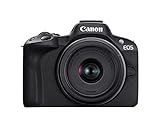
- Top Pick: Canon EOS R100 Mirrorless Camera RF-S18-45mm F4.5-6.3 is STM Lens Kit | 24.1 Megapixel CMOS (APS-C) Sensor, 4K Video, Wi-Fi & Bluetooth, Beginner Photographers & Creators, Digital Camera
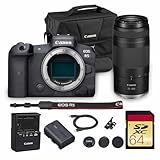
- Best Value: Canon EOS R10 Mirrorless Camera with 18-150mm & 75-300mm Lenses Bundle | Travel Compact | For Photography & Video | 24.2MP APS-C Mirrorless Camera | 4K Video + 64GB Card + Camera Bag (5331C016)
- Premium Choice: Canon EOS RP Mirrorless Camera RF24-105mm Lens F4-7.1 is STM Lens Kit | Full-Frame Interchangeable Lens Camera, Compact & Lightweight for Traveling & Vlogging
Landscape work asks different questions from portraits or sports. Nobody is waiting for autofocus to snap onto a moving face; what matters is how much scene you can fit in the frame, how much detail the sensor can resolve in a mountain ridge or a foggy valley, and whether the body is light enough to carry up a trail before sunrise. That shifts the shopping list toward sensor size, lens range at the wide end, and the accessories bundled with the kit.
This guide is for photographers who want an interchangeable-lens mirrorless body for scenery, from first-time buyers moving up from a phone to enthusiasts who want a full-frame sensor. Six camera kits are compared below using their listing details. Lenses sold on their own were left out, since the question here is which body and kit lens combination suits landscapes. In 2026 the choice mostly comes down to APS-C versus full-frame, and what is in the box.
Quick Picks
As an Amazon Associate we earn from qualifying purchases at no extra cost to you.


| Product | Best for | Key spec from the title |
|---|---|---|
| Canon EOS R100 Kit | Entry into mirrorless | 24.1MP APS-C, RF-S18-45mm lens, 4K video |
| Canon EOS R10 Dual-Lens Bundle | Travel with reach | 24.2MP APS-C, 18-150mm and 75-300mm lenses |
| Canon EOS RP Kit | Lightweight full-frame | Full-frame, RF24-105mm lens |
| Nikon Z50II Dual-Lens Bundle | Wide-to-telephoto flexibility | 16-50mm and 50-250mm lenses, 64GB card |
| Nikon Z50 II Bundle with Bag | Carry-ready package | Dual lens, 128GB card, camera bag |
| Sony a7 IV Deluxe Bundle | Serious full-frame work | 33MP, 28-70mm lens, tripod, filters |
How to Choose
Sensor size: APS-C or full-frame
Full-frame sensors measure about 36 by 24 millimeters and gather more light than APS-C sensors, which are roughly 24 by 16 millimeters. For landscapes, the benefit shows up in dynamic range, the ability to hold detail in both bright skies and shadowed foregrounds, and in cleaner dawn and dusk files. APS-C bodies give up some of that margin but are lighter and smaller, and their kit lenses are usually smaller and lighter. Among the options here, the EOS RP and the Sony a7 IV use full-frame sensors; the rest are APS-C.
Wide end of the kit lens
Landscape photographers live at the wide end. On a full-frame body a 24mm lens is already reasonably wide, and a 16mm lens on an APS-C body behaves like roughly 24mm to 25mm once the crop factor is applied. An 18mm kit lens on a Canon APS-C body is a little less wide than that. Look at the shortest focal length printed in the title, not just the zoom range; a long telephoto helps with distant peaks but does little for sweeping vistas. Bundles that add a second lens mostly add reach rather than width, so judge the first lens by its wide end.
Megapixels, files, and storage
Around 24 megapixels is enough for large prints and generous cropping. The 33MP Sony listing adds room to crop or print bigger, but also produces larger files, so plan for a fast memory card and a laptop with space. Memory cards bundled in kits range from 64GB to 128GB; for a long hiking day shooting raw files, a spare card is sensible insurance. Resolution only helps if the lens is sharp and the camera is steady, so a solid tripod and a remote or timer release matter as much as the sensor.
Carry weight, stability, and accessories
A tripod is the most important landscape accessory because sunrise and sunset light demands slow shutter speeds. The Sony bundle lists a tripod and filters, while other kits focus on cards, bags, and cleaning supplies. Ignore bundle padding such as generic cleaning cloths when comparing, and weigh the camera and lenses you will carry. Filters deserve a note: a polarizer deepens skies and cuts glare on water, while neutral density filters allow silky waterfalls in daylight, but both must match the lens thread size. Budget bodies cut corners on weather sealing, viewfinder quality, and the number of control dials, so check the product page for those details before relying on one in rain.
The 6 Best Options
Canon EOS R100 Kit
The R100 kit pairs a 24.1 megapixel APS-C CMOS sensor with an RF-S18-45mm F4.5-6.3 image-stabilized STM lens, 4K video, and Wi-Fi with Bluetooth. The listing targets beginner photographers and creators, making it the simplest way into the Canon RF mount.
- Strength: the lens is compact, which keeps the kit light for long hikes.
- Strength: Wi-Fi and Bluetooth help move files to a phone for quick sharing.
- Trade-off: an 18mm wide end is less sweeping than a 16mm or 24mm full-frame option.
Skip it if you want a long telephoto in the box or a camera that will grow with advanced needs. Photographers who already know they enjoy sweeping vistas may also prefer a body with a wider kit lens or a full-frame sensor from day one.
Canon EOS R10 Dual-Lens Bundle
This bundle lists an R10 body with a 24.2MP APS-C sensor, 4K video, an 18-150mm lens, and a 75-300mm telephoto, plus a 64GB card and a camera bag. It is framed as a travel compact for photography and video.
- Strength: two lenses cover wide scenes and distant subjects like peaks or wildlife on the same trip.
- Strength: the card and bag are included.
- Trade-off: carrying two lenses adds weight, and neither lens is as wide as a dedicated wide-angle zoom.
Skip it if you want one lightweight lens and do not plan on telephoto work. Hikers counting every ounce may find that two lenses and a bag add up quickly on a multi-hour climb.
Canon EOS RP Kit
The EOS RP is the only full-frame body from Canon here, supplied with an RF24-105mm F4-7.1 image-stabilized STM lens. The listing calls it compact and lightweight for traveling, which suits landscape hikers who want a bigger sensor without a heavy body.
- Strength: full-frame sensor and a 24mm wide end give a genuinely wide field of view.
- Strength: the lightweight body is easier to carry than most full-frame cameras.
- Trade-off: the lens is variable-aperture, narrowing to F7.1 at the long end.
Skip it if you want a bundled card, bag, or tripod, since the listing mentions none of these. Buyers who want a second lens for distant subjects will need to add one separately, as this kit includes only the standard zoom.
Nikon Z50II Dual-Lens Bundle
This Nikon APS-C kit includes a 16-50mm lens and a 50-250mm lens, a 64GB card, and a cleaning kit. The 16mm wide end is the widest opening focal length among the APS-C kits here, which is an advantage for sweeping vistas.
- Strength: 16mm on APS-C gives noticeably wider framing than 18mm kits.
- Strength: the 50-250mm lens adds reach for compressed mountain layers.
- Trade-off: the 64GB card fills quickly if you shoot raw files.
Skip it if you need full-frame depth of field control or want a bag included. Photographers who prefer carrying a single lens may also find a two-lens kit more than they need.
Nikon Z50 II Bundle with Bag
This listing carries the same camera body and 16-50mm plus 50-250mm lens pair, but with a 128GB card and a camera bag rather than a cleaning kit. It is the better match for anyone who wants to head outdoors with minimal additional shopping.
- Strength: the larger card holds more raw files for a full day of hiking.
- Strength: a bag is already part of the package.
- Trade-off: it duplicates the previous kit, so the choice depends on which extras you value.
Skip it if you already own a good bag and would rather have the cleaning kit variant. Anyone shooting in dusty or coastal conditions may value the cleaning supplies more than extra storage.
Sony a7 IV Deluxe Bundle
The only Sony in the group lists a 33MP full-frame body with a 28-70mm lens, 128GB card, add-on wide and 2X lenses, a case, tripod, filters, hood, spare battery and charger, and a software kit. It is a complete outfit for committed landscape shooters.
- Strength: full-frame resolution and a tripod plus filters cover many landscape needs at once.
- Strength: a spare battery helps on long cold mornings.
- Trade-off: the 28mm wide end is less wide than a 24mm lens, though the add-on wide lens partly addresses this.
Skip it if you want a light, simple kit; accessory-heavy bundles often include generic items of uncertain quality. Buyers who prefer to choose their own tripod, filters, and bag can pass on the extras and assemble a better matched outfit over time.
Which One Fits Your Situation
You are moving up from a phone
The Canon EOS R100 Kit keeps things simple with one lens and wireless sharing. The Nikon Z50II is the next step if you want a wider lens and extra reach, and its bundled cleaning kit helps keep a new sensor tidy when you swap lenses outdoors for the first time.
You hike long distances
The Canon EOS RP Kit gives a full-frame sensor in a lightweight body, so it carries well without giving up wide framing. The Nikon APS-C kits are another strong option if you want two lenses; the bag version suits anyone who wants storage and carrying gear sorted in one order.
You want everything in one purchase
The Sony a7 IV Deluxe Bundle includes a tripod, filters, and a spare battery, which saves piecing together a landscape setup. Verify the quality of the third-party extras before depending on them.
You shoot both scenery and wildlife
The Canon EOS R10 Dual-Lens Bundle has a 75-300mm lens for distant subjects and an 18-150mm lens for wide views, so a single trip covers both. That flexibility is useful on coastal drives, where seascapes and distant birds appear in the same afternoon.
Common Mistakes
- Buying a telephoto-heavy bundle when the landscapes you shoot need a wide angle.
- Ignoring the bundled card size and running out of storage mid-hike.
- Assuming every bundled tripod or filter is sturdy enough for slow shutter speeds in wind.
- Chasing megapixels while carrying a lens that is not sharp at the edges.
- Forgetting weather protection; a rain cover matters if the body is not sealed.
Related guides
- Battery Operated Smoke And Carbon Monoxide Detectors
- Combination Smoke And Carbon Monoxide Detectors
- Aio Liquid Coolers For High Performance Gaming
Frequently Asked Questions
Do I need full-frame for landscapes?
No. APS-C bodies produce excellent landscape files, but full-frame offers more dynamic range and cleaner low-light results. It is an upgrade, not a requirement, and many scenic photographers work happily with APS-C for years.
Which focal length is best for scenery?
Wide lenses from roughly 16mm to 35mm on full-frame equivalents are the most popular. Longer lenses isolate distant features and compress layers of hills.
Why are the Nikon listings so similar?
They appear to share the same body and lens pair; the difference is in the included card, bag, and cleaning kit. Choose based on which extras you would use, and read the product page closely to confirm what ships in each box.
Should I add a lens after buying a kit?
Often yes. A wide-angle zoom or a sharp prime can improve a landscape kit more than a body upgrade, but that is a second purchase once you know your favorite focal lengths.