

A millivolt thermostat solves a narrow but stubborn problem: your heater has no 24-volt control wiring, and the gas valve runs on the tiny current produced by a pilot-light thermopile. Wall heaters, floor furnaces, and many gas fireplaces work this way. Plug a typical smart thermostat onto those two wires and nothing happens, because it expects power the system never provides. That is why this keyword exists, and why the label on the box matters more than any screen or app.
This guide is written for people replacing a worn dial on a gas wall heater, adding wall control to a fireplace, or swapping a failed unit in a rental. Six listings are compared on what their titles state, and one programmable listing with no millivolt wording anywhere in its title was left out. Throughout 2026 the same rule applies: confirm that the heater is a millivolt appliance, check the model number, and only then pick between simple and programmable control.
Quick Picks
As an Amazon Associate we earn from qualifying purchases at no extra cost to you.


| Product | Best for | Key spec from the title |
|---|---|---|
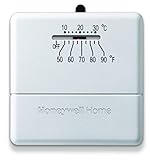
| Honeywell Home CT33A1009 | Simple wall heater swap | Millivolt, non-programmable, white |
| White-Rodgers 1E78-140 | Classic dial-style control | 70 Series, non-programmable |
| 750mV Wall-Mount | Basic millivolt control | Wall-mount, 750mV |
| Generic Digital Non-Programmable | Digital readout seekers | Single-stage, 1 Heat/1 Cool, backlight |
| White-Rodgers 1F83C-11PR | Scheduled heating | 80 Series, programmable, single stage |
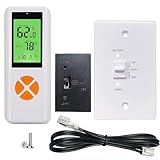
| Fireplace Remote Kit | Gas fireplace control | Millivolt valve, 65ft range, timer |
How to Choose
Confirm the system really is millivolt
Millivolt systems have a pilot flame heating a thermopile, which generates a small voltage, commonly in the hundreds of millivolts. Look at the gas valve or heater plate: wording such as millivolt, or a two-wire hookup with no transformer, is the tell. If a 24V transformer or a common wire is present, you have a different system and need a different thermostat. Only three of these titles state millivolt or mV outright, so the others call for a closer read of their packaging. When in doubt, search the heater model number plus the word thermostat; manufacturers often publish a short list of approved controls, and that list is more reliable than any marketing blurb. Rental owners should also photograph the data plate before removing anything.
Programmable or simple
Non-programmable controls give you a setpoint and nothing else. They suit rooms that you heat on demand. A programmable model lets you set a schedule, which matters when the heater would otherwise run through hours that nobody is home. Programmable units need small power for the display and logic, so check how the listing supplies that power before assuming it will run on a thermopile alone. A heater that cycles on a schedule also needs a pilot that stays reliably lit, because a cold thermopile cannot hold the valve open when the schedule calls for heat.
Wall control or remote
Wall-mounted units replace the existing control on two wires. A remote kit, like the fireplace listing here, instead controls the gas valve from a receiver and a handheld, with a stated 65ft range, an ON/AUTO/Off selector, a timer, and a child lock. Pick a remote when the fireplace is the main heat source and nobody wants to reach the valve. Make sure the receiver can sit somewhere reachable by the handheld, since masonry and metal fireboxes can interfere with the listed range.
What to ignore and where corners get cut
Ignore backlight claims and styling unless the room is dim. Corners get cut with vague listings: a title that gives no compatibility information, like a bare wall-mount label with only a voltage figure, leaves you guessing. Be skeptical of any thermostat that says only single-stage or 1 Heat/1 Cool, because that describes staging, not millivolt support. A decent habit is to treat any unlabeled listing as unconfirmed until the manufacturer sheet or the heater manual names it.
One more practical note before the individual write-ups: thermopile output weakens as a pilot assembly ages or gets dirty, so a new thermostat will not rescue a heater with a tired pilot. If the flame looks weak or the heater drops out on its own, have the appliance serviced before blaming the control.
The 6 Best Options
Honeywell Home CT33A1009
This white economy control is named a millivolt, non-programmable thermostat in its title. It is the straightforward choice for a wall heater where you adjust the setpoint by hand and nothing else. White finish and a plain face help it blend into most hallways.
- Strength: the word millivolt appears directly in the product name
- Strength: a plain non-programmable layout that is easy to understand
- Trade-off: no scheduling at all
Skip it if you want the heater to follow a daily schedule or need a remote receiver for a fireplace, since this model offers neither of those features.
White-Rodgers 1E78-140
A 70 Series Classic, non-programmable thermostat from White-Rodgers. The title does not spell out millivolt, so match the model number against your heater manual before purchase.
- Strength: a familiar brand and a classic non-programmable design
- Strength: a short, simple model code that is easy to look up in a heater manual
- Trade-off: the listing does not state millivolt compatibility itself
Skip it if you cannot verify the compatibility on the manufacturer sheet, or if you want a digital readout and a schedule. Owners of older wall heaters often shop for this kind of familiar control because it resembles what came off the wall.
Generic 750mV Wall-Mount Thermostat
The title is only “Wall-Mount Thermostat, 750mV,” which signals millivolt-level operation but gives little else. That bare listing suits a buyer who already knows exactly what the heater needs and who is comfortable reading the wiring labels without a detailed spec sheet in front of them.
- Strength: the mV figure indicates it is meant for low-voltage millivolt use
- Strength: a wall-mount format that replaces an existing control
- Trade-off: no brand, model, or feature details in the title
Skip it if you want clear documentation, a recognized brand, or any programmable features. Anyone installing in a rental unit may also prefer a name that a future tenant or technician can look up.
Generic Digital Non-Programmable Thermostat
This listing describes a digital, energy-saving non-programmable control for single-stage systems with 1 Heat/1 Cool, a white backlight, and easy DIY installation. It does not mention millivolt, so treat it as conditional. It is best viewed as a candidate only after the packaging or manual confirms the heater type.
- Strength: a digital display with a backlight
- Strength: simple setup for single-stage equipment
- Trade-off: no millivolt claim appears in the title, so compatibility is unconfirmed
Skip it if your heater has no 24V power; many digital controls with this description require it, and an unpowered display will simply stay blank on a pilot-only appliance.
White-Rodgers 1F83C-11PR
An 80 Series programmable single-stage thermostat. It is the scheduling option in this group, intended for people who want temperatures to shift through the day, lower overnight and warmer in the morning. The 80 Series label gives you a model code to check against the heater paperwork.
- Strength: programmable operation for a daily routine
- Strength: single-stage design suited to simple heaters
- Trade-off: the title does not state millivolt support, so check the manual
Skip it if you prefer a plain dial-style control or the heater manual does not list this model. Households that rarely change settings may find the schedule menus more than they need.
Fireplace Thermostat Remote Control Kit
Built for a millivolt gas valve and electronic ignition systems, this kit offers a 65ft range, an LCD, ON/AUTO/Off modes, a timer, and a child lock. It is a remote setup rather than a wall unit, so it fits living rooms where the valve sits low behind a decorative panel.
- Strength: explicitly aimed at millivolt gas valves
- Strength: timer and child lock features listed
- Trade-off: it is a receiver-and-handheld arrangement, not a replacement wall thermostat
Skip it if you need to replace a fixed wall control on a heater or furnace, or if the fireplace valve is not a millivolt type. The batteries in the handheld also need occasional attention.
Which One Fits Your Situation
You have a gas wall heater with a worn dial
The Honeywell Home CT33A1009 is the clearest match, because its title names millivolt directly. It swaps a basic control for another basic control, which keeps the project to a short afternoon job. Check the wire count at the old control first.
You want a schedule
The White-Rodgers 1F83C-11PR is the programmable choice here. Confirm against your heater manual that it works on your valve before wiring it, since the title itself stays silent on millivolt compatibility.
You own a gas fireplace
The Fireplace Thermostat Remote Control Kit fits a millivolt valve with electronic ignition. The 65ft range and timer suit a living room where you do not want to bend to the valve.
You want a plain control that blends in
Both the White-Rodgers 1E78-140 and the Honeywell Home CT33A1009 are non-programmable, so there are no menus to explain to guests or tenants. The 750mV Wall-Mount Thermostat is a no-frills alternative for experienced buyers who already know the voltage their valve expects, though its title carries no brand or model to look up. Anyone who wants a control that a technician can verify later should lean on the model-numbered options instead, since a traceable code makes warranty and manual lookups far easier.
Common Mistakes
- Buying a standard 24V thermostat and expecting it to run on a pilot-powered system.
- Reading single-stage or 1 Heat/1 Cool as proof of millivolt support, or trusting a generic listing with no model number to check.
- Forgetting to shut off the gas supply and the pilot before touching the valve wiring.
- Choosing a programmable unit without confirming how it is powered.
- Assuming a remote kit replaces a wall thermostat on a furnace.
Frequently Asked Questions
What is a millivolt system?
It is a gas heating setup where a pilot flame warms a thermopile that generates a small voltage. That voltage is enough to hold a gas valve open, so no household power is needed for control. This is also why millivolt heaters keep working during an outage, a trait owners often appreciate in cold climates.
Can a smart thermostat work on millivolt heaters?
Typically not directly, because smart thermostats need steady low-voltage power from a transformer. Millivolt systems do not supply that, so a purpose-built millivolt control is the safer choice.
Does a programmable millivolt thermostat make sense?
If the heater runs for long stretches in unoccupied rooms, a schedule helps. Otherwise a simple non-programmable control is easier to operate and has fewer parts that can fail. Programmable units also add menus that some household members will never touch.
How do I know which wires to use?
Millivolt controls usually connect to two wires from the gas valve. Photograph the old wiring first, turn off the gas and pilot, and follow the instructions that come with the replacement. If the wires are brittle or corroded, replace the short section rather than forcing a connection.







