

A smoke alarm that cannot wake you is a smoke alarm that has failed at its only job. People who search for loud models are usually thinking about a specific problem: a bedroom at the far end of a hallway, a heavy sleeper in the house, a basement stairwell with a closed door, or an older family member whose hearing is no longer sharp. Volume is the headline spec, but it only helps when it comes with the right sensing technology and a power source that will not die unnoticed at 3 a.m.
This guide looks at eight alarm families, covering a mix of single-room battery units, interconnect-capable models and multi-pack options for larger homes. Several titles state an 85 dB alarm outright, which is the loudness figure to anchor on. Others cite certification to UL 217, the standard that governs residential smoke alarm audibility and performance, and a few say nothing about decibels at all. Those are marked below so you know what still needs checking on the live listing before you buy in 2026.
Quick Picks
As an Amazon Associate we earn from qualifying purchases at no extra cost to you.


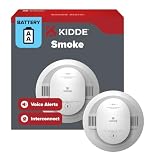
| Product | Best for | Key spec from the title |
|---|---|---|
| Kidde 10SDR | Small rooms and apartments | Loud 85 dB alarm, 4-inch body, AA battery |
| Kidde 20SDR | Standalone bedroom alarm | 85 dB alarm, LED status lights, AA battery |
| Kidde 20SDR-VRF | Linked alarms across a floor | Wireless interconnect, voice alerts, 85 dB |
| Heiman Smoke and CO | Rentals and multi-room homes | 85 dB, 10-year sealed battery, UL 217 and UL 2034 |
| X-Sense SD2J0AX | Kitchens that nuisance-trigger | Photoelectric, one-button hush, 10-year battery |
| First Alert SMI100 | Simple battery coverage | Battery smoke alarm, 1-pack and 2-pack |
| SITERWELL GS509A | Covering many rooms at once | 10-year product life, photoelectric sensor |
| Mini Alarm 12-Pack | Large homes and rentals | 10-year sensor, voice alerts, mute button |
How to Choose
What the decibel number really tells you
An 85 dB figure measured at the standard distance of about ten feet is the common yardstick for a residential alarm, and a title that prints it makes comparison easy. Keep in mind that decibels climb on a logarithmic scale, so a unit that claims a handful more is not twice as loud to the ear. A few extra decibels on paper changes little in a real hallway. What changes the picture is where the alarm sits: one placed outside a bedroom door will be louder than one two rooms away, and a closed door can muffle even the loudest unit. Treat a printed dB figure as a floor, then use placement to close the gap.
Photoelectric or ionization sensing
Photoelectric sensors respond well to slow, smoldering fires, and they are also the kind that produces fewer false alarms from cooking. Several listings here name the photoelectric sensor. Dual-sensor models add a second technology for fast flaming fires. Check the sensor type because it shapes how early the alarm sounds, which matters as much as how loudly.
Power source and lifespan
AA battery models such as the Kidde 10SDR and 20SDR let you swap cells yourself and keep the alarm running for years. Sealed 10-year units, such as the X-Sense, the Heiman and the SITERWELL, are replaced as a whole when the battery ends, so write the install date on the cover. Whichever type you choose, a low-battery chirp needs a plan, since an ignored chirp is how many alarms end up silenced for good.
Interconnect, voice alerts and where corners are cut
If one alarm sounds, a linked network can bring the rest of the house with it. The Kidde 20SDR-VRF lists wireless interconnect, a feature that matters in a two-story layout. Voice alerts name the location or hazard, which helps children. Lower-tier multi-packs tend to leave out the interconnect option and give a less detailed spec list, so read the title closely.
The 8 Best Options
Kidde 10SDR
A compact, 4-inch alarm that runs on AA batteries and states a loud 85 dB alarm. It is aimed at homes and small spaces where a large detector looks out of place.
- Strength: the 85 dB alarm is printed in the title, so the loudness claim is explicit.
- Strength: LED status lights give a quick visual check without a ladder.
- Trade-off: the title does not mention interconnect, so each unit sounds alone.
Skip it if you need a network of linked alarms across several floors, or if a built-in 10-year sealed battery sounds easier than managing AA cells. Anyone who forgets routine upkeep may prefer the sealed route, because AA cells need a reminder in the calendar to be swapped before they fade.
Kidde 20SDR
The slightly larger relative of the 10SDR, sold as a single pack for homes and apartments. It shares the AA power source and the 85 dB alarm.
- Strength: a printed 85 dB alarm and LED status lights.
- Strength: user-replaceable AA batteries mean the alarm itself is not discarded when power runs low.
- Trade-off: no voice alerts or wireless interconnect are named in the title.
Skip it if you want the alarm to speak, or if you are outfitting an entire house and would rather start with a multi-pack. It makes sense as the single alarm for a bedroom door or a studio, where one clear tone with a status light is all the setup you need.
Kidde 20SDR-VRF
This variant adds wireless interconnect and voice alerts to the family, still on AA batteries with an 85 dB alarm and LED status lights.
- Strength: interconnect means one alarm can bring the others in, helpful for a long hallway or upstairs bedrooms.
- Strength: voice alerts make the warning clearer than a bare tone.
- Trade-off: interconnect only helps when every alarm in the network is the compatible kind.
Skip it if you have one small apartment, where a single standalone alarm does the job. Mixing it with older non-matching alarms will not create a link, so plan to buy the compatible units together and mount them on each level and outside sleeping areas.
Heiman Smoke and Carbon Monoxide Detector
A three-pack combination alarm with a 10-year sealed battery. The title lists UL 217 10th edition and UL 2034 5th edition, an 85 dB alarm and a photoelectric smoke sensor.
- Strength: one device covers smoke and carbon monoxide, which cuts the number of ceiling units.
- Strength: the title calls it suitable for homes, hotels, rentals and apartments.
- Trade-off: the sealed battery means the whole combination unit is replaced at the end of its life.
Skip it if you already have separate CO alarms or prefer a replaceable battery. A landlord stocking several units, or a family who wants fewer ceiling devices, is the buyer this pack is aimed at, while a single-room shopper may find three units more than needed.
X-Sense SD2J0AX
This listing is for the 1-pack. It is UL 217 certified, uses a 10-year battery and a photoelectric sensor tuned for fewer cooking nuisance alarms.
- Strength: one-button hush and self-test make the alarm easier to live with in a kitchen-adjacent hall.
- Strength: no-wire installation suits renters and quick replacements.
- Trade-off: the title does not print a decibel number, so rely on the UL 217 certification for the volume floor.
Skip it if you want a printed dB figure or voice announcements. Because the listing leans on certification and nuisance-alarm design instead of loudness numbers, it fits shoppers who value fewer false triggers as much as a high number on the label.
First Alert SMI100
Offered as a battery smoke alarm in 1-pack and 2-pack listings. The title is brief, so what it tells you is the brand, the model number and the pack size.
- Strength: a familiar household name, sold in small quantities for a bedroom or two.
- Strength: the 2-pack listing suits a hall and a bedroom without overbuying.
- Trade-off: no decibel level, sensor type or battery life appears in the title.
Skip it if you shop by printed loudness and need that number before you commit. The sparse title is the main reason to check the full product page for sensor technology, battery life and certification marks before it goes on a ceiling, especially for bedrooms.
SITERWELL GS509A
Listed in 5-pack and 10-pack versions, with a 10-year product life, a photoelectric sensor and a low-battery warning.
- Strength: large pack sizes cover a big house or a rental property in one order.
- Strength: photoelectric sensing is named in the title.
- Trade-off: no decibel figure or interconnect feature is stated.
Skip it if you only need one or two alarms, or if a printed loudness figure is a must. The same model also comes in a smaller pack, so a household with only a few rooms can match the count to the layout instead of storing spares in a drawer.
Mini Alarm 12-Pack
A twelve-unit indoor set with a 10-year sensor, a test and mute button, a low-battery warning and voice alerts.
- Strength: voice alerts and anti-nuisance technology are named in the title.
- Strength: twelve units outfit a multi-room building.
- Trade-off: the title is silent on the decibel level, certification and brand pedigree.
Skip it if you want a recognized brand or a certification printed in the listing. It is built for property managers and big households that value coverage and a spoken alert, and a buyer who needs only one alarm will have eleven spares.
Which One Fits Your Situation
A deep sleeper in a far bedroom
Start with an alarm that prints its volume, such as the Kidde 20SDR, and put it right outside the bedroom door rather than at the end of the hall.
A two-story house
The Kidde 20SDR-VRF lists wireless interconnect, so an alarm on the lower floor can alert the people upstairs.
A kitchen that keeps setting off the old alarm
The X-Sense SD2J0AX uses photoelectric sensing aimed at fewer cooking nuisance alarms, and its hush button helps.
A rental property or a large home
The Heiman three-pack combines smoke and carbon monoxide, while the SITERWELL and Mini Alarm multi-packs cover more rooms.
Common Mistakes
- Choosing by decibels alone and ignoring where the alarm will be mounted.
- Leaving a 10-year sealed unit in place after the date on the back has passed.
- Pulling the battery during a cooking false alarm and forgetting to put it back.
- Buying a mixed set of unrelated brands and expecting them to link up wirelessly.
- Skipping the bedroom and the hallway outside it because the living room already has coverage.
Related guides
- Battery Operated Smoke And Carbon Monoxide Detectors
- Combination Smoke And Carbon Monoxide Detectors
- Aio Liquid Coolers For High Performance Gaming
Frequently Asked Questions
Is 85 dB loud enough?
It is the common yardstick for residential alarms and it is meant to wake most sleepers. Placement and closed doors matter as much as the number, so put an alarm in every sleeping area and consider a linked network if bedrooms sit far from each other. Households with hearing loss may need a specialty device with a strobe or bed shaker.
Do louder alarms mean more false alarms?
Not directly. False alarms depend mostly on sensor type and location, and photoelectric models are the usual choice near kitchens.
Can I mix sealed and AA-battery alarms?
Yes for standalone coverage, though they will not necessarily link to each other. Keep interconnected groups within one compatible family.
How often should I replace an alarm?
Check the manufacture date on the back and follow the maker’s stated life, which is 10 years for the sealed models listed here. Press the button each month to confirm it sounds.







