A large 4K gaming monitor means something different in 2024 than it did three years ago. “Large” now starts around 32 inches and runs up through 42-inch OLEDs that blur the line with TVs. At 4K resolution, screen size changes pixel density enough to affect text sharpness, desk distance requirements, and whether you need to scale Windows. Get the size wrong and you’ll either strain your eyes or waste resolution you paid for.
This guide covers what actually matters at this size and resolution: panel type, refresh rate ceiling given current GPU and port bandwidth limits, and the real trade-offs between IPS, VA, and OLED at 32 inches and up.
As an Amazon Associate we earn from qualifying purchases at no extra cost to you.

Size and viewing distance first
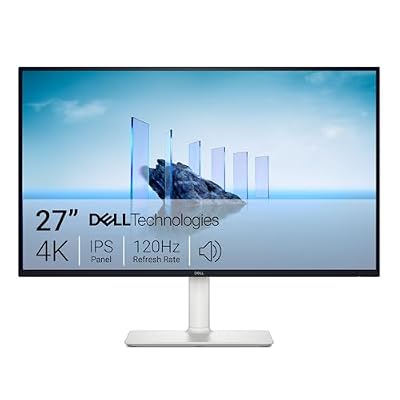
Before panel tech, settle on size. A 32-inch 4K panel runs about 140 pixels per inch, close enough to a 27-inch 1440p screen that text looks crisp at a normal 24-28 inch desk distance. Step up to 42 inches and pixel density drops to around 105 PPI, which is fine for console-style couch gaming at 6-8 feet but noticeably softer for desktop use and small UI text up close.
If this is a desk monitor you’ll sit in front of for work and games, 32-34 inches is the practical ceiling. Beyond that you’re either sitting further back than a desk allows or doing a lot of head turning to see the corners. The 38-42 inch OLED “monitors” that have shown up recently are really repurposed TV panels and make more sense 4-5 feet back.
IPS, VA, or OLED
At this size, panel type matters more than at 24-27 inches because flaws are more visible across a bigger area.
IPS panels give you the best color accuracy and viewing angles, which matters on a 32-inch-plus screen where the edges are further from your eyeline. The trade-off is contrast: IPS blacks look more like dark gray under any ambient light, and IPS glow (a brighter haze in corners when displaying dark scenes) is more noticeable on larger panels. Response times on modern gaming IPS are good enough that this isn’t the limiting factor anymore.
VA panels get you deeper native contrast, often 3000:1 to 6000:1 versus IPS’s typical 1000:1, which makes a real difference in dark, atmospheric games. The classic VA complaint is black smearing in fast-moving dark scenes, where pixels take too long to transition between dark shades. This has improved a lot but hasn’t fully disappeared, and it’s worth checking review footage of smearing specifically before buying a VA panel for competitive shooters.
OLED is the one with the real step change: near-instant response times, true per-pixel blacks, and no smearing or ghosting at all. The costs are real too. Burn-in and permanent image retention from static elements (HUDs, taskbars, killfeeds) is a legitimate long-term risk, brightness in SDR is lower than a good VA or IPS panel, and prices run well above LCD alternatives at the same size. If you’re mostly playing varied content and not leaving a browser or game HUD static for hours daily, OLED risk is manageable. If you’re using this as a dedicated desktop monitor with a visible taskbar all day, that’s the scenario where burn-in actually happens.
| Panel type | Contrast | Response time | Main risk | Best for |
|---|---|---|---|---|
| IPS | ~1000:1 | Good | IPS glow, washed-out blacks | Mixed use, color work, bright rooms |
| VA | 3000-6000:1 | Moderate | Dark scene smearing | Single-player, atmospheric games |
| OLED | Effectively infinite | Excellent | Burn-in with static content | Varied gaming, no fixed HUD habits |
Refresh rate at 4K is a bandwidth problem
4K at high refresh rates runs into real limits that don’t exist at 1080p or 1440p. HDMI 2.1 supports 4K at up to 120Hz uncompressed, and getting past that (144Hz, 160Hz, some panels hitting 240Hz) typically requires DisplayPort 1.4 with Display Stream Compression or DisplayPort 2.1, depending on the monitor and GPU generation. If you’re on an older GPU without DP 1.4 DSC support, check this before buying a 160Hz+ 4K panel, because you may be capped well below the panel’s rated refresh rate.
The GPU side matters just as much as the port. Driving 4K at 120Hz-plus in demanding games requires serious GPU horsepower, and most mid-range cards will not sustain triple-digit frame rates at native 4K in current AAA titles without leaning hard on upscaling. If your GPU is realistically topping out around 60-90 fps at 4K, a 144Hz or 240Hz panel’s extra headroom goes mostly unused, and a well-reviewed 120Hz-144Hz panel is the better money. Save the premium for 160Hz-240Hz 4K panels for GPUs that can actually push those frame rates, which currently means high-end cards.
HDR and inputs are not just checkboxes
“HDR” on the box means little without a brightness and local dimming spec behind it. VESA’s DisplayHDR 400 certification is close to meaningless for actual HDR impact; look for DisplayHDR 600 or 1000, or VESA’s newer True Black certifications for OLED, which test for actual sustained brightness and black levels rather than just accepting HDR metadata. A VA or IPS panel without real local dimming zones will show HDR highlights blooming into surrounding dark areas, which looks worse than just leaving HDR off.
If you’re connecting a current-gen console alongside a PC, confirm the monitor has at least two full-bandwidth HDMI 2.1 ports, not one HDMI 2.1 and one HDMI 2.0 port relabeled in marketing copy. This has been a real pattern on budget “4K 120Hz” monitors.
What to actually buy
For a desk-distance all-rounder at 32-34 inches, a solid IPS panel with HDMI 2.1 and DisplayHDR 600 covers most people well; browse current 32-inch 4K 144Hz IPS gaming monitors and check the specific DisplayPort/HDMI bandwidth before buying. If you mostly play atmospheric single-player games and want deeper blacks without OLED pricing, look at 32-inch 4K VA gaming monitors and read smearing-specific reviews first. If your GPU can actually sustain high frame rates at 4K and you don’t run a static desktop on it all day, 4K OLED gaming monitors are the biggest real upgrade in motion clarity and contrast available right now.
Don’t buy a 240Hz 4K panel to pair with a GPU that caps out near 90-100 fps at native 4K. That gap is the single most common overspend in this category, and the money is better spent either on the GPU or on a panel tier with better contrast and HDR instead of refresh rate you can’t reach.