- Top Pick: TIKUSAN Donabe Japanese Hot Pot Banko Ware Made in Japan (6 go(30 fl oz.))
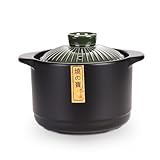
- Best Value: Ceramic Cooking Pot 2.1QT – Authentic Japanese Donabe Clay Pot – Earthenware Stew Pot for Slow Cooking, Casserole with Green Lid, Healthy & Non Toxic
- Premium Choice: Kotobuki Donabe Japanese Hot Pot, Large, Gray
Best Japanese Donabe Pots: Quick Picks by Use
The best Japanese donabe pots are unglazed Iga-ware models for strong heat retention and flavorful hot pots, glazed clay pots for easier everyday care, and a smaller rice donabe with a fitted inner lid for dependable stovetop rice. The right choice depends less on a brand name than on your burner: traditional clay works over gas, but most donabe should not be used on ordinary electric coil or induction cooktops unless the maker explicitly approves it.
| What you cook | Practical capacity | What to look for | Best heat source |
|---|---|---|---|
| Rice for 1–2 people | 0.5–1 go (about 90–180 ml uncooked rice) | Rice-specific shape and tight inner lid | Gas; compatible models may suit other stoves |
| Rice for 2–3 people | 2–3 go (about 360–540 ml uncooked rice) | Room for bubbling without boil-over | Gas |
| Hot pot for 2–3 | 1.5–2.5 L | Broad opening and a secure, easy-to-grip lid | Gas or tabletop burner |
| Stew or hot pot for 4–5 | 3–4 L | Wide cooking area and sturdy handles | Gas; check appliance restrictions |
| Electric or induction cooking | Any | Explicit approval for your exact cooktop, or a suitable metal-bodied alternative | Only as specified by the manufacturer |
Japanese rice units called go are volume measures, not serving counts: 1 go is 180 ml of uncooked rice, typically enough for about one to two modest portions. For hot pots, capacity is easier to judge in liters. A pot filled to its brim has no room for simmering, so plan to cook below the stated capacity.
As an Amazon Associate we earn from qualifying purchases at no extra cost to you.



Clay, size and lid: the choices that change the result
Iga ware: excellent heat retention, more demanding care
Iga ware, associated with Mie Prefecture, is often made from porous clay fired at high temperatures. Its thermal mass helps it hold warmth after the flame is reduced, a useful trait for simmered dishes and hot pot served at the table. The pot also heats more gradually than thin metal cookware, which can make low, steady cooking easier once it is warmed through.
The trade-off is fragility and care. Unglazed or partly unglazed interiors can absorb moisture and food aromas. Follow the maker’s seasoning and cleaning directions, dry the pot completely, and avoid sudden temperature changes. A cold pot placed over a strong flame—or a hot pot set on a wet surface—can crack.
Glazed clay: the simpler everyday option
Glazed donabe are generally easier to clean because the smooth interior absorbs less liquid and odor. They suit broths, soups and varied weeknight dishes, though glaze does not make a pot immune to thermal shock or unsuitable burners. Check whether the model is intended for direct flame, oven use, or a particular electric appliance; those are separate compatibility claims.
Rice donabe: prioritize lid geometry
Rice-focused donabe often have a heavier lid, and some use a second inner lid. That arrangement helps manage steam and bubbling, reducing the chance of starchy water escaping while maintaining pressure inside the pot. A regular hot-pot donabe can cook rice, but its lid and proportions may make the process less forgiving.
Capacity matters as much as the lid. Rice expands and bubbles vigorously. Choose a pot rated for the quantity you usually cook rather than trying to fill a large stew pot with a very small batch. For a household that makes rice daily and hot pot occasionally, a dedicated rice donabe plus a larger serving pot may be more practical than one oversized all-purpose vessel.
Match the donabe to your stove
Traditional clay donabe are usually designed for direct flame, making gas the most straightforward fit. Electric resistance coils heat differently: they can create concentrated contact heat at the base, while the pot warms unevenly. Many clay pots are not approved for this use. Induction requires magnetic cookware, so an ordinary clay pot will not work unless it has an approved induction-compatible construction or accessory.
Do not assume that a heat diffuser makes an incompatible pot safe. It may spread heat, but it does not override the manufacturer’s guidance or eliminate cracking risk. If you have an electric or induction stove, confirm the exact model’s instructions before buying. When no clay model is approved, use a compatible metal pot for stovetop cooking and serve the meal in a donabe.
| Your situation | Recommended direction | Why |
|---|---|---|
| Gas burner; frequent hot pot | Glazed or Iga-ware, roughly 2–3 L for a small group | Direct flame suits many traditional pots; broad opening makes sharing easier |
| Gas burner; rice is the main use | Rice-specific donabe sized to your usual go count | Inner-lid design and appropriate headspace help control bubbling |
| Electric coil; wants direct stovetop use | Only a model explicitly approved for that cooktop | Clay can heat unevenly or crack from concentrated contact heat |
| Induction; wants direct stovetop use | Induction-approved cookware, verified in the manual | Clay alone is not magnetic and will not trigger a standard induction hob |
| One pot for stew and hot pot | Glazed, wide-mouth model with a 2–3 L capacity for a small household | Easier cleaning and a shape suited to serving; less specialized for rice |
How to choose capacity without buying too large
For hot pot, estimate the amount you will actually serve at once, not the pot’s brim capacity. A 1.5–2 L pot is often manageable for one or two diners; 2–3 L gives a small group more room for vegetables and broth. For four or more people, consider a larger pot or split the meal into batches, especially if the burner is small.
For rice, start with the manufacturer’s recommended range in go. As a practical example, if you cook 2 go of rice most nights, choose a rice pot designed to cook 2 go comfortably rather than a large hot-pot vessel. A larger pot is not automatically better: a small rice batch spread across a broad base may cook less consistently, while an undersized pot can boil over.
Buying checklist: avoid the common mismatches
- Verify cooktop compatibility first. Look for explicit approval for gas, electric, or induction—not a vague claim that the pot is “stovetop safe.”
- Choose the lid for the job. A tight or double-lid design favors rice; a single, easy-to-lift lid is convenient for checking a stew or adding ingredients to hot pot.
- Match shape to cooking. A wide mouth helps diners reach ingredients and encourages evaporation; a deeper, narrower pot can be more convenient for broth-heavy dishes but may be less comfortable to serve from.
- Check care instructions. Some clay pots need seasoning before first use and must be dried thoroughly. Do not soak an unglazed pot or place it in a dishwasher unless its maker says that is safe.
- Inspect handling details. A full clay pot is heavy. Sturdy handles and a lid knob that can be grasped safely matter when moving it from burner to table.
Using a donabe safely and consistently
On an approved gas burner, begin with low heat and raise it gradually. Once a stew reaches a simmer, lower the flame to maintain gentle bubbling; high heat wastes fuel and may scorch food at the base before the center is hot. For rice, follow the model’s water ratio and timing rather than applying a generic recipe, since pot shape and lid design affect steam retention.
After cooking, let the pot cool naturally. Never pour cold liquid into a hot donabe or rinse it under cold water immediately; abrupt temperature changes can cause cracks. If the pot has absorbed moisture, dry it fully before storing to prevent lingering odors or damage.
Bottom line
For gas cooking and frequent hot pot, choose a glazed or Iga-ware donabe sized for the group, with a comfortable lid and enough headspace. For rice, favor a purpose-built model with the right go capacity and a well-fitted lid. For electric coil or induction, buy only a pot explicitly approved for your exact cooktop—or choose a compatible metal cooker and use the donabe for serving. That compatibility check is more important than clay origin, capacity claims, or appearance.
Ready to decide? Our #1 pick for 2026 is the Rice for 1–2 people.
Live price & availability on Amazon.