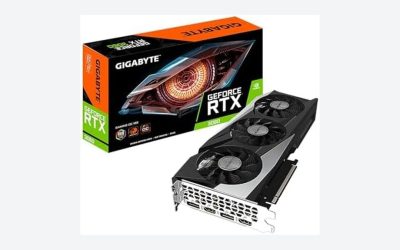
- Top Pick: ASUS Prime GeForce RTX 5070 12GB GDDR7 OC Edition Gaming Graphics Card find alternatives
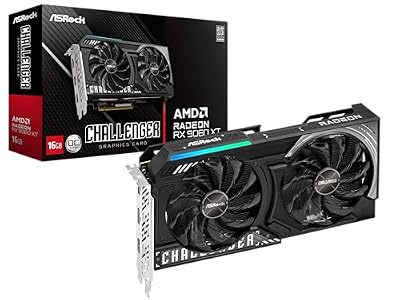
- Best Value: ASRock Radeon RX 9060 XT Challenger 16GB OC, RDNA 4, 3290MHz Boost, 16GB GDDR6 128-bit, PCIe 5.0, Dual Fans, 0dB Silent, LED Indicator, DisplayPort 2.1a, HDMI 2.1b
- Premium Choice: GIGABYTE Radeon RX 9070 XT Gaming OC 16G Graphics Card, PCIe 5.0, 16GB GDDR6, GV-R9070XTGAMING OC-16GD Video Card
The Core i5-12100 is a 4-core, 8-thread chip with a boost clock around 4.3GHz. It’s one of the better budget CPUs Intel has put out, but it’s still a 4-core part, and that puts a ceiling on how much GPU it can usefully feed. The question isn’t “what’s the best GPU,” it’s “what’s the best GPU before this CPU starts holding it back.” Those are different questions, and getting the answer wrong means either wasting money on a GPU that’s bottlenecked or underbuying and leaving performance on the table.
As an Amazon Associate we earn from qualifying purchases at no extra cost to you.



Where the 12100 actually bottlenecks
At 1080p, the 12100 will bottleneck anything above a mid-range card in CPU-heavy titles. Think competitive shooters with high draw-call counts, simulation games, open-world titles with lots of NPCs. In those cases, pairing it with a high-end GPU just means that GPU spends more time waiting on the CPU than rendering frames. In GPU-bound titles though, like most modern AAA games with heavy ray tracing or 4K-targeted settings, the 12100 holds up surprisingly well because the GPU is the thing struggling, not the CPU.
This matters for your buying decision. At 1080p with high refresh rate goals (144Hz+), the 12100 starts to cap you out somewhere in the RTX 4060 / RX 7600 range in CPU-sensitive games. At 1440p or 4K, the GPU becomes the bottleneck well before the CPU does, so you can go further up the stack without wasting money, up to a point.
The sweet spot: RTX 4060 or RX 7600
For most people building around a 12100, a card in the RTX 4060 or RX 7600 class is the realistic ceiling for 1080p gaming. Both draw under 170W, both fit in budget cases without power delivery headaches, and both will not be meaningfully throttled by the 12100 in the vast majority of games at 1080p/1440p. You get strong 1080p high-refresh performance and usable 1440p performance in less demanding titles.
Going past this tier, say to an RTX 4070 or above, isn’t wasted money across the board, but you’ll see diminishing returns at 1080p specifically because the 12100 starts rationing frames in CPU-heavy games. If your plan is 1440p or 4K with ray tracing and you’re fine with lower frame rates in CPU-bound titles, a stronger card still makes sense. If your plan is 1080p esports titles chasing 200+ fps, the CPU is your limiter long before the GPU is, and spending more on the GPU won’t move the needle much.
When the cheaper option is fine
If the budget is tight, a card like the RTX 4060 or RX 7600 is already slightly ahead of what the 12100 needs in some scenarios. Stepping down to something like an RX 7600 non-XT equivalent or a previous-gen RTX 3060-class card is genuinely fine for 1080p gaming at 60-100fps in most titles. You won’t be leaving much performance unused, because the 12100 is going to be the limiting factor in a chunk of games anyway. Don’t feel pressured into a bigger card “to future-proof” when the CPU is the actual limiting factor on that future.
Rough performance expectations
| GPU tier | 1080p result with 12100 | 1440p result with 12100 | Bottleneck risk |
|---|---|---|---|
| RTX 3050 / RX 6600 | CPU rarely limits you | GPU-limited, lower settings needed | Low |
| RTX 4060 / RX 7600 | Strong, CPU limits in a few CPU-heavy titles | Good at medium-high settings | Low-moderate |
| RTX 4070 | CPU limits frequently in esports/CPU-bound titles | GPU-limited, good performance | Moderate |
| RTX 4070 Ti / 4080-class | CPU limits often, GPU underused | Still some CPU limiting in lighter titles | High at 1080p |
These numbers are directional, not benchmark results, but they reflect the pattern you’ll see across review data: as resolution climbs, the GPU takes back control of the frame rate ceiling, and the 12100’s 4-core limitation matters less.
Cooling and PSU notes
The 12100 doesn’t need much cooling. It runs cool even under its stock cooler for most workloads, so you don’t need to spend on an aftermarket cooler unless you’re overclocking (and the 12100 is a non-K locked part on most boards, so overclocking headroom is limited anyway). Put that cooling budget into the GPU or PSU instead.
On power, an RTX 4060 or RX 7600 build with a 12100 comfortably runs on a quality 550W power supply, since the 12100 itself only pulls around 60-70W under load. Don’t oversize the PSU chasing headroom you won’t use. If you want to pair it with something heavier down the line, like a GPU upgrade without a CPU upgrade, 650W gives you margin without overspending now.
The actual decision
If you’re building a 1080p gaming PC around a 12100, stop at the RTX 4060 / RX 7600 tier unless you specifically plan to game at 1440p or 4K with heavier settings, where the GPU becomes the limiter again and a stronger card pays off. Buying bigger than that for 1080p mostly pays Nvidia or AMD for frames the 12100 won’t let you use. The CPU is a genuinely good budget part, it’s just a budget part, and the GPU pairing should respect that rather than fight it.