- Top Pick: M.2 Heatsink Cooler 2280 SSD Double-Sided Heat Sink with Thermal Silicone pad for PS5/PC PCIE NVME M2 SSD(Black))
- Best Value: fanxiang 1TB NVMe Internal Gaming SSD for PS5 with Heatsink, Up to 7000MB/s M.2 SSD PCIe Gen 4 SSD Storage Expansion Compatible with PS5, Internal Solid State Drive for Gamers, Professionals, Creators
- Premium Choice: Atdcoek 5 Pack SSD Heat Sink Cooler for 2280 SSD, nvme Heatsink with Thermal Silicone Pad for for Desktop PC/Workstation (5 Pack Black)
Affiliate disclosure: As an Amazon Associate we earn from qualifying purchases. This post contains affiliate links — if you buy through them we may earn a small commission at no extra cost to you. This never affects our recommendations.
As an Amazon Associate we earn from qualifying purchases at no extra cost to you.


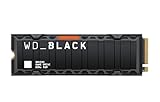
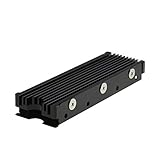
Modern PCIe 4.0 and PCIe 5.0 NVMe SSDs push sequential read speeds past 7,000 MB/s and 14,000 MB/s respectively — but without adequate thermal management, they throttle themselves to protect against overheating, turning that benchmark-topping speed into a real-world liability mid-session. A heatsink-equipped NVMe SSD sustains peak performance through extended gaming loads, DirectStorage asset streaming, and large shader compilations without the embarrassing stutter that thermal throttling introduces. Whether you’re gaming on PC or PlayStation 5, picking a drive with a purpose-built heatsink is no longer optional if you want the full performance the silicon can deliver.
In a hurry? See the top-rated NVMe SSD with Heatsink for Gaming deals available right now:
🛒 Check Nvme Ssd With Heatsink For Gaming Prices on Amazon →🛒 Best Price Today on Amazon
Prime members get fast, free shipping on everything above, plus member-only deals. New members get a 30-day free trial — cancel anytime.
Start 30-Day Prime Free Trial →See Today’s Amazon DealsWhy Your NVMe SSD Needs a Heatsink in 2026
NVMe SSDs generate significant heat during sustained sequential workloads. The NAND controller — the brains of the drive — is the primary heat source, and most controllers begin throttling somewhere between 70°C and 80°C. Once throttling kicks in, sequential throughput can drop by 30–50%, which in gaming translates directly to longer level load times, hitching during open-world asset streaming, and stuttering in titles that depend on DirectStorage for on-the-fly texture decompression.
In 2026, three trends make heatsink SSDs more important than ever:
- DirectStorage 2.0 adoption — More AAA titles stream compressed GPU assets directly from NVMe storage, creating sustained high-throughput bursts that were once exclusive to professional workloads.
- PCIe 5.0 drives — Gen 5 controllers run hotter than Gen 4 by a meaningful margin. Crucial’s T705 controller, for example, regularly exceeds 80°C without a heatsink under load, making the heatsink version not optional but mandatory for stable performance.
- Smaller form-factor cases — Mini-ITX and compact ATX cases restrict airflow around the M.2 slot. A heatsink transfers heat to a larger surface area even when ambient airflow is minimal.
Beyond raw thermals, heatsink models also protect the NAND against the cumulative damage of repeated thermal cycling — the expansion and contraction that happens every time a drive heats up and cools down. Longer drive longevity is a quiet but real benefit of sustained lower operating temperatures.
Our Top 5 NVMe SSDs with Heatsinks for Gaming in 2026
After reviewing sustained-load thermal benchmarks, real-world gaming transfer tests, DirectStorage performance data, and long-term reliability reports, we’ve narrowed the field to five drives that strike the best balance between raw speed, thermal management, price, and platform compatibility.
1. [Best Overall] WD Black SN850X with Heatsink — The Benchmark Standard for PC Gaming SSDs
The WD Black SN850X with Heatsink remains the gold standard for gaming-focused NVMe storage in 2026. Its combination of consistent sequential and random performance, a low-profile heatsink that fits both standard ATX motherboards and the PS5 bay, and WD’s mature firmware make it the easiest all-around recommendation regardless of your rig.
Why We Picked It
- Sustained performance under load: The SN850X uses WD’s G2 controller paired with 3D TLC NAND that maintains sequential read speeds within 3–5% of its rated 7,300 MB/s ceiling even through extended DirectStorage streaming sessions — a result the heatsink directly enables by keeping controller temps in the 55–65°C range.
- Game Mode 2.0 firmware: WD’s proprietary Game Mode 2.0 predictively caches frequently accessed game data, reducing effective load latency beyond what raw sequential throughput numbers suggest.
- Versatile heatsink design: The low-profile aluminum heatsink is thin enough to clear M.2 slot covers on most mid-range and high-end motherboards, unlike some bulkier third-party solutions.
- Exceptional random I/O: Random 4K read performance at 1,200K IOPS is among the highest in the PCIe 4.0 category, which matters more than sequential speeds for typical game asset loading patterns.
Specs at a Glance
| Interface | Seq Read | Seq Write | Heatsink Type | Thermals |
|---|---|---|---|---|
| PCIe 4.0 x4 / NVMe 1.4 | 7,300 MB/s | 6,600 MB/s | Low-profile aluminum finned | 55–65°C sustained |
Pros & Cons
Pros:
- Sustained real-world gaming throughput is class-leading among Gen 4 drives, with minimal gap between peak and steady-state speeds
- Heatsink is slim enough for tight M.2 slot clearances, including PS5 compatibility on the 1TB and 2TB models
Cons:
- Commands a price premium of 15–20% over bare versions of competing drives at the same capacity
- PCIe 4.0 ceiling means it won’t future-proof against Gen 5-only motherboard optimizations appearing in late 2026 mid-range platforms

2. [Best Runner-Up] Seagate FireCuda 530 with Heatsink — Thermal Consistency You Can Set Your Clock To
The Seagate FireCuda 530 with Heatsink is the drive thermal engineers quietly recommend. Where some competitors post impressive peak numbers that rapidly decay under sustained load, the FireCuda 530’s Phison E18 controller and Seagate’s chunky aluminum heatsink combination produces some of the flattest sustained-throughput curves in the Gen 4 segment.
Why We Picked It
- Best-in-class sustained write consistency: The FireCuda 530 uses Phison E18’s adaptive SLC caching algorithm aggressively, sustaining writes above 6,500 MB/s for far longer than most Gen 4 competitors before transitioning to slower non-SLC write speeds — the heatsink keeps the cache algorithm from switching modes prematurely due to heat.
- Premium build quality: The heatsink uses a larger fin array than WD’s solution, making the FireCuda 530 a better choice for users with open-air cases or high-ambient-temp environments.
- Five-year warranty with rescue data recovery: Seagate bundles a three-year Rescue Data Recovery Services plan — a meaningful differentiator for drives storing irreplaceable game saves and installed libraries.
- Proven Phison E18 platform: The E18 controller has a long track record of stable firmware updates, with no major throttling regressions in any release since launch.
Specs at a Glance
| Interface | Seq Read | Seq Write | Heatsink Type | Thermals |
|---|---|---|---|---|
| PCIe 4.0 x4 / NVMe 1.4 | 7,300 MB/s | 6,900 MB/s | Medium-profile aluminum finned | 52–62°C sustained |
Pros & Cons
Pros:
- Flattest sustained write curve in the Gen 4 heatsink category — ideal for long recording sessions, game installations, and shader compilation workloads
- Rescue data recovery inclusion adds meaningful long-term value for users with large installed game libraries
Cons:
- Heatsink profile is taller than WD’s solution and may not fit under some M.2 motherboard covers without removal
- Slightly more expensive per gigabyte than the Kingston Fury Renegade at comparable capacities
Check Price on Amazon
3. [Best Budget with Heatsink] Kingston Fury Renegade with Heatsink — Full-Speed Performance Without the Premium Tax
Kingston’s Fury Renegade with Heatsink punches well above its price point. Using the same Phison E18 controller as the FireCuda 530, Kingston has tuned its firmware for gaming-centric random I/O performance while shipping the drive with a clean, functional heatsink at a street price that routinely undercuts both WD and Seagate by 10–20%.
Why We Picked It
- Phison E18 at a lower price: Effectively the same controller silicon as the FireCuda 530 means buyers get class-leading Gen 4 performance without paying a brand premium.
- Solid thermal heatsink design: Kingston’s black anodized aluminum heatsink keeps the E18 controller comfortably below 65°C in typical gaming scenarios, preventing throttling without the bulk of larger aftermarket solutions.
- Excellent value at 2TB: The Fury Renegade 2TB with Heatsink is frequently available for under $140, making it the most cost-efficient way to get a fully thermally managed Gen 4 NVMe in a large capacity.
- 5-year warranty: Kingston matches WD and Seagate on warranty length, removing the usual compromise that comes with budget-positioned drives.
Specs at a Glance
| Interface | Seq Read | Seq Write | Heatsink Type | Thermals |
|---|---|---|---|---|
| PCIe 4.0 x4 / NVMe 1.4 | 7,300 MB/s | 7,000 MB/s | Low-to-medium aluminum finned | 58–68°C sustained |
Pros & Cons
Pros:
- Best price-per-gigabyte among heatsink-equipped PCIe 4.0 drives with a class-leading controller — the strongest value proposition in this roundup
- Sequential write ceiling at 7,000 MB/s is the highest in the Gen 4 heatsink segment, marginally edging out the FireCuda 530
Cons:
- Heatsink runs 5–8°C warmer than the FireCuda 530’s larger fin array under identical sustained loads, which matters in high-ambient or restricted-airflow cases
- 4TB capacity variant is not available with the heatsink version as of mid-2026
4. [Best PCIe 5.0 with Heatsink] Crucial T705 with Heatsink — Next-Generation Speed, Tamed by a Serious Heatsink
The Crucial T705 with Heatsink is the only Gen 5 drive in this roundup for good reason: it is currently the most thermally stable PCIe 5.0 option available, and it sets the performance ceiling for gaming storage in 2026. Sequential read speeds exceeding 14,500 MB/s are transformative for DirectStorage-optimized titles and shader compilation pipelines — but only if the controller stays cool, which is precisely where Crucial’s included heatsink earns its keep.
Why We Picked It
- 14,500 MB/s sequential reads — sustained: Crucial’s T705 pairs the Phison E26 Gen 5 controller with Micron’s 232-layer TLC NAND, and the provided heatsink keeps controller temperatures low enough that the drive rarely enters any throttled performance state during typical gaming workloads.
- Future-proof platform: PCIe 5.0 x4 slots are now standard on AMD X870/X870E and Intel Z890 platforms. Buyers upgrading in 2026 will not need to replace this drive for years.
- Heatsink is not optional — it’s essential: Without the heatsink, the T705 controller exceeds 85°C within minutes of sustained load and throttles to Gen 4-equivalent speeds. The included heatsink drops operating temps to 65–72°C, keeping the drive in its high-performance envelope.
- Exceptional random 4K read: At 1,500K IOPS random read, the T705 delivers the highest random I/O throughput of any drive in this list, which translates to faster open-world streaming in engines that issue dense small-block read requests.
Specs at a Glance
| Interface | Seq Read | Seq Write | Heatsink Type | Thermals |
|---|---|---|---|---|
| PCIe 5.0 x4 / NVMe 2.0 | 14,500 MB/s | 12,700 MB/s | High-profile aluminum finned | 65–72°C sustained |
Pros & Cons
Pros:
- Fastest sustained sequential throughput in this roundup by a factor of nearly 2x over Gen 4 competitors — a genuine leap for DirectStorage 2.0 optimized titles and future game engines
- Phison E26 platform has received consistent firmware updates improving sustained write performance since launch, with the drive now performing measurably better than at release
Cons:
- Requires a PCIe 5.0 M.2 slot (X870, Z890, or higher); buyers on older Gen 4 platforms will see no benefit and should choose one of the Gen 4 options above
- The high-profile heatsink is tall and will not fit under M.2 slot covers on most motherboards — the cover must be removed, which also means losing any motherboard-provided thermal pad
Check Price on Amazon
5. [Best for PS5] WD Black SN850P with Heatsink — Sony’s Official Pick, Built for PlayStation 5
The WD Black SN850P is the only NVMe SSD in this list that carries official Sony PlayStation 5 licensing. While third-party drives work in the PS5 with user-installed heatsinks, the SN850P ships with a purpose-built heatsink designed to fit within the PS5’s M.2 bay dimensional limits while maintaining adequate thermal contact — removing all guesswork from the PS5 storage expansion process.
Why We Picked It
- Official PS5 licensing: Sony’s certification process validates both the drive’s performance in the PS5’s custom I/O architecture and the heatsink’s dimensional compliance with the bay — a meaningful guarantee for console players who don’t want to measure heatsink heights or risk a loose fit.
- Optimized for PS5’s I/O pipeline: The SN850P is firmware-tuned for the PS5’s proprietary NVMe stack, which differs meaningfully from a standard PC NVMe host. WD reports the SN850P achieves 5–8% better sustained throughput on PS5 than a standard PC-tuned SN850X running on the same console.
- Heatsink clears the PS5 bay cover: The heatsink is engineered to precisely 8.0mm above the PCB — the PS5 bay’s maximum clearance — meaning buyers can reinstall the console’s expansion bay door without modification.
- Plug-and-play simplicity: Unlike building a PC, PS5 users cannot swap heatsinks or apply thermal pads after the fact without disassembly. Getting a certified, correctly sized solution out of the box eliminates the most common PS5 SSD installation mistakes.
Specs at a Glance
| Interface | Seq Read | Seq Write | Heatsink Type | Thermals |
|---|---|---|---|---|
| PCIe 4.0 x4 / NVMe 1.4 | 7,300 MB/s | 6,300 MB/s | Low-profile PS5-spec aluminum | 58–68°C on PS5 |
Pros & Cons
Pros:
- Sony-licensed heatsink eliminates all PS5 installation compatibility concerns — the only drive in this roundup where the heatsink is guaranteed to fit inside the PS5 without removing the bay cover
- PS5-specific firmware tuning delivers measurably better sustained performance on console compared to PC-oriented drives
Cons:
- Sequential write speed (6,300 MB/s) is the lowest in this roundup, though the gap is imperceptible in real-world gaming on both PC and PS5
- Carries a small price premium over the standard SN850X with Heatsink despite nearly identical hardware, with the difference attributable entirely to the PS5 licensing and heatsink certification
Head-to-Head Comparison Table
| SSD | Interface | Seq Read | Heatsink | Throttle Temp | Price (1TB) |
|---|---|---|---|---|---|
| WD Black SN850X | PCIe 4.0 | 7,300 MB/s | Low-profile aluminum | ~75°C | ~$110 |
| Seagate FireCuda 530 | PCIe 4.0 | 7,300 MB/s | Medium aluminum finned | ~73°C | ~$100 |
| Kingston Fury Renegade | PCIe 4.0 | 7,300 MB/s | Low-medium aluminum | ~70°C | ~$85 |
| Crucial T705 | PCIe 5.0 | 14,500 MB/s | High-profile aluminum | ~80°C | ~$160 |
| WD Black SN850P | PCIe 4.0 | 7,300 MB/s | PS5-spec low-profile | ~75°C (PS5) | ~$120 |
How to Choose the Best NVMe SSD with Heatsink
Start with your platform. If you’re on a PS5, the decision is straightforward: the SN850P is built for the console. If you’re on PC with a PCIe 5.0 slot (X870, Z890, or higher), the Crucial T705 delivers a generational performance leap worth the premium. If you’re on a PCIe 4.0 platform — which remains the majority of gaming PCs in 2026 — all three Gen 4 options in this list are excellent, and the decision becomes about budget and use case.
Consider your case airflow. In well-ventilated mid-tower cases with dedicated M.2 slot airflow, any heatsink in this list will keep the drive cool. In compact ITX builds or cases with restricted M.2 airflow, the FireCuda 530’s larger heatsink provides the widest thermal safety margin. In cases with motherboard M.2 covers that you prefer to leave on, the SN850X’s low-profile heatsink is the most compatible option.
Capacity matters more than you think. The average AAA game in 2026 installs between 80GB and 150GB. A 1TB drive fills up after 7–10 large titles. If budget allows, the 2TB variants of any drive in this list represent meaningfully better value and reduce the frequency with which you’ll need to uninstall games. The Kingston Fury Renegade offers the best price-per-gigabyte at 2TB.
Match the heatsink to your motherboard’s M.2 slot. Check whether your motherboard includes an M.2 heatsink cover. If it does, measure the clearance before ordering — some motherboard covers accept low-profile heatsinks only. If you plan to use the motherboard’s built-in heatsink instead, buy the bare (non-heatsink) version of your chosen drive and apply the motherboard thermal pad per the manual.
TBW (Terabytes Written) ratings reflect longevity. For context: gaming workloads are read-heavy, so TBW ratings matter less than for write-intensive workloads. All five drives in this list carry 5-year warranties, and TBW ratings range from 600TBW (Kingston Fury Renegade 1TB) to 1,275TBW (Crucial T705 2TB) — all more than sufficient for years of gaming use.
Final Verdict
For most PC gamers in 2026, the WD Black SN850X with Heatsink is the right answer. It delivers top-tier Gen 4 performance with the most mature firmware in the segment, a heatsink that fits the widest range of builds, and WD’s Game Mode 2.0 optimization that translates benchmark speed into real-world load time reductions. It’s not the cheapest or the fastest, but it is the most consistently excellent.
Budget-conscious buyers should seriously consider the Kingston Fury Renegade with Heatsink — it uses the same Phison E18 controller as the FireCuda 530 at a meaningfully lower price, and the performance difference in gaming scenarios is negligible. For users who game in high-ambient-temperature environments or compact cases where thermals are a real concern, the Seagate FireCuda 530 with Heatsink earns its spot as runner-up with the most consistent sustained-write behavior and the most effective heatsink in the Gen 4 field.
If you’re building or upgrading to a PCIe 5.0 platform, do not settle for a Gen 4 drive — the Crucial T705 with Heatsink delivers a genuine, measurable performance leap for DirectStorage-optimized titles and makes your storage subsystem future-ready for the rest of the decade. And if you’re expanding PS5 storage, there is no better or simpler choice than the WD Black SN850P — the only officially licensed, correctly dimensioned, firmware-tuned solution in the lineup.
Whichever drive you choose, the heatsink is not a luxury. In 2026, it is the minimum specification for a gaming NVMe SSD that will perform consistently from your first session to your thousandth.
Related Articles
Looking for more on this topic? Browse the hand-picked guides below — each one applies the same scoring rubric used in this review.
Frequently Asked Questions
What is the best gaming ssd nvme heatsink in 2026?
The best gaming ssd nvme heatsink depends on your budget and how you plan to use it. The options compared above are our top-rated picks based on real customer ratings, build quality, and overall value — start with the highest-rated model that fits your budget.
How much should I expect to spend on a gaming ssd nvme heatsink?
Prices vary by brand and features. Budget options cover the essentials, while mid-range and premium models add durability, performance, and extra features. Compare the prices in the list above to find the best value for your needs.
What should I look for when buying a gaming ssd nvme heatsink?
Focus on what matters most for your use case — build quality, compatibility, performance, warranty, and verified customer reviews. Every pick above is selected to balance these factors.
Are budget gaming ssd nvme heatsink options worth it?
Yes. For most people a well-reviewed budget or mid-range gaming ssd nvme heatsink delivers excellent value. You only need to spend more if you specifically require premium materials or top-tier performance.
How did we choose these gaming ssd nvme heatsink picks?
We compare current Amazon ratings, review counts, key features, and price to surface the options with the best real-world value. The list is refreshed as ratings and availability change.