

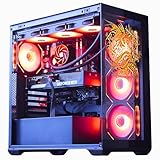
- Top Pick: The Horizon Autherium Dragon RGB I9 RTX Gaming PC || 64GB RAM || 5TB Storage || Core I9 Upto 5.4Ghz || RTX 5070 OC || Windows 11 PRO || 360MM AIO || 2.4GB/s WiFi, VR, Gaming Ready Desktop Computer
- Best Value: Evounic Gaming Desktop PC 12-Core Processor, GeForce GTX 1080 Ti 11GB
- Premium Choice: ZYNEEX Prebuilt Gaming Desktop PC, AMD Ryzen 5 5500, GeForce RTX 3050 6GB,16GB DDR4 3200MHz RAM, 1TB NVMe SSD, ARGB Air Cooling, Wi-Fi,Tower Computer for Gaming, Streaming, Editing
Graphic design has quietly become one of the most hardware-hungry creative disciplines. Modern Photoshop, Illustrator, InDesign and Affinity files carry dozens of layers, smart objects, vector effects and high-resolution assets, and the whole suite leans on the GPU for canvas rendering, smooth zooming and panning, and increasingly for AI-assisted tools. A capable gaming PC turns out to be a near-perfect design workstation: it pairs a strong modern GPU with the RAM and fast NVMe storage that big design projects demand, all at prices that undercut so-called professional workstations. This guide rounds up the best gaming PCs for graphic design in 2026, chosen for the GPU horsepower, memory and storage that keep a design workflow fluid.
- Best Gaming PCs for Graphic Design at a Glance
- 1. iBUYPOWER Element Gaming PC, AMD Ryzen 9 7900X, NVIDIA GeForce RTX
- 2. Skytech Gaming O11 Vision, AMD Ryzen 7 7800X3D, NVIDIA RTX 5070
- 3. Skytech Gaming O11 Vision, AMD Ryzen 7 7700X, NVIDIA RTX 5070
- 4. Skytech Gaming Archangel 5, AMD Ryzen 7 7700X, NVIDIA RTX 5070
- 5. Skytech Gaming Azure 3 Desktop, Ryzen 7 7700X (5.4GHz boost), RTX 50-series
- 6. ASUS TUF Gaming 15L Desktop, Intel Core i7-13620H, NVIDIA GeForce RTX
- How to Choose a Gaming PC for Graphic Design
- Frequently Asked Questions
- Related Guides
- Related Articles
- Related Guides
Our picks were chosen on what genuinely matters to a designer: a GPU with enough power and VRAM to accelerate the canvas and feed a high-resolution, color-capable monitor; generous RAM so large multi-layer files and multiple open apps never stall; fast NVMe storage to load and save heavy assets quickly; and overall value. We have included a deliberate spread, from around $1,699 to around $2,500, and we lead with the builds that balance GPU, RAM and storage best for design rather than the most expensive box. These are gaming desktops fit to design work, not niche pro rigs — but for the money that is exactly why they make so much sense. Below is an at-a-glance comparison of all six, then a closer look at each and a buyer’s guide for design intent.
As an Amazon Associate we earn from qualifying purchases at no extra cost to you.


🛒 Best Price Today on Amazon
Prime members get fast, free shipping on everything above, plus member-only deals. New members get a 30-day free trial — cancel anytime.
Best Gaming PCs for Graphic Design at a Glance
| Gaming PC | Best For | Standout Spec | Approx Price |
|---|---|---|---|
| iBUYPOWER Element (Ryzen 9 7900X) | High-core design + GPU power | Ryzen 9 7900X, RTX-class GPU | around $2,299 |
| Skytech O11 Vision (7800X3D / RTX 5070) | Premium fluid design workflow | Ryzen 7 7800X3D, RTX 5070 | around $2,499 |
| Skytech O11 Vision (7700X / RTX 5070) | Balanced color + value | Ryzen 7 7700X, RTX 5070 | around $1,999 |
| Skytech Archangel 5 (7700X / RTX 5070) | Best value design build | Ryzen 7 7700X, RTX 5070 | around $1,899 |
| Skytech Azure 3 (7700X / RTX 50-series) | Compact design station | Ryzen 7 7700X (5.4GHz boost) | around $1,999 |
| ASUS TUF 15L (i7-13620H / RTX) | Small-form-factor desk pick | Intel i7-13620H, compact 15L | around $1,699 |
1. iBUYPOWER Element Gaming PC, AMD Ryzen 9 7900X, NVIDIA GeForce RTX

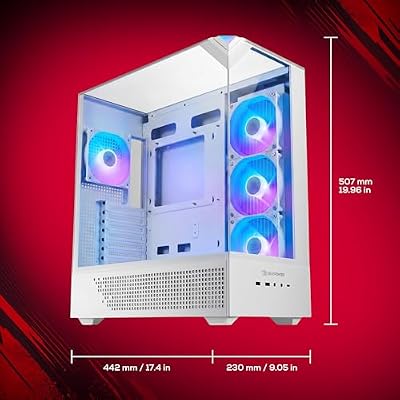
iBUYPOWER Element Gaming PC Desktop Computer AMD Ryzen 9 7900X CPU, NVIDIA GeForce RTX 5070 12GB GPU, 32GB DDR5 RAM, 1TB NVMe SSD, Windows 11 Home, Gamer Keyboard and Mouse - EWA9N5702






As an Amazon Associate we earn from qualifying purchases. Product prices and availability are accurate as of the date/time indicated.
The iBUYPOWER Element leads our design list because of its CPU. The Ryzen 9 7900X brings twelve cores, and that core count is a real asset in graphic design: exporting large batches, applying filters across high-resolution canvases, rendering vector-heavy artboards and running background tasks all scale with cores. Paired with a capable RTX-class GPU to accelerate the canvas and feed a color-accurate display, it makes a strong, well-rounded design machine at around $2,299.
For a designer this is the build to choose when your projects are heavy and your multitasking is heavier still — Photoshop and Illustrator open together, a browser full of references, and an export running in the background. The twelve-core Ryzen 9 keeps all of that responsive, the GPU handles smooth zooming, panning and GPU-accelerated effects, and you will want to pair it with plenty of RAM and a wide-gamut monitor to realize its potential. As a gaming desktop adapted to design, the Element’s high core count is its standout advantage.
Pros: Twelve-core Ryzen 9 7900X for heavy multitasking, GPU-accelerated canvas, strong all-round design value.
Cons: Color accuracy lives in the monitor, not the PC; confirm RAM suits your file sizes.
2. Skytech Gaming O11 Vision, AMD Ryzen 7 7800X3D, NVIDIA RTX 5070

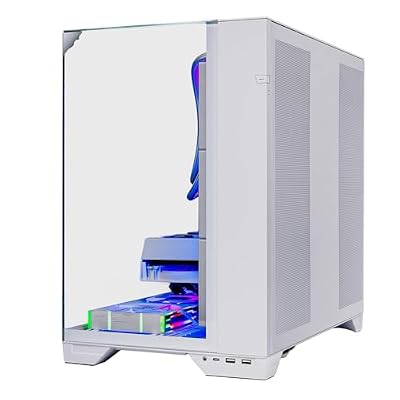
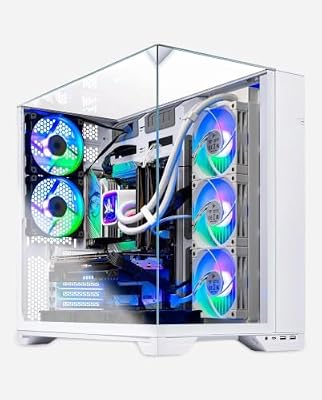
Skytech Gaming O11 Vision Gaming PC, AMD Ryzen 7 9850X3D 4.7GHz, NVIDIA RTX 5070 Ti 16GB VRAM, 2TB Gen4 NVMe SSD, 32GB DDR5 RAM 5600, 850W Gold ATX 3 PSU, 360 ARGB AIO, Wi-Fi 5, Windows 11, Desktop



As an Amazon Associate we earn from qualifying purchases. Product prices and availability are accurate as of the date/time indicated.
The Skytech O11 Vision with the Ryzen 7 7800X3D and an RTX 5070 is the premium fluid-workflow pick. The 7800X3D is one of the most responsive desktop CPUs around, and that snappiness translates directly to a design canvas that feels instant — brushes, transforms and live previews keep up with you. The RTX 5070 accelerates GPU-driven effects and drives a high-resolution color-capable monitor with ease. At around $2,499 it is the showpiece of this list.
This is the build for the designer who wants the smoothest possible day-to-day experience and a striking O11-style chassis to match. The 7800X3D’s large cache keeps interactive work feeling immediate, the RTX 5070 has the muscle for GPU-accelerated tools and modern AI-assisted features in the design suite, and the open-frame case looks the part on a creative desk. Be honest about its nature — it is a high-end gaming desktop — but for design responsiveness and GPU power, it delivers a premium experience.
Pros: Highly responsive 7800X3D, capable RTX 5070, fluid interactive canvas, premium chassis.
Cons: Highest price here; gaming-first marketing, calibrate your monitor for color work.
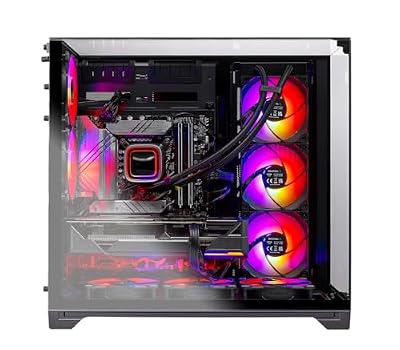
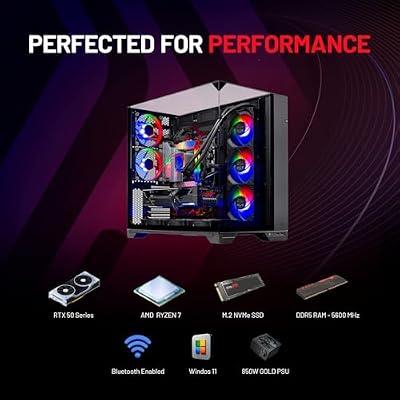
3. Skytech Gaming O11 Vision, AMD Ryzen 7 7700X, NVIDIA RTX 5070
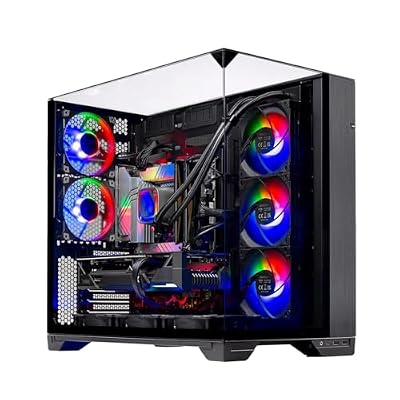
Skytech Gaming O11 Vision Gaming PC, AMD Ryzen 7 7700X 4.5GHz, NVIDIA RTX 5070 12GB, X670 Board, 1TB Gen4 NVMe SSD, 32GB DDR5 RAM 5600, 850W Gold ATX 3 PSU, 360 ARGB AIO, Wi-Fi, Win 11, Desktop







As an Amazon Associate we earn from qualifying purchases. Product prices and availability are accurate as of the date/time indicated.
The Skytech O11 Vision with the Ryzen 7 7700X and RTX 5070 is the balanced color-and-value pick. It keeps the same capable RTX 5070 GPU — the part that matters most for accelerating the canvas and feeding a wide-gamut monitor — but pairs it with the excellent eight-core 7700X, trimming the price to around $1,999. For most designers that combination hits the sweet spot of power and cost.
This is the build for the designer who wants RTX 5070-class GPU performance without paying the X3D premium. The eight-core 7700X is more than enough for Photoshop, Illustrator and the wider suite, the RTX 5070 handles GPU-accelerated effects and high-resolution output comfortably, and the O11 Vision chassis still looks great on a desk. Add a calibrated, high-coverage monitor and ample RAM, and this is a genuinely strong design station at a sensible price.
Pros: Capable RTX 5070 GPU, solid eight-core 7700X, attractive O11 chassis, strong value.
Cons: Eight cores rather than twelve; color fidelity depends on your display.
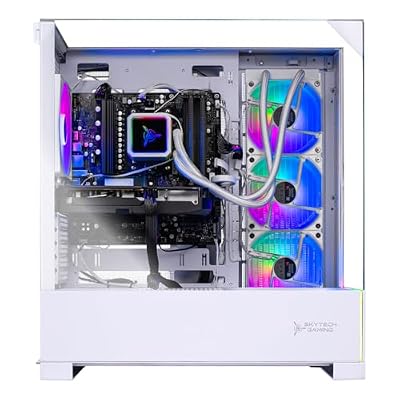
4. Skytech Gaming Archangel 5, AMD Ryzen 7 7700X, NVIDIA RTX 5070

Skytech Gaming Archangel 5 Gaming PC, AMD Ryzen 7 7700X 4.5GHz, NVIDIA RTX 5070 12GB, 1TB Gen4 NVMe SSD, 32GB DDR5 RAM 6000, 750W Gold PSU, 360 ARGB AIO, Wi-Fi, Win 11, Desktop


As an Amazon Associate we earn from qualifying purchases. Product prices and availability are accurate as of the date/time indicated.
The Skytech Archangel 5 with the Ryzen 7 7700X and RTX 5070 is the best-value design build on this list. It delivers essentially the same core design ingredients as the O11 Vision pick — the eight-core 7700X and the capable RTX 5070 — in a more conventional, cost-focused chassis, bringing the price down to around $1,899. For pure design capability per dollar, it is hard to beat.
This is the build for the designer on a budget who refuses to compromise on the parts that drive the work. The 7700X keeps Photoshop, Illustrator and vector tools responsive, the RTX 5070 accelerates the canvas and drives a high-resolution color-capable monitor, and you pocket the savings to spend on a better display or more RAM — both of which directly improve a design setup. As an affordable gaming desktop turned design station, the Archangel 5 offers remarkable value.
Pros: RTX 5070 GPU and eight-core 7700X at a lower price, money freed for a better monitor.
Cons: Plainer chassis than the O11; invest the savings in display and memory.
5. Skytech Gaming Azure 3 Desktop, Ryzen 7 7700X (5.4GHz boost), RTX 50-series

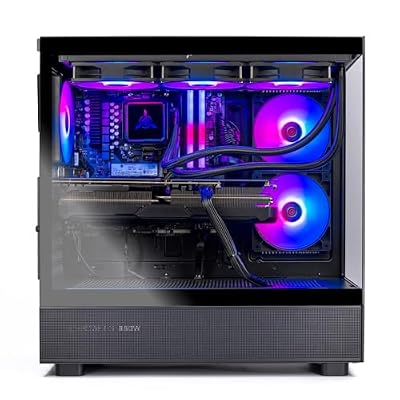
Skytech Gaming PC Azure 3, Ryzen 7, RTX 5070, 32GB RAM, 1TB SSD


As an Amazon Associate we earn from qualifying purchases. Product prices and availability are accurate as of the date/time indicated.
The Skytech Azure 3 is the compact design-station pick. It centers on the same well-regarded eight-core Ryzen 7 7700X — boosting up to 5.4GHz — paired with a modern RTX 50-series GPU, in a tidier Azure chassis that suits a smaller creative desk. At around $1,999 it is a capable, space-conscious option for design work.
This is the build for the designer who wants strong, responsive performance but is tighter on desk space than on budget. The high-boosting 7700X keeps interactive design feeling quick, the RTX 50-series GPU accelerates GPU-driven effects and feeds a color-capable monitor, and the more compact case fits neatly into a studio corner. Pair it with a wide-gamut display and enough RAM for your file sizes, and the Azure 3 is a clean, capable design machine that does not dominate the room.
Pros: High-boosting eight-core 7700X, modern RTX 50-series GPU, compact studio-friendly chassis.
Cons: Smaller case can mean less expansion room; verify exact GPU and RAM at purchase.
6. ASUS TUF Gaming 15L Desktop, Intel Core i7-13620H, NVIDIA GeForce RTX

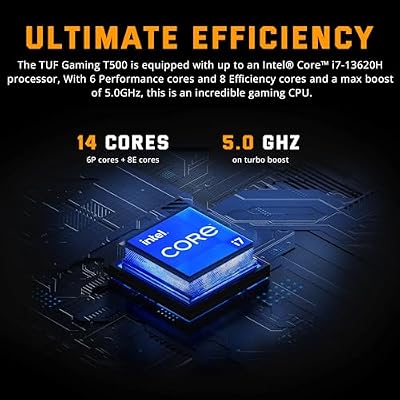
ASUS TUF 15L Gaming Desktop, Intel Core i7-13620H Processor, NVIDIA GeForce RTX 5060 Graphics, 1TB M.2 NVMe™ PCIe® 4 SSD,16GB DDR5 RAM, Windows 11 Home, Gray




As an Amazon Associate we earn from qualifying purchases. Product prices and availability are accurate as of the date/time indicated.
Rounding out the design list is the ASUS TUF 15L, the small-form-factor desk pick. It is a compact 15-liter desktop built around the Intel Core i7-13620H — a capable mobile-derived CPU — and an NVIDIA GeForce RTX GPU, with ASUS’s TUF build quality and a footprint that barely takes any space. At around $1,699 it is the most affordable and most space-saving option here.
Be honest about what this is: a smaller, mobile-CPU-based desktop rather than a full tower, so its raw multitasking ceiling sits below the bigger Ryzen builds. But for a designer with a cramped desk or a tidy home studio, that is a fair trade. The i7-13620H handles Photoshop, Illustrator and everyday design work well, the RTX GPU accelerates the canvas and drives a color-capable monitor, and the tiny 15L chassis frees up your desk. As a compact, capable design machine on a budget, the TUF 15L earns its place.
Pros: Tiny 15L footprint, capable i7-13620H, RTX GPU acceleration, lowest price and most desk-friendly.
Cons: Mobile-derived CPU and compact case cap heavy multitasking and expansion.
How to Choose a Gaming PC for Graphic Design
For graphic design, start with the GPU — but for the right reasons. The design suite increasingly uses the GPU to accelerate the canvas, smooth zooming and panning, drive GPU-based filters and power AI-assisted tools, so a capable modern card like the RTX 5070 in several builds here makes the whole experience feel fluid. Just as important, the GPU is what drives a high-resolution, color-accurate monitor cleanly. The PC itself does not define your color accuracy — that lives in the display and its calibration — but a strong GPU ensures the panel is fed without compromise.
RAM is the next priority and it is easy to underestimate. Multi-layer Photoshop documents, large InDesign books, vector-heavy Illustrator artboards and several open applications all consume memory fast, and once you run out the system slows to a crawl. Aim generously: enough RAM to keep your typical projects and apps open at once with headroom to spare. If a build’s standard memory looks tight for your file sizes, plan to add more — it is one of the highest-impact upgrades a designer can make.
Storage shapes how quickly you load and save heavy assets. A fast NVMe SSD makes opening large files, scratching through caches and exporting feel near-instant compared with an older drive, so prioritise an NVMe boot-and-working drive. Many of these builds ship with capable NVMe storage; if your asset libraries are large, plan for a second drive so your project files and program scratch space are not fighting for room. Fast, roomy storage keeps a design workflow smooth.
Finally, match the CPU and form factor to how you work, and remember these are gaming desktops adapted to design. A high-core CPU like the Ryzen 9 7900X helps with heavy batch exports and aggressive multitasking, while the responsive 7800X3D or the value 7700X keep interactive work snappy. A compact build like the Azure 3 or TUF 15L suits a small studio. Set your budget, lead with GPU and RAM, add a calibrated wide-gamut monitor, and pick the design machine here that fits your projects and your space.
Frequently Asked Questions
Do I need a gaming PC for graphic design, or a workstation?
For most designers a gaming PC is the smarter buy. Modern design apps lean on the same strong GPUs, fast CPUs, ample RAM and NVMe storage that gaming desktops provide, usually at a lower price than a badged ‘workstation.’ These are gaming desktops adapted to design rather than certified pro rigs, but for Photoshop, Illustrator and the wider suite that distinction rarely matters — the components are what count.
How much RAM do I need for graphic design?
More than you might think. Large multi-layer files, vector-heavy artboards and several open apps consume memory quickly, and running short brings everything to a crawl. Aim for enough to keep your typical projects and applications open with headroom; if a build’s stock RAM looks tight for your file sizes, adding memory is one of the highest-impact upgrades you can make as a designer.
Does the gaming PC determine my color accuracy?
No — color accuracy lives in your monitor and its calibration, not the PC. A capable GPU like the RTX 5070 in these builds drives a high-resolution, wide-gamut display cleanly, but the panel and a calibration profile determine whether the colors you see are true. Budget for a high-sRGB or wider-gamut monitor and a calibration tool alongside any of these machines.
Which pick is best for a small studio desk?
The compact options — the Skytech Azure 3 and especially the tiny 15-liter ASUS TUF 15L — are built for limited space. The TUF 15L in particular barely occupies a desk while still offering a capable CPU and an RTX GPU for accelerated design work. Just note that smaller, mobile-derived builds cap heavy multitasking and expansion compared with the larger Ryzen towers.
Related Guides
- Best Gaming PCs
- Best Monitors for Content Creation
- Best 4K Monitors
- Best RAM for Your Build
- Best NVMe SSDs
- Best Mechanical Keyboards
Affiliate Disclosure: As an Amazon Associate, we earn from qualifying purchases. If you click a link and make a purchase, we may earn a small commission at no extra cost to you. Prices and availability are accurate as of publication and may change.
Ready to decide? Our #1 pick for 2026 is the iBUYPOWER Element (Ryzen 9 7900X).
Live price & availability on Amazon.


