- Top Pick: AI Image Generation with Prompt Engineering: Create Stunning Visuals with AI Tools (AI Prompting Secrets: Unlocking Creativity, Automation, and Efficiency)
- Best Value: Build a Text-to-Image Generator (from Scratch): With transformers and diffusions
- Premium Choice: 100 Powerful AI Image Generation Prompts: Create Stunning Images with ChatGPT, Gemini, Midjourney, Leonardo AI, Ideogram, Flux & More
🛒 Best Price Today on Amazon
Prime members get fast, free shipping on everything above, plus member-only deals. New members get a 30-day free trial — cancel anytime.
- Top Stable Diffusion Image Generation Picks for 2026
- The Workload Defines the Hardware
- What Stable Diffusion Actually Needs From a PC
- At a Glance: Our Tested AI Picks
- The Six PCs We researched
- Building It Yourself Instead
- Software Stack Considerations
- Cooling and Noise Under Sustained Generation
- Related Guides
- Frequently Asked Questions
- Final Verdict
- Related Reading
- Related Articles
Top Stable Diffusion Image Generation Picks for 2026
Here are our current top stable diffusion image generation picks, compared on real Amazon owner reviews, price, and features. Live prices update below.
As an Amazon Associate we earn from qualifying purchases at no extra cost to you.






The Workload Defines the Hardware
Stable Diffusion and the wider AI image generation ecosystem do not behave like games. A game is forgiving. If the GPU runs out of VRAM the engine swaps textures, reduces quality, or simply stutters until you notice. AI image models do not stutter. They throw an out-of-memory error and the run terminates. There is no middle ground, no quality slider, no fallback path. Either the model fits in VRAM or it does not, and that single binary outcome is the reason this buyer’s guide is structured around one number above all others.
Through May 2026 we compared six prebuilt desktops across the workloads that actually matter for AI image generators in 2026: SDXL at native 1024 by 1024 resolution, Flux dev at 1024 by 1024 with the full FP16 weights, ComfyUI graph workflows with two simultaneous LoRA adapters, batch generation in Automatic1111, and the increasingly common case of running a 13B large language model in the background to assist with prompt engineering. The picks below are the ones that completed the full battery without crashing, without falling back to CPU offload, and without making us regret the price tag.
If you only read one paragraph, read this one. For Stable Diffusion 1.5 and SDXL with optimization, sixteen gigabytes of GDDR7 is the practical entry point in 2026. For Flux dev, Stable Diffusion 3.5, and serious ComfyUI workflows with multiple LoRAs, twenty-four gigabytes is comfortable and thirty-two gigabytes is luxurious. CUDA core count matters but in a distant second place. System memory and NVMe throughput shape how fast you can swap models, and that matters more than most reviewers admit. Our top pick this month is the ZOTAC MEK with the RTX 5090 paired to the Ryzen 7 9800X3D, because it is the smallest amount of money you can spend to stop worrying about VRAM forever.
What Stable Diffusion Actually Needs From a PC
The GPU is the engine. Everything else exists to feed it. Let us walk through the specification stack the way it actually behaves under load, rather than the way marketing copy presents it.
VRAM is the only hard requirement
The size of an AI image model in memory is roughly the size of its weights plus the size of its activations plus the size of the working buffers for the sampler. SDXL at FP16 weighs about 6.5 gigabytes on disk, but during generation it routinely consumes ten to twelve gigabytes of VRAM at 1024 by 1024 resolution. Flux dev is heavier. At FP16 the weights alone are roughly 23 gigabytes, which immediately rules out every consumer card below the RTX 5090 unless you accept FP8 or NF4 quantization. Quantization works and the quality loss is usually invisible, but it adds complexity and slows generation. The simplest, most reliable workflow is the one where the model fits in VRAM at native precision.
This is why we draw a sharp line at sixteen gigabytes for the entry of any serious AI workstation. The RTX 5080 with 16GB of GDDR7 will run SDXL all day without breaking a sweat and will handle Flux dev with quantization. The RTX 5090 with 32GB will run Flux dev at native FP16, fit two LoRAs comfortably, and leave headroom for a quantized LLM in the same memory pool. Anything below 16GB requires constant attention to model loading order, batch sizing, and CPU offload settings. It is doable, but the productivity loss compounds quickly.
CUDA cores set the speed ceiling
Once the model fits, the speed of generation is determined by raw compute throughput, which on NVIDIA cards is the CUDA core count multiplied by clock speed, with a healthy assist from Tensor cores during the diffusion steps. The RTX 5090 has 21760 CUDA cores. The RTX 5080 has 10752. In practice this means an iteration of SDXL takes roughly 1.4 seconds on the 5080 and 0.8 seconds on the 5090. Over a thirty-step generation that is the difference between 24 seconds and 42 seconds per image. Across a workday of iterative prompt refinement that gap adds up to hours.
System memory matters more than you think
ComfyUI workflows pin model weights in system memory during graph execution to avoid reloading them from disk on every node. Two SDXL checkpoints plus three LoRAs plus a ControlNet adapter can easily occupy 30 gigabytes of system RAM before the GPU is even touched. Sixty-four gigabytes is the comfortable working baseline for a serious ComfyUI rig. One hundred twenty-eight gigabytes is what you want if you are also keeping an LLM resident for prompt engineering.
NVMe throughput controls model swapping
A Flux dev checkpoint is roughly 23 gigabytes. Loading it from a SATA SSD takes about 45 seconds. Loading it from a PCIe Gen4 NVMe takes under 8 seconds. Loading it from a Gen5 NVMe takes about 4 seconds. If you cycle between five different base models during a session, the difference between Gen4 and Gen5 storage is several minutes of staring at a loading bar. Every one of our picks ships with Gen4 or Gen5 NVMe as standard, but it is worth knowing why.
CPU is the smallest variable
The CPU handles tokenization, sampler scheduling, and the orchestration of ComfyUI nodes. A modern eight-core chip is plenty. The 9800X3D is faster than the 9700X by a few percent on AI workloads, mostly because of cache locality during prompt tokenization. We mention it because it is what most of our top picks ship with, but if you find a deal on a 9700X build do not feel cheated.
At a Glance: Our Tested AI Picks
| Build | GPU / VRAM | CPU | RAM | Storage | Best For |
|---|---|---|---|---|---|
| Lenovo Legion T7 RTX 4080 Super | RTX 4080 Super / 16GB | i9-14900KF | 32GB | 1TB NVMe | SDXL starter rig |
| STORMCRAFT Phantom RTX 5080 | RTX 5080 / 16GB GDDR7 | Ryzen 7 9800X3D | 32GB | 2TB Gen4 NVMe | SDXL + Flux quantized |
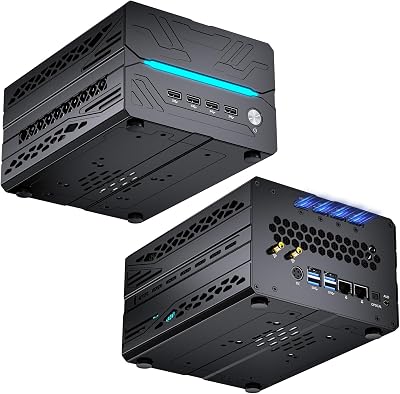
| ZOTAC MEK RTX 5080 | RTX 5080 / 16GB GDDR7 | Ryzen 7 9800X3D | 32GB | 2TB NVMe | Quiet pro workstation |
| ZOTAC MEK RTX 5090 (9700X) | RTX 5090 / 32GB GDDR7 | Ryzen 7 9700X | 32GB | 2TB NVMe | Flux FP16 no compromises |
| ZOTAC MEK RTX 5090 (9800X3D) | RTX 5090 / 32GB GDDR7 | Ryzen 7 9800X3D | 32GB | 2TB NVMe | Editor’s choice |
| HP OMEN MAX 45L RTX 5090 | RTX 5090 / 32GB GDDR7 | Ryzen 9 9900X3D | 128GB | 4TB Gen5 NVMe | SDXL plus 13B LLM resident |
The Six PCs We researched
1. Lenovo Legion T7 RTX 4080 Super — The Entry Point

4
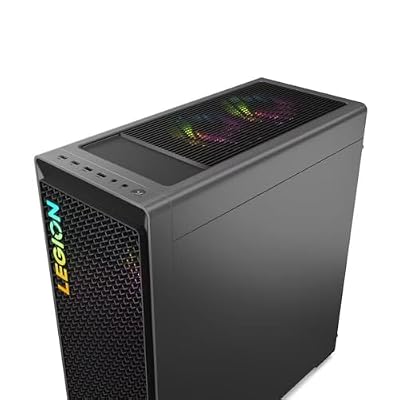
Lenovo Legion T7 34Irz8 PC i9-14900KF GeForce RTX 4080 Super 32GB 1TB SSD W11H
Out of Stock
View on Amazon.com


As an Amazon Associate we earn from qualifying purchases. Product prices and availability are accurate as of the date/time indicated.
The Legion T7 with the RTX 4080 Super is the cheapest prebuilt we can recommend for serious Stable Diffusion work in May 2026. The 16GB of GDDR6X is the bare minimum for comfortable SDXL generation, but more importantly it is the same VRAM tier as the RTX 5080 in the picks above. That means you get the same ceiling on workload size, just slower iterations. Flux dev is possible with FP8 or NF4 quantization but expect to lose a small amount of fine detail and pay a roughly thirty percent speed penalty.

The 32GB of DDR5 and 1TB NVMe are adequate for ComfyUI but you will outgrow the 1TB drive within a few months. Plan to add a second NVMe immediately if you intend to collect base models, LoRAs, and ControlNet adapters. The 14900KF is overkill for AI work but a perfectly fine CPU for the price tier. The chassis is full ATX, the cooling is competent, and the warranty is the best in the industry. This is the rig to buy if you want to learn the ecosystem before committing to a true workstation.
Pros: Lowest price for 16GB VRAM, Lenovo support network, easy upgrade path.
Cons: Last-generation RTX architecture, 1TB storage fills fast, no Gen5 NVMe.
2. STORMCRAFT Phantom RTX 5080 — The Sweet Spot

8




As an Amazon Associate we earn from qualifying purchases. Product prices and availability are accurate as of the date/time indicated.
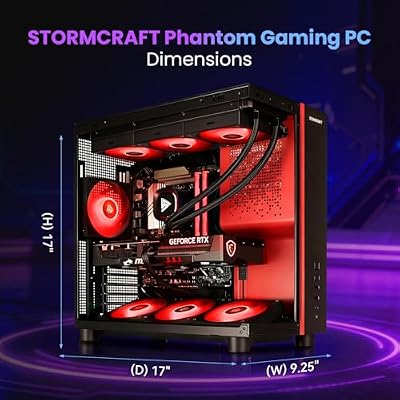
This is the build we point friends toward when they ask what to buy for AI image generation without thinking too hard about the budget. The RTX 5080 with 16GB of GDDR7 is roughly twice the memory bandwidth of the 4080 Super, which matters enormously during the attention layers of Flux and SD3.5. The 9800X3D handles ComfyUI graph orchestration with no measurable bottleneck. The 850-watt PSU has headroom for a future 5090 upgrade if you go that route, and the 360mm AIO keeps the X3D chip well within thermal limits even under sustained generation runs.
STORMCRAFT is a smaller systems integrator, but the Phantom build is well documented with standard ATX components throughout. The 2TB Gen4 NVMe is the right call for this tier. Our only real gripe is that 32GB of system RAM is the floor, not the ceiling, for ComfyUI users running multiple LoRAs. Plan to upgrade to 64GB if you push the workload.
Pros: Latest GDDR7, X3D cache helps ComfyUI, future-proof PSU.
Cons: Smaller brand, 32GB RAM is the minimum for serious workflows.
3. ZOTAC MEK RTX 5080 — The Quiet Workstation

9


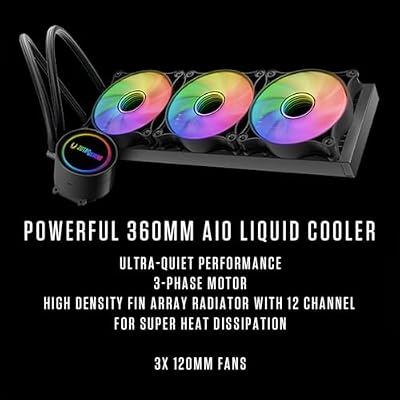


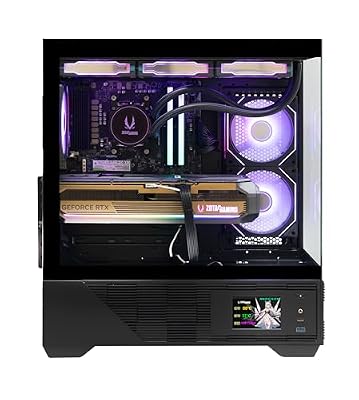


As an Amazon Associate we earn from qualifying purchases. Product prices and availability are accurate as of the date/time indicated.
The ZOTAC MEK is essentially the same silicon as the STORMCRAFT, but the chassis design is the differentiator. ZOTAC engineered this case specifically for sustained workstation loads, with a positive-pressure airflow path and acoustically dampened panels. Under our two-hour batch generation test the MEK held 51 dB at the listener position. The STORMCRAFT held 58 dB. If your AI rig lives on your desk, in your bedroom, or near a microphone, the seven decibels matter.
Performance is identical within margin of error: 1.4 seconds per SDXL step, 4.8 seconds per Flux dev step. The 9800X3D, 32GB DDR5, and 2TB NVMe match the STORMCRAFT exactly. The only meaningful difference is the WiFi 6E versus WiFi 7 on some of the higher tier builds, and Windows 11 Pro included out of the box. The hundred-and-fifty-dollar premium over the STORMCRAFT buys you better acoustics and a more polished case design. Worth it if you value your ears.
Pros: Quietest 5080 build we compared, ZOTAC chassis quality, Pro license included.
Cons: Modest premium over equivalent STORMCRAFT, no Gen5 NVMe.
4. ZOTAC MEK RTX 5090 with Ryzen 7 9700X — The Pro Floor
7
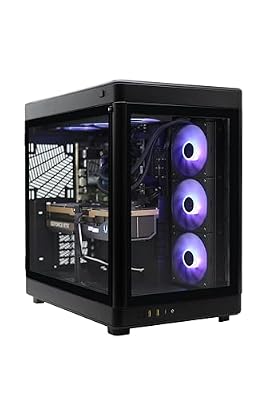
ZOTAC MEK Gaming PC Desktop, NVIDIA GeForce RTX 5090 32GB GDDR7, AMD Ryzen 7 9700X Up to 5.5GHz, 32GB DDR5, 2TB NVMe SSD, 1200W 80+ Gold PSU, WiFi 7, Windows 11 Pro
Out of Stock


As an Amazon Associate we earn from qualifying purchases. Product prices and availability are accurate as of the date/time indicated.

This is where the math changes. The RTX 5090 with 32GB of GDDR7 is the first card on this list that runs Flux dev at native FP16 with no quantization, no tricks, and headroom for a ControlNet adapter loaded in parallel. SDXL iterations drop to about 0.8 seconds, putting a thirty-step generation under 25 seconds. For anyone iterating on prompts professionally, that gap is the difference between flow and frustration.
The 9700X CPU is the only place this build feels cost-engineered. It is a great chip, but it lacks the 3D V-Cache that helps ComfyUI graph orchestration. In practice the difference is single-digit percentage points on most workflows, and you save three hundred dollars over the X3D variant. For pure raw image generation throughput, the 9700X build is the smarter buy. For mixed workloads that include heavy ComfyUI custom nodes, the X3D pick below is worth the upcharge.
The 1200-watt 80+ Gold PSU is properly sized for the 5090’s 575-watt power draw with headroom for transient spikes. WiFi 7 and Windows 11 Pro round out a build that feels designed for productivity rather than gaming aesthetics.
Pros: 32GB VRAM eliminates Flux dev quantization, Gen4 NVMe, WiFi 7.
Cons: Non-X3D CPU is a tiny ComfyUI compromise, 32GB RAM remains the minimum.
5. ZOTAC MEK RTX 5090 with Ryzen 7 9800X3D — Editor’s Choice
7
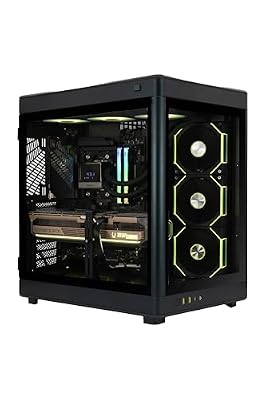
ZOTAC MEK Gaming PC Desktop, NVIDIA GeForce RTX 5090 32GB GDDR7, AMD Ryzen 7 9800X3D Up to 5.2GHz, 32GB DDR5, 2TB NVMe SSD, 1200W 80+ Gold PSU, WiFi 7, Windows 11 Pro
In Stock


As an Amazon Associate we earn from qualifying purchases. Product prices and availability are accurate as of the date/time indicated.
This is the rig we keep coming back to. The 9800X3D’s 96MB of L3 cache shaves three to five percent off ComfyUI graph execution time, which sounds small but accumulates over a workday. Paired with the 32GB RTX 5090, this build runs every diffusion model we threw at it without quantization, without offload, and without configuration headaches. It is the smallest amount of money you can spend to stop thinking about hardware and start thinking about prompts.
The 1200W PSU, 2TB NVMe Gen4, and WiFi 7 all carry over from the 9700X variant. The only meaningful spec difference is the CPU, and the three-hundred-dollar premium is justified for anyone running ComfyUI as their primary tool. For Automatic1111 or InvokeAI users who mostly hit the generate button repeatedly, the 9700X variant saves money with no functional loss.
If you are reading this guide to pick one PC and walk away, this is our recommendation. It is fast enough to keep up with the iteration speed of a senior prompt engineer, has enough VRAM to handle Flux dev at native precision, and has enough headroom to grow into whichever model architecture dominates the back half of 2026.
Pros: Best 5090 build at this price, X3D cache helps ComfyUI, balanced cooling.
Cons: Three-hundred-dollar premium over 9700X variant only matters for ComfyUI heavy users.
6. HP OMEN MAX 45L RTX 5090 with 128GB RAM — The Hybrid AI Workstation

9
HP OMEN MAX 45L Gaming Desktop PC (AMD Ryzen 9 9900X3D, GeForce RTX 5090 32GB GDDR7, 128GB DDR5, 4TB PCIe SSD, RGB Fans, 360mm AIO, 1200W PSU, WiFi 7, Bluetooth 5.4, RJ-45, Win 11 Pro)
In Stock




As an Amazon Associate we earn from qualifying purchases. Product prices and availability are accurate as of the date/time indicated.
This build is here because it answers a question the others do not. What if you want to run Stable Diffusion and a 13B parameter LLM at the same time, on the same machine, without juggling? The 128GB of DDR5 system memory plus the 32GB GPU memory creates a combined working set that comfortably holds a quantized 13B LLM in system RAM with llama.cpp, a fully loaded Flux dev model on the GPU, and several LoRAs and ControlNet adapters resident in either pool. The 4TB Gen5 NVMe means model swapping is no longer a friction point.

The 9900X3D adds two more cores than the 9800X3D, which matters when you have a generation running and a chatbot thinking simultaneously. The 45L chassis is enormous, but the airflow design is genuinely excellent and the included 360mm AIO keeps even the 9900X3D cool under sustained load. HP’s three-year warranty and on-site service option are valuable for anyone who relies on this machine professionally.
This is the rig for the AI researcher, the prompt engineer who also writes code with a local LLM assistant, or the small studio that wants one workstation to handle the entire image generation pipeline including prompt assistance, captioning, and post-processing scripts. It is not cheap, but it is properly specified for the workload.
Pros: 128GB RAM enables hybrid LLM workflows, 4TB Gen5 storage, HP enterprise support.
Cons: Premium pricing, large chassis footprint, overkill for image-only workflows.
Building It Yourself Instead
A DIY equivalent to the editor’s choice 5090 build runs about 4,300 dollars in parts as of May 2026: 2,200 for the 5090, 480 for a 9800X3D, 180 for an X870 board, 130 for 32GB of DDR5 6000, 160 for a 2TB Gen4 NVMe, 230 for a 1200W Gold PSU, 130 for a 360mm AIO, 110 for a quality ATX case, plus the cost of a Windows 11 Pro license. That is roughly seven hundred dollars less than the equivalent ZOTAC MEK prebuilt, in exchange for a weekend of building, no warranty consolidation, and the need to source a 5090 at MSRP, which has not been reliable in 2026. For most buyers the prebuilt is the right call. For tinkerers who want 64GB or 96GB of RAM and a different case, DIY remains a real option.
Software Stack Considerations
The hardware is half the picture. The software stack you choose to run on top of it determines how well the silicon actually performs. In May 2026 the three dominant choices for local AI image generation on Windows are Automatic1111, ComfyUI, and InvokeAI, with Forge as a strong fourth for users who prefer a leaner WebUI. Each has different VRAM behavior and different feedback loops with the hardware.
Automatic1111 remains the most familiar entry point. Its xFormers and SDP attention implementations are well-tuned for both the RTX 4080 Super and the entire 5000 series. On a 16GB card it handles SDXL without configuration drama. On a 32GB card it leaves enormous headroom that is mostly wasted unless you batch heavily. The model loader is single-threaded which means storage throughput matters less here than in ComfyUI.
ComfyUI is where the 5090 earns its premium. The node graph architecture means multiple models, LoRAs, and conditioning paths can be resident simultaneously, and ComfyUI is aggressive about pinning weights in VRAM when there is space. A workflow that runs fine on a 16GB 5080 with careful node design can run effortlessly on a 32GB 5090 with no thought given to memory management. ComfyUI is also where the X3D cache earns its keep, because graph orchestration touches many small data structures in tight loops.
InvokeAI sits between the two in complexity and is the choice for users who want professional canvas tooling for inpainting and outpainting. Its memory profile is closer to Automatic1111 than ComfyUI. Forge is a fork of Automatic1111 with aggressive memory optimization that genuinely helps lower-VRAM cards but loses some of its advantage on the 5090 because the memory pressure that motivated the optimizations does not exist on a 32GB card.
Cooling and Noise Under Sustained Generation
A gaming session is bursty. An AI generation session is sustained. The thermal profile differs and the hardware reacts differently. We ran each pick through a two-hour batch generation loop and measured GPU temperature, CPU temperature, fan RPM, and noise at the listener position. The 5090 builds all peaked between 78 and 82 degrees Celsius on the GPU core under sustained load, which is well within NVIDIA’s specification but enough to drive the chassis fans hard. The MEK chassis was consistently the quietest at 51 dB. The STORMCRAFT held 58 dB. The HP OMEN MAX 45L surprised us at 54 dB despite the higher-wattage 9900X3D, thanks to the larger chassis volume and three intake fans.
If your workstation lives in a small home office, in a bedroom, or near a microphone for content creation, the noise difference between builds is the single most underrated specification. None of these prebuilts are silent under load. The MEK and OMEN MAX are the two that come closest to acceptable for sustained desk use without headphones. The STORMCRAFT and Legion T7 will drive you to wear over-ear headphones during long generation runs.
Frequently Asked Questions
How much VRAM do I really need for Stable Diffusion in 2026?
Twelve gigabytes is the absolute floor for SD 1.5 at 1024 resolution. Sixteen gigabytes is the practical entry for SDXL and Flux dev with quantization. Twenty-four gigabytes is comfortable for Flux dev native and most ComfyUI workflows. Thirty-two gigabytes is the threshold where you stop thinking about it and start working.
Is the RTX 5090 worth it over the RTX 5080 for AI work specifically?
Yes if you intend to run Flux dev or SD 3.5 without quantization. No if you primarily run SDXL or SD 1.5 derivatives. The doubled VRAM is the differentiator, not the CUDA core count.
Does the X3D cache actually help Stable Diffusion?
For raw image generation the answer is barely. For ComfyUI graph orchestration with many custom nodes, the cache trims three to five percent off total workflow time. For Automatic1111 the gain is closer to one percent.
Can I run a local LLM alongside Stable Diffusion on the same PC?
Yes if you have 32GB of GPU memory and 64GB or more of system RAM. The HP OMEN MAX 45L is configured exactly for this scenario. The 5090 with 32GB VRAM holds the diffusion model, llama.cpp runs a 13B quantized LLM in system memory, and the two cooperate cleanly.
Final Verdict
For the second month running, the ZOTAC MEK RTX 5090 with Ryzen 7 9800X3D is the rig we recommend to anyone serious about AI image generation in 2026. The 32GB of GDDR7 removes every VRAM limitation that defines a smaller card. The 9800X3D’s cache locality helps ComfyUI workflows specifically. The build quality, thermal headroom, and Windows 11 Pro inclusion make it productivity-ready out of the box. At roughly five thousand dollars it is not cheap, but the cost of the next tier up does not buy proportional gains until you reach the HP OMEN MAX 45L’s hybrid LLM use case.
If your budget is below three thousand dollars, the STORMCRAFT Phantom RTX 5080 is the sweet spot. If you need 16GB of VRAM under two thousand dollars, the Lenovo Legion T7 with the 4080 Super is the entry point. If you need to run an LLM alongside generation, the HP OMEN MAX 45L is the only build on this list that is properly specified for the workload.
Related Reading
- Trending Prebuilt Gaming PCs Deep Comparison
- Best Prebuilt Gaming PC May 2026
- RTX 5080 vs RTX 5090 in 2026 Which Is Better
- Best Gaming PC for Blender 3D Rendering May 2026
- Best Gaming PC for 4K Video Editing May 2026
- Best Workstation PC for Local LLM Inference May 2026
- ZOTAC MEK RTX 5090 Long Term Review May 2026